Showing 33–48 of 146 results

Out Of Stock

Nostalgic Edition 35

Tady je překlad s ponecháním HTML formátování:

Year of Manufacture: 2016
Power: 130 hp
Displacement: 2,292 cm3

Number of Cylinders/Valves: 8/3
Weight: 750 kg

Condition: perfect
Catalogue Number: 63

Nostalgic Edition 35B

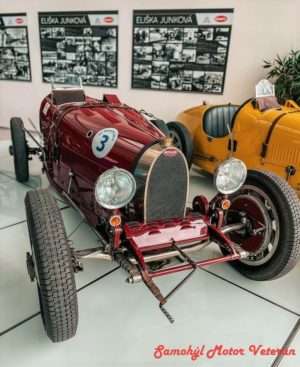
What brand is this? What are Nostalgic Edition cars? Why are they part of the Samohýl family historic vehicle collection and hold an important place there?

When Mr. Ladislav Samohýl purchased two original Bugatti GP cars, it was necessary to renovate and restore them to original working condition. Authentic period parts are very rare, expensive, and often worn. The best known manufacturer and supplier of these spare parts and even entire vehicles as replicas is the Argentine company Pur Sang. Missing parts were ordered from them. However, after payment and delivery, the parts turned out to be poor quality and ultimately unusable. What now? Classic Czech traits prevailed—flexibility, skill, craftsmanship, and inventiveness. The first idea was to produce the parts ourselves, but setting up production was very costly and complex. So why cast only 2 engine blocks in a foundry when you can make more? In the end, a production series of 20 units of these beautiful and legendary cars was planned and is now being realized. Everything is made to original parts with original tolerances. Thus, Nostalgic Edition parts can be freely interchanged with original parts, and the finished cars are indistinguishable from the original Bugatti 35 GP cars.

Why the name Nostalgic Edition? It is well known that the trademark and name Bugatti, including the famous red and white badge from the radiator grille, was purchased years ago by Volkswagen for their use—also for Veyron cars. The industrial design of the legendary Bugatti cars themselves is, however, freely available, and the Bugatti family did not renew it for themselves. Therefore, anyone can build replicas of these cars, but no longer under the Bugatti name and without the famous badge on the grille. For this reason, the cars are called Nostalgic Edition and do not pretend to be originals but are faithful and dignified copies of the famous cars.

And according to which model were these faithful copies created?

According to the most famous one – Bugatti Type 35

The fame of this type dates back to August 1924, when the Bugatti factory presented the racing T35 at the GP in Lyon. The Bugatti T35 later achieved phenomenal success and won more than 2,000 races, including 21 Grand Prix categories. Among the prominent winners were such names as Tazio Nuvolari, Louis Chiron, William Grover-Williams, and René Dreyfus. We must not forget our own lady, Eliška Junková. Her greatest success was an absolute fifth place at the Sicilian Targa Florio (1928). The sad truth is that her husband, Čeněk Junek, died in a T35B on the Nürburgring on July 15, 1928.

The visually unmistakable Bugattis had narrow horseshoe-shaped radiators. When they retired from racing tracks, they were often converted with sporty touring bodies.

“The Blue Bugatti”

The Bugatti 35 was born at a time when the Grand Prix cars had to comply with a two-liter engine displacement limit. The patron drew on a clean sheet an elegant long inline eight-cylinder engine, which first appeared in the T28 prototype (1921) and then especially in the racing T30 (1922–1926). It had an OHC valve train with three valves (two intake, one exhaust) per cylinder. The light engine was a mechanical jewel, requiring precise and meticulous work to produce. Numerous plain bearings needed splash lubrication, yet suffered considerable wear requiring frequent replacement. The T35 model achieved up to 30% higher rpm compared to its predecessors. The camshaft, crankshaft, connecting rods, bearings, and lubrication were all changed. The factory-supplied eight-hole aluminum alloy wheels with integrated brake drums gave the car its characteristic Bugatti look. Its wheelbase was 2,400 mm.

Bugatti T35A

In December 1924, the racing Bugatti T35B cost 100,000 francs, affordable only to truly wealthy buyers. Therefore, in May 1925, the factory introduced a cheaper version, the T35A. Although it looked optically like the T35B Grand Prix, some components came from the original T30 (e.g., crankshaft bearings in three main bearings). The engine blocks and the eight smaller cams of the T30, T35B, and T35A differed in ignition coil and distributor connections. Most importantly, the 35A model was without a supercharger, thus offering lower power but greater durability. The cars came with wire-spoked wheels, but full aluminum wheels were available at extra cost. The T35A cost “only” 65,000 francs.

Other versions and supercharger

The patron decided to build the Bugatti 35T (T for Targa) to be successful in the toughest race, the Sicilian Targa Florio in 1926. He increased the stroke by 100 mm, bringing the engine displacement to 2,262 cm3. The result was success, with three factory T35Ts leading the race—Costantini, Minoia, and Goux—and Dubonnet with a private car finishing fifth. Twelve racers finished in total, seven of which drove cars made in Molsheim. Bugatti performed similarly well in subsequent races until 1930. Only seven Bugatti T35T units were built due to Grand Prix rules limiting engine displacement to two liters. Between 1927 and 1930, 45 T35B models were made, essentially T35Ts equipped with Roots superchargers. The first supercharger designs date from May 1926, allowing the 2,262 cm3 engine to reach a maximum power of 138 hp. The car won the 1929 French GP. The T35B had a somewhat larger radiator placed further forward compared to other types. Another variant was the Bugatti Type 35C produced from 1927 to 1930, a T35 with a 1,991 cm3 engine and Roots supercharger producing 127 hp. Fifty T35Cs were built. They won the French GP in 1928 and 1930. In truth, these versions and related T39 and T43 models are hard to distinguish, as Ettore Bugatti already used the same parts across several models, reducing production costs and unifying components—a practice well ahead of its time.

As you can see, the Samohýl family can be justly proud. Creating a perfect and functional replica of probably the most famous racing car of all time is no bad credit to everyone involved in the Nostalgic Edition project.


Bugatti Type 37 GP

Here is the English translation with the original HTML formatting preserved:

Year of Manufacture: 1926
Power: 60 hp
Displacement: 1,496 cm3

Number of Cylinders/Valves: 4/3
Weight: 720 kg

Condition: drivable
Catalogue Number: 67

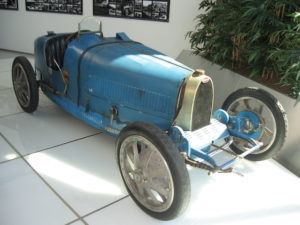
The Bugatti Type 37 is a four-cylinder model derived from the more famous eight-cylinder Type 35 from 1924, which is still considered the most beautiful racing car of all time. However, with the newer Type 37, Ettore Bugatti gave private racers the chance to acquire a quality racing car at a relatively affordable price. The Type 35 was a racing special and therefore very expensive. Those who wanted to race as privateers with a Bugatti at that time had to be truly wealthy. The Bugatti 37 followed a path of simpler technical solutions, cost-saving production, and thus accessibility for amateur drivers who still wanted to experience the feeling of real racing. The commercial success of this model proved the correctness of this decision. About 290 Type 37s were made, of which 67 were 37A models with a supercharger.

Technically, it was a typical Bugatti, with solutions identical to most models. The inline four-cylinder 1.5-liter engine with two intake and one exhaust valve was available either with a supercharger (Type 37A) or without (Type 37), producing 90 hp at 5,500 rpm or 60 hp, respectively. The chassis consisted of rigid axles, with the front suspended by longitudinal semi-elliptic springs, and the rear by quarter-elliptic springs. A specialty was the forged hollow front axles, through which the leaf springs passed. Technically demanding but beautiful. The brakes were mechanical with equalization of braking force on all wheels. In the late 1920s, these were among the best racing cars in the under 1.5-liter category.

Our Bugatti Type 37 is in original condition without major renovations—exactly the type of car with which amateur drivers raced worldwide in its time. It was manufactured in 1926 and delivered to Marseille, France. It spent its entire life in France before being purchased for Mr. Samohýl’s collection. It is one of two original Bugatti Grand Prix cars in the collection and thus a highly prized exhibit.


Škoda Felicia Super

Year of Manufacture: 1964
Power: 55 hp
Displacement: 1,221 cm3

Number of Cylinders/Valves: 4/2
Weight: 895 kg

Condition: good
Catalogue Number: 104

Škoda Felicia Super

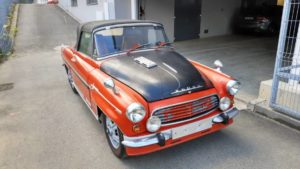
The Škoda Felicia Super was born in Kvasiny already at the end of 1959 (development lasted about a year and a half) and followed the preceding Škoda 450 model. It was first presented in March 1959 at the Leipzig Motor Show.

The greatest paradox is that even after more than 60 years, it remains a fact that this very Felicia Super is actually the last serially produced convertible of the Škoda brand. Therefore, it still enjoys the reputation of a legend and evokes proper enthusiasm and admiration from fans of beautiful cars wherever it appears.

Nimble Convertible

The original Felicia remained in production until 1964, during which the original 1,089 cm³ engine was replaced in the last 3 years by a larger 1,221 cm³ engine. This engine was 5 horsepower more powerful, totaling 55 hp, which is why the Felicia earned the epithet ‘Super’. The engines were, of course, typical OHV design for Škoda at that time. The car could reach a top speed of 135 km/h and realistically consumed about 9 liters of leaded gasoline per 100 kilometers.

The base of the car was identical to the concurrently produced Škoda Octavia sedans. However, at its time, the car was at a very good level and had some progressive design solutions.

A great curiosity was the possibility of two roofs for the car. The standard fabric roof could be complemented by a fixed fiberglass roof, instantly transforming the car into a beautiful coupe suitable for year-round use.

Timeless Legacy

The Škoda Felicia Super is simply the embodiment of automotive pleasure. Sixty years ago, the Czech industry was truly very advanced, and if it weren’t for the dark parts of our history, everything could have been very different. One is literally fascinated by the materials used. Everything is made either of quality metal, leather, or plastic. The car was also highly sought after abroad, so part of the production was exported. And its price there was not small at all!

And some details? For example, mechanical controls for the wipers, indicators, or the cleverly designed heating system can only be perceived as the cherry on such a timeless automobile. It is a pity that so few have survived to this day in their original condition.

Even today, meetings of these beautiful cars are held, where very valuable vehicles in original condition with just a patina of years of use can be seen. On the other hand, today there are also shiny cars after complete restoration, which are probably in better condition than when they originally left the factory!

The car in our collection is very rare. As can be seen in the attached photographs, the original owner subjected it to extensive “tuning” modifications and in its time won competitions for modified cars with it. That is why it is left in this modified state and demonstrates that the creativity of the Czech people knows no bounds.

Škoda 120

Year of Manufacture: 1930
Power: 

Displacement: 

Number of Cylinders/Valves: 
Weight: 

Condition: drivable
Catalogue Number: 75

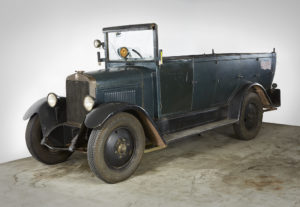
On the extended chassis of the standard model, a body was built for 9-11 people, widely used by police forces as well as a tourist and excursion vehicle for ČEDOK.

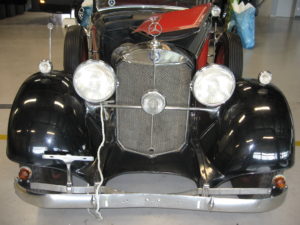
Mercedes Benz 500K

Sure! Here is the English translation with the original HTML formatting preserved:

Year of Manufacture: 1934
Power: 115 / 170 hp
Displacement: 5,401 cm3

Number of Cylinders/Valves: 8 / 2
Weight: 1,950 kg

Condition: undergoing restoration
Catalogue Number: 77

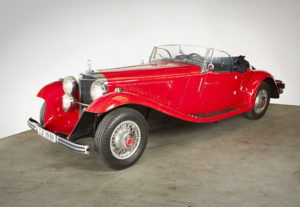
In our collection, we also have one of the most famous cars in automotive history – the Mercedes-Benz 500 K (K stands for Kompressor). Our example is truly exclusive, with an interesting history and remarkable technology.

During the 1930s, the automotive industry experienced a tremendous boom, especially in Germany. These years were marked by Adolf Hitler’s rise to power and the overall easing of economic blockades following the defeat in World War I. The automotive industry, car racing, and all related activities served the emerging fascist regime primarily as a showcase of the economic miracle and prosperity of the “new Germany” under its new leadership.

There was never enough ostentation, and appropriate cars were needed for the ruling elite to publicly present themselves. In February 1933, the model 380 was introduced, but it quickly became apparent that it did not meet performance requirements – due to its weight, it lacked sufficient power. Therefore, work on its further development started immediately.

At the Berlin International Motor Show in March 1934, the Mercedes-Benz 500 K model was presented. This model was developed under the leadership of Technical Director and Chief Designer Dr. Hans Nibel, a Czech native from Olšany near Šumperk. The chassis was slightly modified from the 380 model, but the engine was redesigned. It was again an inline eight-cylinder with an OHV valve train, but with increased displacement to 5,019 cm3. Equipped with a Roots supercharger, it produced 100 hp naturally aspirated and 160 hp with the supercharger engaged.

The car featured a four-speed transmission with an overdrive and, weighing 1,950 kg, could reach speeds of up to 170 km/h. At the time, it represented the pinnacle of automotive technology, and some of its technical solutions remain impressive even today. The 500 K was essentially an interim model produced only from 1934 to 1936. It was followed by the more famous 540 K, but that is another story. Only 354 units of the 500 K were produced, offering great variability in body styles and chassis. Among the most prized were the “Spezial Roadster,” of which only 20 were made.

Today, these cars are extremely valuable, with auction prices reaching several million dollars.

And what about the car in our collection? It was one of the first produced and made specifically for one of the prominent figures of the fascist regime – Adolf Hühnlein (not to be confused with Konrad Henlein). Hühnlein was responsible in Germany for everything related to cars – motorsport, highway construction, driver training, and something akin to today’s automobile club. He was a close collaborator and protégé of Adolf Hitler. Many photographs from that era show him alongside or in the company of Hitler.

In the late 1930s, as leader of the NSAK (National Socialist Automobile Corps), he gained enormous influence over affairs in Germany and contributed significantly to the country’s preparation for war. He died at the height of his power in 1942 after a serious illness and was given a state funeral with full honors attended by the entire government elite of the time.

In his official capacity, he used this car to participate in popular long-distance rallies and hill climbs. He appears in many photographs, and his activities served primarily to promote the German automotive industry. The car bore the license plate IIA-28998, and its participation in these events is documented in contemporary records.

What is most interesting about this car? According to Mercedes-Benz’s business records, it was sold directly to A. Hühnlein on July 26, 1934, and on August 21, 1934, the original engine was replaced with a new 5.4-liter engine. The car thus had a power output of 115 hp and 170 hp with the supercharger engaged. However, this engine officially did not yet exist at the time (the 540 K model was introduced only in 1936), so Hühnlein had a still-in-development engine installed in his car. Given his position, the manufacturer fulfilled any of his requests. By coincidence, a true automotive unique was created – the only one of its kind.

After Hühnlein’s death, the car ended up under somewhat unclear circumstances in Prague. It was likely assigned by Heinrich Himmler to people around Reinhard Heydrich during his time in Prague. Later, when Albert Speer brought the car to Panenské Břežany in 1944, it was used by Heydrich’s widow, Lina Heydrich.

After the war, the car was confiscated and ended up in the National Recovery Fund, along with many other cars from the German occupiers. It was here that Mr. Otto Langer from Olomouc acquired it as compensation for his originally confiscated Opel. He took great care of the car, used it for normal travel, and participated in many veteran car events.

He also tried to gather as much information about the car as possible, corresponding during the deep socialist period with the Mercedes-Benz museum, including Alfred Neubauer himself, the most famous racing manager who was in charge of the museum at that time. This allowed him to obtain additional documentation and technical information.

Later in life, Mr. Langer sold the car to Mr. Alois Samohýl, father of today’s owner. The car immediately became a centerpiece of the private collection, and the Samohýl family participated in various automotive events with it.

Where can the car be seen today? It is currently undergoing partial restoration and is disassembled in the workshop. Over time, it had undergone various modifications, so it was decided to return it to its original condition. The restoration will include repainting in the original color, new interior upholstery, and other adjustments. Once completed, this unique and very rare car will be exhibited in a suitably honorable place. We will inform fans and enthusiasts so they can admire it in its full restored glory.

Laurin & Klement, Mh

Here is the English translation with the HTML formatting preserved:

Year of Manufacture: 1920 Power: Displacement:

Number of Cylinders/Valves: Weight:

Condition: Catalogue Number: 83

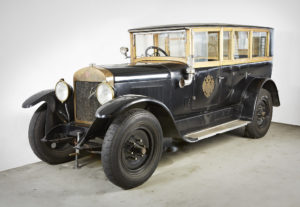
This is a limousine in a taxi style. An interesting feature of the body is the option of a removable wooden roof extension. For its time, it was a luxuriously equipped six-seat limousine that included many accessories such as cut-glass ashtrays, glass windows, interior lighting, and a period telephone for communication with the driver. It was mainly used for representative rides as a taxi or wedding car.

This vehicle served as the “official” car for Police Councilor Mr. Vacátko in the TV series *Sinners of the City of Prague*. It is believed that only one specimen exists.


Mercedes Benz 500 N Nurburg

Catalogue Number: 84

It was the first luxury car from Mercedes-Benz equipped with a V8 engine. It was introduced in 1928 at the Paris Motor Show. It was produced in various versions and modernizations until the summer of 1939, making it the longest-produced Mercedes-Benz model.

Nürburg 460

The model was produced from 1928 to 1929. It was developed by Ferdinand Porsche, who was a board member responsible for new product development. The new eight-cylinder Mercedes-Benz was meant to become a serious competitor to the luxury cars from Horch. The car had a traditional chassis with the frame placed above the axles, which gave the vehicle an antique and tall appearance.

The car was powered by a straight-eight engine with a displacement of 4,622 cm3. It produced a maximum power of 80 hp, enabling a top speed of 100 km/h. The car’s size was similar to the Horch 8, which essentially served as a model for its development.

The 1928 Horch limousine was 5,000 mm long and weighed 2,100 kg. The Mercedes-Benz Nürburg 460 limousine measured 4,890 mm and was extended to 5,200 mm by adding a rear trunk. The Mercedes weighed 2,150 kg. Both cars had a height of 1,900 mm. The large, old-fashioned, and very expensive Mercedes-Benz W08 produced in 1928 found only a few customers and was therefore replaced the following year by a more elegant version with a lower chassis.

Nürburg 460/460 K

This car was produced between 1929 and 1932. For the 1929 season, the company largely redesigned its first eight-cylinder model. The result was a car with a more modern chassis, where the longitudinal frame rails were positioned below the axles. The wheelbase remained unchanged. The engine and most other technical details also stayed the same. Despite all efforts and modifications made in 1929, the Mercedes-Benz W08 was less successful than the competing Horch 8, which was well established on the German luxury car market at that time. The 460 model was also the first popemobile. In 1930, Daimler-Benz presented Pope Pius XI with a specially modified vehicle of this type.

Nürburg 500

1931–1933 – This version had a wheelbase of 3,670 mm and was equipped with a new 4,918 cm3 engine with a twin downdraft carburetor. Maximum power was increased to 100 hp and top speed to 110 km/h.

1932–1936 – In 1932 the car lost the “Nürburg” name and was sold simply as the Mercedes-Benz 500N. It was equipped with the same 4,918 cm3 engine with side-valve (SV) timing and twin downdraft carburetors, as well as a four-speed gearbox and unchanged chassis dimensions. Visible changes included the shape of the radiator and front windshield. Slightly larger wheels allowed speeds up to 120 km/h.

1936–1939 – In 1936 the engine power was increased to 110 hp. The displacement remained the same, but the compression ratio was raised. The highest reported speed was 123 km/h. Visually, the 1936 models differed by a steeper front grille and windshield angle. The competitor Horch 8 disappeared from the market in 1935. Production of the model ended in 1939 without a direct successor. Another V8 appeared in the Mercedes-Benz lineup only in 1963. Between 1928 and 1939, 3,824 vehicles were produced. Its competitor Horch sold approximately 12,000 Horch 8 cars between 1926 and 1934.

All these models primarily served as luxury and representative vehicles for bankers, industrialists, and high-ranking politicians. This type was also used by Adolf Hitler. They were renowned for incredible reliability and durability. The bodywork itself was among the peak of luxury that customers could afford at that time. Interestingly, throughout the entire 11 years of production, it retained wooden spoked wheels and a very conservative chassis with rigid axles.

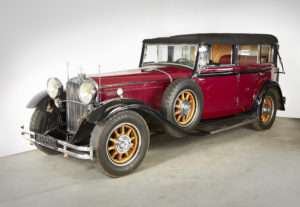
The car from our collection has an interesting history. It was bodied by the famous Glässer coachbuilder in Dresden as a “Type F” cabriolet. This open body had 4 doors, 6 side windows, and was one of the most luxurious versions ever made on this chassis. During the First Republic, the car served as a backup vehicle for President T.G. Masaryk. After the war, it was rebuilt as a limousine. Many elements of the original bodywork were preserved, and after a long and demanding restoration, it was returned to the original Type F cabriolet condition. Today it is one of the highlights of our vintage car collection.

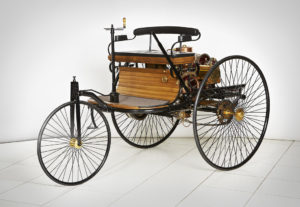
Benz Patentwagen

Year of Manufacture: 1885

Power: 1.5 hp

Displacement: 954 cm3

Number of Cylinders / Valves: 1

Weight: 260 kg

Condition: replica

Catalogue Number: 85


Karel Benz owned a successful factory, but rather than a businessman, he was an inventor. He constantly invented and improved his ideas and always wanted to build a vehicle powered by an engine, not horses. In 1885, he built a vehicle that crashed immediately during testing, so he continuously worked on improving it.

Satisfaction came in June 1886, when his wife Berta Benz proved that his Patentwagen was capable of driving by traveling 104 km in 13 hours, confirming the validity of the advertising slogan: “A full-fledged replacement for horse-drawn carriages.” With this feat, she secured not only fame for the family but also sufficient financial support. Benz then shaped the direction of the automotive industry for many years.

Although the automobile could not climb every hill, was not quiet, and did not smell pleasant, it still became popular and ultimately turned Benz from an inventor back into an entrepreneur. His company employed over 10,000 people. Benz contributed significantly to directing the global development of automobiles toward their current path.

Horse-less Carriage

The vehicle was powered by a four-stroke spark-ignition engine with a displacement of 0.954 liters. Many elements of this engine are found even in modern combustion engines. According to Benz’s measurements, the engine had a power output of 0.5 kW. For its time, it was an extremely light engine, weighing about 100 kg. It featured an open crankcase and a drip oil system. The vehicle consumed 10 liters of fuel per 100 km, using light gasoline called ligroin, which at that time was sold in pharmacies as a stain remover.

The entire vehicle was built as a three-wheeled velocipede. The front wheel was suspended on an unsprung fork and was steered by a crank. The wheels were supplied by the Adler bicycle factory in Frankfurt am Main. The wheels already featured ball bearings. Power transmission from the crankshaft to the rear wheels was done via two flat chains, left and right of a differential prototype. A flat belt, which also served as a clutch, drove the rear solid axle through elliptical springs connected to the vehicle frame. This first automobile had only one gear, consisting of a fixed disk and an integrated differential.

The exhibit in our collection is, of course, a replica; the original vehicle is displayed in an honored place at the Mercedes-Benz factory museum. A very well-made replica was purchased by Mr. Samohýl in England and is fully functional. Therefore, it can be seen on various occasions, admired for its movement and sound.


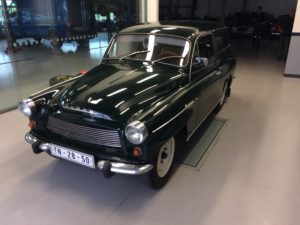
Škoda Octavia combi

Year of Manufacture: 1968
Power: 47 hp
Displacement: 1,221 cm3

Number of Cylinders / Valves: 4 / 2
Weight: 965 kg

Condition: drivable
Catalogue Number: 98

The Škoda Octavia Combi model was produced between 1961 and 1971.

This new Combi body variant appeared in 1960. It stood out with its spacious interior and flat cargo floor, quickly winning the hearts of users. The following year, the Škoda Octavia underwent a visual modernization, most noticeable at the rear of the vehicle. These cars became popular not only in their home country but also abroad. For its time, it was an affordable, reliable, and well-handling car.

It is a three-door, five-seat station wagon. It had a front-mounted engine and rear-wheel drive. It was equipped with a spark ignition, liquid-cooled inline four-cylinder engine. It produced 47 horsepower and had a mechanical four-speed manual gearbox, reaching a top speed of 120 km/h.

The version with the Tudor body ceased production in 1964 and was replaced by the new Škoda 1000 MB model. The Combi body versions remained in production until 1971.

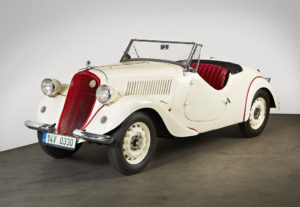
Škoda Popular roadster

Year of Manufacture: 1936
Power: 22 hp
Displacement: 995 cm3

Number of Cylinders / Valves: 4 / 4
Weight: 750 kg

Condition: excellent
Catalogue Number: 86


Development

Škoda 420 Standard

Produced between 1933–1934, this model introduced a new design concept derived from Tatra’s layout. This change brought Škoda great success, propelling the company from third place on the domestic market to the top spot after the economic crisis. The car featured a three-speed gearbox with synchronization on the 2nd and 3rd gears and lacked a differential. It had a four-stroke, water-cooled four-cylinder engine with a displacement of 995 cm3 and an output of 20 horsepower. Most vehicles were bodied as four-seater Tudors or open military cars. The top speed was 85 km/h with a fuel consumption of 7 l/100 km.

Škoda 418 Popular

This version was produced in 1934. The only difference compared to the 420 was the use of a smaller engine and a shorter chassis. The engine displacement was reduced to 903 cm3, resulting in 18 horsepower and a top speed of 80 km/h.

Škoda 420 Popular (Types 906/907, 916/917)

Manufactured from 1934 to 1937, this was the first model to bear the name “Popular” and also introduced a differential—though only available as an optional extra. Compared to the Škoda 420, the power slightly increased to 22 horsepower.

Škoda 420 Popular Sport (Type 908)

Produced in 1935, this car was developed specifically for the endurance race “1000 Miles of Czechoslovakia,” which ultimately did not take place. Only 20 vehicles were made on the 906 chassis.

Škoda Popular Sport Monte Carlo (Type 909)

Manufactured between 1935–1938, this model was named after one of the world’s most famous automobile races. It was created by replacing the standard Popular engine with a more powerful one from the larger Škoda Rapid (901). The combination proved to be excellent, leading the company to produce this model with Roadster, Roadster De Luxe, and Coupé Sport bodies. The car reached a top speed of 110 km/h with a consumption of 10 l/100 km.

Škoda Sagitta (Type 911)

Produced from 1936 to 1937, this was a prototype mini car built on a chassis derived from the Škoda 418. It featured a completely new air-cooled V-twin engine with a displacement of 845 cm3. The car could reach speeds of up to 70 km/h.

Škoda Popular was the brand’s most successful pre-war model, helping the company reach the top of the automotive industry.

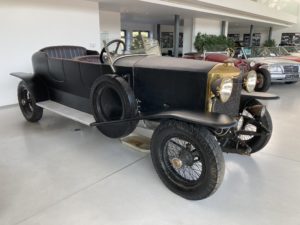
Austro–Daimler AD 6-17

Year of Manufacture: 1921
Power: 60 hp
Displacement: 4,426 cm3
Number of Cylinders / Valves: 6 / 2
Weight: 1,800 kg
Condition: operational
Catalogue Number: 101


Introduction
Austro-Daimler was an Austrian car manufacturer and a subsidiary of the German Daimler-Motoren-Gesellschaft, based in Wiener Neustadt. The company was founded in 1899, and in 1900, it produced its first automobile. In 1905, it became the first manufacturer in the world to build a car with all-wheel drive.

A key figure in the company’s history was Czech-born engineer Ferdinand Porsche, who became technical director in 1906 and later served as general director until 1923—a total of 17 years. During this time, he applied his undeniable engineering talent to all of the company’s products.


History of the AD 6-17 Model
After World War I, like many others, Ferdinand Porsche focused on designing a large luxury vehicle. This led to the creation of the Austro-Daimler AD 6-17 in 1921, produced until 1924. It was powered by a straight-six engine delivering 60 horsepower and was considered a luxury limousine at the time. The chassis was fitted with various body types, and the car’s spacious and robust design made it a favorite of Porsche himself and even the Swedish royal family.

Our specific vehicle was manufactured in 1921 and won its class in the prestigious Zbraslav–Jíloviště hill climb in 1922. The car was then owned and driven by Edgar Morawitz, who later became a factory driver for Bugatti and led a remarkable life story.


Restoration and Present Day
After decades and numerous foreign owners, the car eventually returned to the Czech Republic. It was acquired by Mr. Samohýl, and although only the chassis and an incomplete engine remained, the car underwent an extensive and meticulous restoration and is now in operational condition.

A symbolic return to the scene took place in 2020, when the vehicle once again participated in the Zbraslav–Jíloviště race. At the initiative of Mr. Ladislav Samohýl, the driver’s seat was taken by Wolfgang von Bremm, CEO of Mercedes-Benz Cars Czech Republic, who thoroughly enjoyed the ride and was genuinely impressed by the car.

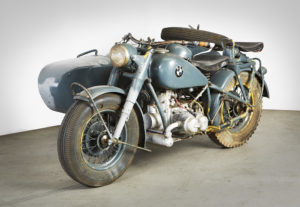
BMW R75

Year of Manufacture:  1942
Power Output: 26 hp
Displacement:  745 cm3

Number of Cylinders: 2
Weight: 400 – 420 kg (including sidecar)

Condition:  Excellent
Catalog Number: 89


Introduction

In 1938, the German Army High Command issued a requirement for the design and production of a motorcycle exclusively for military purposes. This was because the BMW R12 and R71 motorcycles were civilian models.


Development

The heavy BMW R75 Gespann motorcycles were originally intended to stir up dust on battlefields in North Africa and the Mediterranean. However, they were eventually used by Wehrmacht and Waffen-SS units on virtually all fronts. They became an integral part of the German army’s equipment.

In reconnaissance battalions, they replaced bicycles. Only insufficient production and fuel shortages delayed the full replacement by these military specials.

By the end of World War II, however, the expectations of Heinz Guderian—main architect of the German army’s tank doctrine and the theory of “Blitzkrieg”—were not fully realized, even though these rather clumsy yet very fast motorcycles would have fit his vision well. Allied bombing of Third Reich factory complexes further reduced production capacity and forced a reevaluation of priorities in weapon and equipment manufacturing.


Technical Specifications

The BMW R75 motorcycles were powered by air-cooled 2-cylinder boxer engines, the BMW M56 Baumuster 275, producing 19.1 kW. The first models were equipped with engines from the R71 type. The engines featured BMW’s characteristic outward-facing cylinders for better cooling. Compared to other manufacturers, who tried to hide the engine inside the frame, the R75 stood out as original and unconventional.

Engineers equipped the motorcycles with strong spoked wheels and car-type tires, interchangeable with small utility vehicles like the KdF. The tall wheels contributed to an unusually high ground clearance for the category. One of the most praised features was the rear-wheel drive system. Instead of a chain, a short cardan shaft was used. Acceleration and movement through difficult terrain were enhanced by drive to the fixed-mounted sidecar, with traction transferred through a rear transverse shaft. One-third of the total drive power was sent to the sidecar wheel, and two-thirds to the motorcycle’s rear wheel. A differential lock ensured optimal wheel speeds.

Maximum torque was achieved at 3,600 rpm. The gearbox had a unique layout: a standard four-speed forward gear setup, plus a lever beside the gear shifter on the rider’s right side—or a foot lever on the left side—allowed switching to a special off-road mode with three forward gears. Both modes included one reverse gear. Front suspension used telescopic forks, the rear wheel was rigid, and the sidecar wheel was suspended with a leaf spring. The braking system consisted of manual cable brakes and rear hydraulic drum brakes with a 25 cm diameter.

The R75’s power unit allowed for fording water up to 35 cm deep. Sensitive components were protected by special measures. The engines had Graetzin Sa carburetors with high water resistance. The spark plug was housed in a waterproof cover. The intake manifold and air filter were raised to prevent water ingress. The exhaust pipe led from the cylinder exhaust chamber to the right side of the motorcycle and was bent over the sidecar’s drive system. These motorcycles performed best in North Africa—earning the nickname “Sahara”—and on the dense road networks of Western Europe. In the Soviet Union, despite their reputation, they struggled with severe cold and mud (as did most German vehicles).

Electric power during operation was provided by a 70 W dynamo. Reliable ignition was supported by Noris ZG 2 or Bosch FJ 2R 134 coils, which, thanks to optimal sealing, could endure thousands of kilometers without maintenance. However, R75s performed poorly when towing light artillery—the front wheel would lift off the ground, rendering the vehicle uncontrollable.

Maintenance and parts replacement were simplified by the robust motorcycle design, with minimal welding. Welded joints were mostly used on the sidecar frame. The motorcycle’s tubular frame was bolted together. The connection between the motorcycle and the sidecar was also fully detachable—removable at four points even in field conditions.

The BMW R75 Gespann found use primarily with reconnaissance units, but also with motorized infantry and military police. These heavy motorcycles often led or closed columns and served as valuable tools for couriers and dispatch riders. Lockable boxes mounted on the motorcycle and sidecar were used for postal duties. Recon units and motorized infantry often used a sidecar-mounted MG 34 machine gun (caliber 7.92 mm). However, its ability to deliver fire was limited by its restricted range of motion.

The R75s were robust and reliable motorcycles—but disproportionately expensive. A single unit could cost twice as much as a four-wheeled Kübelwagen. Despite this, production continued even after the war (until 1946). Over more than five years, BMW delivered over 16,000 units of the R75, mostly in gray or sand camouflage. These German machines also appealed to other countries, especially the Soviet Union, where the popular IMZ M72 was produced based on the older R71. In China, the R71 was manufactured under the name Chang Jiang 750. In the U.S., the powertrain impressed engineers so much that Harley-Davidson developed the XA model based on the German R75.

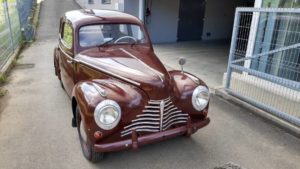
Škoda 1101 – Tudor

Year of Manufacture: 1948
Power Output: 32 hp
Displacement: 1089 cm3

Number of Cylinders/Valves: 4/2
Weight: 940 kg

Condition: Good
Catalog Number: 105

These passenger and light utility vehicles were produced in Mladá Boleslav and its branch factories, mainly in Kvasiny and Vrchlabí. The Škoda 1101 was a modernized version of the pre-war Škoda Popular 1101, differing primarily in its redesigned bodywork. Between 1946 and 1950, a total of 71,591 vehicles of all versions were produced, most of which were exported to various countries—chiefly Poland, the Netherlands, and Belgium.

Technical Specifications

Compared to its predecessor, the Škoda 1101 featured a slightly modernized engine with the same power output. Flexible Hardy couplings on the drive shaft were replaced with universal joints, and the original friction dampers on the front axle were replaced with hydraulic lever dampers. A four-speed gearbox was fitted as standard. A completely new dashboard replaced individual gauges with a combined instrument cluster, and a grille in the center was prepared for the installation of a car radio. The vehicle was not equipped with a heater as standard (except for the ambulance version).

Vehicle Development

The Škoda 1101 was a modernized version of the Škoda Popular 1101 from 1939. The most modern pre-war model of the Mladá Boleslav automaker was produced from 1940 to 1944. The development of this vehicle took place secretly during the war. A 1944 brochure already depicted the vehicle with a body design very similar to the future production version. The final shape was established in 1945, shortly after the end of the war.

Production Versions

The unfinished first prototype, built on the old Popular 1101 chassis, was presented to journalists at the end of 1945. It was completed in March 1946 and then went on a promotional tour across Czechoslovakia. This first car had a Tudor body. Between April and October 1946, body variants including ambulance, roadster, four-door sedan, Tudor convertible, and van were gradually introduced.

Modernization

In October 1947, a prototype roadster was unveiled with a new grille design consisting of five prominent ribs. This grille was subsequently fitted to all production roadsters and sedans. Other passenger versions began receiving the new grille from 1948. In mid-1950, a new two-spoke steering wheel began to be installed.

Škoda 1102

This updated version was introduced in April 1949. It was nearly identical to the 1101 model, differing mainly in the relocation of the gear lever from the floor to the steering column beneath the steering wheel. Another change was a new front bumper integrated with the bodywork. However, the 1102 model did not replace the older type. Passenger versions (primarily four-door sedans) were built as 1102s, while utility versions were mostly built on the 1101 chassis.


Mercedes Benz 380

Year of Manufacture: 1933
Power Output: 120 hp
Displacement: 3769 cm3

Number of Cylinders/Valves: 8/2
Weight: 2050 kg

Condition: Operational
Catalog Number: 94

It should be emphasized that the Mercedes-Benz 380 is a true rarity, with this particular body style reportedly produced in only two units. Its elegance was recognized in 1933 at the Concours d’Elegance in Barcelona, among other accolades. According to foreign expert literature, only about five examples of all versions of this model have survived in European collections.

The era of a new generation of high-performance sports cars powered by supercharged inline OHV eight-cylinder engines—immortalized particularly in the form of the sleek Mercedes-Benz 500 K and 540 K roadsters—began in February 1933 with the introduction of the Type 380, internally designated as W 22.

Technical Specifications

This is a liquid-cooled inline petrol OHV eight-cylinder engine with a displacement of 3,769 cm3. It featured a four-speed manual transmission with overdrive. The operational weight was approximately 2,050 kg, and the top speed reached up to 137 km/h. Average fuel consumption was around 25 liters per 100 km. From summer 1933, a more powerful version with increased supercharger pressure was offered, delivering up to 140 hp.

Development

The model was based on the modular design of the Type 290. This intermediate model inherited, among other things, solid axles and mechanically operated brakes from the original Mannheim.

The next stage of development, designated W19, featured a significantly more modern chassis with independent suspension on all wheels and a hydraulic braking system. Twenty units were produced, none of which appeared in official catalogs or price lists—similarly to the fourteen subsequent W20 vehicles.

The public first saw the Type 380 W22, which mainly differed by its OHV valve system, twin carburetors of in-house design, and an optional supercharger. When activated, the supercharger temporarily increased power output from 90 to 120 hp during acceleration. Unlike its visually similar successors—the 500 K series—the W22 is easily distinguishable by the absence of the signature “flying goose necks” (external exhaust manifold covers). The engine was also positioned further forward in the chassis compared to its predecessors.

Interesting Facts

The manufacturer anticipated demand for custom-built bodies in this upper-class vehicle segment. On a chassis costing 13,000 Reichsmarks, a number of unique creations were made.

Vehicles with factory bodies were priced uniformly at 19,500 Reichsmarks—equivalent to the cost of four Type 200 sedans.

However, it became evident that the 3.8-liter engine was not quite sufficient for the expectations of a vehicle in this class. This soon led to further development of the model line—ushering in the legendary pre-war Mercedes models, the 500K and especially the 540K. But those belong to another chapter.


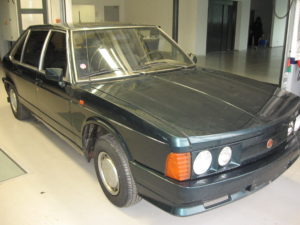
Tatra 613

Power: 167 hp
Displacement: 3,495 cm3

Number of cylinders/valves: 8/2
Weight: 1,690 kg

Condition: operational
Catalogue number: 99

This is a representative limousine of the upper-middle class, produced by the Tatra car manufacturer between 1974 and 1995 as the successor to the second-generation Tatra 603. The first prototypes were built as early as 1969.

History

It is among automotive legends and is exceptional both in its design and its history. The car was developed in Czechoslovakia as a representative vehicle intended primarily for top state officials and members of the ruling Communist Party. The vehicle was not available to the general public. It was manufactured in small series in Tatra’s branch plant in Příbor, which also made production very expensive. After the development ended in 1973, the car entered production and, in a modernized version, was manufactured until 1995, when it was replaced by the last passenger car of the Tatra brand, the Tatra 700.

Technical Specifications

The Tatra was known as a fast, spacious, and comfortable vehicle with a responsive 2×2 OHC carbureted engine with a displacement of 3.5 liters and a power output of 168 hp. It could reach speeds of up to 190 km/h. Later, small numbers of more powerful engines with higher displacement appeared. Toward the end of production, engines with fuel injection and outputs of up to 200 hp were introduced. These cars could reach speeds of up to 230 km/h. Initially, the gearbox was four-speed, and in the final models, a five-speed transmission was used. Most of the vehicles had sedan-type bodies, but other versions were also made, such as coupés, two-seaters for rescuers and firefighters, ambulances, utility vehicles, police cars, and special ceremonial landaulettes.

Prototypes

Many sports-bodied prototypes were also built based on the Tatra 613’s technical platform. The most famous of these is the MTX Tatra V8 from 1991. Another attempt at modernizing the model line was the Tatra Prezident prototype.

Production

In total, only about ten thousand vehicles of all versions were produced, which, along with its original technical concept, makes the Tatra 613 unique.

However, with the change in the political system and, most importantly, the unrestricted availability of vehicles produced west of our borders, the exclusivity of these representative Tatra cars came to an end. That doesn’t change the fact that, in its time, this was the most luxurious car produced in socialist countries, and it’s a pity that it was also the last model, effectively ending Tatra’s production of passenger cars.


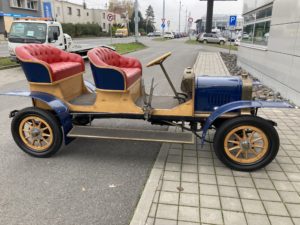
Laurin & Klement B Voiturette

Year of Manufacture: 1907 Power: 9 hp Displacement: 1,399 cm3

Number of Cylinders/Valves: 2/2

Condition: perfect Catalog Number: 165

The Laurin & Klement Voiturette B is the successor and continuation of the very first serially produced car in the Austro-Hungarian monarchy – the Voiturette A. Let us recall the history of the automobile’s origin on Czech territory.

In 1894, two Václavs, Klement and Laurin, began repairing bicycles in Mladá Boleslav. The following year, they started manufacturing them under the brand Slavia. The next logical step for this very ambitious company was the transition to motorcycle production. By 1899, they had their first motorcycle ready for production. The start of their business was not easy from a commercial perspective. Eventually, it succeeded, and motorcycles sold under the Slavia brand gained great respect and became an excellent commercial product. Thanks to these successes, the small workshop turned into a prosperous factory with an excellent reputation and a range of quality products. By 1905, Laurin & Klement offered nine different types of motorcycles, from twin-cylinder to four-cylinder engines. They had no competition within the then monarchy.

Meanwhile, the time came for another crucial step: the move to automobile production. It was a long road with many development stages. At the April 1905 auto show, Messrs. Klement and Laurin presented their new engine: a V-twin. This was a sign that production of their own car was imminent. Of course, it was based on a motorcycle engine but also met the requirements for powering a true automobile.

By the end of that year, complete functional cars were ready in a verifiable quantity of two units (some contemporary sources even mention three). They were intended for test drives and demonstrations, and their photographs appeared in newspapers of the time. Interestingly, the manufacturer at the time was deciding between rear axle drive by chains or a cardan shaft. Today, this seems amusing, but back then practical experience was lacking, so everyone followed their own path. Only after testing and customer feedback was the proven solution chosen. The car used the French designation “voiturette,” used in the pioneering days for small and light, mostly two-seater, vehicles. The original type still carried the “A” designation. The Mladá Boleslav “A” exactly matched this class. The car was type-approved on January 18, 1906, and officially presented to the public at the 2nd Prague Auto Show in April 1906.

Messrs. Laurin and Klement were guided in the construction of this vehicle by the idea that the car must be popular, i.e., accessible to a broader group of customers than was usual at the time. The automobile was a very luxurious affair back then. Eventually, they succeeded in creating a very attractive, elegant, and practical car at an excellent technical level, which many customers could afford at the offered price. The first Voiturette A is described in detail under catalog number 2 in our collection. So, how did the “B” type in our collection differ from the “A” type?

The car has a larger, four-seat open body mounted on a ladder frame made of pressed sheet metal. The four-stroke, two-valve engine with SV valve timing located at the front is structurally identical to its original predecessor. However, the car has an increased displacement of 1,399 cm3, and power increased from 7 hp to 9 hp. All other parameters were identical to the “A” type, and most parts and components were interchangeable. The car also achieved the same operating parameters.

Thanks to the larger chassis, its usage possibilities expanded. Mainly, the option of a four-seat body and use as a delivery vehicle. In fact, two flatbed trucks were even produced. Over three years, an incredible number of these cars were manufactured — exactly 250 units — which was unprecedented at that time.

Both types of these first cars contributed to the development of motorization and stood at the beginning of car production in our country.