Showing 17–32 of 146 results

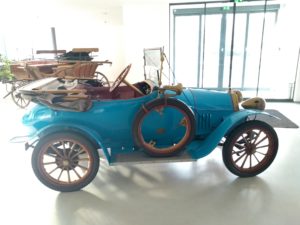
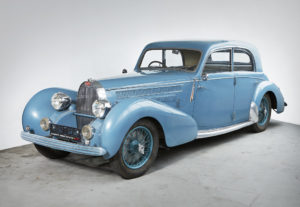
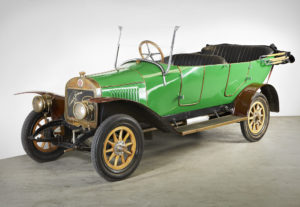
Laurin & Klement, Se

Year of Manufacture: 1913
Power:
Engine Displacement:

Number of Cylinders/Valves:
Weight:

Condition: drivable
Catalog Number: 90

History

Between 1913 and 1914, efforts at the Mladá Boleslav factory began to focus on rationalizing production. The threat of an invasion of American cars into Europe was becoming increasingly serious, so car manufacturers with foresight prepared defenses, or even counterattacks. Achieving the production numbers of American factories was not feasible under the economic conditions in Europe at the time, but organizing efficient production of small, inexpensive cars was realistic—cars that could better meet domestic needs than imported vehicles.

Technical Data

On an extended chassis originally designed for a two-cylinder engine, a compact four-cylinder open car was developed with many significant technical and design modifications. Its production was carried out in several small series. One of many variants was an open, sporty, four-seat phaeton body style with undivided seats and a lightweight American-style roof.

Development

In Mladá Boleslav, the Type S hit the mark. Demand for this fast and solid car was growing.

In 1913, the Sd, Se, and Sg series started using more powerful engines. The original stroke of 115 mm was increased to 120 mm, and engine power rose from 14 hp to 20 hp. More cars of the S type were produced in 1913 than all other types combined.

In 1914, for the Sh and Sk series, the bore was increased from 70 mm to 74 mm, and power rose to 24 hp.

In the spring of 1914, a new car type called T was introduced. This small yet solid car attracted attention from the general public and experts alike. The engine was a four-stroke four-cylinder delivering a maximum power of 12 hp from a displacement of 1,220 cm3. The car could reach speeds up to 60 km/h.

In the class of larger cars, the Mladá Boleslav factory prepared several newly designed models just before the war. In 1913, the Type M was introduced, featuring a four-cylinder engine with a displacement of 3,802 cm3 and a maximum power of 40 hp. The related Type MO was used for mounting military ambulance bodies.
Mercedes Benz SLS AMG

Year of Manufacture: 2010
Power: 571 hp
Engine Displacement: 6,208 cm3

Number of Cylinders/Valves: 8/4
Weight: 1,620 kg

Condition: Excellent
Catalog Number: 10

The Mercedes-Benz SLS AMG was developed as a no-compromise super sports car, replacing the Mercedes-Benz SLR McLaren in the lineup. The SLS is the first Mercedes fully developed by AMG and is considered the spiritual successor to the legendary 1950s Mercedes-Benz 300SL Gullwing.

The vehicle was unveiled at the IAA in 2009, with sales beginning in mid-2010.

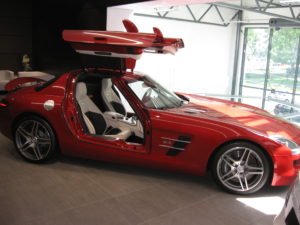
The SLS AMG was designed as a modern evolution of the 300SL Gullwing, closely following its design cues. The car features a long hood, a passenger compartment set close to the rear axle, and a short rear end. The SLS AMG also has specially adapted gullwing doors that open upwards on gas struts—not in a combined upward-and-forward motion like its predecessor, the SLR. The doors must be closed manually, a clear choice for the sports driver, with every kilogram saved on electric mechanisms counting.

The car was ultimately produced in several versions and variants. One of the most famous is the racing version SLS AMG GT3, designed for international FIA circuit racing. It was even used for several seasons in Formula 1 as a pace car and safety car.

The engine is a naturally aspirated 6.3-liter V8 producing 570 hp. The standard transmission is the semi-automatic seven-speed AMG SPEEDSHIFT DCT. Standard brakes measure 390 mm at the front and 360 mm at the rear. Optional larger carbon-ceramic disc brakes were available, offering increased braking performance with a 40% weight reduction compared to the standard braking system.

The car accelerates from 0 to 100 km/h in 3.8 seconds and reaches a top speed of 317 km/h.

Although conceived and designed as a true super sports car, it could also be used as a daily driver for work or city driving, with a fuel consumption of around 12 liters per 100 km.

The exhibited car belongs to the historical vehicle collection of the Samohýl family and is part of the so-called “holy trinity” of Mercedes-Benz vehicles with upward-opening doors, also referencing the shape of a flying seagull’s wings.

Mercedes Benz E 200 W124

Year of Manufacture: 1995
Power: 136 hp
Engine Displacement: 1,998 cm3

Number of Cylinders/Valves: 4/4
Weight: 1,630 kg

Condition: Excellent
Catalog Number: 37

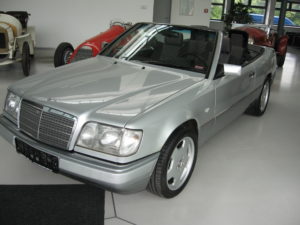
The Mercedes-Benz E-Class, internally designated as the W 124, is one of the most successful model lines in Mercedes-Benz history. It was introduced to the market in 1985, with official production ending in 1997. An incredible total of 2,562,143 units were produced across all variants.

This vehicle belonged to the mid-size class and was produced as a sedan, estate (wagon), coupé, and cabriolet. It was equipped with a wide range of engines—from basic four-cylinder carbureted gasoline versions to the top-tier 500E with a V8 engine. All diesel engines made by the company at that time were also fitted into this model. Versions with four-wheel drive under the 4-Matic badge were also produced, marking a Mercedes-Benz first. During development, great care was taken to ensure the car was very advanced in many respects and set trends for automotive development. It featured excellent aerodynamics and chassis designs previously used only in higher-class vehicles. It stood out with a high level of safety. Its main strength was incredible reliability due to the quality of craftsmanship and the materials and technology used. When you look at these cars today in any version, the timelessness of their design is obvious.

And the most interesting model of the W 124 series? Definitely the 500E sedan with a 5-liter V8 engine and 32 valves. This unassuming sedan hid a pure sports car with excellent performance. Interestingly, Porsche was involved in its development and production, which speaks volumes.

The chassis design, which was already top-class in standard versions, was further improved here. Front double wishbones and elastokinematic five-link rear suspension are still hard to beat in this class today. It was an excellent base for building a powerful model, as the 500E clearly demonstrated. Sitting inside the impeccably finished interior, starting the engine, and driving off was a dream for many people in the early 1990s. The car’s rigidity is impressive, appearing carved from granite. The chassis offers great road contact yet filters out irregularities excellently. This car is rightly considered the pinnacle of German engineering of the time. The entire vehicle was crafted with extreme care.

It accelerates from zero to 100 km/h in 5.5 seconds. The engine not only offers contemporary performance but is also very advanced technically. It is made entirely of aluminum, has continuous variable intake valve timing, and a CAN-Bus control unit. A four-speed automatic transmission manages the shifting. Not all technical features were embraced by customers; for example, the traction control system was not switchable until 1994, which understandably annoyed driving enthusiasts.

Production of a single car took a solid 18 days, and due to strict quality controls and production complexity, the 500E cost a full 2.5 million CZK when new. Even at that price, it did not turn a profit.

And the cabriolet model? It premiered in September 1991. It was a four-seater convertible—the first in this series in nearly two decades. The car, internally coded A124, was structurally based on the coupé. The biggest weakness of open-top cars—body torsion—was eliminated with four vibration dampers. The entire body was reinforced and significantly modified.

Since the cabriolet lacked both B and C pillars, the front pillars had to be suitably strengthened. Safety in case of rollover was ensured by a special protective system of two deployable segments behind the rear seats, which also served as headrests. If the electronics detected an imminent rollover, these headrests deployed automatically within just 0.3 seconds. They could also be manually activated by the driver.

The folding roof consisted of 27 parts and 34 joints but occupied only 80 liters of trunk space when folded. The roof had to be operated manually unless the owner paid extra for electro-hydraulic control. Initially, only the 300 CE-24 Cabriolet version was produced, starting in 1992. Later, additional engine versions were added. Even today, it remains a very beautiful and unmistakable car.

Owners of all these W 124 series cars remember them fondly, and for many, they represent something like the last truly mechanical cars before the massive arrival of electronic and electric features in today’s automobiles.

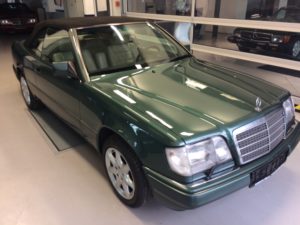
Mercedes Benz 300 CE – 24 W124

Year of Manufacture: 1993
Power: 220 hp
Engine Displacement: 2,962 cm3

Number of Cylinders/Valves: 6/4
Weight: 1,710 kg

Condition: Excellent
Catalog Number: 38

The Mercedes-Benz E-Class, internally designated as the W 124, is one of the most successful model lines in Mercedes-Benz history. It was introduced to the market in 1985, with official production ending in 1997. A remarkable total of 2,562,143 units were produced across all variants.

This vehicle belonged to the mid-size class and was available as a sedan, estate (wagon), coupé, and cabriolet. It featured a wide range of engines—from basic four-cylinder carbureted gasoline versions to the top-tier 500E with a V8 engine. All diesel engines produced by the company at the time were also used in this model. Some versions were equipped with four-wheel drive under the 4-Matic badge, marking a Mercedes-Benz first. From its development stage, the car incorporated many advanced features and set benchmarks for future vehicles. It had excellent aerodynamics, and the chassis used design elements previously found only in higher classes. The car stood out for its high level of safety. Its greatest asset was incredible reliability, thanks to quality craftsmanship, premium materials, and advanced technology. When you look at these cars today, their timeless design is unmistakable.

The most interesting model of the W 124 series? Definitely the 500E sedan with a 5-liter V8 engine and 32 valves. This unassuming sedan hid a true sports car with excellent performance. Notably, Porsche participated in its development and production, which speaks volumes about its qualities.

The chassis construction, which was already top-notch in standard versions, was further improved here. Front double wishbones and elastokinematic five-link suspension at the rear are still hard to beat in this class today. The car provided a solid foundation for a powerful model, which the 500E clearly demonstrated. Sitting in its impeccably finished interior, starting the engine, and driving off was a dream for many in the early 1990s. The car’s rigidity is impressive, feeling like it was carved from granite. The chassis offers greater road contact while filtering out irregularities excellently. It is rightly regarded as the pinnacle of German engineering of that era. The entire vehicle was crafted with extreme care.

It accelerates from zero to 100 km/h in 5.5 seconds. The engine not only delivers modern power but is also highly advanced technically. It is made entirely of aluminum, features variable valve timing on the intake valves, and uses a CAN-Bus control unit. Gear shifting is managed by a four-speed automatic transmission. Not all technical features were welcomed by customers; for example, the traction control system was not switchable until 1994, which understandably annoyed driving enthusiasts.

Production of one vehicle took a thorough 18 days, and due to strict quality controls and the complexity of production, the 500E cost 2.5 million CZK when new. Despite this price, it was not profitable.

And what about the cabriolet model? It premiered in September 1991. It was a four-seater convertible—the first in this series in nearly two decades. The car, with the internal code A124, was based structurally on the coupé. The biggest challenge with open-top cars—body torsion—was countered with four vibration dampers. The entire body was reinforced and heavily modified.

Because the cabriolet lacked both the B and C pillars, the front pillars had to be reinforced. Safety during rollovers was ensured by a special system of two deployable roll bars behind the rear seats, which also served as headrests. If the electronics detected an imminent rollover, these bars deployed automatically within just 0.3 seconds. They could also be manually activated by the driver.

The folding roof consisted of 27 parts and 34 joints but occupied only 80 liters of trunk space when folded. The roof had to be operated manually unless the owner opted for the electro-hydraulic system. Initially, only the 300 CE-24 Cabriolet version was produced, starting in 1992. Later, additional engine variants were added. Even today, it remains a very beautiful and unmistakable car.

Owners of all W 124 series vehicles remember them fondly, and for many, they represent the last truly mechanical cars before the widespread arrival of electronic and electric technologies in today’s automobiles.

Mercedes Benz E200 W124

Year of manufacture: 1994 Power: 136 hp Displacement: 1,998 cm3

Number of cylinders/valves: 4/4 Weight: 1,630 kg

Condition: perfect Catalog number: 44

The Mercedes Benz E-Class, internally designated as W 124, is one of the most successful model series in the history of Mercedes Benz production. It was introduced in 1985 and officially ended production in 1997. In total, an incredible 2,562,143 units were produced in all versions.

The car belonged to the mid-size class and was gradually produced in sedan, station wagon, coupe, and cabriolet versions. It featured a wide range of engines, from basic four-cylinder carbureted gasoline engines to the top-of-the-line 500E V8 engine. All diesel engines produced by the company at the time were also installed. Models with four-wheel drive under the 4-Matic designation premiered with Mercedes–Benz. From the development stage, emphasis was placed on making it very advanced in many respects, setting the trend for future cars. It had excellent aerodynamics. The chassis incorporated constructions previously only used in higher-class cars. It excelled in safety. Its main advantages were incredible reliability due to the quality of workmanship, materials, and technology used. When you look at these cars in any version today, the timeless overall design is obvious.

And the most interesting model from the W 124 series? Definitely the 500E sedan with a 5-liter V8 engine and 32 valves. Hidden inside the inconspicuous sedan was a pure sports car with excellent performance. Interestingly, Porsche was involved in its development and production, which speaks volumes.

The chassis design in the regular versions was already top-notch, and here it was further improved. Front double wishbones and elastokinematic five-link rear suspension. It is hard to find anything better in this class even today. It was an excellent base for building a powerful model, which the 500E clearly proved. Sitting in the impeccably finished interior, starting the engine, and driving off was a dream for many in the early 1990s. The car’s rigidity is noticeable during driving, making it feel as if carved from granite. The chassis provides excellent road contact while filtering out bumps superbly. It’s no wonder this car is considered the pinnacle of German engineering of its time. The entire car’s workmanship is extremely meticulous.

This car accelerates from zero to one hundred in 5.5 seconds. Besides offering modern performance, the engine is also technically advanced. It is all-aluminum, has continuous variable valve timing on the intake valves, and features a CAN-Bus control unit. Gear shifting is handled by a four-speed automatic transmission. However, not all technical features were well received by customers. For example, the traction control system could not be disabled until 1994, which understandably annoyed driving enthusiasts. Manufacturing one car took a solid 18 days, and due to strict quality controls and demanding production, the 500E cost a full 2.5 million CZK new. Even at this price, it did not make a profit.

And the cabriolet model? It premiered in September 1991. It was a four-seater convertible, the first in this series after nearly two decades. The car with the code designation A124 was based structurally on the coupe. The biggest weakness of convertibles — body flexing — was eliminated by using four vibration dampers. The entire body was of course reinforced and significantly modified.

Since the convertible lacked both the central and rear pillars, the front ones had to be properly reinforced. A special protective system of two deployable segments behind the rear seats, which also served as headrests, guarded safety in case of rollover. If the electronics detected a rollover, these headrests activated automatically within just 0.3 seconds. They could also be manually activated by the driver.

The folding roof construction consisted of 27 parts and 34 joints, but when folded, it occupied only 80 liters of trunk space. The roof had to be operated manually unless the owner paid extra for electro-hydraulic control. Initially, only the 300 CE-24 Cabriolet version was produced. Its production started in 1992. Later, other engine versions were added. Even today, it remains a very beautiful and unmistakable car.

Owners of all W 124 series cars remember them fondly, and for many, they represent the last truly honest mechanical cars before the massive advent of electronic and electric features in today’s automobiles.

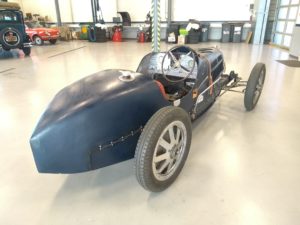
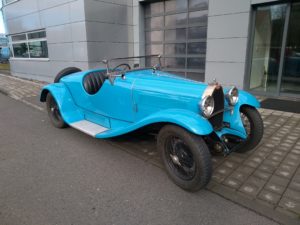
Bugatti 35A GP

Year of manufacture: 1927
Power: 70 hp
Displacement: 1991 cm3

Number of cylinders/valves: 8/3
Weight: 750 kg

Condition: functional
Catalogue number: 55

The most famous Bugatti T35 model

For the first fourteen years of its existence, the Bugatti brand was one of many small car manufacturers producing limited numbers of vehicles that achieved promising results on racing tracks. Everything changed in August 1924, when the factory presented the Bugatti T35 racing car at the Grand Prix in Lyon, which later achieved phenomenal success and won more than 2000 races – including twenty-one Grand Prix categories. Among the prominent winners were names like Tazio Nuvolari, Louis Chiron, William Grover-Williams, or René Dreyfus – and of course also our Mrs. Eliška Junková. Her greatest achievement is considered to be the absolute 5th place at the Sicilian Targa Florio in 1928. The sad truth is that her husband Čeněk Junek died at the Nürburgring on July 15, 1928, precisely in a Bugatti T35B. Visually unmistakable “bugattas” got radiators in the shape of a narrow horseshoe, and when they were retired from racing tracks, they were often converted by fitting sports touring bodies and further served as spare or service vehicles. In the former Austro-Hungarian territory, the sale of 22 versions of Bugatti T35 is documented, of which about two T35, three T35B, and a few T35C were in Czechoslovakia. After 1989, two T35A were imported to the Czech Republic.

The blue Bugatti

The Bugatti T35 was born at a time when the two-liter engine rule began to apply for Grand Prix cars. Ettore Bugatti drew an elegant long straight-eight engine on a clean sheet of paper, which first appeared in the T28 prototype (in 1921) and then mainly in the racing T30 (1922–1926). It had an OHC valve train with three valves (two intake, one exhaust) per cylinder. The lightweight engine was a mechanical jewel and its production required precise and meticulous work. Numerous plain bearings needed spray lubrication, thus suffering significant wear with the necessity of frequent replacement. Compared to the mentioned predecessors, the T35 model achieved up to 30% higher RPM. Camshafts, crankshafts, connecting rods, bearings, and lubrication had to be changed. Also characteristic were the factory-supplied eight-spoke aluminum alloy wheels with integrated brake drums, which gave the car its characteristic look forever typical of Bugatti.

Bugatti T35A

In December 1924, the racing Bugatti T35B cost 100,000 francs, which only truly wealthy buyers could afford. Therefore, in May 1925, the factory introduced a cheaper version, the T35A. Although it looked visually like the T35B Grand Prix, some of its components came from the original T30 (for example, the crankshaft bearing with three bearings). The engine blocks and eight smaller cams were somewhat different from the T30. The 35A model was without a supercharger, thus having lower power and greater durability. Cars were delivered with wire-spoke wheels (solid and aluminum wheels were extra). The T35A cost “only” 65,000 francs. It was called a “Course Imitation“, an imitation of a racing car. Between 1925–1927, 124 were sold, compared to 87 purebred T35B in the same period. In total, 139 Bugatti T35A were built. This particular Bugatti T35A is in original condition, comes from 1925, has 75 hp, and was originally delivered to a customer in the Netherlands.

Other versions and supercharger

The “Patron” (= Ettore Bugatti) decided to build the Bugatti T35T (T for Targa) because he wanted his team to succeed in the most demanding race, the Sicilian Targa Florio in 1926. Therefore, he increased the engine stroke by 100 mm, achieving a displacement of 2,262 cm3. The effort succeeded, and three factory T35Ts raced at the front, finishing in the order Costantini, Minoia, and Goux – fifth was Dubonnet in a private car. A total of 12 racers finished, 7 of them in cars built in Molsheim. Bugatti similarly performed well in other years’ Targa until 1930. Only 7 T35T units were built, as the Grand Prix regulations limited engine displacement to two liters. Between 1927-1930, 45 T35B models were produced, which were nothing more than T35Ts additionally equipped with a Roots supercharger, allowing the 2,262 cm3 engine to produce a maximum power of 138 hp. The first supercharger drawings are dated May 1926. The car won the 1929 French Grand Prix. The T35B had, compared to other types, a somewhat larger radiator, whose position was moved forward. Another version was the Bugatti Type 35C from 1927–1930. It was a T35 type with a 1,991 cm3 engine equipped with a Roots supercharger, which produced a maximum power of 127 hp – a total of 50 units of the T35C type were built, and these won the French GP in 1928 and 1930. The truth is that individual versions, as well as related T39 and T43, can sometimes be very difficult to distinguish from each other, because Ettore Bugatti already at that time used the same parts and components for several types of these cars, which reduced production costs and unified parts. In this respect, he was far ahead of his time, as others resorted to similar practices many years later.


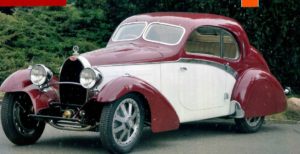
Bugatti La Mouche 37 A

Year of Manufacture: 1926 Power: 90 hp Displacement: 1,496 cm3

Number of Cylinders/Valves: 4/3 Weight: 700 kg

Condition:   Catalogue Number: 62

Type 37 was derived from the more famous eight-cylinder Type 35 from 1924, which is still considered the most beautiful racing car of all time. However, with the newer Type 37, Ettore Bugatti gave private racing drivers the chance to acquire a quality racing car at a relatively affordable price. The Type 35 was a racing special and thus very expensive. At that time, anyone wanting to race privately with a Bugatti had to have a lot of money. The “37” followed the path of simpler technical solutions and cost-saving production methods, making it accessible to amateur drivers who wanted to experience real racing. The commercial success of this model proved the correctness of this approach. About 290 units of the Type 37 were produced, including 67 units of the supercharged 37A. However, figures vary across sources.

Technically, it was a typical Bugatti, similar to most models. The inline four-cylinder 1.5-liter engine with two intake and one exhaust valve was available either supercharged (37A) or naturally aspirated (37), producing 90 hp at 5500 rpm or 60 hp, respectively. The chassis featured rigid axles: the front axle was sprung by longitudinal semi-elliptical leaf springs, the rear by quarter-elliptical springs. A special feature was the forged hollow front axle through which the leaf springs passed — a technically demanding but beautiful solution. The brakes were mechanical with compensation for braking force on all wheels. In the late 1920s, it was among the best racing cars in the up to 1.5-liter category.

The Story of Our Car in the Collection:

Since this is the only produced example with this body style — a precursor to the famous Coupe de Napoleon bodies — this car is a historical and collectible rarity.

Technically, it is a two-door, two-seat coupe. The engine is an inline four-cylinder with a displacement of 1496 cm³, equipped with a supercharger producing 90 hp, making it the more powerful variant than the 37A. The car can reach a top speed of up to 180 km/h.

The chassis was manufactured in 1926 and sold to Paris. A unique body was then designed and mounted on this chassis by the company Milion–Guiet. The body was designed by Jean Antoine Augustin de Vizcaya, who patented it. The first owner in 1927 was the Brazilian ambassador in Paris, Count de Souza Dantas. The car’s body, known to many as “La Mouche” (the Fly), offers little comfort since it is built on a racing chassis. This gave the car great power and speed for its time compared to other commonly produced cars. The entire body is made of aluminum. An interesting feature is the removable roof section, which can be stored behind the seats, creating a “semi-convertible.” The upholstery is made of corduroy and leather. From today’s perspective, the car looks miniature, and it is difficult to sit comfortably inside, let alone travel in it. Traveling in this car was probably a small adventure, but many enthusiasts today would give a lot for such an experience, despite fully comfortable cars with all modern equipment, electronics, and comfort. Of note is the large fuel tank mounted behind the cabin, secured by straps and with a separate spare tire fastened on top by leather belts — a fantastic solution from today’s viewpoint.

The car itself has had a turbulent and complicated history, including being rebuilt and restored. In incomplete condition, it eventually arrived in the Czech Republic in the 1990s and was restored to its current, almost original condition in the workshops of the Samohýl company. It is now a highlight of our Bugatti car collection.


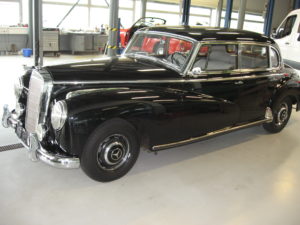
Mercedes Benz 300 Adenauer

Year of Manufacture: 1954 Power: 115 hp Displacement: 2,996 cm3

Number of Cylinders/Valves: 6/2 Weight: 1,780 kg

Condition: drivable Catalogue Number: 95

History

Six years after the end of World War II, in April 1951, the Stuttgart company continued the tradition of its luxury automobiles. In the same year, the Spanish supercar Pegaso from the former Barcelona Hispano-Suiza factory and the Bugatti type 101 also debuted.

Technical Specifications

The first version offered a naturally aspirated three-liter six-cylinder engine producing 115 hp. The short-stroke power unit differed from the smaller 220 series by having the crankshaft supported on seven bearings instead of four. By modifying the arrangement and angle of the valves (OHC), better cylinder filling and scavenging were achieved. The oil/water heat exchanger accelerated oil warming, which was especially useful during cold starts. Similar to the 220 type, the dashboard included an octane selector, a mechanical ignition timing adjustment according to the fuel type or octane rating. The innovative two-spoke steering wheel with a large diameter of 440 mm and the column-mounted gear lever contrasted with the X-shaped chassis frame and wheel suspension, which were based on pre-war designs.

Development

In March 1954, the W 186 series received its first update, designated 300 b. Power increased by 10 hp, and the reported fuel consumption dropped to 12.5 liters, though in practice it hovered around 16 liters.

In September 1955, the 300 c version took over, benefiting from a number of changes, including a single-joint rear axle. An automatic three-speed transmission with a hydrodynamic torque converter was optionally available. Only by the mid-1950s did the renowned manufacturer stop charging extra for heating in its flagship model.

The most significant changes came with the last version, the 300 D with internal designation W189. Power was increased to 160 hp. Thanks to larger glazing, the car offered significantly better visibility. The automatic transmission was upgraded with a fourth gear and became part of the standard equipment.

In September 1958, power steering was added.

Interesting Facts

It is impossible to omit the prominent users of the 300 series.

The first was long-time Federal Chancellor Konrad Adenauer, who initiated the construction of German highways even before Hitler and owned six different service 300 models. For this reason, this type of car is known among collectors as the “Adenauer.”

In 1960, Pope John XXIII took the extended 300 D landaulet with a raised throne.

Among the few Czech celebrities who used the W 186 series were personalities such as Josef Lada and Jan Werich.

Our Adenauer car was purchased in Switzerland in a somewhat different condition and color. It was finally decided to restore it to a condition typical for this car. The vehicle is in perfect drivable condition and is a beautiful example of this model series.


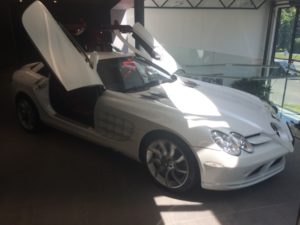
Mercedes Benz SLR McLaren W199

Year of Manufacture: 2004 Power: 617 hp Displacement: 5,439 cm3

Number of Cylinders/Valves: 8/3 Weight: 1768 kg

Condition: perfect Catalogue Number: 51

The Mercedes-Benz SLR McLaren is a car belonging to the Grand Tourer category, developed jointly by Mercedes-Benz and the British automaker McLaren Automotive. It was sold from 2003 to 2010. At that time, both companies closely collaborated in Formula 1 racing, making this car a natural continuation of their partnership. SLR stands for “Sport Leicht Rennsport” (Sport Light Racing) and is a tribute to the legendary Mercedes-Benz 300 SLR racing car from the 1950s.

A total of 2,157 units of this car were produced in all its variants. Interestingly, the company originally planned to manufacture 3,500 units at an annual production rate of 500 cars. These numbers were never reached, and production was eventually stopped earlier.

The base version was a two-door, two-seat coupe. However, a roadster and a racing GT version were also available. One of the limited editions (called the 722 Edition) referred to the famous victory of English driver Stirling Moss with co-driver Denis Jenkinson in the Mercedes-Benz 300 SLR with starting number 722 at the Mille Miglia in 1955. There was even a special edition called the SLR Stirling Moss, featuring Speedster styling without a roof or windshield.

The base model was equipped with a 5.4-liter engine, supercharged by a compressor, with two intercoolers and an output of 626 hp.

The transmission is a five-speed automatic, and the brake discs are carbon-ceramic with a diameter of 370 mm at the front and 360 mm at the rear. This highly specialized design incorporated knowledge gained from Formula 1 racing.

To maintain very low weight, the car’s body is made of carbon fiber-reinforced plastic. It features highly refined aerodynamics, making the car stable even at high speeds.

Acceleration is 3.4 seconds to 100 km/h, with a top speed of 334 km/h.

Technical specifications varied depending on the model and different editions. The car was originally conceived as a supercar and was not very suitable for everyday driving. Ironically, if such a car appears for sale today, its price is often higher than when it was new.

The exhibited car is part of the Samohýl family’s historic vehicle collection and belongs to the so-called “holy trinity” of Mercedes Benz cars with upward-opening doors, also reminiscent of the shape of a flying seagull’s wings.

Additionally, this particular car has a very interesting story.


In 2009, it was purchased by Tomáš Řepka, a well-known football rebel, for 14.5 million CZK.

Řepka fell in love with Vlaďka Erbová during a calendar photo shoot in 2010. This beautiful car was used as a prop during the shoot. Řepka assisted as the car’s owner during the session; sparks flew, and their acquaintance soon led to marriage. The couple later had a son named Markus.

However, the footballer did not enjoy the luxury car for long. About six months later, the state confiscated the car with the help of executors. Rumors circulated that a wealthy sheikh had seen photos of the car and claimed the Mercedes as stolen property. For several years, Řepka’s car sat dusty and overgrown with grass in a police impound lot, forgotten. The marriage of the footballer and model ended after some time amid disputes and legal battles.

After a while, the car was released from police custody and shortly after Řepka’s imprisonment was put up for auction. The car was renovated to an acceptable condition for around half a million CZK. The starting price at the public auction was 7 million CZK. Eventually, the McLaren was purchased by Zlín businessman and collector Ladislav Samohýl for his collection.

The car has only 20,000 kilometers on the odometer. It belongs to the so-called wing-cars, i.e., cars whose doors open upward. Mercedes released only three such models worldwide. All of them are in the Samohýl family’s historic vehicle collection, where this particular car holds a significant place.


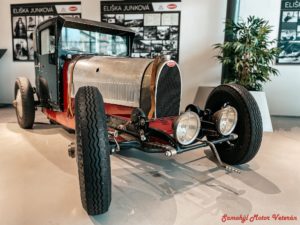
Bugatti 43 Zapadlik

Year of Manufacture: 1928 Power: 120 hp Displacement: 2,262 cm3

Number of Cylinders/Valves: 8/3 Weight: 1100 kg

Condition: functional Catalogue Number: 54

This car has a long and rich history.

In 1927, Bugatti introduced the Type 43. This model was based on the most famous Bugatti racing car, the 35 GP. Ettore Bugatti wanted the Type 43 to offer the thrill of racing also to amateur drivers who could afford this very expensive car for its time. It was suitable both for racing and everyday driving. It was often seen at sports car races. The chassis was a new design, while the engine (with Roots supercharger), transmission, axles, and wheels were the same as in the Type 35 racing model. Bugatti produced either just the chassis for further coachbuilding or cars from the factory with an open, four-seat sports body.

This particular car was purchased in 1928 to Poland, where it participated in various races. It raced throughout the 1930s, after which its fate is unknown. Eventually, it was sold in very poor condition in 1975 from Poland to Switzerland. The car, which was later “split” into chassis and body (or rather what was left of it), was bought in 2006 by a collector from the Czech Republic, and a full restoration began.

The body was in relatively good condition, but many individual parts were missing. Ultimately, the entire body was reconstructed by Václav Zapadlík (hence the car’s nickname). After enormous effort, the car was reassembled into a drivable condition. However, during the first drives, the engine was damaged and the car was disassembled again.

The car was eventually purchased by the Samohýl family collection and is currently being restored to its original, complete, and operational state.


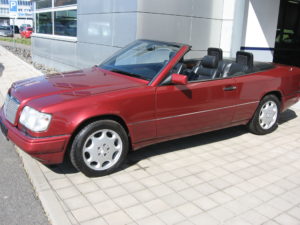
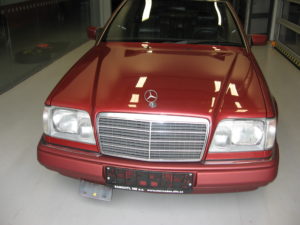
Mercedes Benz 300 CE – 24 W124

Year of Manufacture: 1993 Power: 220 hp Displacement: 2,962 cm3

Number of Cylinders/Valves: 6/4 Weight: 1,710 kg

Condition: perfect Catalogue Number: 46

The Mercedes-Benz E-Class, internal designation W 124, is one of the most successful model series in the history of Mercedes-Benz production. It was introduced to the market in 1985, and its production officially ended in 1997. In total, an incredible 2,562,143 units were produced across all variants.

The car belonged to the mid-size class and was gradually produced in sedan, estate, coupe, and cabriolet versions, featuring a wide range of engines. From simple four-cylinder, carbureted gasoline versions up to the top-range 500E V8 engine. It was also fitted with all diesel engines manufactured by the company at the time. Models with all-wheel drive under the 4-Matic badge, which marked a debut for Mercedes-Benz, were also produced. From development onwards, great care was taken to make it very advanced in many aspects and to set trends for the future of automobiles. It featured excellent aerodynamics. The chassis incorporated designs previously used only in higher-class cars. It excelled in safety. Its main advantage was incredible reliability, due to quality workmanship, materials, and technology. When you look at these cars in any variant today, the timelessness of the overall design is obvious.

And the most interesting model from the W 124 series? Definitely the 500E sedan with a 5-liter V8 engine and 32 valves. Hidden inside the understated sedan was a pure sports car with excellent performance. Fun fact: Porsche factory collaborated on its development and production, which says it all.

The chassis design was already top-notch in the regular versions and was further improved here. Front double wishbones, elastokinematic five-link suspension at the rear—hardly anything better can be found in this class even today. It was thus an excellent basis for building a powerful model, as the 500E clearly demonstrated. Sitting in the perfectly crafted interior, starting the engine, and driving off was the dream of many people in the early ’90s. During driving, the car’s rigidity stands out, as it feels like it was carved from granite. You feel more road contact from the chassis, yet it filters bumps exceptionally well. This car is rightly considered the pinnacle of German engineering of its time. The entire vehicle’s workmanship is extremely meticulous.

This car accelerates from zero to 100 km/h in 5.5 seconds. Besides offering truly contemporary performance, the engine is also very technically advanced. It is all-aluminum, features continuously variable intake valve timing, and has a CAN-Bus control unit. A four-speed automatic transmission handles the shifting. However, not all the car’s technical innovations were embraced by customers. For example, the anti-slip system could not be switched off until 1994, which understandably annoyed enthusiastic drivers.

Production of a single car took a solid 18 days, and due to strict quality controls and demanding production, a new 500E cost a full 2.5 million CZK. Even at that price, it was not profitable but enhanced the brand’s prestige, as the average customer was then a settled sixty-year-old gentleman, while the powerful 500E also attracted much younger buyers.

Owners of all W 124 series cars fondly remember them, and for many, these cars represent the last truly honest mechanical vehicles before the massive rise of electronic and electric gadgets in today’s cars.


Bugatti 13

Year of Manufacture: 1911

Power: 25 hp

Displacement: 1,368 cm3

Number of Cylinders/Valves: 4/2

Weight: 380 kg

Condition: functional

Catalogue Number: 56

Ettore Bugatti worked from 1908 to 1909 as chief designer at the Cologne-based company Deutz Gasmotoren Fabrik. As soon as his contract ended there in 1910, he packed up his family and moved to the French industrial town of Molsheim. All his previous cars, on which he had collaborated, were completed in Cologne and did not bear his name.

The car named Type 13 was the first automobile, to bear the Bugatti brand. The model was later modified under the designations Type 15/17/22 and 23. From 1910, when the first example saw the light of day, until 1920, 435 units of these cars were produced. Even in Cologne, during his free time, he worked on developing his own engine for this model. It was a lightweight, inline four-cylinder, very advanced design with an OHC valve train. Most of these subsequently produced engines had the classic 8 valves for four cylinders, but a few vehicles were made with engines equipped with 16-valve heads. This was the Type 13 Brescia, which in its time and category became the embodiment of Bugatti’s invincibility on racing tracks. Bugatti was one of the first companies in the world to manufacture 16V engines.

Type 13 was a single-door two-seat roadster with a front engine and rear-wheel drive. The ignition, water-cooled, inline four-cylinder (R4) engine had a displacement of 1327 cm³, Zenith carburetor, naturally aspirated, outputting 15.0 kW (20.0 hp) at 2800 rpm, with a mechanical four-speed gearbox, a curb weight of 450 kg, and a top speed of 100 km/h. It featured a rigid front axle with longitudinal leaf springs and a rigid rear axle with longitudinal leaf springs. The car had no front brakes, only rear drum brakes. It also already had the famous horseshoe-shaped radiator grille, which remains a typical feature of all Bugatti cars to this day.

This particular car has been in the Czech lands for 104 years. In March 1912, it was purchased as a fully operational chassis by the Viennese dealer Franz Michelfeit, but it did not stay with him long. Fitted with a custom two-seat sporty body by the Austrian coachbuilder and wagon maker A. Schwanzar, it headed to Třeboň already in 1913. For the next 14 years, it belonged to the local veterinarian Dobroslav Horák.

After various vicissitudes, the car was eventually bought into the collection of Mr. Samohýl from Mr. Šeda. Interestingly, it is the 3rd oldest preserved car of this model, and the oldest preserved Type 13 is held in the collections of the NTM in Prague. This again confirms that the Czech lands were truly devoted to this brand.

This fully functional car can be seen at various vintage car events, where it is mostly driven by the famous cardiac surgeon prof. MUDr Jan Pirk DrSc.


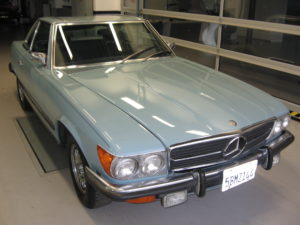
Mercedes Benz SL 350 W107

Year of manufacture: 1972
Power: 194 hp
Engine displacement: 4,520 cm3

Number of cylinders/valves: 8/2
Weight: 1,632 kg

Condition:
Catalogue number: 39

History

The Mercedes Benz 107, also known as the Timeless Endurer, was produced from 1971 to 1989. It was the second longest-produced series by the German automaker Mercedes-Benz, after the off-road Mercedes-Benz G-Class. The cars were sold under the model names SL (R107) and SLC (C107).

Development

The R107 and C107 adopted chassis components from the mid-size W 114 model and originally paired them with M116 and M117 engines used in the W108, W109, and W111 series.

Mass production of the R107 350 SL began in April 1971, offered with an optional four-speed hydraulic automatic transmission. The car accelerated from 0 to 100 km/h in 8 seconds.

In March 1973, the 450 SL/SLC was introduced to the North American market, equipped with a 4.5-liter 8-cylinder engine.

In September 1977, the 450 SLC 5.0 joined the lineup. This was a homologation version of the large coupe featuring a new aluminum 5.0-liter engine.

Starting in 1980, the 350, 450, and 450 SLC 5.0 were replaced by the 380 and 500 SLC models. The cars were slightly updated, including replacing the three-speed automatic with a four-speed unit.

In 1981, production of the 280, 380, and 500 SL models ended and was replaced by the new W126 380 and 500 SEC series.

From September 1985, the 280 SL was replaced by the new 300 SL and 380 SL, the 500 SL continued, and the 560 SL was introduced for some non-European markets, especially the USA, Australia, and Japan.

Technical specifications

Mercedes-Benz engineers paid great attention to small details in the W107. For example, this model was the first to feature well-known rear lights with horizontal ribs (previously used only on trucks), which prevented dirt buildup.

The chassis featured a closed tunnel necessary for the installation of the transmission and driveshaft, with a floor frame reinforced by longitudinal and cross members. The body was welded on top, either a two-seat roadster or a coupe for two adults and two children. The steel varied in thickness, and intelligently designed crumple zones, patented by Béla Barényi, absorbed most of the impact energy during collisions, resulting in less injury to occupants inside the so-called safety cell. The four-spoke steering wheel included a telescopic shaft and a polyurethane-padded hub. The dashboard was padded with foam to protect occupants during impacts. The fuel tank was located above the rear axle and did not rupture in collisions.

All American models used the 4.5-liter engine and were named 450 SL / SLC.

Interesting facts

Returning to Germany, but also slightly to America, albeit further south, teaching a 4.75-meter-long car to race was a difficult task—but it was accomplished. The SLC coupe achieved great success in competitions. In 1978, Andrew Cowan and Colin Malkin won the demanding Vuelta a la América del Sud marathon. After five weeks traveling mostly off-road through South America, the two drivers completed the route of over 28,500 kilometers with their heavy 5.0-liter Mercedes 450 SLC better than anyone else. Only 22 crews out of 56 finished the race.

Record holder

Thanks to its long career, the R107 still holds the record for the highest number of units produced among all generations of “eselka”. By August 1989, 237,287 units were built in Sindelfingen. The SLC coupe ended its ten-year career at only 62,888 units and is now relatively rare. Its career is a record as well, as no personal Mercedes model was produced for so long (the G-Class is not exactly a personal vehicle). The successor to the R107 series was the SL R129, first presented in March 1989. Although its production was shorter, by today’s standards it was still a long active life, produced for twelve full years.


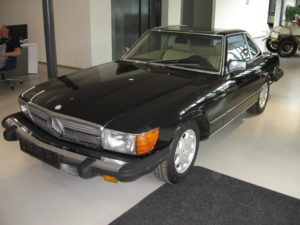
Mercedes Benz SL 380 W107

Year of manufacture: 1985
Power: 157 hp
Engine displacement: 3,839 cm3

Number of cylinders/valves: 8/2
Weight: 1,650 kg

Condition: drivable
Catalogue number: 42

History

The Mercedes Benz 107, also nicknamed the Timeless Endurer, was produced from 1971 to 1989. It was the second longest-produced series by the German automaker Mercedes-Benz, after the Mercedes-Benz G-Class off-road vehicle. The cars were sold under the model designations SL (R107) and SLC (C107).

Development

The R107 and C107 adopted chassis components from the mid-sized W 114 model and originally paired them with M116 and M117 engines used in the W108, W109, and W111 series.

Mass production of the R107 350 SL began in April 1971, available with an optional four-speed hydraulic automatic transmission. Acceleration from 0 to 100 km/h took 8 seconds.

In March 1973, the 450 SL/SLC was introduced to the North American market. The car featured a 4.5-liter 8-cylinder engine.

In September 1977, the 450 SLC 5.0 joined the lineup. This was a homologation version of the large coupe with a new aluminum 5.0-liter engine.

Starting in 1980, the 350, 450, and 450 SLC 5.0 were replaced by the 380 and 500 SLC models. At the same time, the cars were slightly updated, with the three-speed automatic replaced by a four-speed unit.

Production of the 280, 380, and 500 SL models ended in 1981, replaced by the new W126 380 and 500 SEC series.

From September 1985, the 280 SL was replaced by the new 300 SL and 380 SL, the 500 SL continued, and the 560 SL was introduced for some non-European markets, especially the USA, Australia, and Japan.

Technical specifications

Mercedes-Benz engineers and developers focused on small details with the W107. For example, this model was the first to use well-known rear lights, previously used only on trucks, with horizontal ribs preventing dirt buildup.

The chassis, with a closed tunnel necessary for the installation of the transmission and driveshaft, had a floor frame with longitudinal and cross members, onto which the body of a two-seat roadster or coupe for two adults and two children was welded. The steel used varied in thickness, and carefully designed crumple zones, patented by Béla Barényi, absorbed most of the impact energy during collisions, resulting in less injury to occupants in the so-called safety cell. The four-spoke steering wheel was equipped with a telescopic shaft and a polyurethane-filled hub. The dashboard was padded with foam to protect against impacts. The fuel tank, located above the rear axle, did not rupture during collisions.

All American models used the 4.5-liter engine and were called 450 SL / SLC.

Interesting facts

Let’s return to Germany, though staying a bit in America, albeit further south. Teaching a 4.75-meter-long car to race was a tough challenge, but it succeeded. The SLC coupe recorded great success mainly in competitions. In 1978, Andrew Cowan and Colin Malkin won the grueling Vuelta a la América del Sud marathon. After five weeks on the roads—and especially off-road—of South America, the two drivers finished first in their heavy 5.0-liter Mercedes 450 SLC. Only 22 crews out of 56 completed the route of over 28,500 kilometers.

Record holder

Thanks to its long career, the R107 still holds the record for the highest number of units produced among all generations of “eselka” models. By August 1989, 237,287 units had been made in Sindelfingen. The SLC coupe ended its ten-year career with only 62,888 units built and is now relatively rare. Its career is also a record, as no personal Mercedes model has been produced so long (the G-Class is not exactly personal). The successor to the R107 series was the SL R129, first introduced in March 1989. Although it had a shorter production run, by today’s standards it was still long, lasting a full twelve years.


Bugatti Type 44 Cabrio

Year of manufacture:  1927
Power:  90 hp
Engine displacement:  2,991 cm3

Number of cylinders/valves:  8/3
Weight:  1,300 kg

Condition:  perfect
Catalogue number:  60

Bugatti Type 44 arrived on the eve of the Great Depression, a time when elegant and not too large cars sold relatively well. With 1,095 units sold, the Type 44 even became the best-selling model of the Bugatti factory. It had its world premiere at the Paris Motor Show in October 1927. Besides many types of bodies of various origins, it was also possible to encounter stripped-down versions on racing tracks, so this originally touring car could also be raced. For the first time, this model was bodied by Ettore Bugatti himself in his factory, who even expanded his coachbuilding business for this purpose. Many customers longed for it.

Technically, the T44 was derived from the T28. It replaced the Bugatti T30 with a relatively underpowered engine. The Type 44 was powered by an inline eight-cylinder 3-liter engine of interesting design, where two separate blocks, each for 4 cylinders, were built on a common crankcase. The camshaft was driven by a king shaft. The cam operated 24 valves, 2 intake and 1 exhaust per cylinder. The crankshaft was mounted on nine needle bearings and had splash lubrication. The engine had no supercharger but still delivered a very decent power of 80 hp, which was more than enough for its purpose. It had a 4-speed gearbox and rigid axles sprung by leaf springs. The brakes were drum type, cable-operated, and the touring car’s top speed was incredible for its time – 140 km/h. Considering the state of roads back then…

Unlike previous Bugatti types, the 44 was significantly longer, allowing comfortable bodies for four passengers. Almost all well-known coachbuilders of that time contributed to building bodies for it. According to incomplete records, about 16 units of this model were imported to the Czech lands during the interwar period. Some of them were bodied by the prestigious coachbuilder Uhlík. Beautiful variations of this type are still seen at historic vehicle events today.

And an interesting story about this Bugatti type?

After Čeněk Junek died at the German Grand Prix at the Nürburgring on July 15, 1928, Eliška gave up racing. Seeking distraction from her grief, she planned a trip to Ceylon and India. Ettore Bugatti was enthusiastic about the plan: “I will give you this show convertible and a mechanic from the factory for your journey,” he promised her at the motor show, and immediately added the eight-cylinder three-liter Bugatti 44 with a convertible body (chassis number 44595).

From Calcutta in India, the small but experienced Czech woman set off on a 6,000 km expedition around Mount Everest to the borders of Afghanistan. The car had to carry large supplies of gasoline, oil, and distilled water. The sports car, with limited ground clearance, was heavily challenged and mainly helped by its strong engine in emergencies. In Bombay, Junková sold the “forty-four” and seemingly incidentally managed to establish a Bugatti dealership in the British colony of Ceylon, now Sri Lanka.

The car from the Samohýl family collection is a very beautiful two-seat cabriolet in perfect, operational condition.


Bugatti Type 57 Graber

Year of manufacture: 1938
Power: 135 hp
Engine displacement: 3,257 cm3

Number of cylinders/valves: 8/2
Weight: 1,400 kg

Condition: perfect
Catalogue number: 61

History

The development, design, and testing of the Type 57 model were the work of Jean Bugatti, the son of the company founder. Thanks to him, a new generation of cars was created – powerful, quiet, and well-handling sports and touring vehicles. On the Type 57 chassis (which themselves weighed around one ton), countless different bodies were created, ranging from convertibles and coupes to two- and four-door sedans. There were also purely sporty roadsters inspired by Grand Prix racing cars.

Factory coachbuilt versions were named after Alpine mountain passes: Galibier (sedan), Aravis, Ventoux (coupe), Stelvio (convertible), and Atalante. The last three were designed by Jean Bugatti. The chassis were bodied directly in Molsheim under the leadership of Joseph Walter. Based on this type, a very successful racing model with a low aerodynamic body nicknamed the “tank” was created, which won many races, including the famous 24-hour Le Mans race. Unfortunately, vehicle development was interrupted both by World War II and by the tragic death of Jean Bugatti during a test of a new Bugatti model.

Technical specifications

The Bugatti Type 57 has an inline eight-cylinder engine made of light alloy with DOHC. Two valves per cylinder were used here, instead of the previously common trio (two intake and one exhaust valve). The technology mostly originated from racing circuits. The camshafts were driven by an original gear train, not a chain. The crankshaft was mounted six times, and from the 3,257 cm3 engine displacement, the Type 57 produced from 92 kW to 103 kW (125 – 140 hp). Since 1936, engines also received a supercharger, raising the power up to 230 hp.

The transmission was four-speed, and the brakes were originally mechanical drum brakes, later replaced by hydraulic ones. The car reached truly high speeds and was difficult to slow down. The chassis had classic rigid axles and suspension with modified leaf springs.

Interesting facts

And why Graber? At that time, it was common for car manufacturers to deliver only a complete chassis, and the customer would have a body built according to their wishes.

Therefore, this probably most famous Swiss coachbuilder created a conservatively styled but proportionally and detail-wise attractive body for this car.

Its driving force, Hermann Graber (1904–1970), was born into a family operating a carriage business. At the beginning of the 1920s, he realized that horse-drawn carriages were definitively becoming obsolete, and the future belonged to automobile bodies. In Wichtrach, he mainly built on Italian, French, and German chassis. He bodied at least ten Bugatti 57s, mostly as luxury convertibles.

Production

The Bugatti 57 model was produced between 1934 and 1940, with a total of 710 cars built, including derivative types. The base Type 57 model had 630 units produced. This car was purchased for the collection in its current, original condition. Like many similar cars, it has a turbulent history but was never rebuilt or modified.