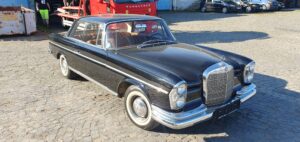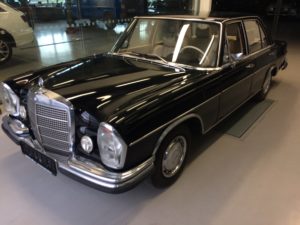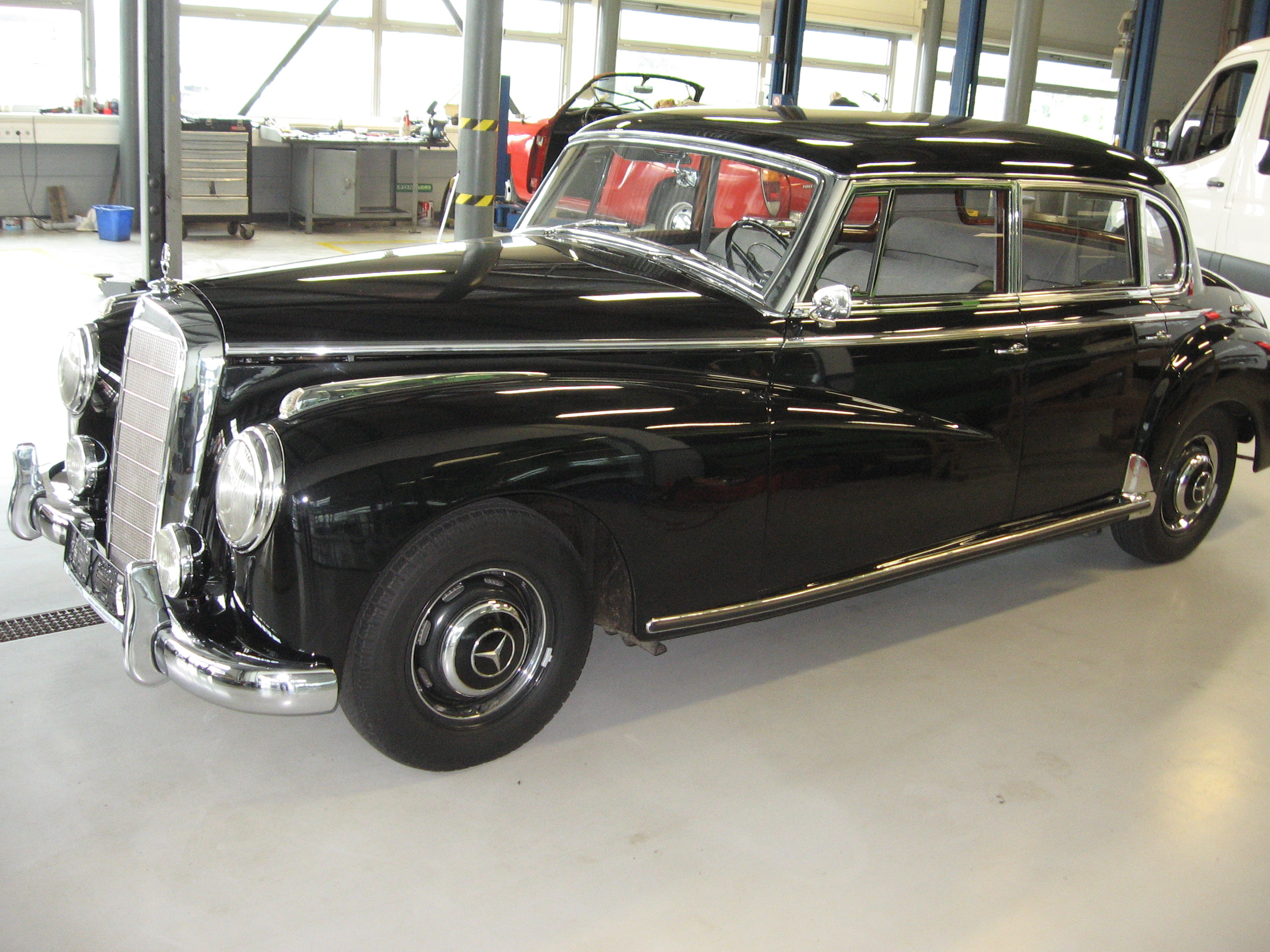
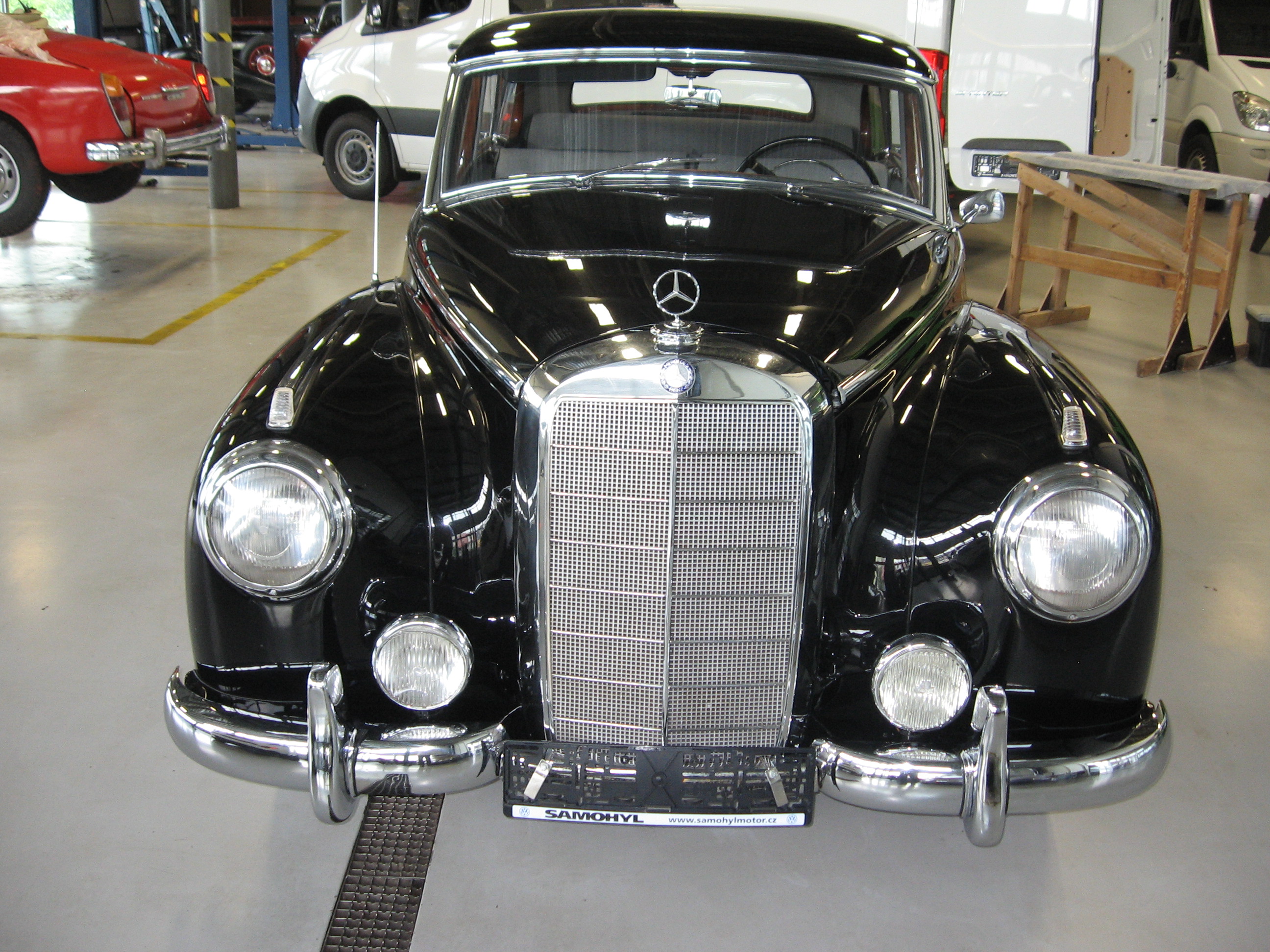
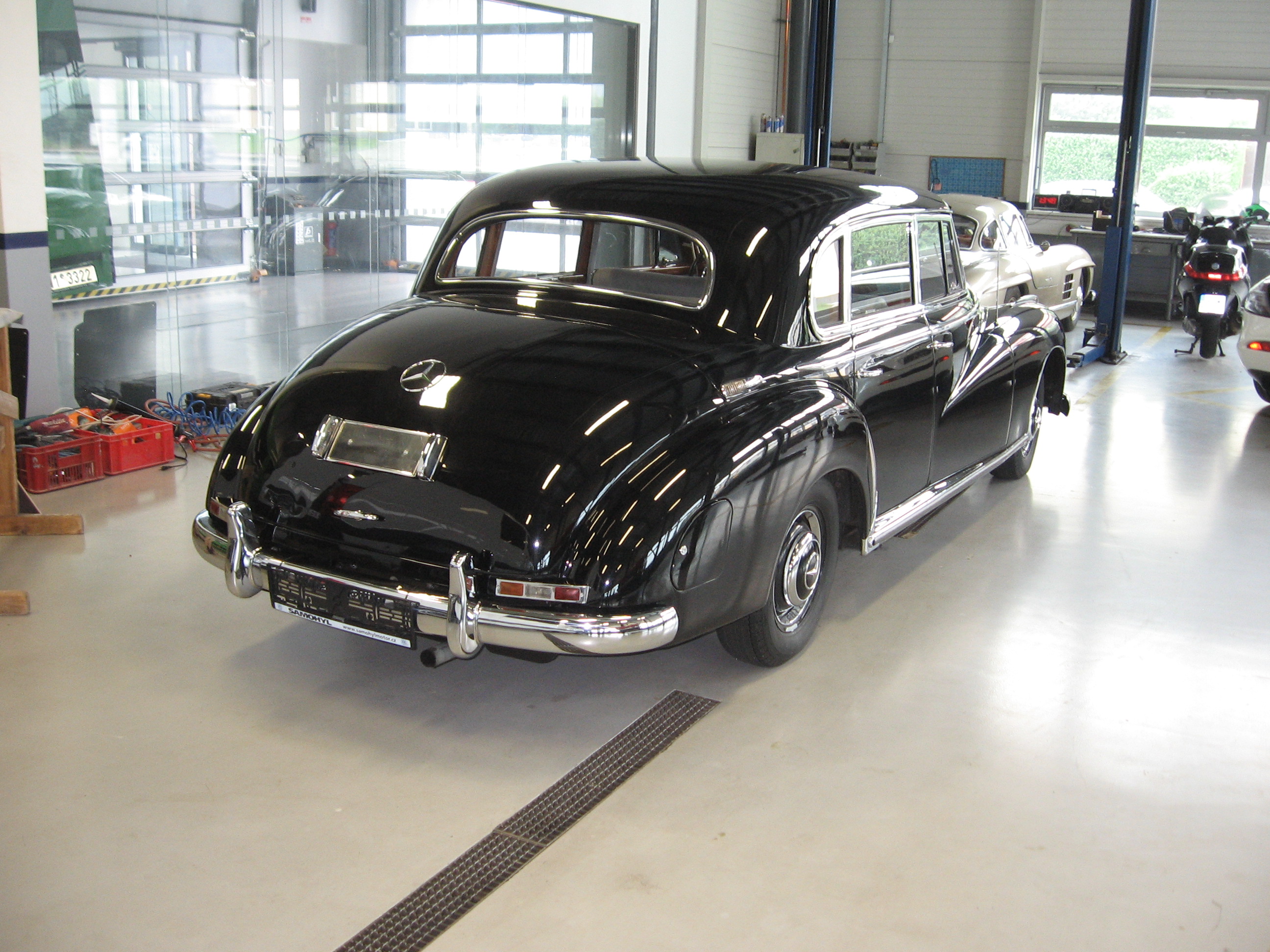
Mercedes Benz 300 Adenauer
Year of Manufacture: 1954 Power: 115 hp Displacement: 2,996 cm3
Number of Cylinders/Valves: 6/2 Weight: 1,780 kg
Condition: drivable Catalogue Number: 95
History
Six years after the end of World War II, in April 1951, the Stuttgart company continued the tradition of its luxury automobiles. In the same year, the Spanish supercar Pegaso from the former Barcelona Hispano-Suiza factory and the Bugatti type 101 also debuted.
Technical Specifications
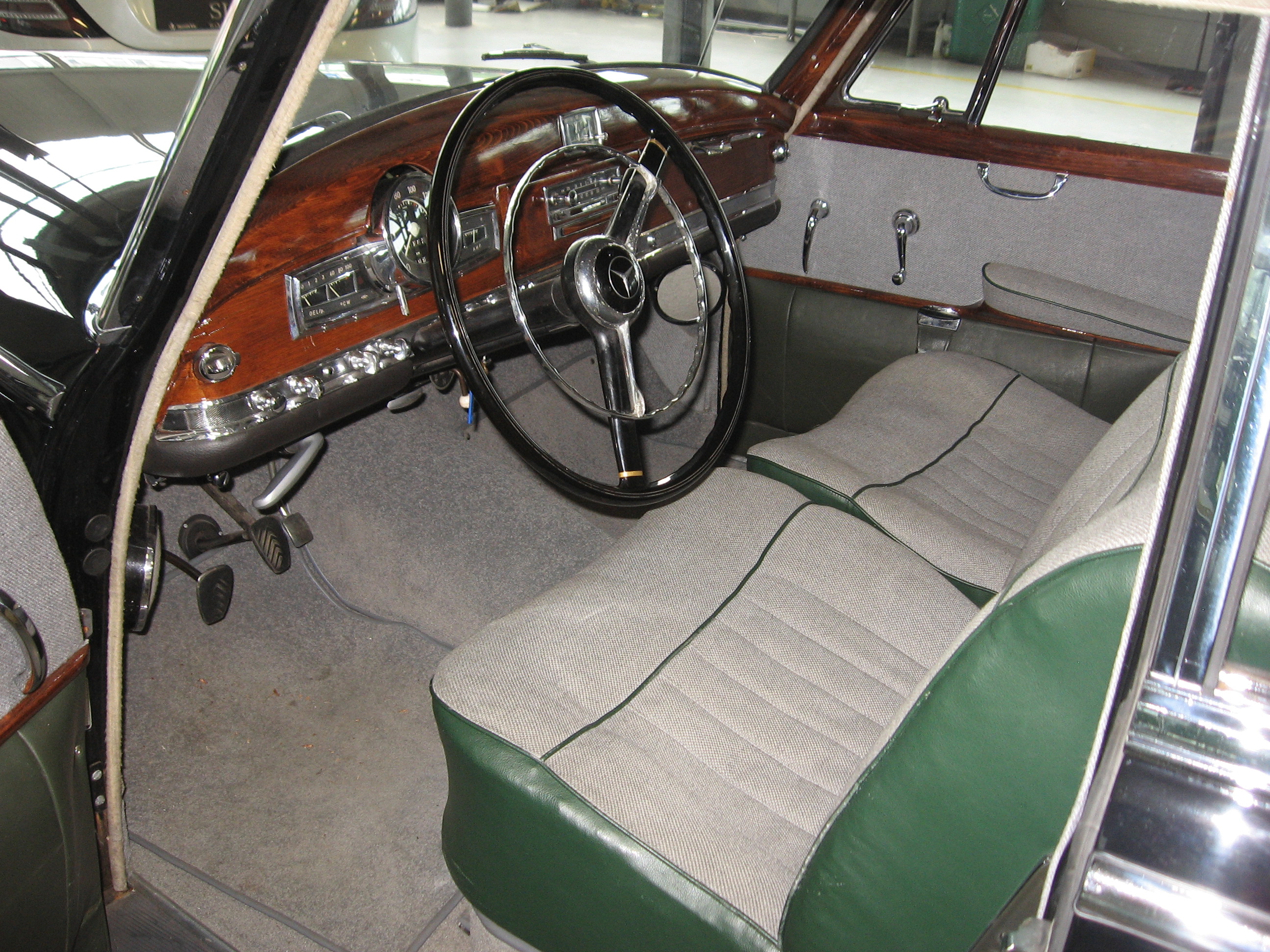
The first version offered a naturally aspirated three-liter six-cylinder engine producing 115 hp. The short-stroke power unit differed from the smaller 220 series by having the crankshaft supported on seven bearings instead of four. By modifying the arrangement and angle of the valves (OHC), better cylinder filling and scavenging were achieved. The oil/water heat exchanger accelerated oil warming, which was especially useful during cold starts. Similar to the 220 type, the dashboard included an octane selector, a mechanical ignition timing adjustment according to the fuel type or octane rating. The innovative two-spoke steering wheel with a large diameter of 440 mm and the column-mounted gear lever contrasted with the X-shaped chassis frame and wheel suspension, which were based on pre-war designs.
Development
In March 1954, the W 186 series received its first update, designated 300 b. Power increased by 10 hp, and the reported fuel consumption dropped to 12.5 liters, though in practice it hovered around 16 liters.
In September 1955, the 300 c version took over, benefiting from a number of changes, including a single-joint rear axle. An automatic three-speed transmission with a hydrodynamic torque converter was optionally available. Only by the mid-1950s did the renowned manufacturer stop charging extra for heating in its flagship model.
The most significant changes came with the last version, the 300 D with internal designation W189. Power was increased to 160 hp. Thanks to larger glazing, the car offered significantly better visibility. The automatic transmission was upgraded with a fourth gear and became part of the standard equipment.
In September 1958, power steering was added.
Interesting Facts
It is impossible to omit the prominent users of the 300 series.
The first was long-time Federal Chancellor Konrad Adenauer, who initiated the construction of German highways even before Hitler and owned six different service 300 models. For this reason, this type of car is known among collectors as the “Adenauer.”
In 1960, Pope John XXIII took the extended 300 D landaulet with a raised throne.
Among the few Czech celebrities who used the W 186 series were personalities such as Josef Lada and Jan Werich.
Our Adenauer car was purchased in Switzerland in a somewhat different condition and color. It was finally decided to restore it to a condition typical for this car. The vehicle is in perfect drivable condition and is a beautiful example of this model series.