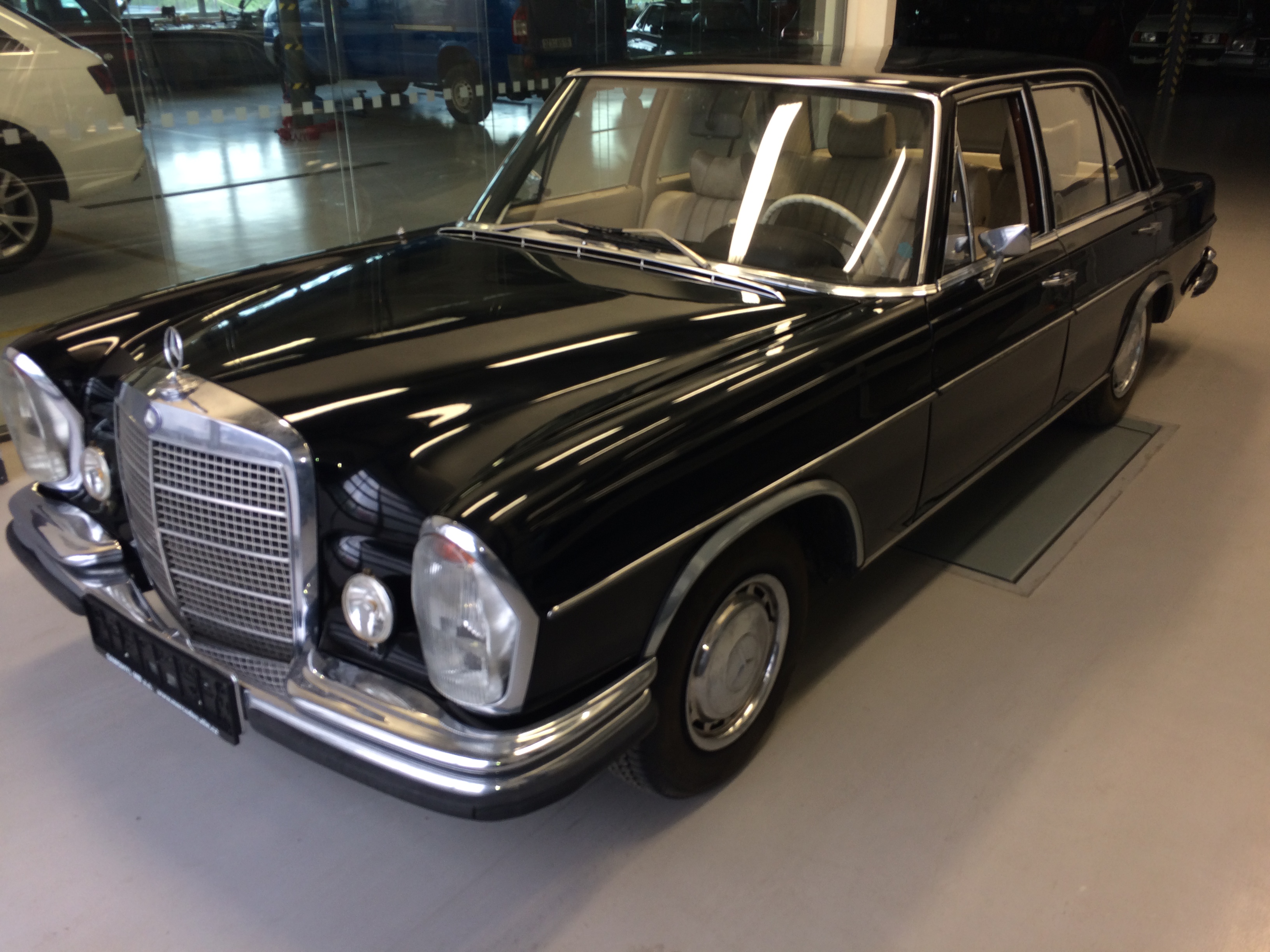
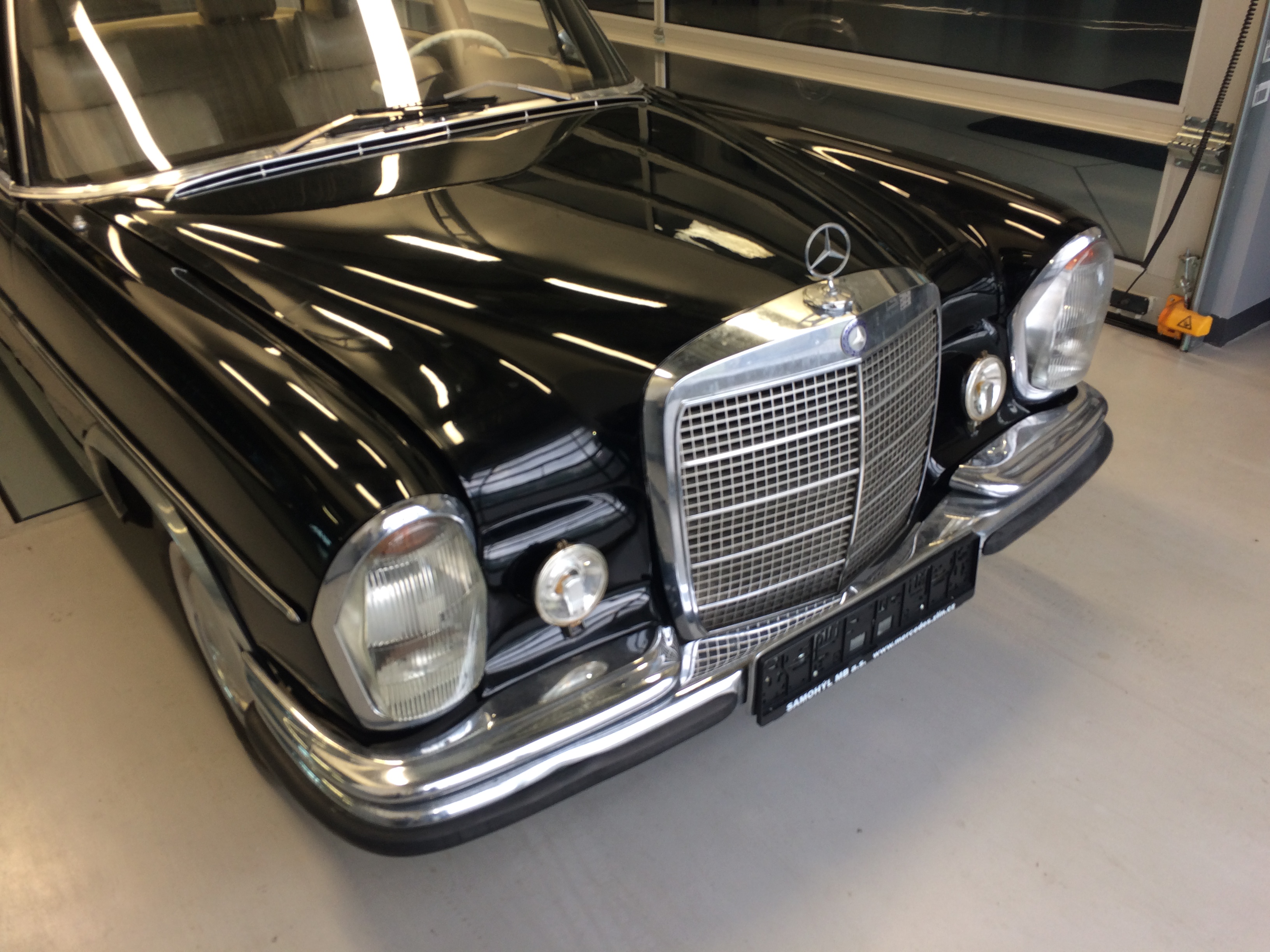
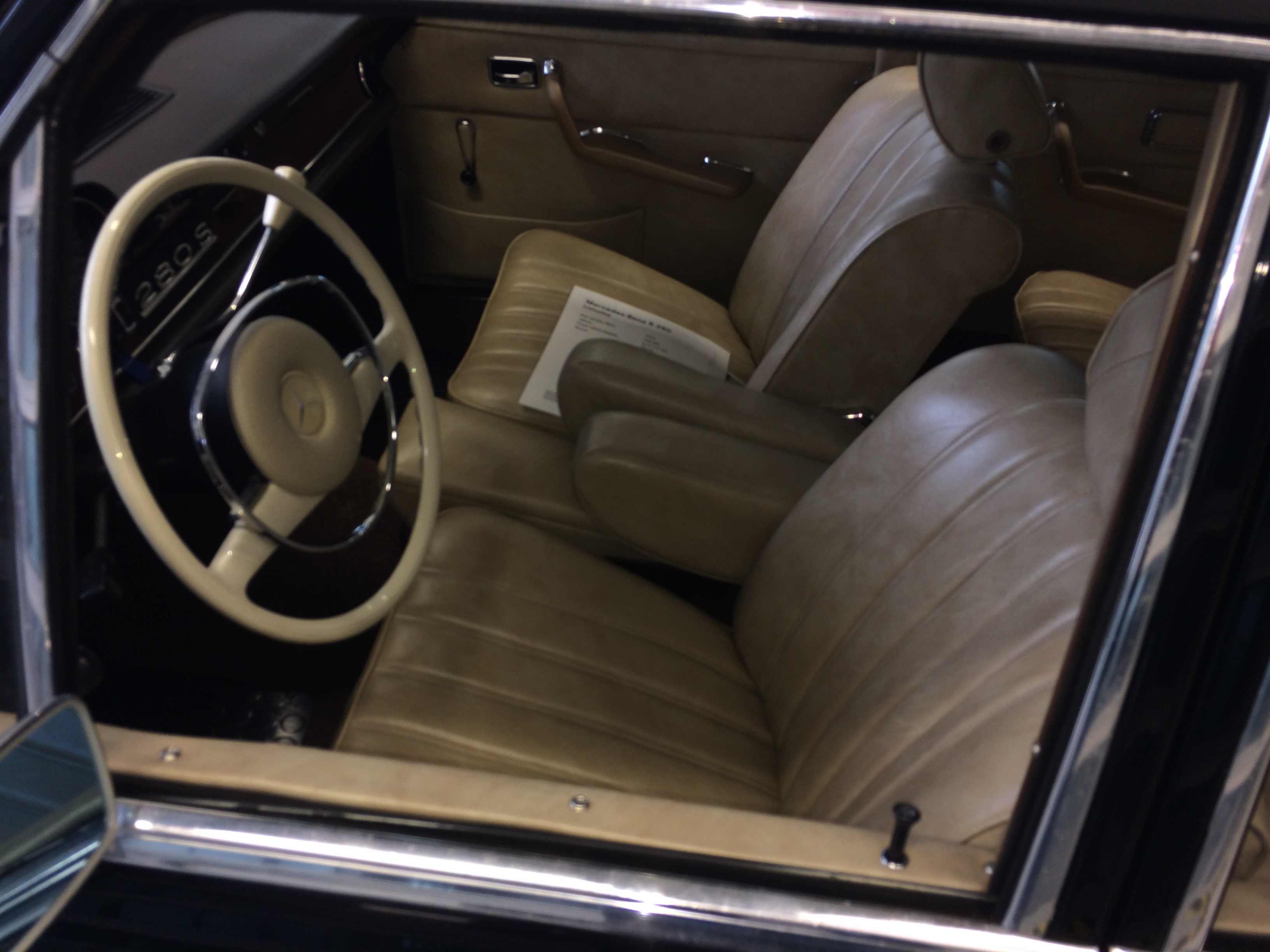
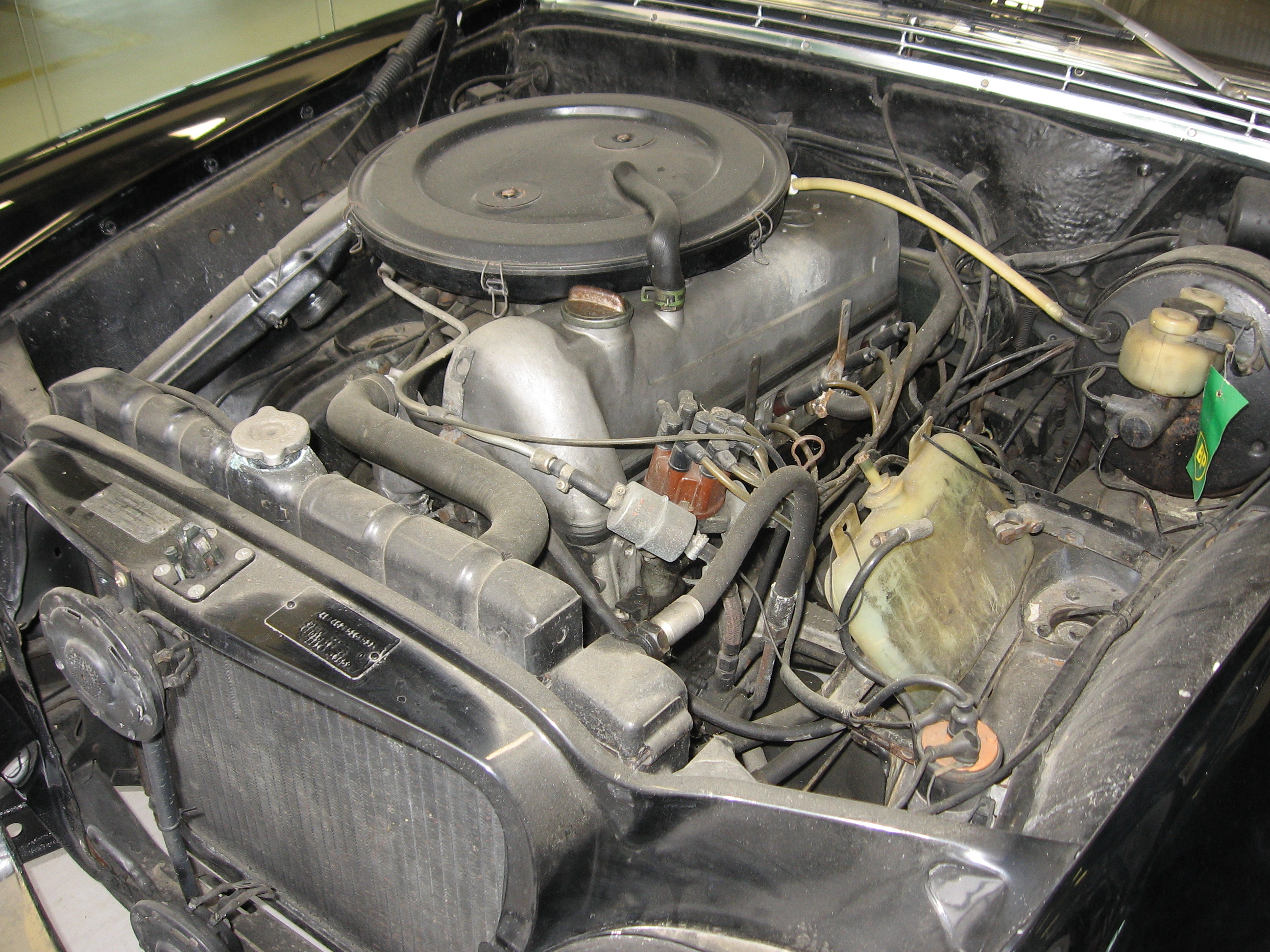
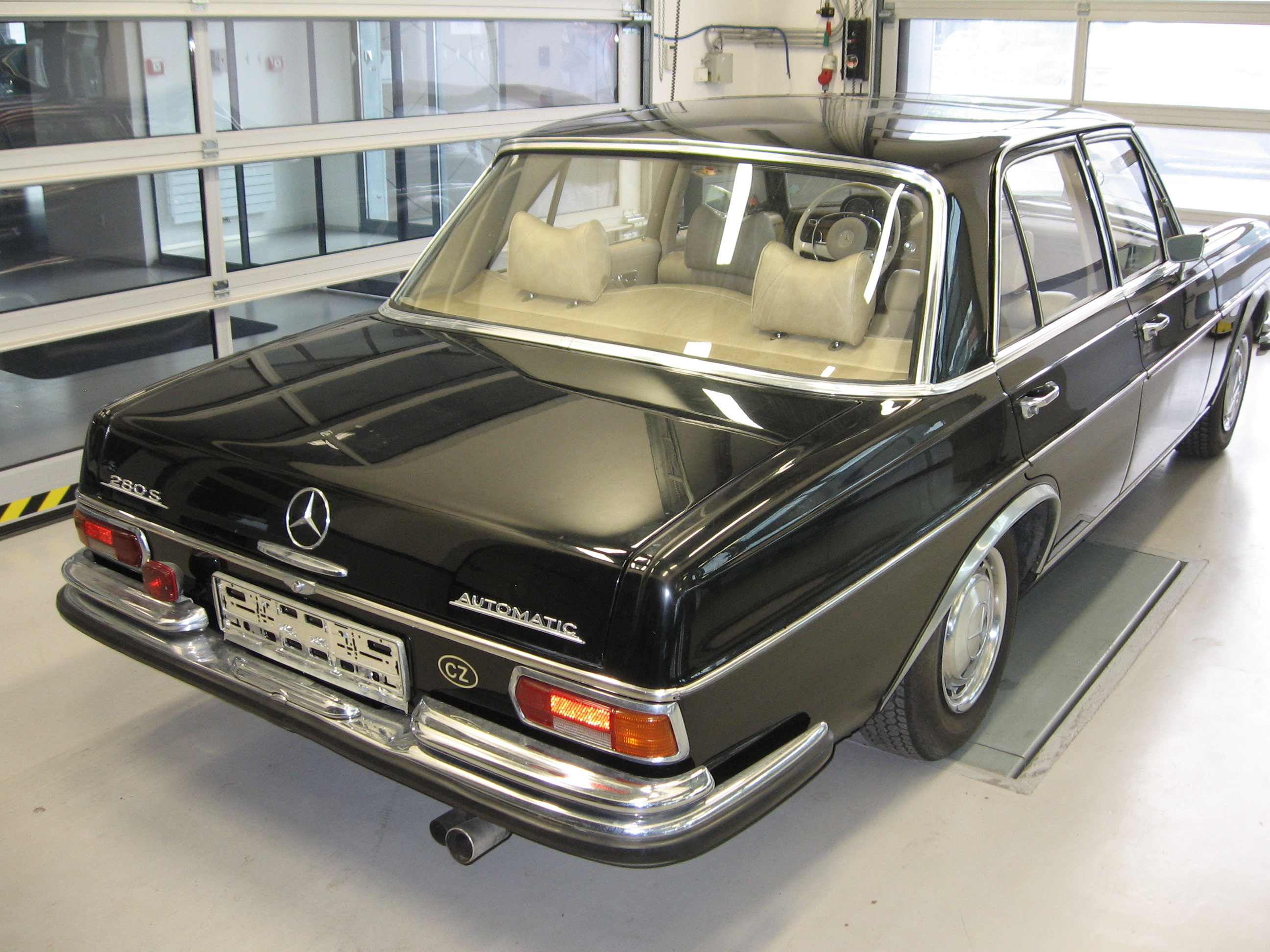
Mercedes Benz S280 W108
Year of Manufacture: 1972
Power Output: 140 hp
Engine Displacement: 2,778 cm3
Number of Cylinders/Valves: 6/2
Weight: 1,470 kg
Catalogue Number: 8
These are luxury vehicles produced from 1965 to 1973. The cars were successful not only in West Germany but also in export markets including North America and Southeast Asia.
Difference between W108 and W109
Due to the success of the long-wheelbase model 300 SE Lang, Mercedes-Benz continued to offer two wheelbase lengths for the W108 and W109. Initially, the W108 designation referred to the standard wheelbase, and the W109 to the long wheelbase. In the 1968 model range, this distinction changed with the introduction of the 280 SEL, which retained the W108 chassis designation instead of W109, and the longer wheelbase was identified by the letter “L” in the model name. This designation has remained standard for all future Mercedes-Benz models.
First Series
The W108/W109 model debuted at the Frankfurt Motor Show in 1965. The initial model lineup consisted of three W108 models (250 S, 250 SE, and 300 SEb) and one W109 model (300 SEL).
– The 250 S model was equipped with the M108 engine with a displacement of 2,496 cm3, featuring dual downdraft two-barrel carburetors, producing 96 kW at 5,400 rpm. It reached a top speed of 182 km/h.
– The 250 SE model had the same engine as the 250 S, except for fuel injection and a different engine designation. The output increased to 110 kW at 5,500 rpm.
– The 300 SEb and 300 SEL models were equipped with a 2,996 cm3 engine, delivering 125 kW at 5,400 rpm. These models reached a top speed of 200 km/h and accelerated to 100 km/h in 6.2 seconds.
Second Series
In 1967, the six-cylinder engine range was revised. The 2.5L engine was increased to 2.8L.
The 250 S and 250 SE models were renamed 280 S and 280 SE in November 1967.
In January 1968, the long-wheelbase 280 SEL was introduced for the first time.
The 280 S model reached 100 km/h in 12.5 seconds with a top speed of 185 km/h.
The 280 SE and 280 SEL models accelerated to 100 km/h in 10.5 seconds and reached a maximum speed of 193 km/h.
Vehicles sold in Europe were equipped with a standard four-speed manual transmission. A four-speed automatic transmission was also available, which was quite unusual among car manufacturers at the time. A five-speed manual transmission was offered for inline-six engines, but only between 1969 and 1972.
In 1966, engineer Erich Waxenberger installed the massive 6.3L Mercedes-Benz M100 V8 engine from the company’s flagship 600 (W100) into the W109 chassis, creating the first large Mercedes-Benz sedan with a V8 engine. Full production of the 300 SEL 6.3 began in December 1967. The 300 SEL 6.3 reached 100 km/h in 6.5 seconds and a top speed of 220 km/h (137 mph), making it the fastest production sedan of its time—a title it held for many years.
When the 3.5L V8 engine was introduced in 1969, the only available transmission was a four-speed automatic with a fluid coupling. This model was aimed mainly at the North American market, where V8 engines were the dominant powertrain for large sedans. By the end of the series’ production run, it gave rise to the 450 SE model, symbolically concluding this highly successful series of large limousines—vehicles in which Mercedes-Benz would go on to dominate the segment for years to come.
A total of 383,361 units were produced during the seven-year production period.