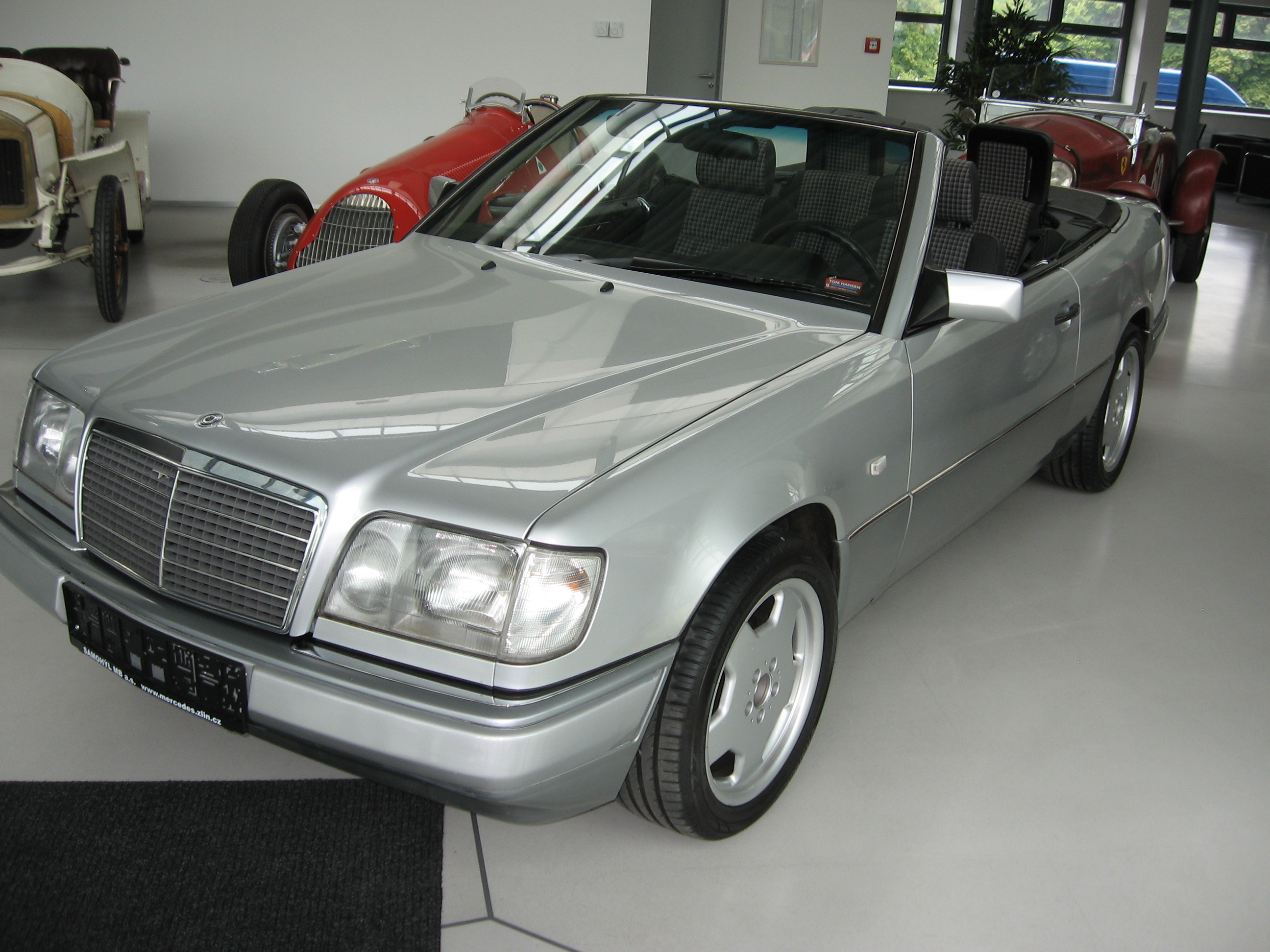
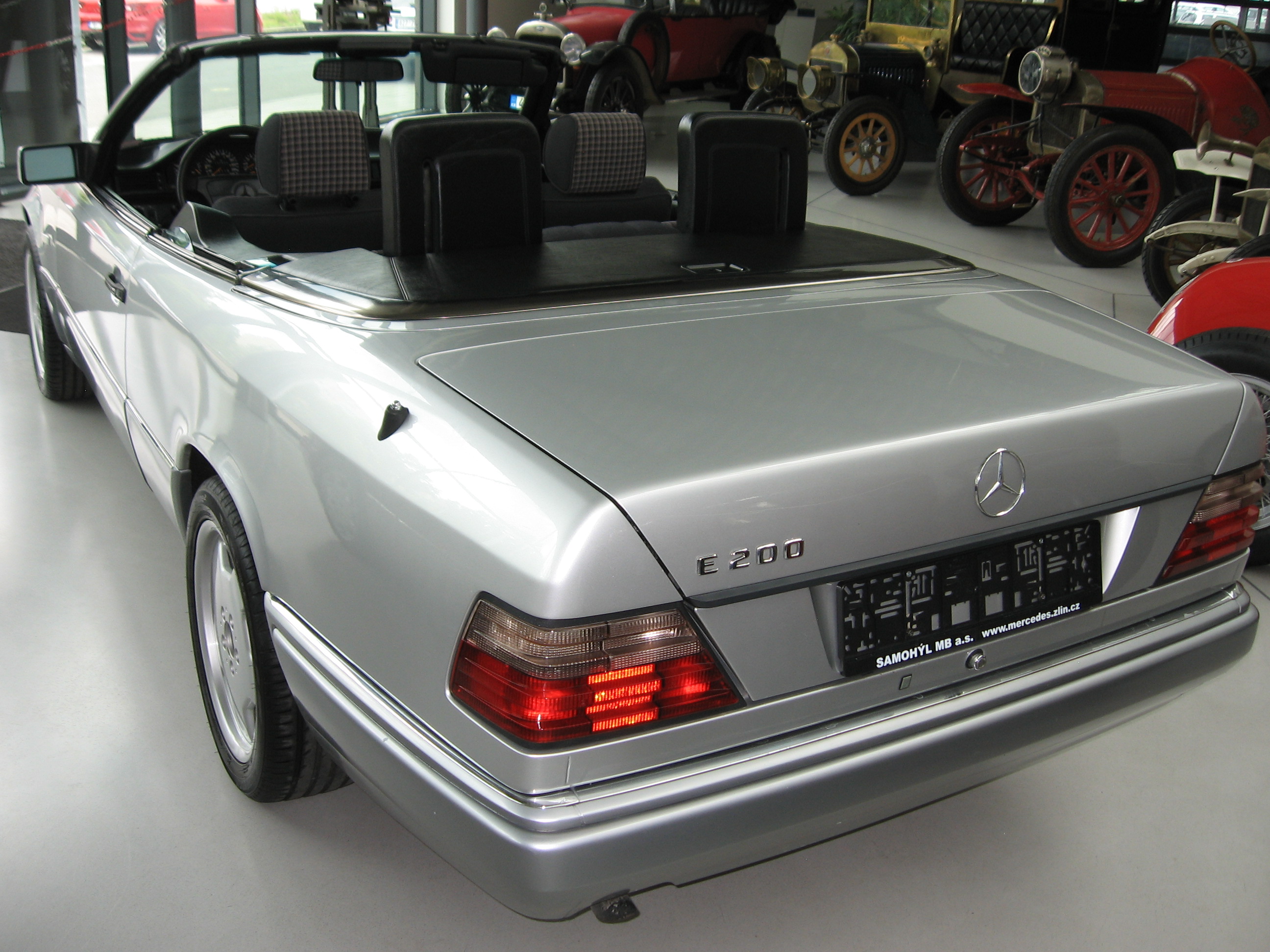
Mercedes Benz E 200 W124
Year of Manufacture: 1995
Power: 136 hp
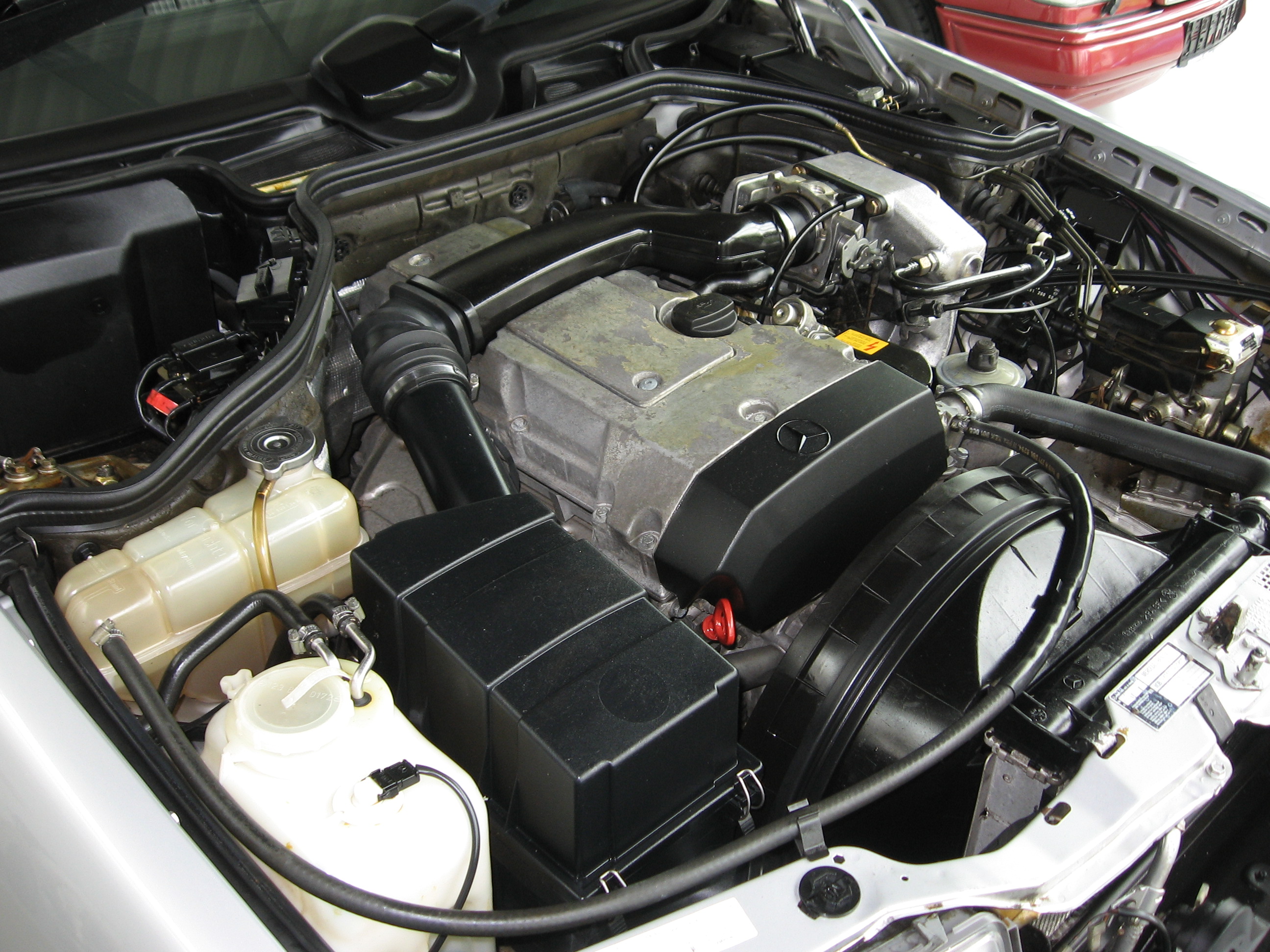
Engine Displacement: 1,998 cm3
Number of Cylinders/Valves: 4/4
Weight: 1,630 kg
Condition: Excellent
Catalog Number: 37
The Mercedes-Benz E-Class, internally designated as the W 124, is one of the most successful model lines in Mercedes-Benz history. It was introduced to the market in 1985, with official production ending in 1997. An incredible total of 2,562,143 units were produced across all variants.
This vehicle belonged to the mid-size class and was produced as a sedan, estate (wagon), coupé, and cabriolet. It was equipped with a wide range of engines—from basic four-cylinder carbureted gasoline versions to the top-tier 500E with a V8 engine. All diesel engines made by the company at that time were also fitted into this model. Versions with four-wheel drive under the 4-Matic badge were also produced, marking a Mercedes-Benz first. During development, great care was taken to ensure the car was very advanced in many respects and set trends for automotive development. It featured excellent aerodynamics and chassis designs previously used only in higher-class vehicles. It stood out with a high level of safety. Its main strength was incredible reliability due to the quality of craftsmanship and the materials and technology used. When you look at these cars today in any version, the timelessness of their design is obvious.
And the most interesting model of the W 124 series? Definitely the 500E sedan with a 5-liter V8 engine and 32 valves. This unassuming sedan hid a pure sports car with excellent performance. Interestingly, Porsche was involved in its development and production, which speaks volumes.
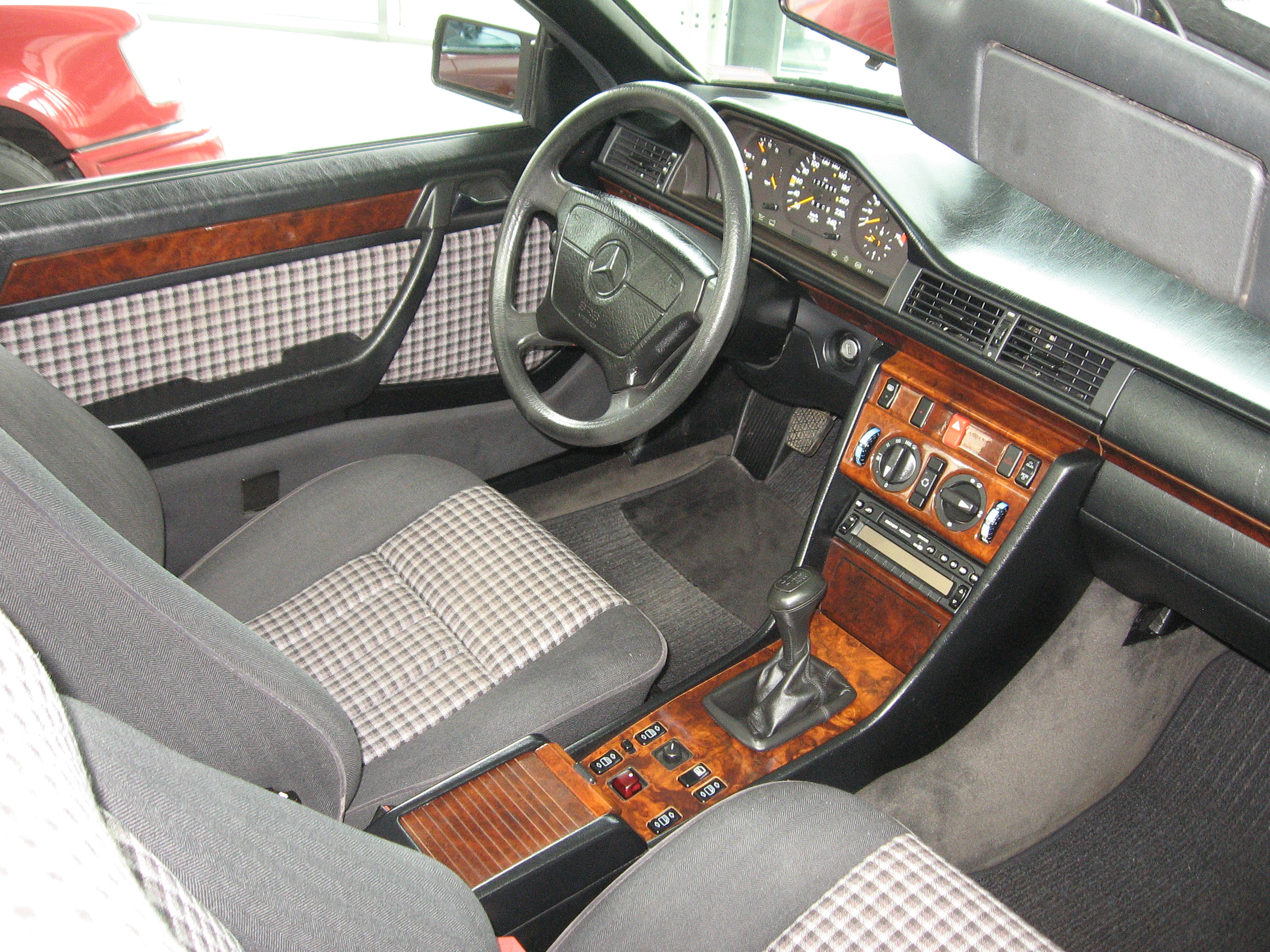
The chassis design, which was already top-class in standard versions, was further improved here. Front double wishbones and elastokinematic five-link rear suspension are still hard to beat in this class today. It was an excellent base for building a powerful model, as the 500E clearly demonstrated. Sitting inside the impeccably finished interior, starting the engine, and driving off was a dream for many people in the early 1990s. The car’s rigidity is impressive, appearing carved from granite. The chassis offers great road contact yet filters out irregularities excellently. This car is rightly considered the pinnacle of German engineering of the time. The entire vehicle was crafted with extreme care.
It accelerates from zero to 100 km/h in 5.5 seconds. The engine not only offers contemporary performance but is also very advanced technically. It is made entirely of aluminum, has continuous variable intake valve timing, and a CAN-Bus control unit. A four-speed automatic transmission manages the shifting. Not all technical features were embraced by customers; for example, the traction control system was not switchable until 1994, which understandably annoyed driving enthusiasts.
Production of a single car took a solid 18 days, and due to strict quality controls and production complexity, the 500E cost a full 2.5 million CZK when new. Even at that price, it did not turn a profit.
And the cabriolet model? It premiered in September 1991. It was a four-seater convertible—the first in this series in nearly two decades. The car, internally coded A124, was structurally based on the coupé. The biggest weakness of open-top cars—body torsion—was eliminated with four vibration dampers. The entire body was reinforced and significantly modified.
Since the cabriolet lacked both B and C pillars, the front pillars had to be suitably strengthened. Safety in case of rollover was ensured by a special protective system of two deployable segments behind the rear seats, which also served as headrests. If the electronics detected an imminent rollover, these headrests deployed automatically within just 0.3 seconds. They could also be manually activated by the driver.
The folding roof consisted of 27 parts and 34 joints but occupied only 80 liters of trunk space when folded. The roof had to be operated manually unless the owner paid extra for electro-hydraulic control. Initially, only the 300 CE-24 Cabriolet version was produced, starting in 1992. Later, additional engine versions were added. Even today, it remains a very beautiful and unmistakable car.
Owners of all these W 124 series cars remember them fondly, and for many, they represent something like the last truly mechanical cars before the massive arrival of electronic and electric features in today’s automobiles.