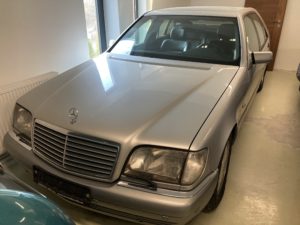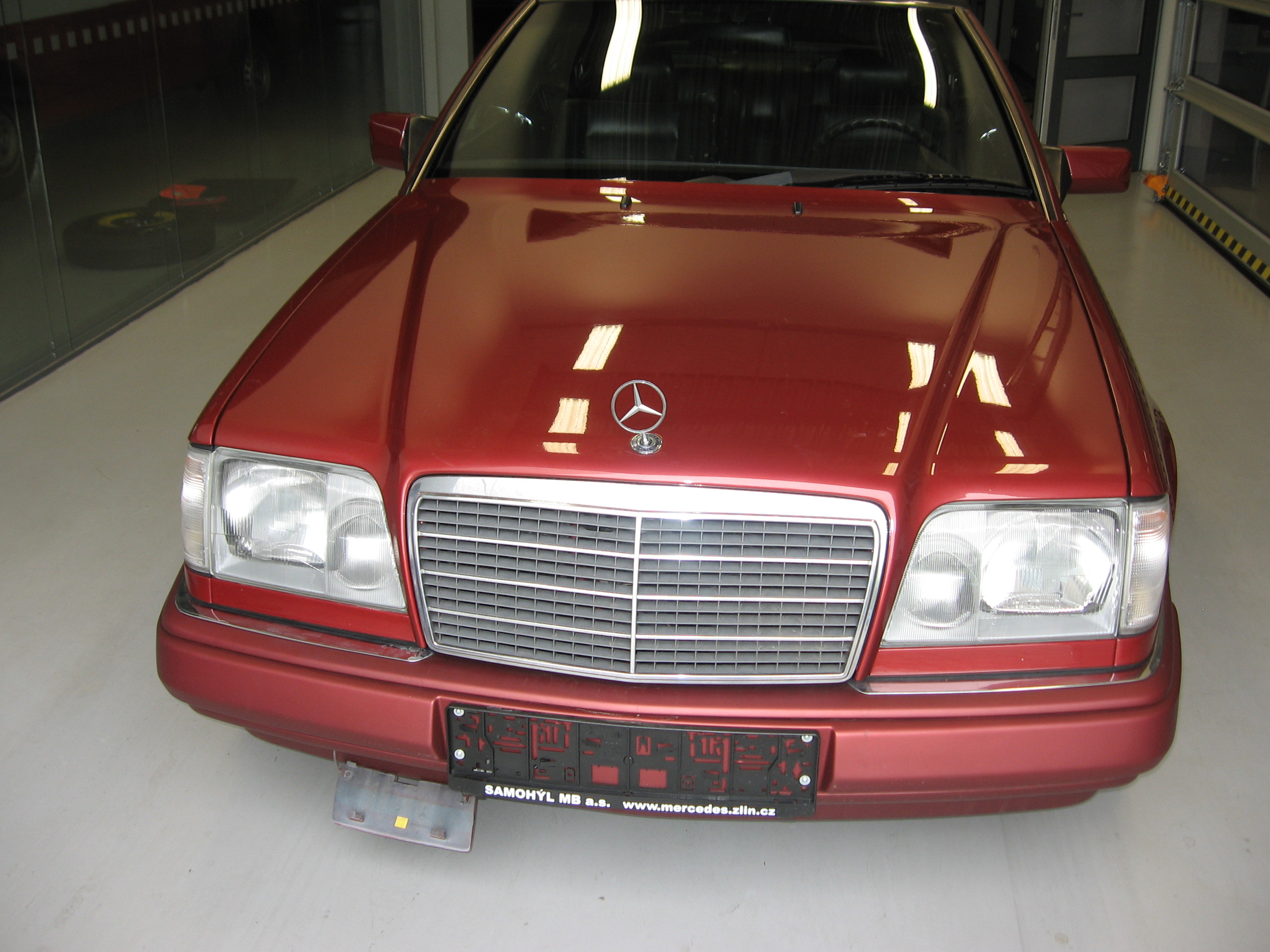
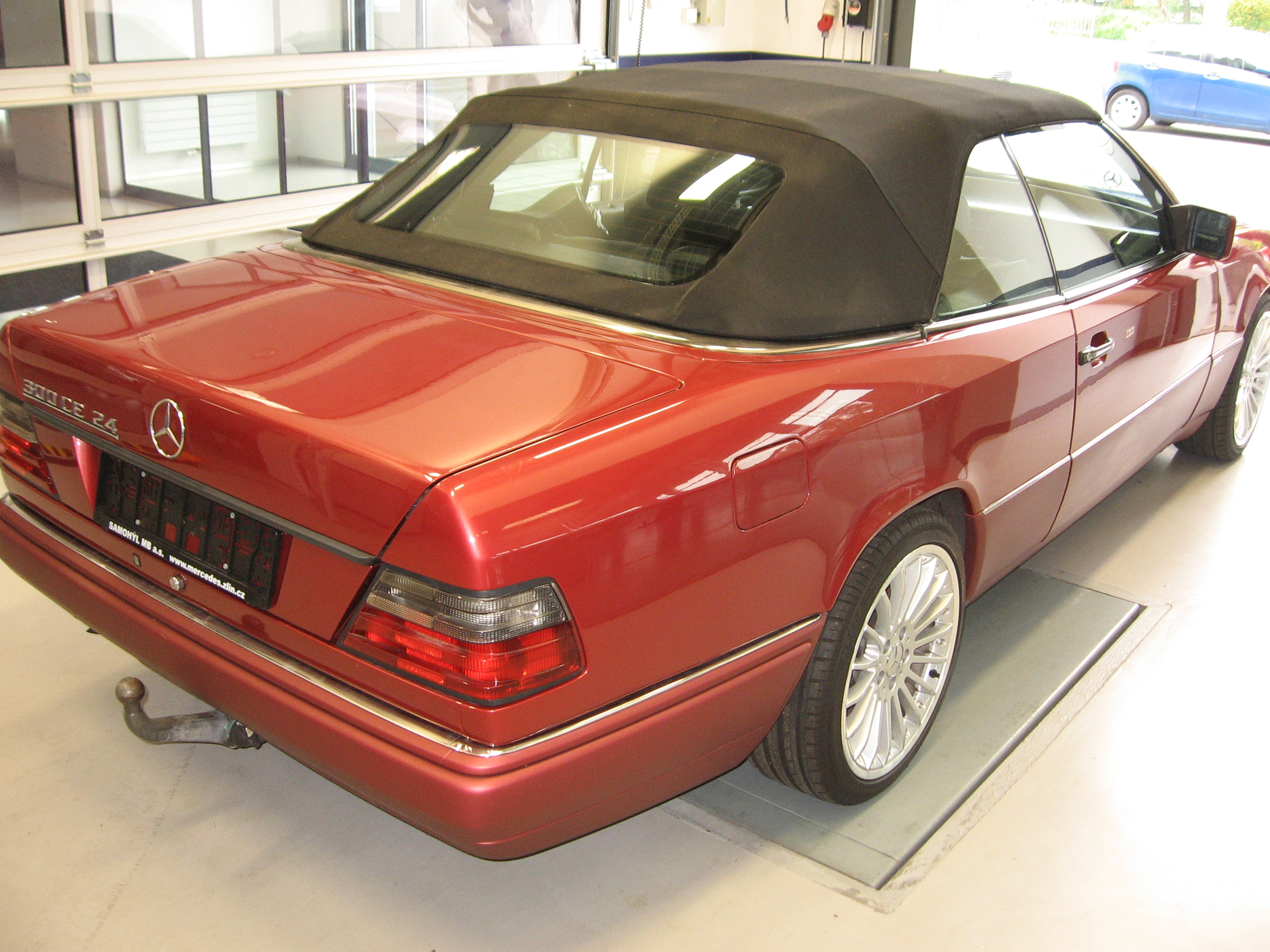
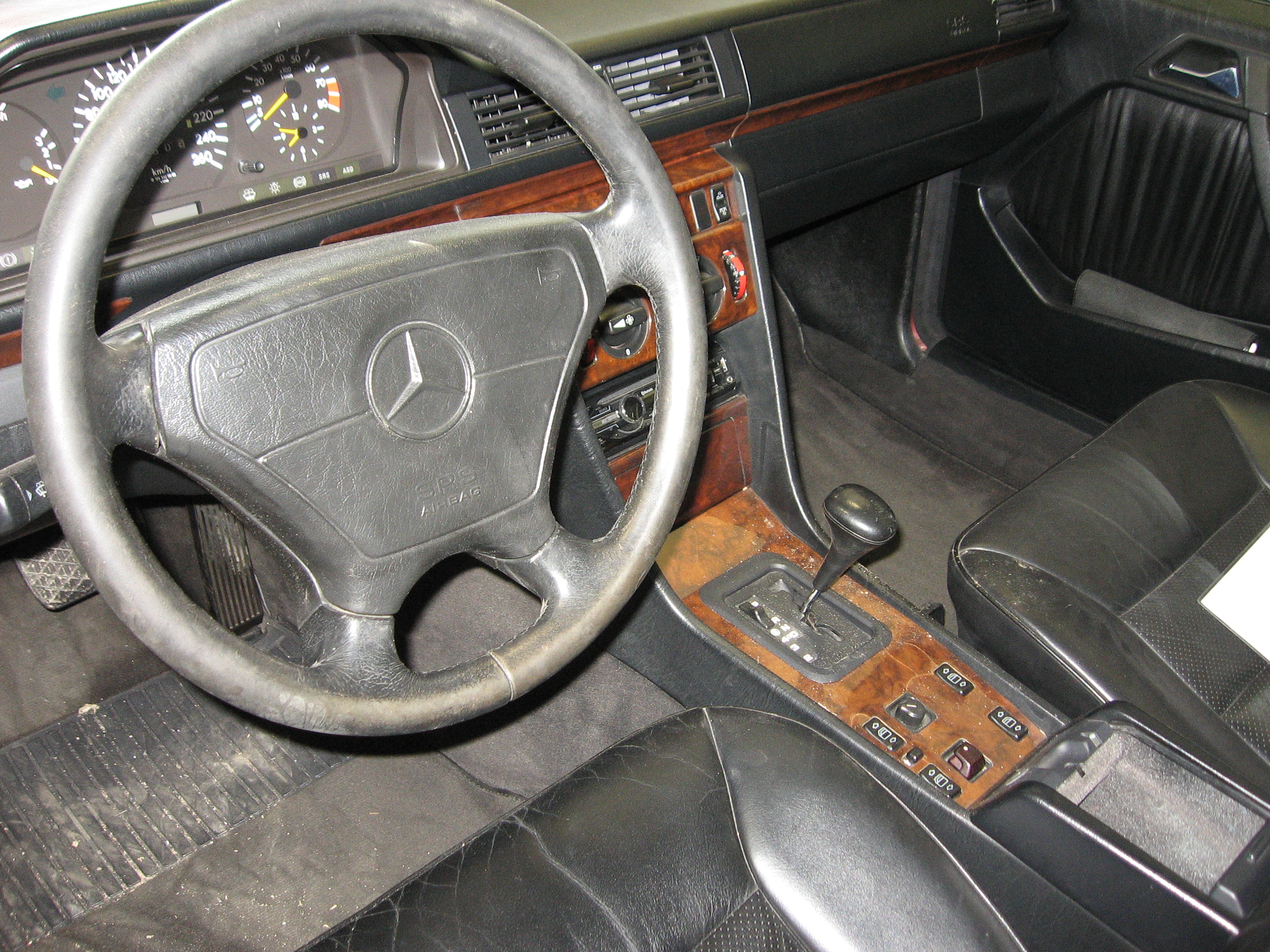
Mercedes Benz 300 CE – 24 W124
Year of Manufacture: 1993 Power: 220 hp Displacement: 2,962 cm3
Number of Cylinders/Valves: 6/4 Weight: 1,710 kg
Condition: perfect Catalogue Number: 46
The Mercedes-Benz E-Class, internal designation W 124, is one of the most successful model series in the history of Mercedes-Benz production. It was introduced to the market in 1985, and its production officially ended in 1997. In total, an incredible 2,562,143 units were produced across all variants.
The car belonged to the mid-size class and was gradually produced in sedan, estate, coupe, and cabriolet versions, featuring a wide range of engines. From simple four-cylinder, carbureted gasoline versions up to the top-range 500E V8 engine. It was also fitted with all diesel engines manufactured by the company at the time. Models with all-wheel drive under the 4-Matic badge, which marked a debut for Mercedes-Benz, were also produced. From development onwards, great care was taken to make it very advanced in many aspects and to set trends for the future of automobiles. It featured excellent aerodynamics. The chassis incorporated designs previously used only in higher-class cars. It excelled in safety. Its main advantage was incredible reliability, due to quality workmanship, materials, and technology. When you look at these cars in any variant today, the timelessness of the overall design is obvious.
And the most interesting model from the W 124 series? Definitely the 500E sedan with a 5-liter V8 engine and 32 valves. Hidden inside the understated sedan was a pure sports car with excellent performance. Fun fact: Porsche factory collaborated on its development and production, which says it all.
The chassis design was already top-notch in the regular versions and was further improved here. Front double wishbones, elastokinematic five-link suspension at the rear—hardly anything better can be found in this class even today. It was thus an excellent basis for building a powerful model, as the 500E clearly demonstrated. Sitting in the perfectly crafted interior, starting the engine, and driving off was the dream of many people in the early ’90s. During driving, the car’s rigidity stands out, as it feels like it was carved from granite. You feel more road contact from the chassis, yet it filters bumps exceptionally well. This car is rightly considered the pinnacle of German engineering of its time. The entire vehicle’s workmanship is extremely meticulous.
This car accelerates from zero to 100 km/h in 5.5 seconds. Besides offering truly contemporary performance, the engine is also very technically advanced. It is all-aluminum, features continuously variable intake valve timing, and has a CAN-Bus control unit. A four-speed automatic transmission handles the shifting. However, not all the car’s technical innovations were embraced by customers. For example, the anti-slip system could not be switched off until 1994, which understandably annoyed enthusiastic drivers.
Production of a single car took a solid 18 days, and due to strict quality controls and demanding production, a new 500E cost a full 2.5 million CZK. Even at that price, it was not profitable but enhanced the brand’s prestige, as the average customer was then a settled sixty-year-old gentleman, while the powerful 500E also attracted much younger buyers.
Owners of all W 124 series cars fondly remember them, and for many, these cars represent the last truly honest mechanical vehicles before the massive rise of electronic and electric gadgets in today’s cars.