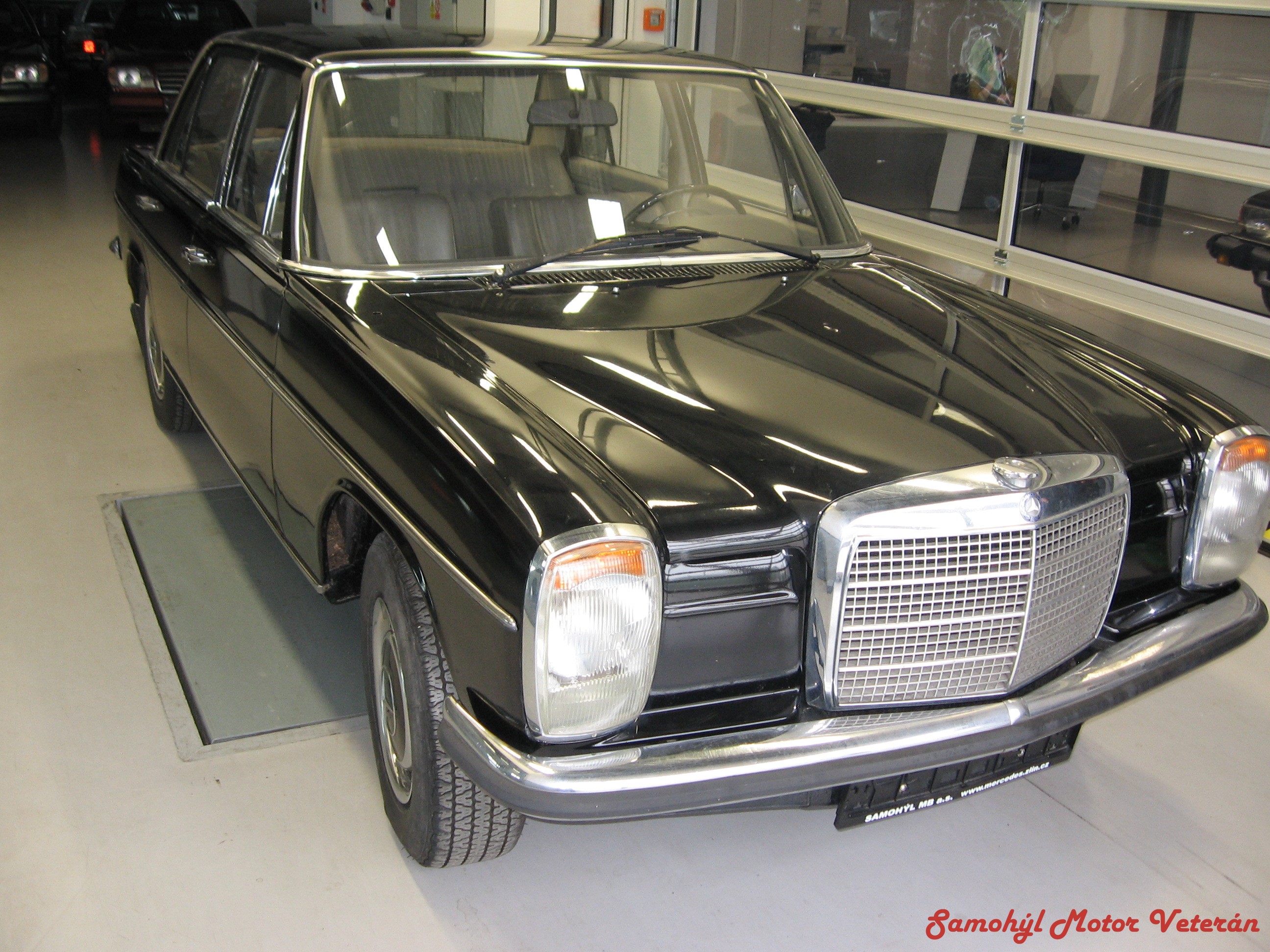
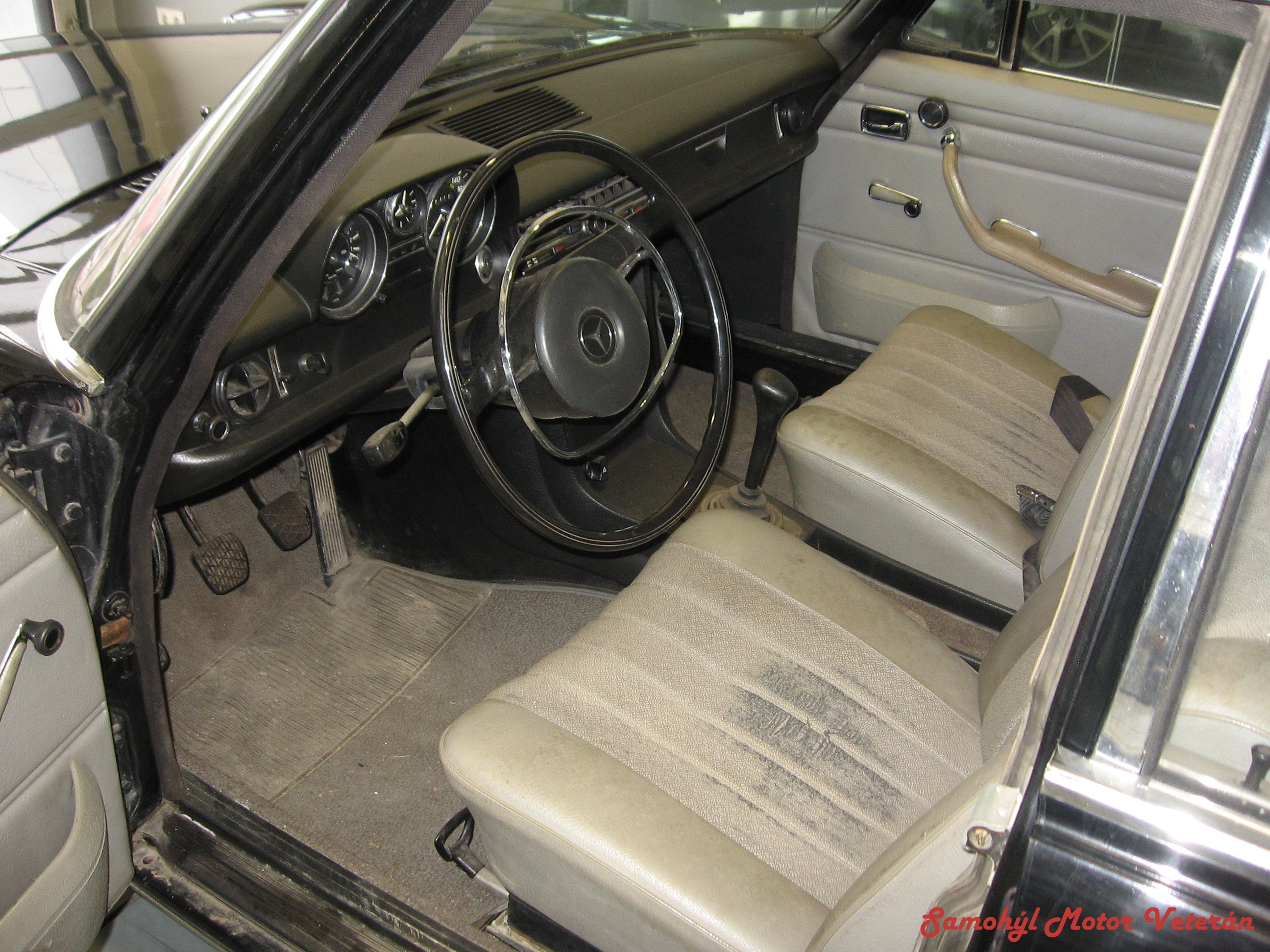
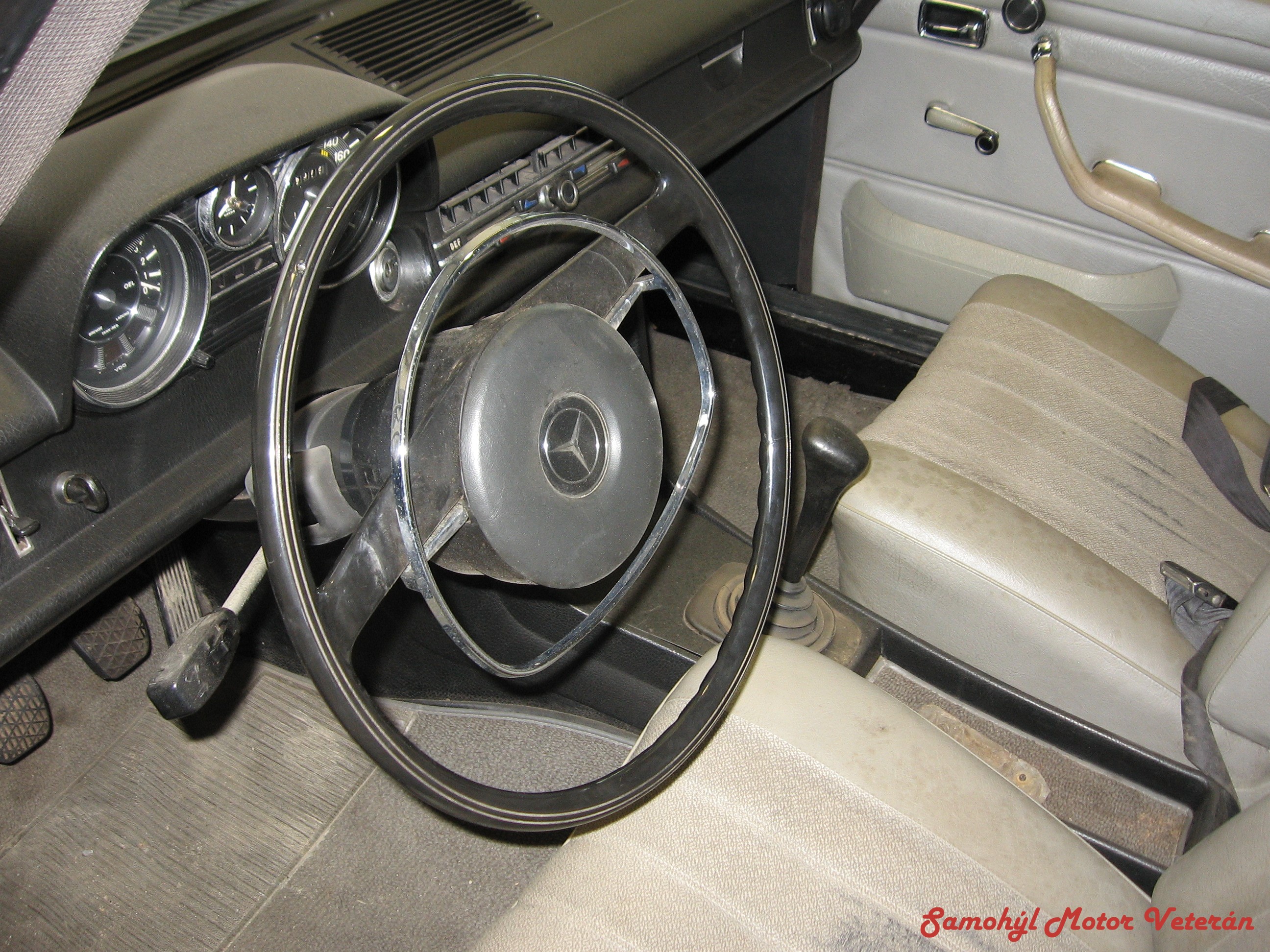
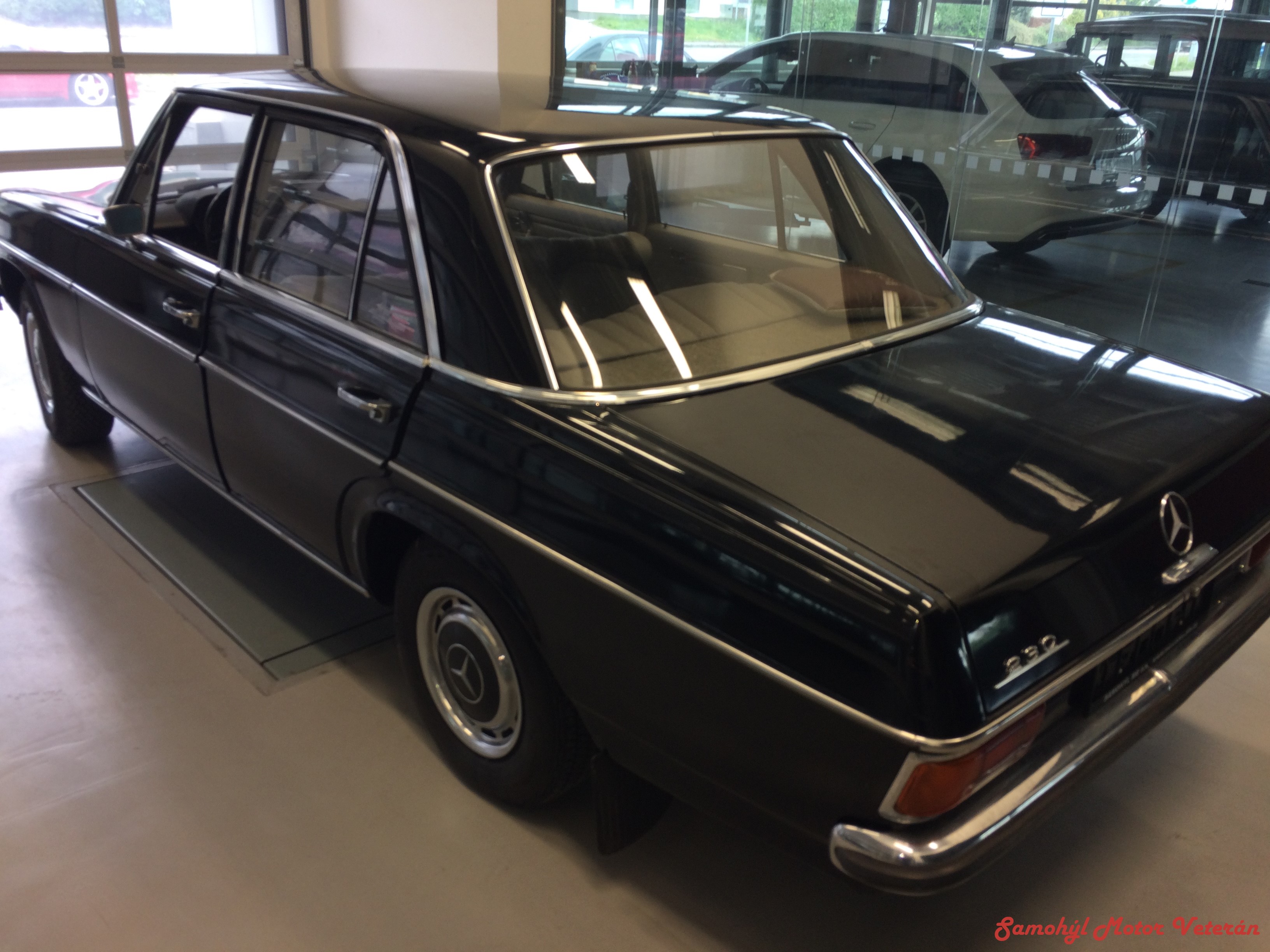
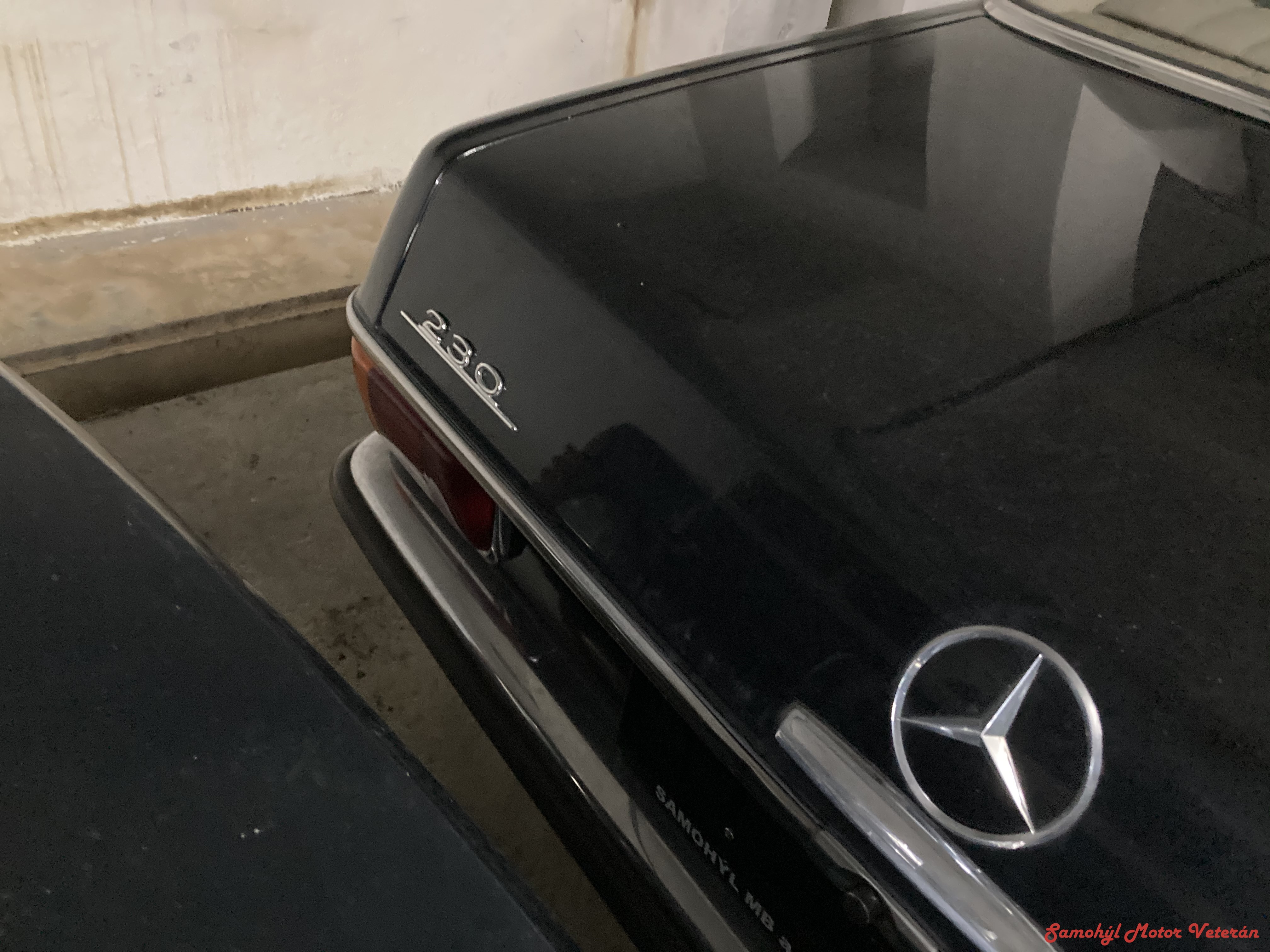
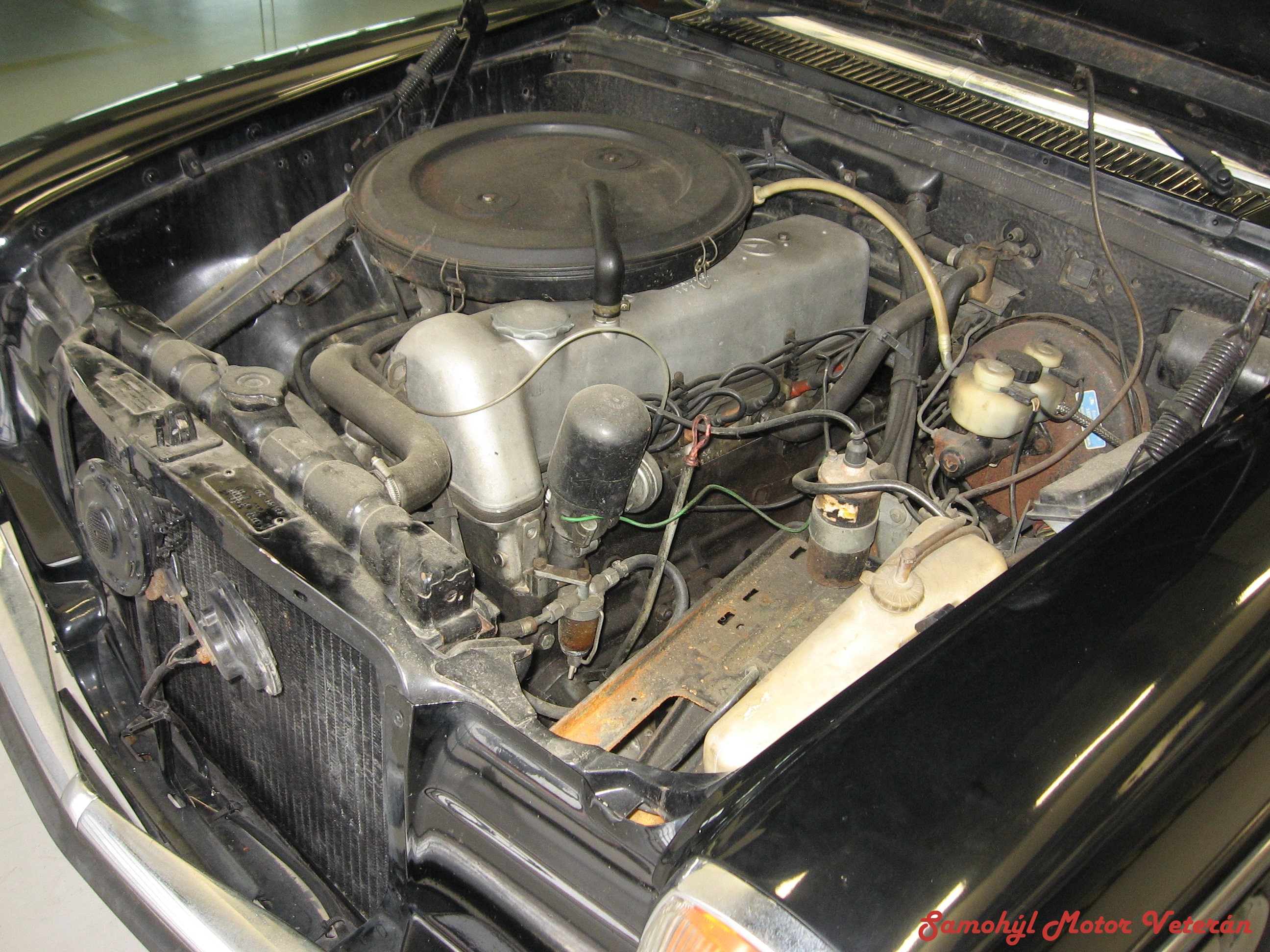
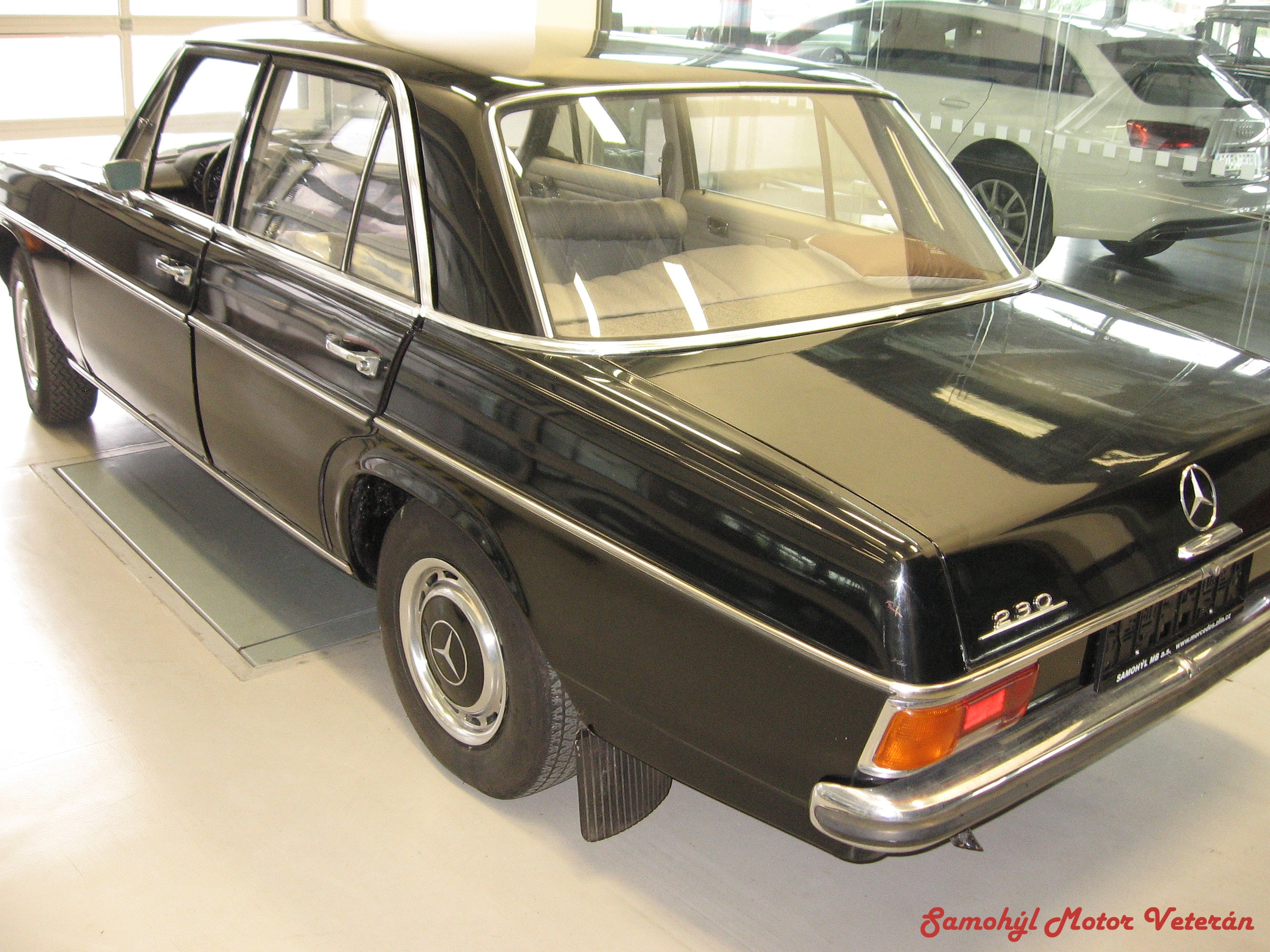
Mercedes-Benz 230 W114
Year of manufacture: 1972
Power: 135 hp
Displacement: 2,292 cm3
Number of cylinders/valves: 6/2
Weight: 1,355 kg
Condition: operational
Catalogue number: 97
The Mercedes-Benz W114 and W115 (nicknamed the “shorty”) was the internal designation used by Mercedes-Benz for a generation of classic sedans and coupes with a front-mounted engine and rear-wheel drive, introduced in 1968. At that time, Mercedes sold sedans in two classes: the mid-range W114/W115 and the larger S-Class.
The W114/W115 models were distinguished on the market by engine size badges. The W114 models had six-cylinder engines and were sold as 230, 250, and 280. Conversely, the W115 models had four-cylinder engines and were labeled 200 and 220. These also included brand-new diesel engines under the designations 200D and 220D. The cars were widely exported to North America, where they had differences mainly in body design.
The W114/W115 models were the first post-war Mercedes-Benz vehicles to use newly designed suspension, not derived from previous models. The new semi-trailing rear arms and front suspension with ball joints, first applied on the W114, were used on all new Mercedes passenger cars until the development of multi-link rear suspension in the 1980s.
The Mercedes-Benz W114/W115 was a mid-sized sedan positioned below the S-Class in the lineup. The company introduced its very first 5-cylinder diesel engine OM617 in this model. The car was designed by French automotive designer Paul Bracq, who was Mercedes-Benz’s chief designer for models from 1957 to 1967.
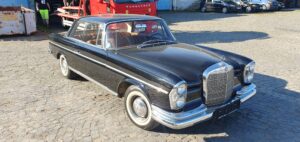
In 1969, Mercedes introduced the W114 coupe variant with a longer trunk lid and either a 2.5 or 2.8-liter six-cylinder engine. The W114 underwent a facelift in 1973 – featuring a lower hood line, a lower and wider grille, a simple front bumper replacing the previous double bumpers, lower headlight placement, modified A-pillars for better side window visibility, removal of the quarter windows in front doors, ribbed tail lights to minimize dirt coverage, and larger side mirrors. The interior received retractable seat belts and a new padded steering wheel with a four-hole design.
This model became crucial for Mercedes-Benz at the time, earning a reputation for incredible quality and near indestructibility. However, the company charged a premium for these qualities; the model was certainly not cheap. In total, 1,919,056 units were produced, including 67,048 coupes. At that time, it was the most successful model in the company’s history. The successor, introduced in 1976, was the new W123, the legendary “piano,” which eventually surpassed it in every way, including production numbers.
The car in our collection is a fairly well-preserved classic sedan with a 2.3-liter six-cylinder engine.