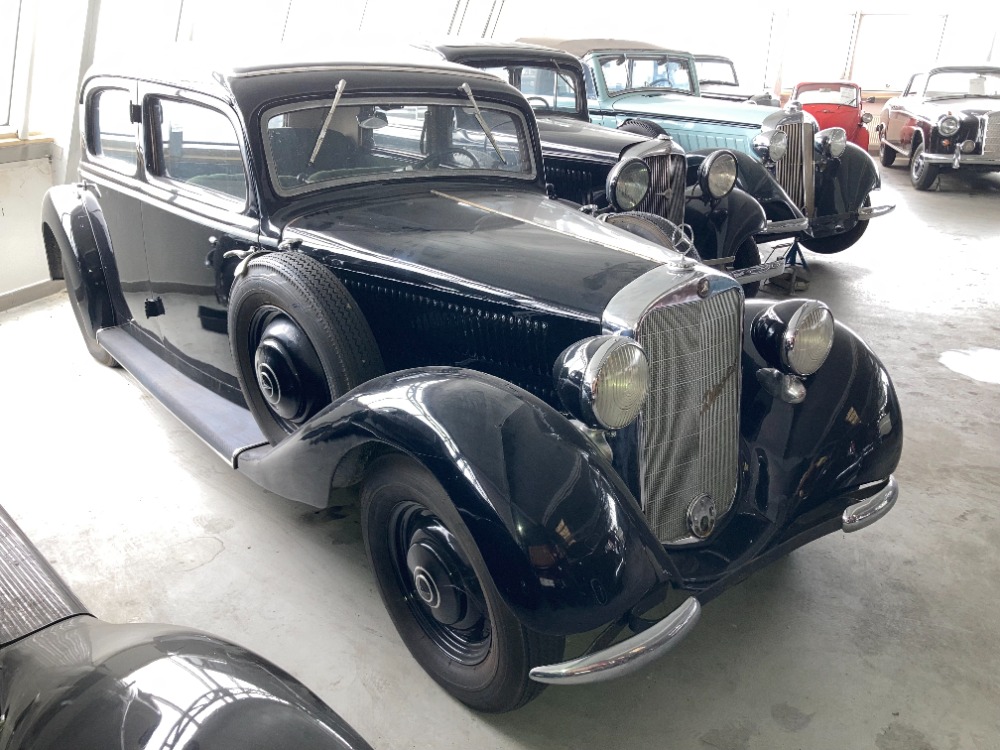
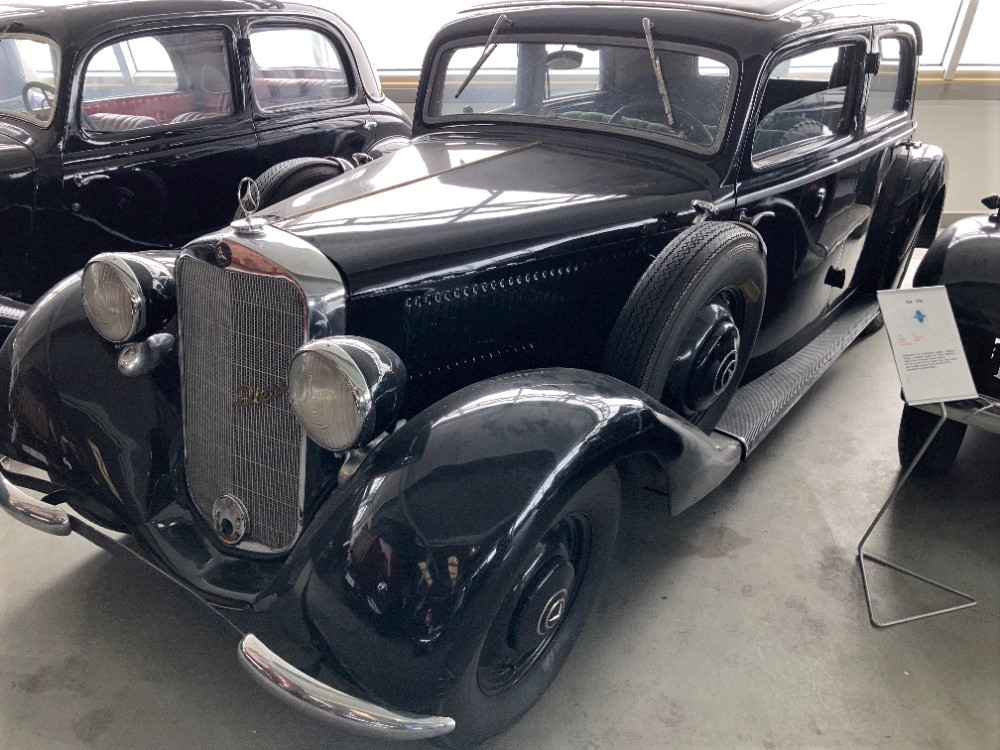
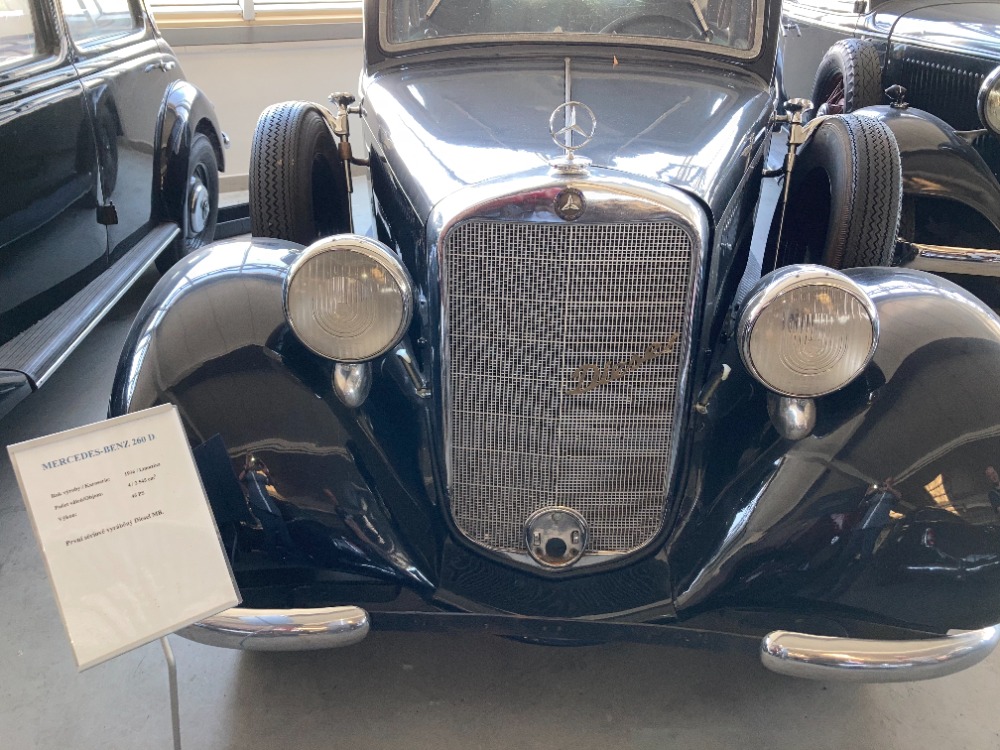
Mercedes-Benz 260 D W138
Year of manufacture: 1940
Power: 45 hp
Displacement: 2,545 cm3
Number of cylinders/valves: 4/2
Weight: 1,550 kg
Condition: drivable
Catalogue number: 19
Introduction
The diesel engine, which had already proven its advantages in commercial vehicles, seemed a natural step towards developing a passenger car with this engine. The development strategy for diesel engines intended for light commercial vehicles and passenger cars was set by technical director Hans Nibel. However, he did not live to see the series production of the 260 D model in November 1935, passing away almost exactly one year earlier. Under his leadership, the development of small-capacity diesels by the tandem Albert Heess and Eckart Schmidt was carried out at Untertürkheim. The 260 D was introduced on February 21, 1936, at the 26th International Automobile and Motorcycle Exhibition (IAMA) in Berlin.
Development
In the autumn of 1933, the first experimental engines were installed in test vehicles – 3.8-liter six-cylinder units producing 80 hp. However, engine vibrations were so strong that they made the chassis unusable for passenger cars.
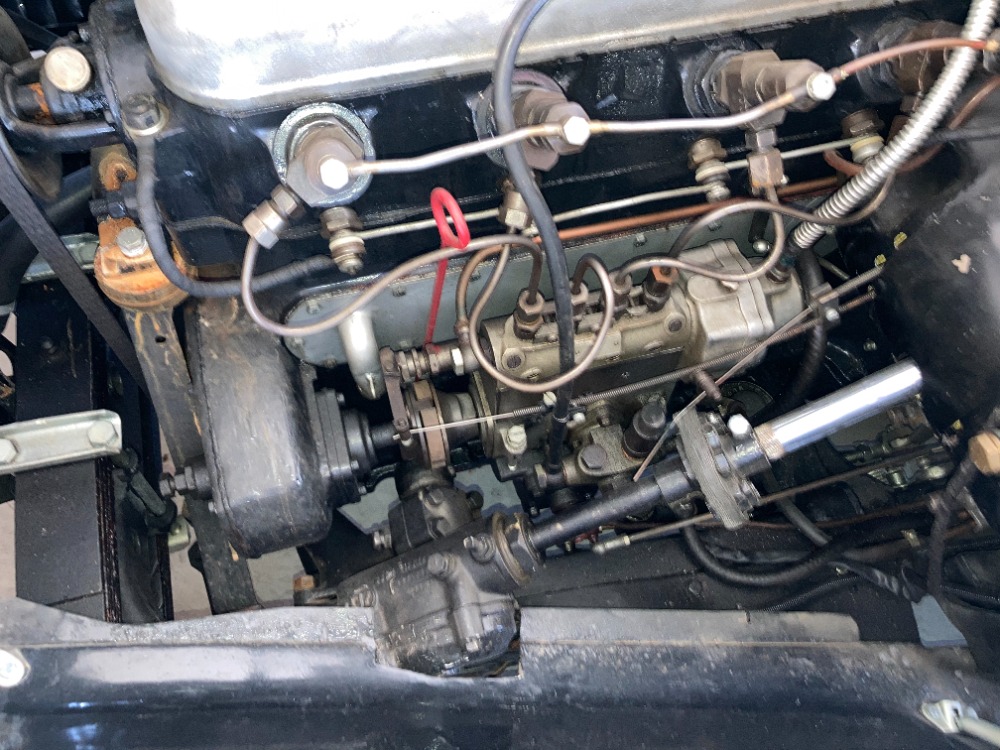
Subsequently, a four-cylinder diesel engine with identical cylinder dimensions but lower power density was developed. This 2.6-liter engine with 45 hp was installed in the long-wheelbase 200 version. After a prolonged testing program, production maturity was reached in mid-1935. In February 1936, at the Berlin Motor Show, Daimler-Benz presented the 260 D model as a six-seater Pullman landaulet, with 13 units produced since July 1935. The Hanomag Rekord, another passenger car with a diesel engine, was also shown in Berlin, but as it entered serial production only in 1938, the 260 D was the world’s first mass-produced passenger car with a diesel engine.
Technical specifications
A year after its debut in Berlin, the 260 D model, like the 230 which replaced the long-wheelbase 200, was presented in an improved version. The facelifted variant was recognizable by modifications to the radiator’s appearance. The headlights were reduced in size and mounted on the fenders instead of on a chrome strip in front of the radiator. Large Pullman limousines received more spacious bodies, adding greater prestige to their owners.
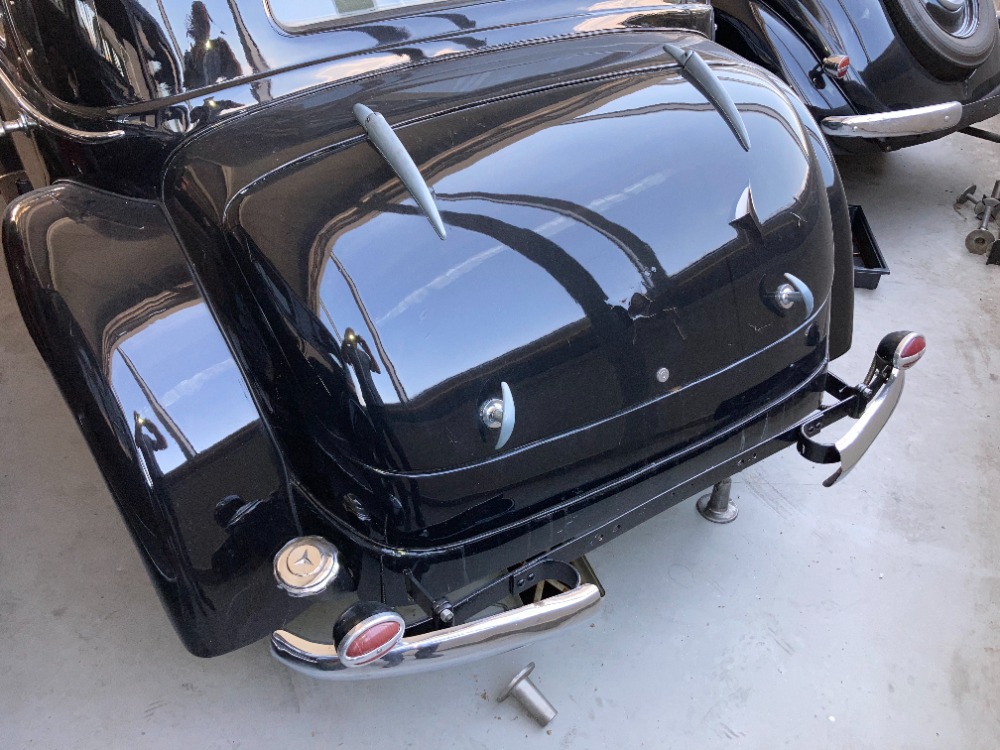
More importantly, the track width was increased. The front widened from 1,340 to 1,370 mm, and the rear from 1,380 to 1,390 mm. This allowed for wider wheels and tires (5.50 x 17 instead of the original 5.25 x 17). All four wheels were equipped with hydraulic drum brakes. The fuel tank for precious diesel grew from 45 to exactly 50 liters and was relocated from the engine compartment to the rear of the vehicle. This increased the driving range to at least 500 km. Customers welcomed this modification, as fuel stations were still very sparse in the late 1930s.
In February 1938, the previous gearbox with an overdrive was replaced by a fully synchronized four-speed gearbox with direct drive on the fourth gear. Another important innovation introduced in early 1938 was an electrically heated glow plug, which facilitated cold starts. Lastly, the 1938 model year also brought robust-looking bumpers, replacing the elegant design from 1936/37.
By December 1940, 1,967 units of the 260 D W 138 were produced. The advantages of the diesel engine – durability and economy – were thus finally utilized in a passenger car, and the 260 D laid the foundation for the lasting success of passenger cars with diesel engines. The fact that the first examples were almost exclusively used as taxis was due not only to the engine’s exceptional economy but also to the spacious six-seater body, which was launched in early 1934 as the long-wheelbase version.