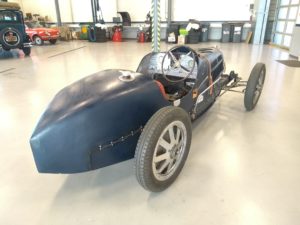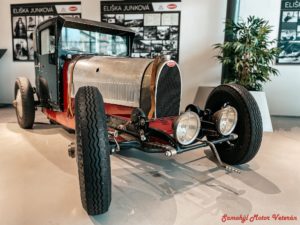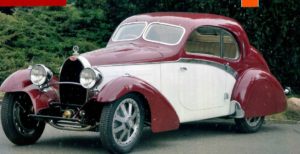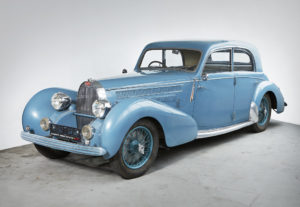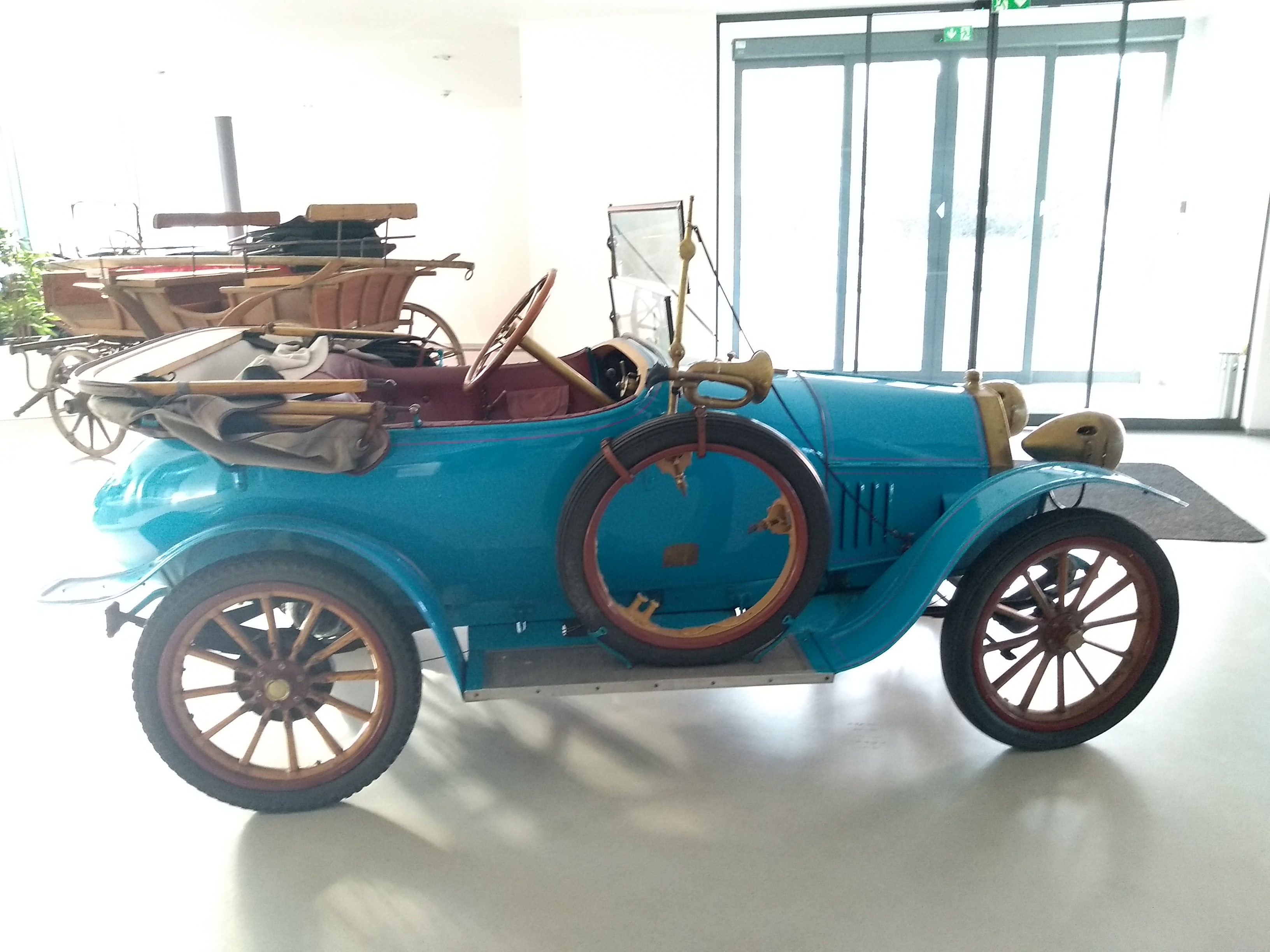
Bugatti 13
Year of Manufacture: 1911
Power: 25 hp
Displacement: 1,368 cm3
Number of Cylinders/Valves: 4/2
Weight: 380 kg
Condition: functional
Catalogue Number: 56
Ettore Bugatti worked from 1908 to 1909 as chief designer at the Cologne-based company Deutz Gasmotoren Fabrik. As soon as his contract ended there in 1910, he packed up his family and moved to the French industrial town of Molsheim. All his previous cars, on which he had collaborated, were completed in Cologne and did not bear his name.
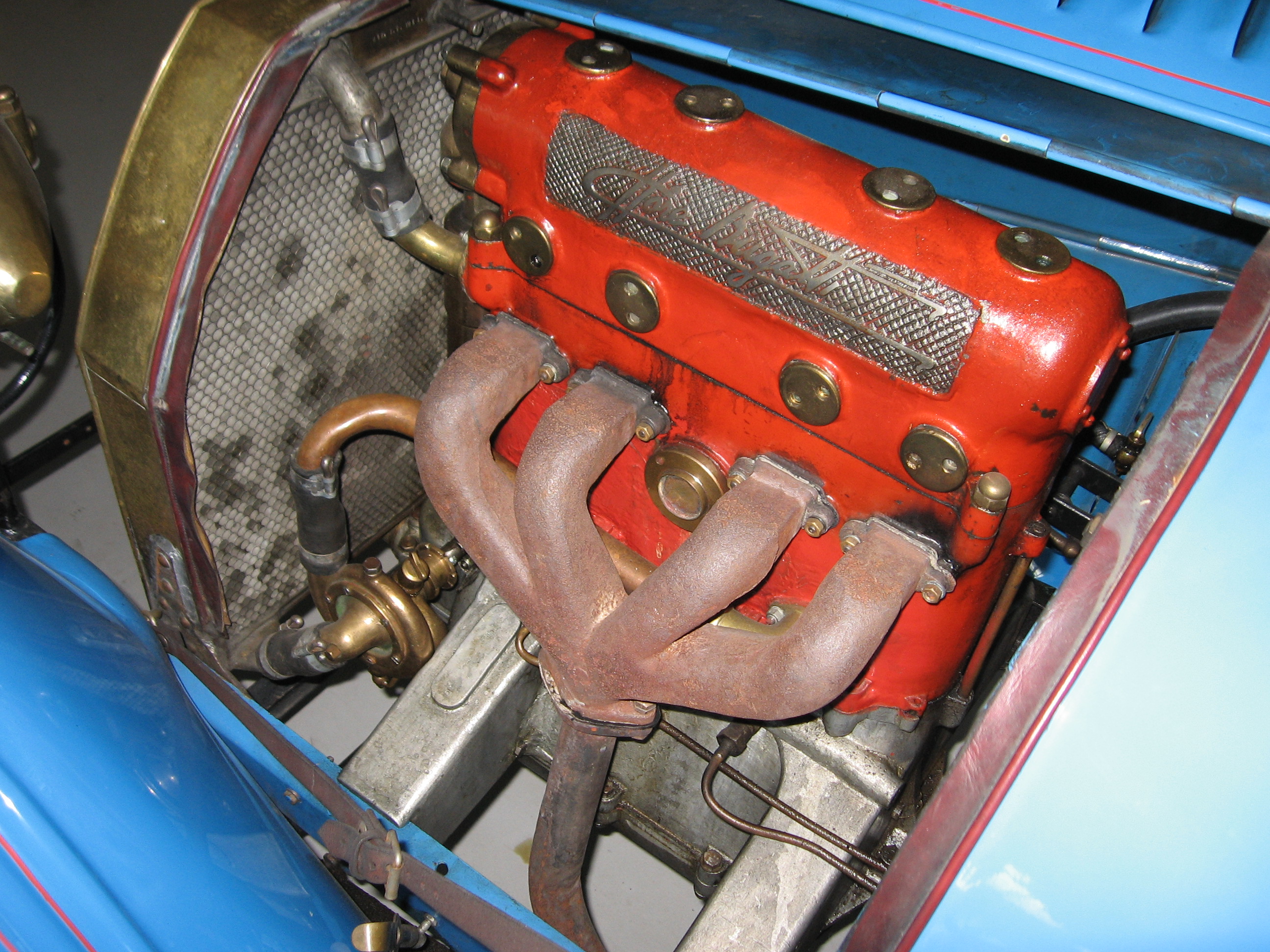
The car named Type 13 was the first automobile, to bear the Bugatti brand. The model was later modified under the designations Type 15/17/22 and 23. From 1910, when the first example saw the light of day, until 1920, 435 units of these cars were produced. Even in Cologne, during his free time, he worked on developing his own engine for this model. It was a lightweight, inline four-cylinder, very advanced design with an OHC valve train. Most of these subsequently produced engines had the classic 8 valves for four cylinders, but a few vehicles were made with engines equipped with 16-valve heads. This was the Type 13 Brescia, which in its time and category became the embodiment of Bugatti’s invincibility on racing tracks. Bugatti was one of the first companies in the world to manufacture 16V engines.
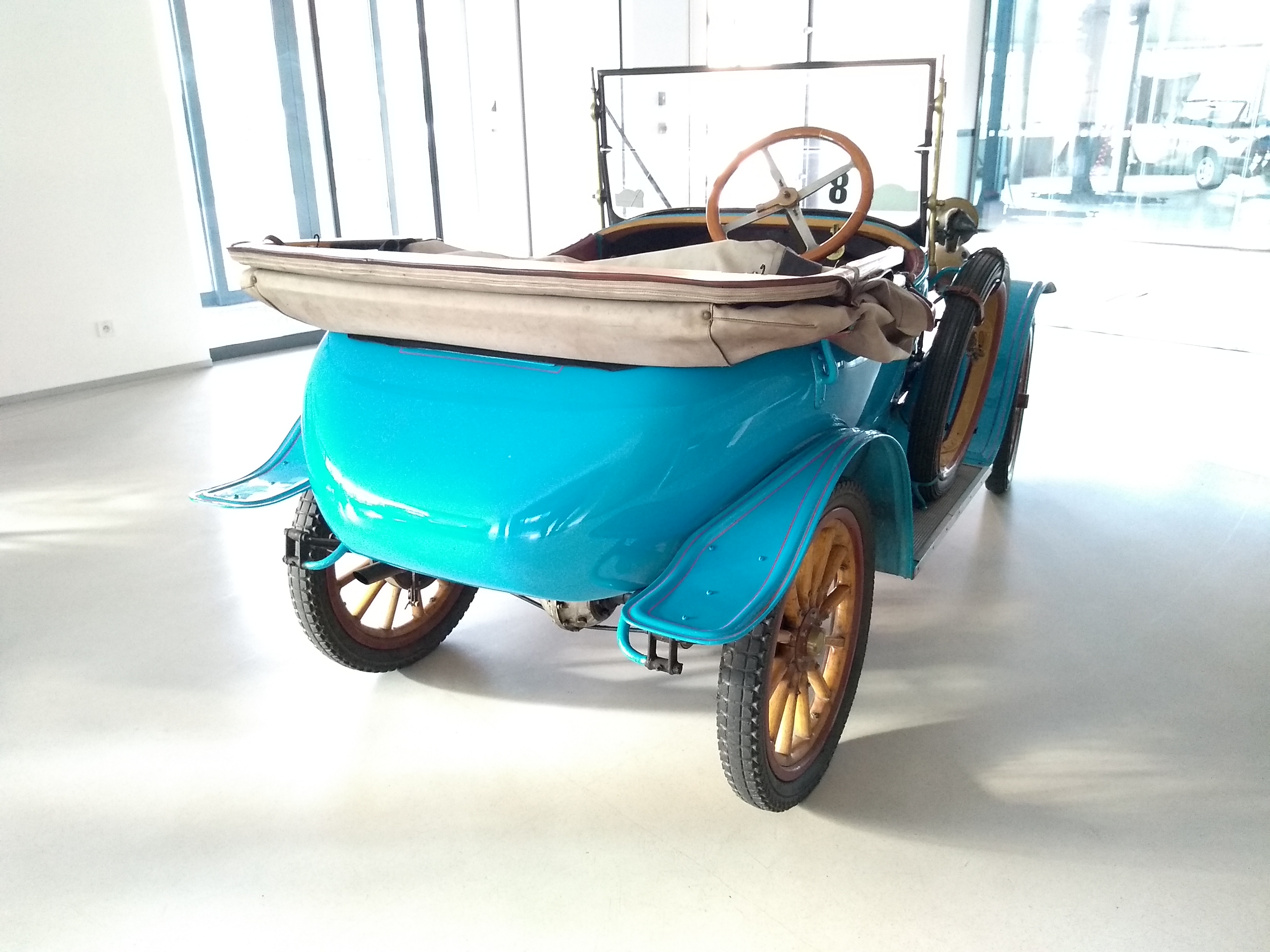
Type 13 was a single-door two-seat roadster with a front engine and rear-wheel drive. The ignition, water-cooled, inline four-cylinder (R4) engine had a displacement of 1327 cm³, Zenith carburetor, naturally aspirated, outputting 15.0 kW (20.0 hp) at 2800 rpm, with a mechanical four-speed gearbox, a curb weight of 450 kg, and a top speed of 100 km/h. It featured a rigid front axle with longitudinal leaf springs and a rigid rear axle with longitudinal leaf springs. The car had no front brakes, only rear drum brakes. It also already had the famous horseshoe-shaped radiator grille, which remains a typical feature of all Bugatti cars to this day.
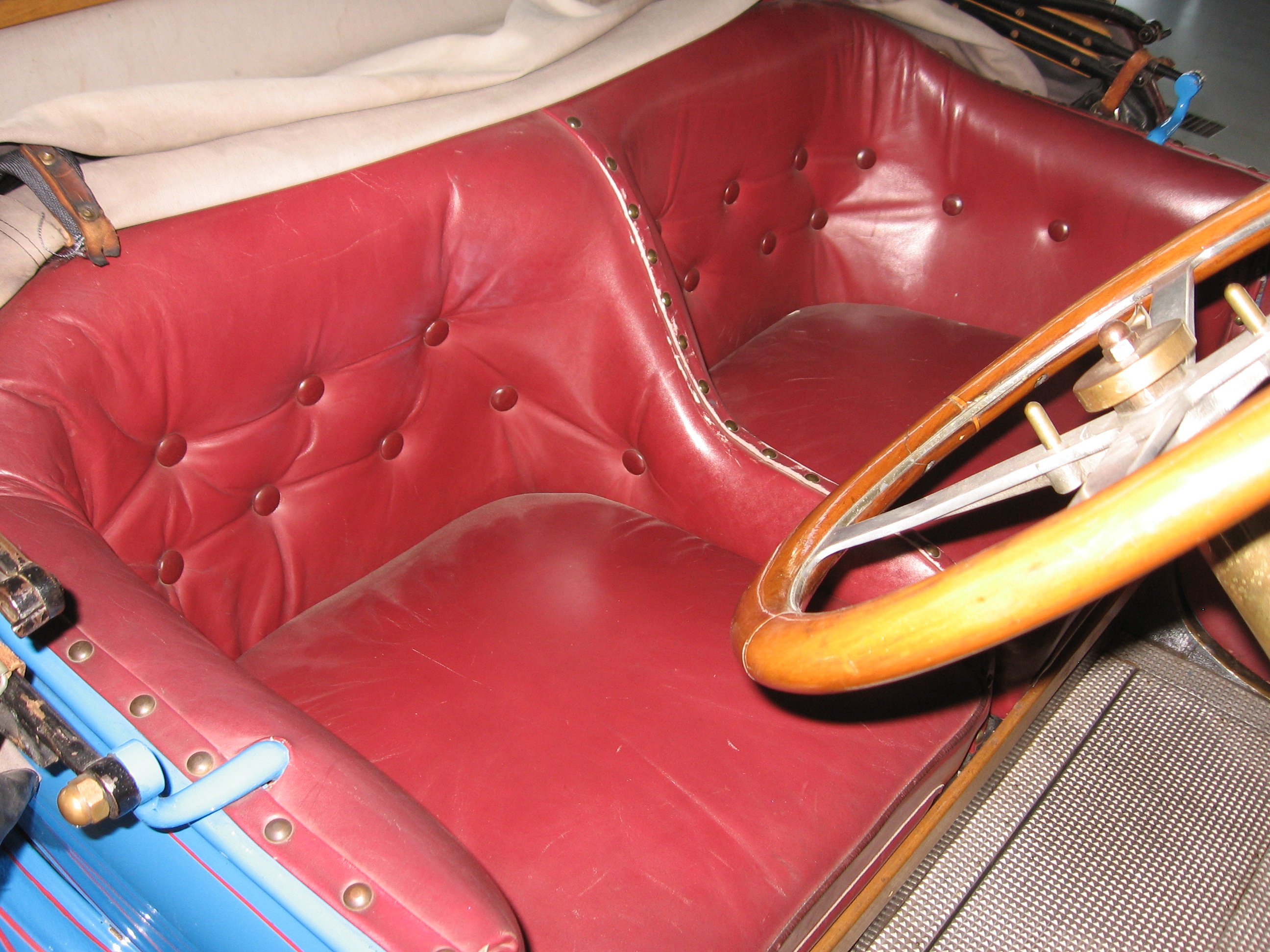
This particular car has been in the Czech lands for 104 years. In March 1912, it was purchased as a fully operational chassis by the Viennese dealer Franz Michelfeit, but it did not stay with him long. Fitted with a custom two-seat sporty body by the Austrian coachbuilder and wagon maker A. Schwanzar, it headed to Třeboň already in 1913. For the next 14 years, it belonged to the local veterinarian Dobroslav Horák.
After various vicissitudes, the car was eventually bought into the collection of Mr. Samohýl from Mr. Šeda. Interestingly, it is the 3rd oldest preserved car of this model, and the oldest preserved Type 13 is held in the collections of the NTM in Prague. This again confirms that the Czech lands were truly devoted to this brand.
This fully functional car can be seen at various vintage car events, where it is mostly driven by the famous cardiac surgeon prof. MUDr Jan Pirk DrSc.