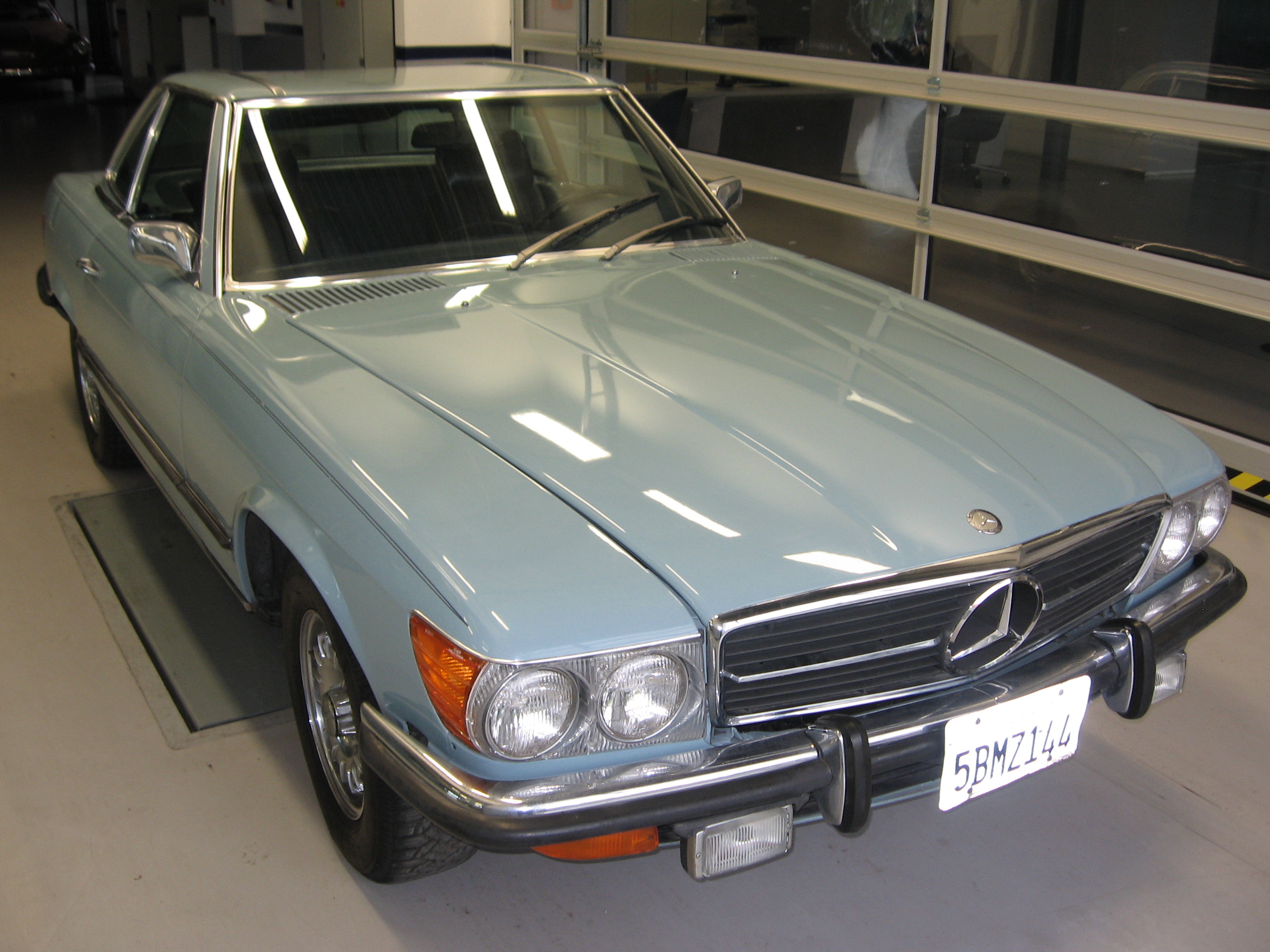
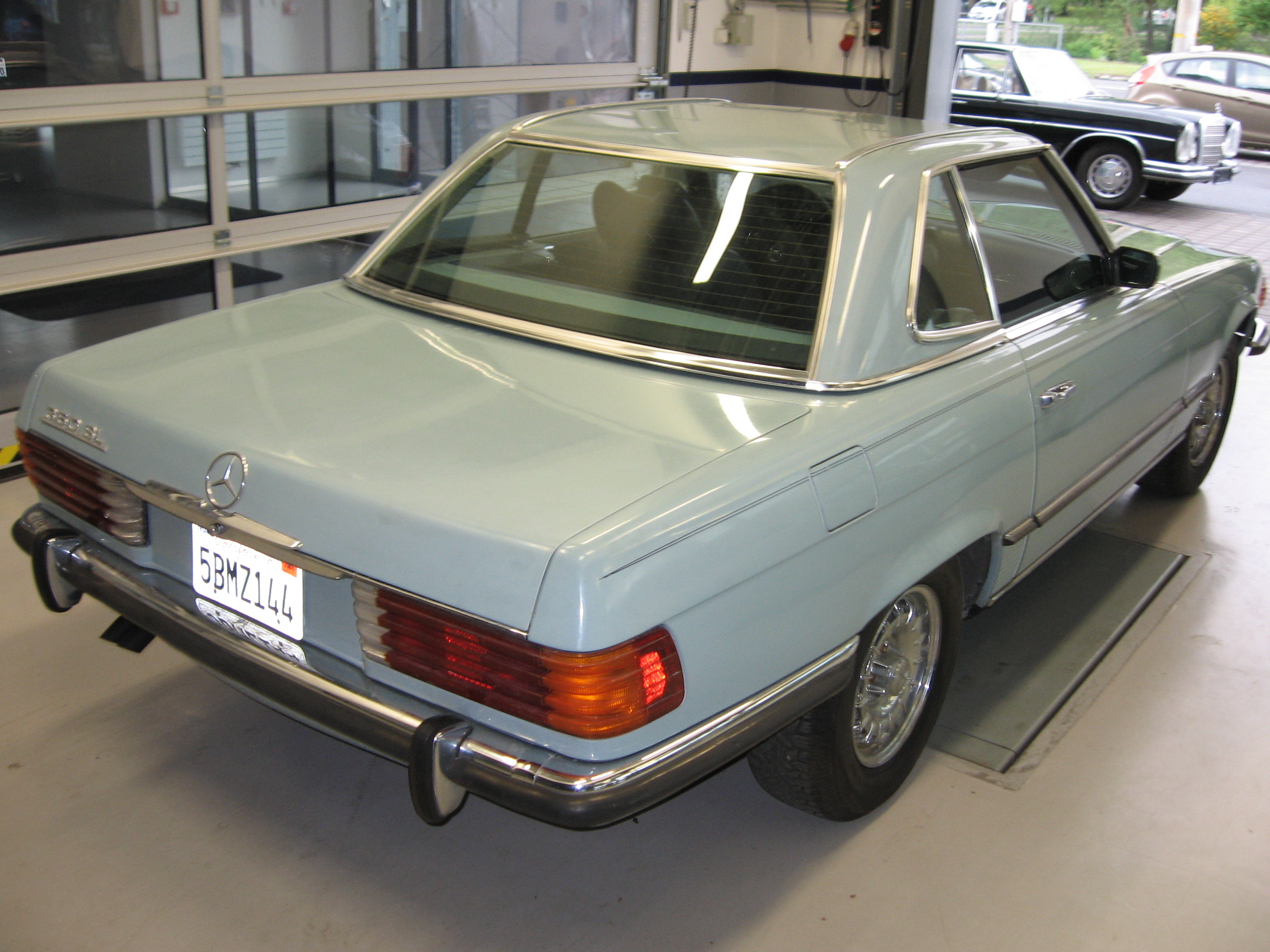
Mercedes Benz SL 350 W107
Year of manufacture: 1972
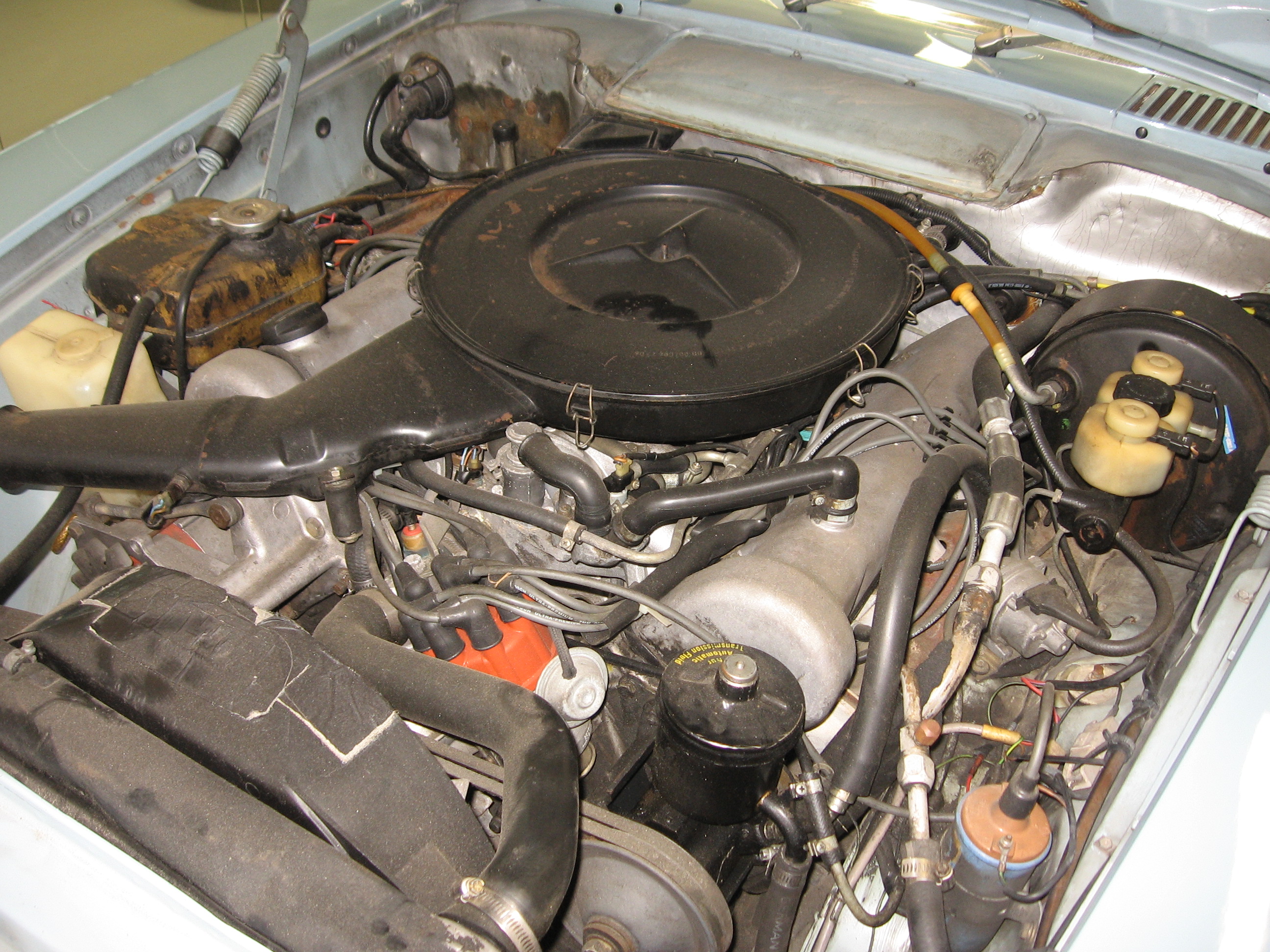
Power: 194 hp
Engine displacement: 4,520 cm3
Number of cylinders/valves: 8/2
Weight: 1,632 kg
Condition:
Catalogue number: 39
History
The Mercedes Benz 107, also known as the Timeless Endurer, was produced from 1971 to 1989. It was the second longest-produced series by the German automaker Mercedes-Benz, after the off-road Mercedes-Benz G-Class. The cars were sold under the model names SL (R107) and SLC (C107).
Development
The R107 and C107 adopted chassis components from the mid-size W 114 model and originally paired them with M116 and M117 engines used in the W108, W109, and W111 series.
Mass production of the R107 350 SL began in April 1971, offered with an optional four-speed hydraulic automatic transmission. The car accelerated from 0 to 100 km/h in 8 seconds.
In March 1973, the 450 SL/SLC was introduced to the North American market, equipped with a 4.5-liter 8-cylinder engine.
In September 1977, the 450 SLC 5.0 joined the lineup. This was a homologation version of the large coupe featuring a new aluminum 5.0-liter engine.
Starting in 1980, the 350, 450, and 450 SLC 5.0 were replaced by the 380 and 500 SLC models. The cars were slightly updated, including replacing the three-speed automatic with a four-speed unit.
In 1981, production of the 280, 380, and 500 SL models ended and was replaced by the new W126 380 and 500 SEC series.
From September 1985, the 280 SL was replaced by the new 300 SL and 380 SL, the 500 SL continued, and the 560 SL was introduced for some non-European markets, especially the USA, Australia, and Japan.
Technical specifications
Mercedes-Benz engineers paid great attention to small details in the W107. For example, this model was the first to feature well-known rear lights with horizontal ribs (previously used only on trucks), which prevented dirt buildup.
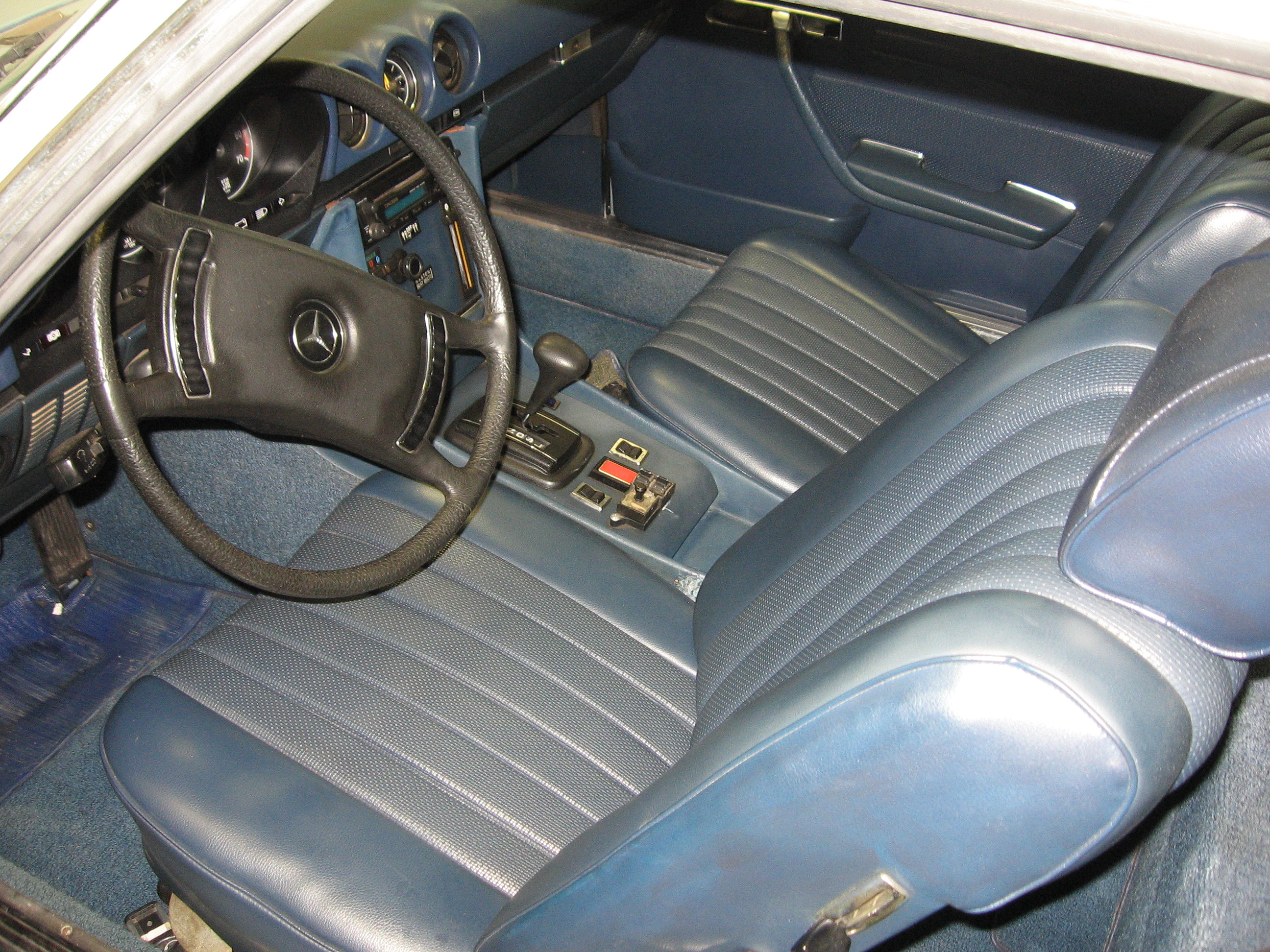
The chassis featured a closed tunnel necessary for the installation of the transmission and driveshaft, with a floor frame reinforced by longitudinal and cross members. The body was welded on top, either a two-seat roadster or a coupe for two adults and two children. The steel varied in thickness, and intelligently designed crumple zones, patented by Béla Barényi, absorbed most of the impact energy during collisions, resulting in less injury to occupants inside the so-called safety cell. The four-spoke steering wheel included a telescopic shaft and a polyurethane-padded hub. The dashboard was padded with foam to protect occupants during impacts. The fuel tank was located above the rear axle and did not rupture in collisions.
All American models used the 4.5-liter engine and were named 450 SL / SLC.
Interesting facts
Returning to Germany, but also slightly to America, albeit further south, teaching a 4.75-meter-long car to race was a difficult task—but it was accomplished. The SLC coupe achieved great success in competitions. In 1978, Andrew Cowan and Colin Malkin won the demanding Vuelta a la América del Sud marathon. After five weeks traveling mostly off-road through South America, the two drivers completed the route of over 28,500 kilometers with their heavy 5.0-liter Mercedes 450 SLC better than anyone else. Only 22 crews out of 56 finished the race.
Record holder
Thanks to its long career, the R107 still holds the record for the highest number of units produced among all generations of “eselka”. By August 1989, 237,287 units were built in Sindelfingen. The SLC coupe ended its ten-year career at only 62,888 units and is now relatively rare. Its career is a record as well, as no personal Mercedes model was produced for so long (the G-Class is not exactly a personal vehicle). The successor to the R107 series was the SL R129, first presented in March 1989. Although its production was shorter, by today’s standards it was still a long active life, produced for twelve full years.