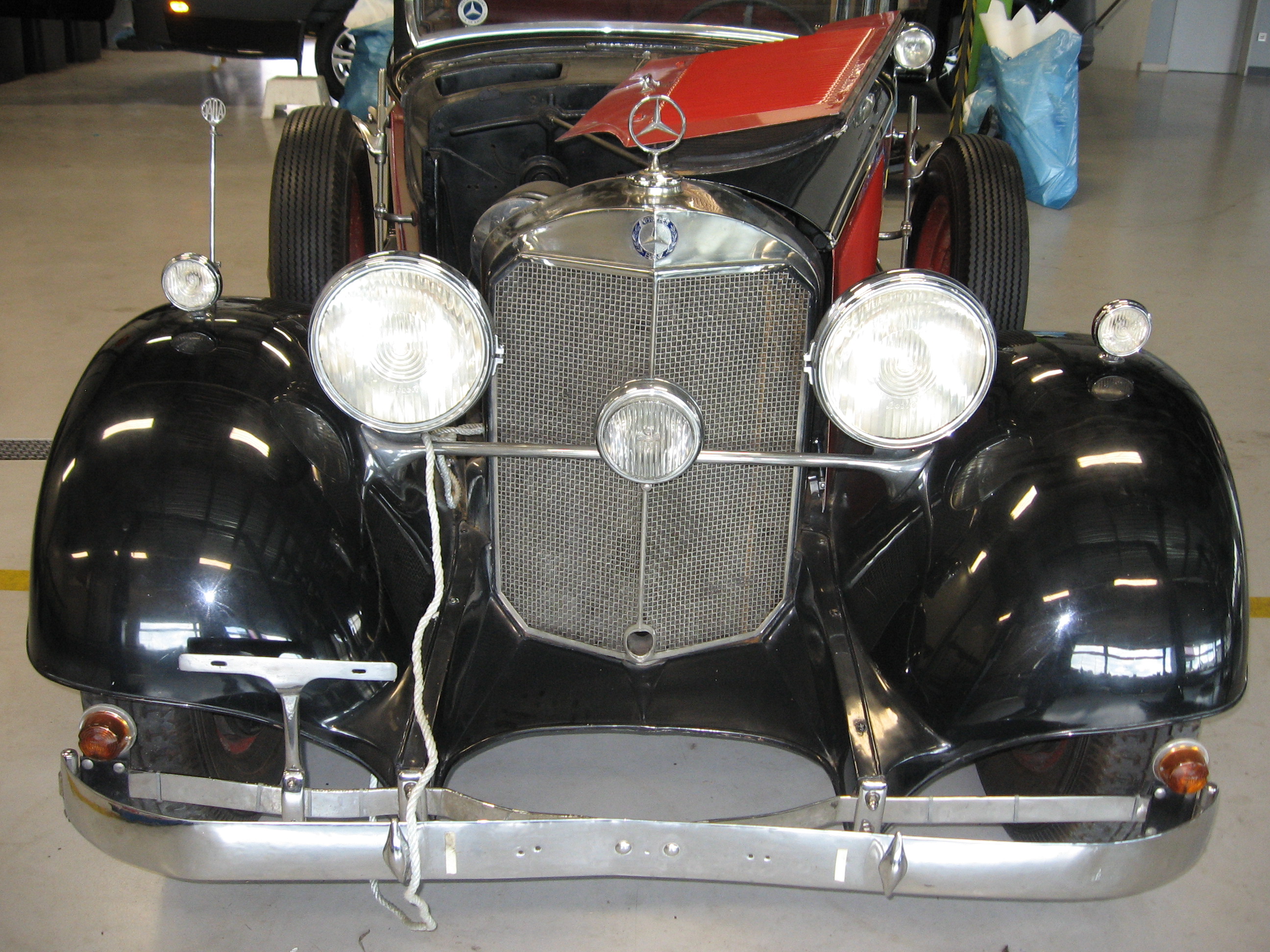
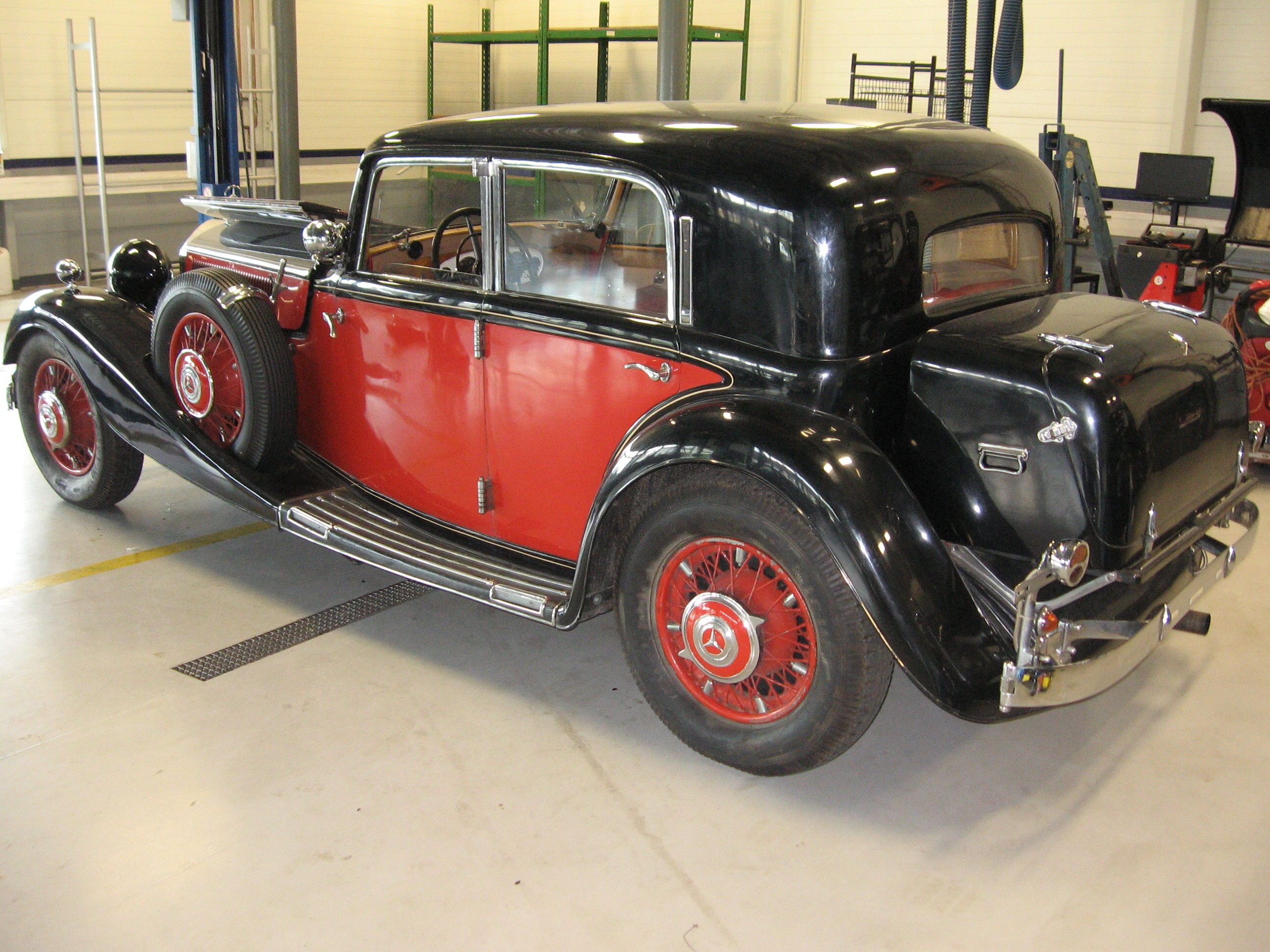
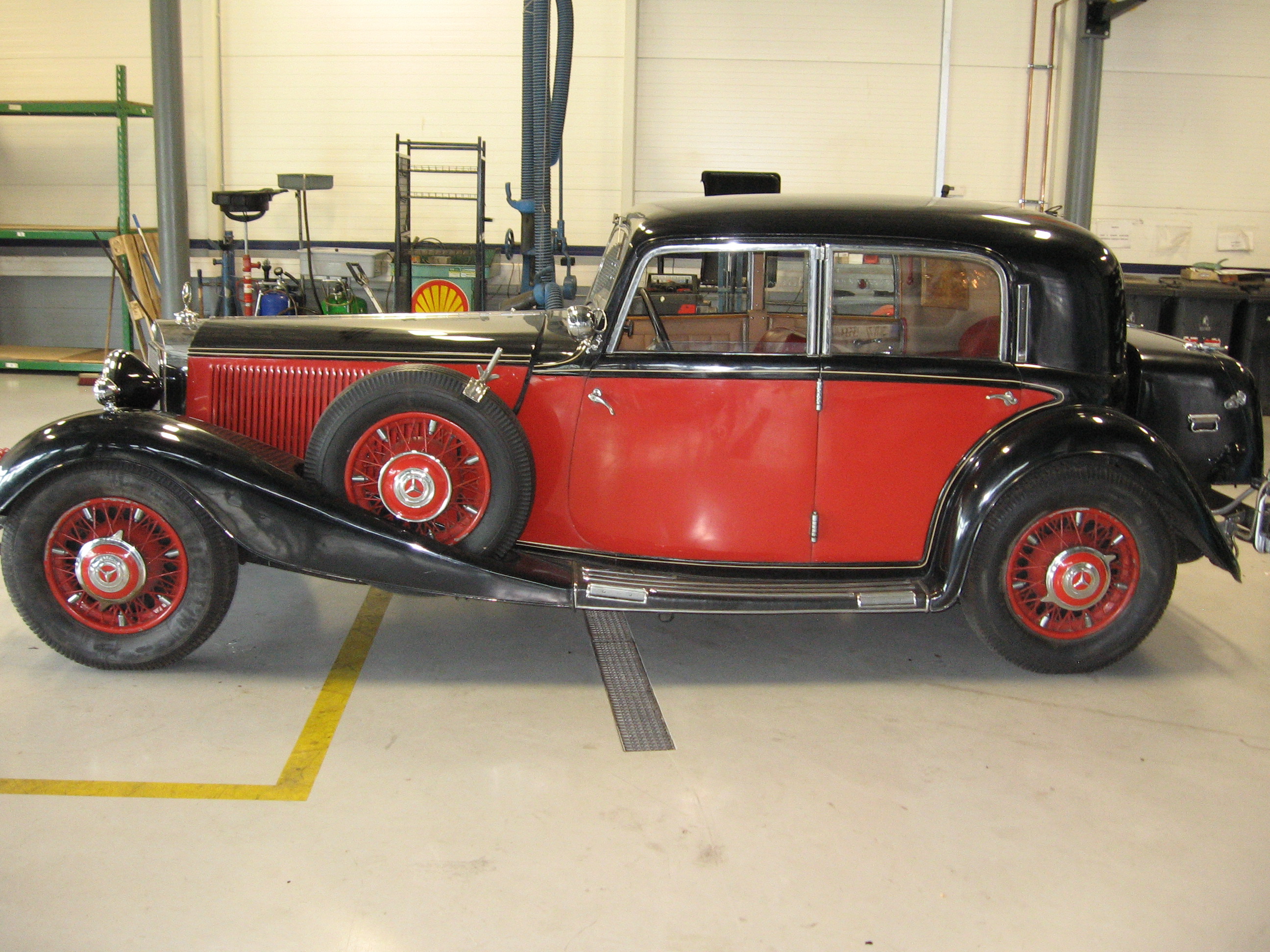
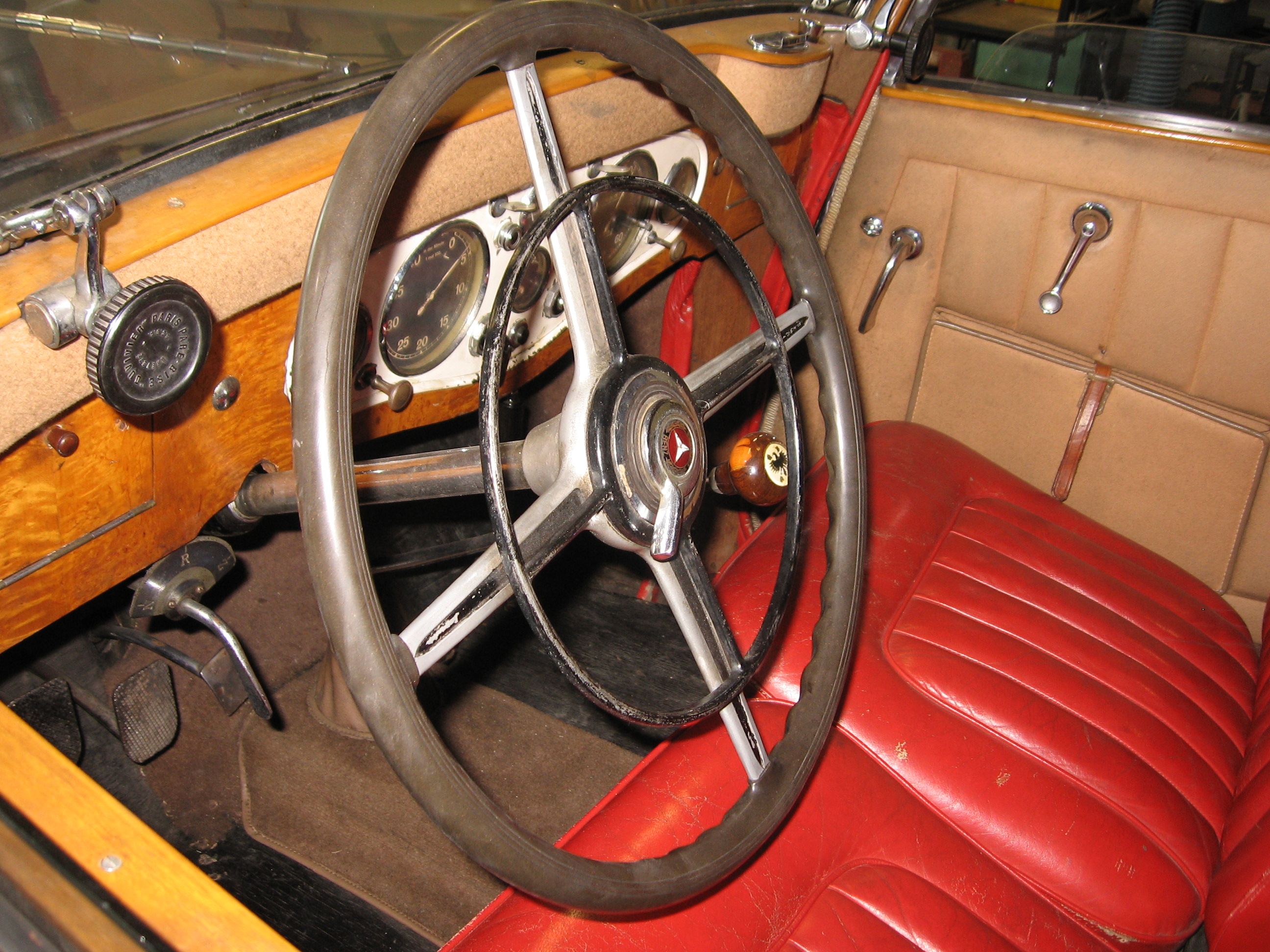
Mercedes Benz 380
Year of Manufacture: 1933
Power Output: 120 hp
Displacement: 3769 cm3
Number of Cylinders/Valves: 8/2
Weight: 2050 kg
Condition: Operational
Catalog Number: 94
It should be emphasized that the Mercedes-Benz 380 is a true rarity, with this particular body style reportedly produced in only two units. Its elegance was recognized in 1933 at the Concours d’Elegance in Barcelona, among other accolades. According to foreign expert literature, only about five examples of all versions of this model have survived in European collections.
The era of a new generation of high-performance sports cars powered by supercharged inline OHV eight-cylinder engines—immortalized particularly in the form of the sleek Mercedes-Benz 500 K and 540 K roadsters—began in February 1933 with the introduction of the Type 380, internally designated as W 22.
Technical Specifications
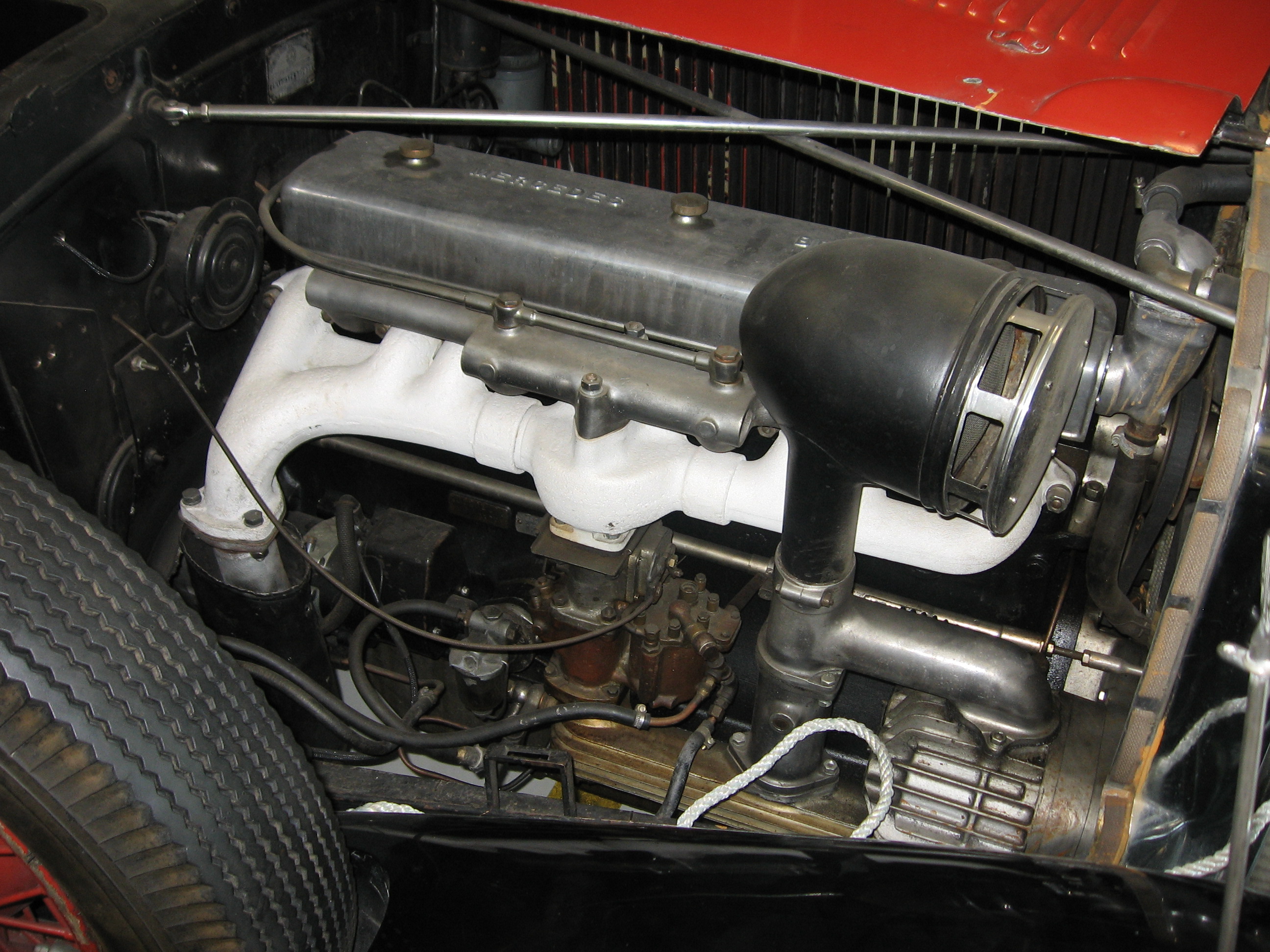
This is a liquid-cooled inline petrol OHV eight-cylinder engine with a displacement of 3,769 cm3. It featured a four-speed manual transmission with overdrive. The operational weight was approximately 2,050 kg, and the top speed reached up to 137 km/h. Average fuel consumption was around 25 liters per 100 km. From summer 1933, a more powerful version with increased supercharger pressure was offered, delivering up to 140 hp.
Development
The model was based on the modular design of the Type 290. This intermediate model inherited, among other things, solid axles and mechanically operated brakes from the original Mannheim.
The next stage of development, designated W19, featured a significantly more modern chassis with independent suspension on all wheels and a hydraulic braking system. Twenty units were produced, none of which appeared in official catalogs or price lists—similarly to the fourteen subsequent W20 vehicles.
The public first saw the Type 380 W22, which mainly differed by its OHV valve system, twin carburetors of in-house design, and an optional supercharger. When activated, the supercharger temporarily increased power output from 90 to 120 hp during acceleration. Unlike its visually similar successors—the 500 K series—the W22 is easily distinguishable by the absence of the signature “flying goose necks” (external exhaust manifold covers). The engine was also positioned further forward in the chassis compared to its predecessors.
Interesting Facts
The manufacturer anticipated demand for custom-built bodies in this upper-class vehicle segment. On a chassis costing 13,000 Reichsmarks, a number of unique creations were made.
Vehicles with factory bodies were priced uniformly at 19,500 Reichsmarks—equivalent to the cost of four Type 200 sedans.
However, it became evident that the 3.8-liter engine was not quite sufficient for the expectations of a vehicle in this class. This soon led to further development of the model line—ushering in the legendary pre-war Mercedes models, the 500K and especially the 540K. But those belong to another chapter.