Nostalgic Edition 35
Tady je překlad s ponecháním HTML formátování:
—
Year of Manufacture: 2016
Power: 130 hp
Displacement: 2,292 cm3
Number of Cylinders/Valves: 8/3
Weight: 750 kg
Condition: perfect
Catalogue Number: 63
Nostalgic Edition 35B
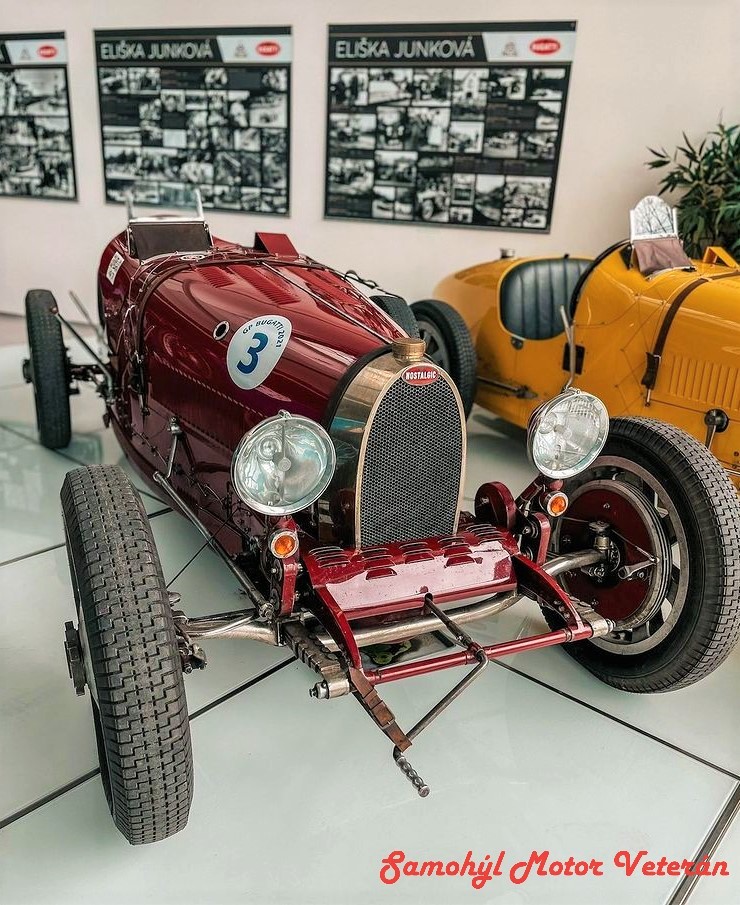
What brand is this? What are Nostalgic Edition cars? Why are they part of the Samohýl family historic vehicle collection and hold an important place there?
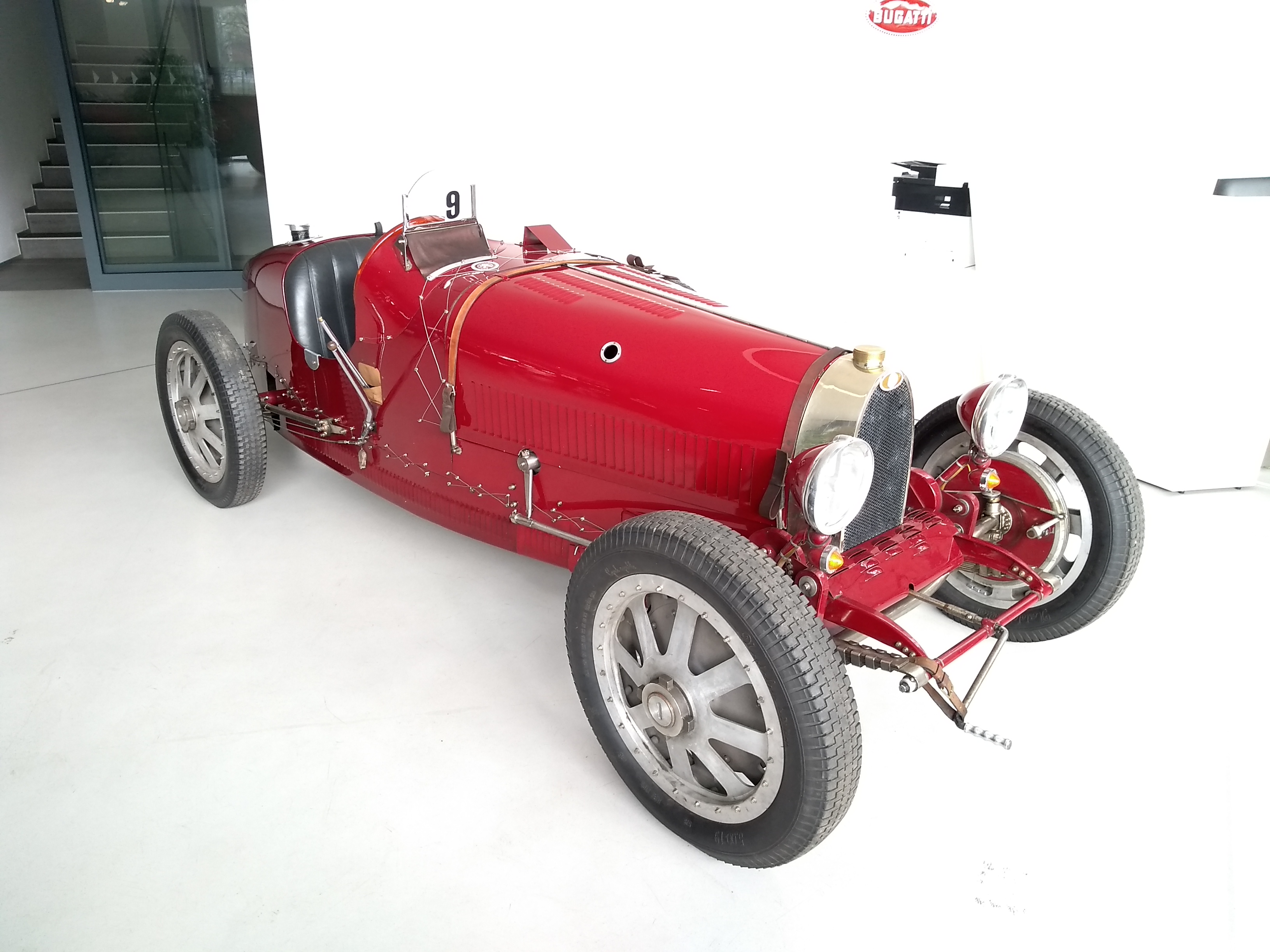
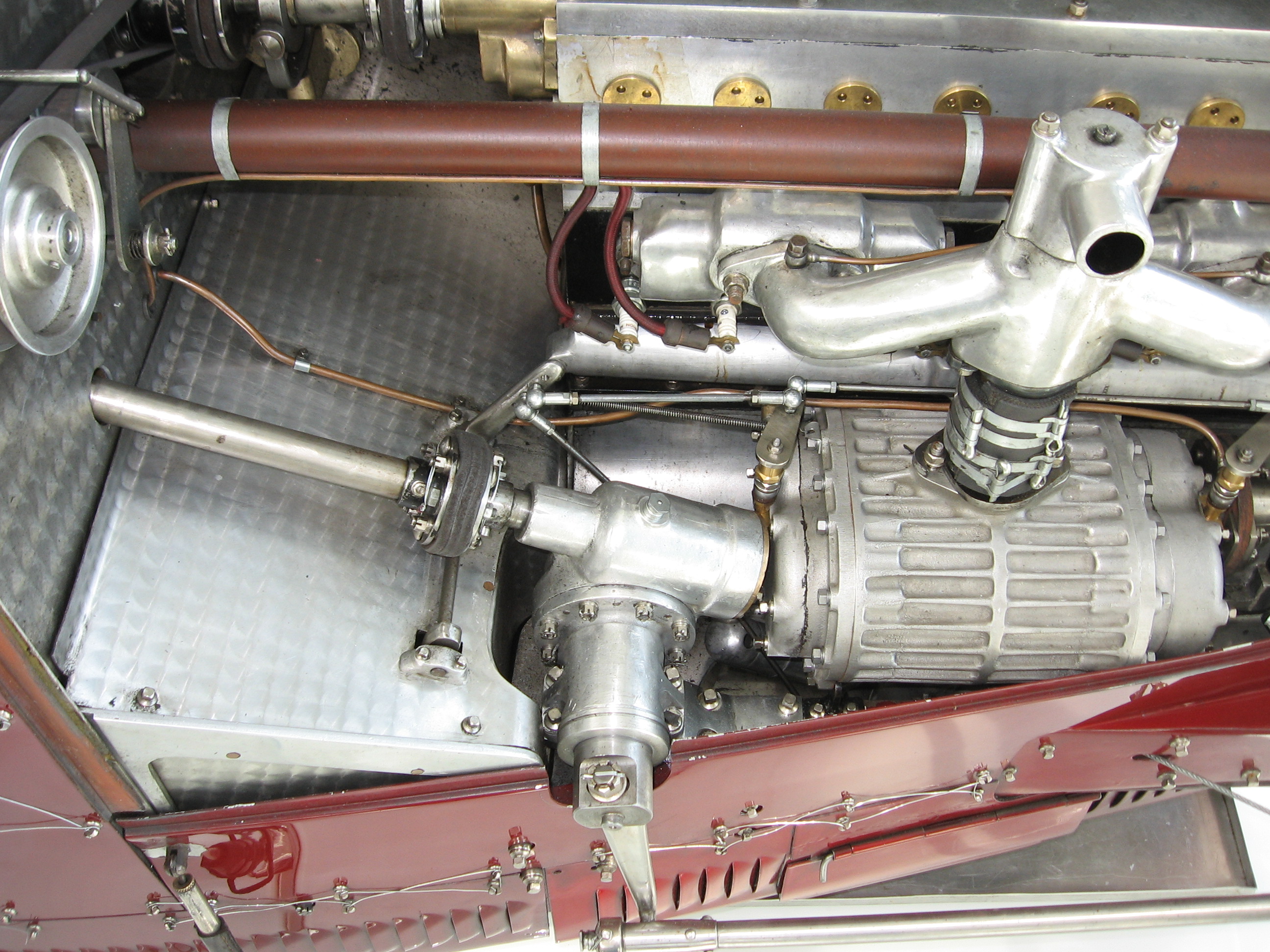
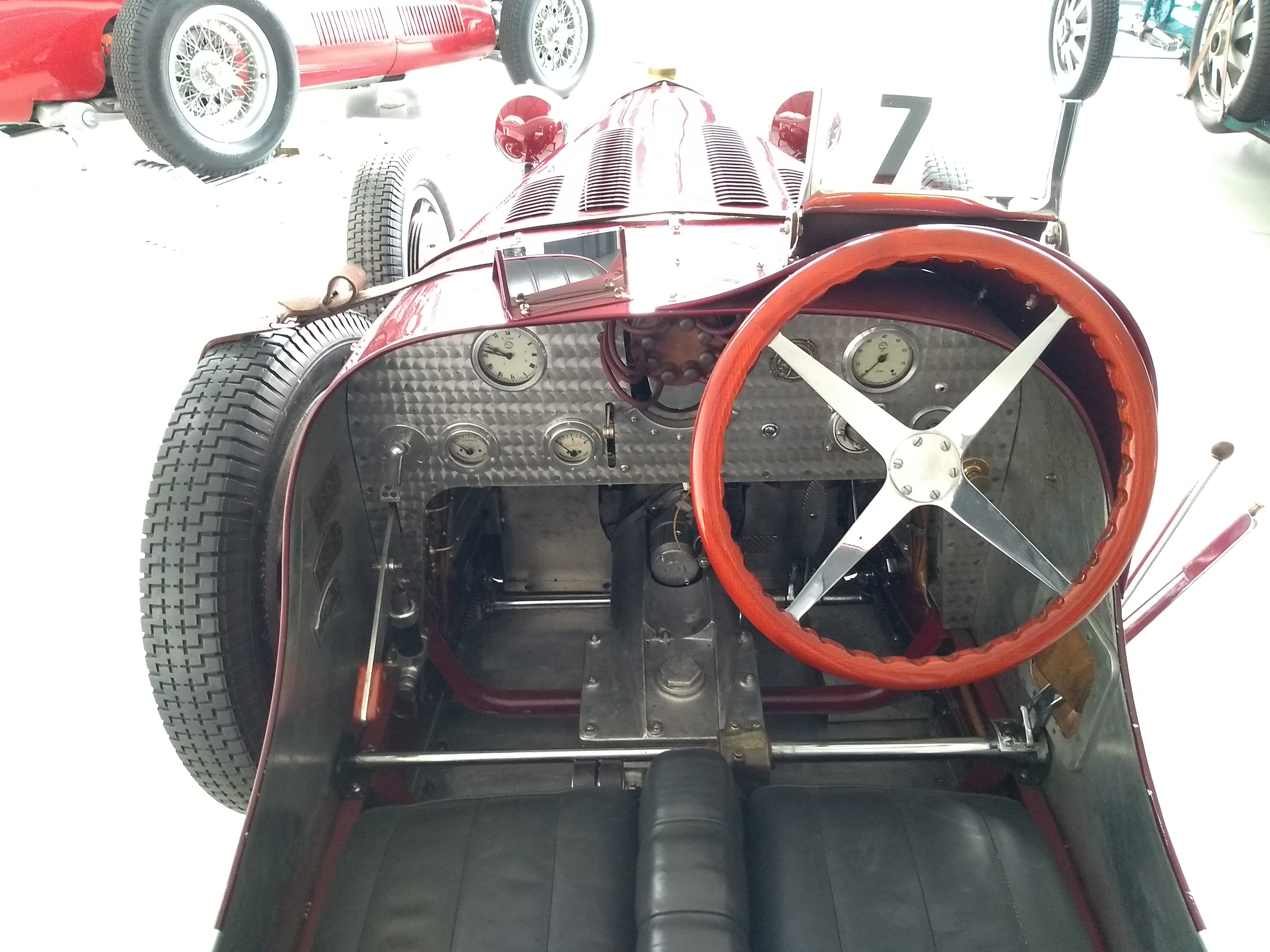
When Mr. Ladislav Samohýl purchased two original Bugatti GP cars, it was necessary to renovate and restore them to original working condition. Authentic period parts are very rare, expensive, and often worn. The best known manufacturer and supplier of these spare parts and even entire vehicles as replicas is the Argentine company Pur Sang. Missing parts were ordered from them. However, after payment and delivery, the parts turned out to be poor quality and ultimately unusable. What now? Classic Czech traits prevailed—flexibility, skill, craftsmanship, and inventiveness. The first idea was to produce the parts ourselves, but setting up production was very costly and complex. So why cast only 2 engine blocks in a foundry when you can make more? In the end, a production series of 20 units of these beautiful and legendary cars was planned and is now being realized. Everything is made to original parts with original tolerances. Thus, Nostalgic Edition parts can be freely interchanged with original parts, and the finished cars are indistinguishable from the original Bugatti 35 GP cars.
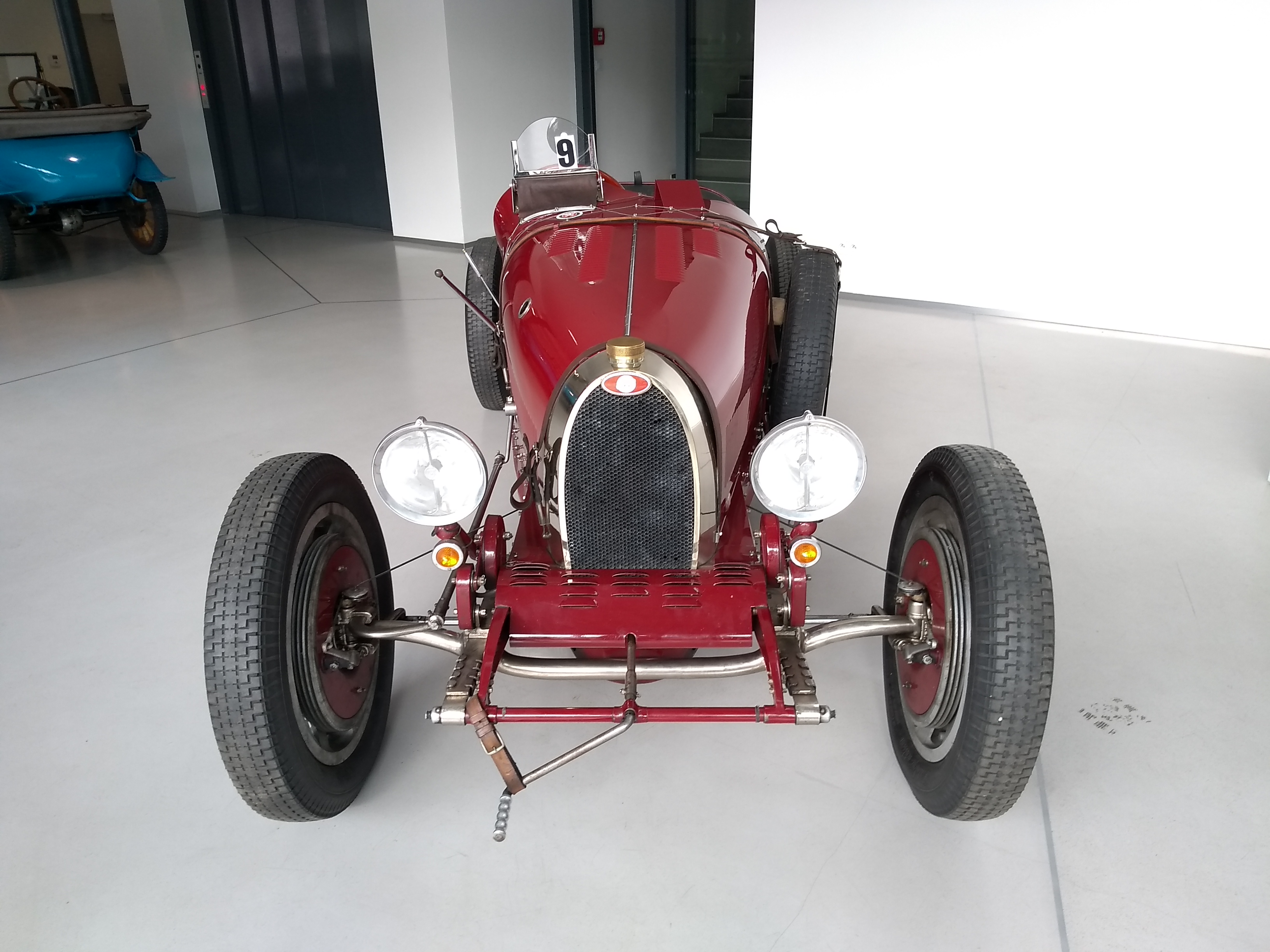
Why the name Nostalgic Edition? It is well known that the trademark and name Bugatti, including the famous red and white badge from the radiator grille, was purchased years ago by Volkswagen for their use—also for Veyron cars. The industrial design of the legendary Bugatti cars themselves is, however, freely available, and the Bugatti family did not renew it for themselves. Therefore, anyone can build replicas of these cars, but no longer under the Bugatti name and without the famous badge on the grille. For this reason, the cars are called Nostalgic Edition and do not pretend to be originals but are faithful and dignified copies of the famous cars.
And according to which model were these faithful copies created?
According to the most famous one – Bugatti Type 35
The fame of this type dates back to August 1924, when the Bugatti factory presented the racing T35 at the GP in Lyon. The Bugatti T35 later achieved phenomenal success and won more than 2,000 races, including 21 Grand Prix categories. Among the prominent winners were such names as Tazio Nuvolari, Louis Chiron, William Grover-Williams, and René Dreyfus. We must not forget our own lady, Eliška Junková. Her greatest success was an absolute fifth place at the Sicilian Targa Florio (1928). The sad truth is that her husband, Čeněk Junek, died in a T35B on the Nürburgring on July 15, 1928.
The visually unmistakable Bugattis had narrow horseshoe-shaped radiators. When they retired from racing tracks, they were often converted with sporty touring bodies.
“The Blue Bugatti”
The Bugatti 35 was born at a time when the Grand Prix cars had to comply with a two-liter engine displacement limit. The patron drew on a clean sheet an elegant long inline eight-cylinder engine, which first appeared in the T28 prototype (1921) and then especially in the racing T30 (1922–1926). It had an OHC valve train with three valves (two intake, one exhaust) per cylinder. The light engine was a mechanical jewel, requiring precise and meticulous work to produce. Numerous plain bearings needed splash lubrication, yet suffered considerable wear requiring frequent replacement. The T35 model achieved up to 30% higher rpm compared to its predecessors. The camshaft, crankshaft, connecting rods, bearings, and lubrication were all changed. The factory-supplied eight-hole aluminum alloy wheels with integrated brake drums gave the car its characteristic Bugatti look. Its wheelbase was 2,400 mm.
Bugatti T35A
In December 1924, the racing Bugatti T35B cost 100,000 francs, affordable only to truly wealthy buyers. Therefore, in May 1925, the factory introduced a cheaper version, the T35A. Although it looked optically like the T35B Grand Prix, some components came from the original T30 (e.g., crankshaft bearings in three main bearings). The engine blocks and the eight smaller cams of the T30, T35B, and T35A differed in ignition coil and distributor connections. Most importantly, the 35A model was without a supercharger, thus offering lower power but greater durability. The cars came with wire-spoked wheels, but full aluminum wheels were available at extra cost. The T35A cost “only” 65,000 francs.
Other versions and supercharger
The patron decided to build the Bugatti 35T (T for Targa) to be successful in the toughest race, the Sicilian Targa Florio in 1926. He increased the stroke by 100 mm, bringing the engine displacement to 2,262 cm3. The result was success, with three factory T35Ts leading the race—Costantini, Minoia, and Goux—and Dubonnet with a private car finishing fifth. Twelve racers finished in total, seven of which drove cars made in Molsheim. Bugatti performed similarly well in subsequent races until 1930. Only seven Bugatti T35T units were built due to Grand Prix rules limiting engine displacement to two liters. Between 1927 and 1930, 45 T35B models were made, essentially T35Ts equipped with Roots superchargers. The first supercharger designs date from May 1926, allowing the 2,262 cm3 engine to reach a maximum power of 138 hp. The car won the 1929 French GP. The T35B had a somewhat larger radiator placed further forward compared to other types. Another variant was the Bugatti Type 35C produced from 1927 to 1930, a T35 with a 1,991 cm3 engine and Roots supercharger producing 127 hp. Fifty T35Cs were built. They won the French GP in 1928 and 1930. In truth, these versions and related T39 and T43 models are hard to distinguish, as Ettore Bugatti already used the same parts across several models, reducing production costs and unifying components—a practice well ahead of its time.
As you can see, the Samohýl family can be justly proud. Creating a perfect and functional replica of probably the most famous racing car of all time is no bad credit to everyone involved in the Nostalgic Edition project.