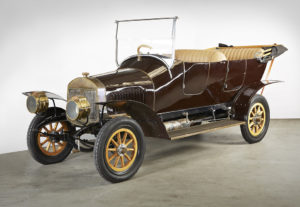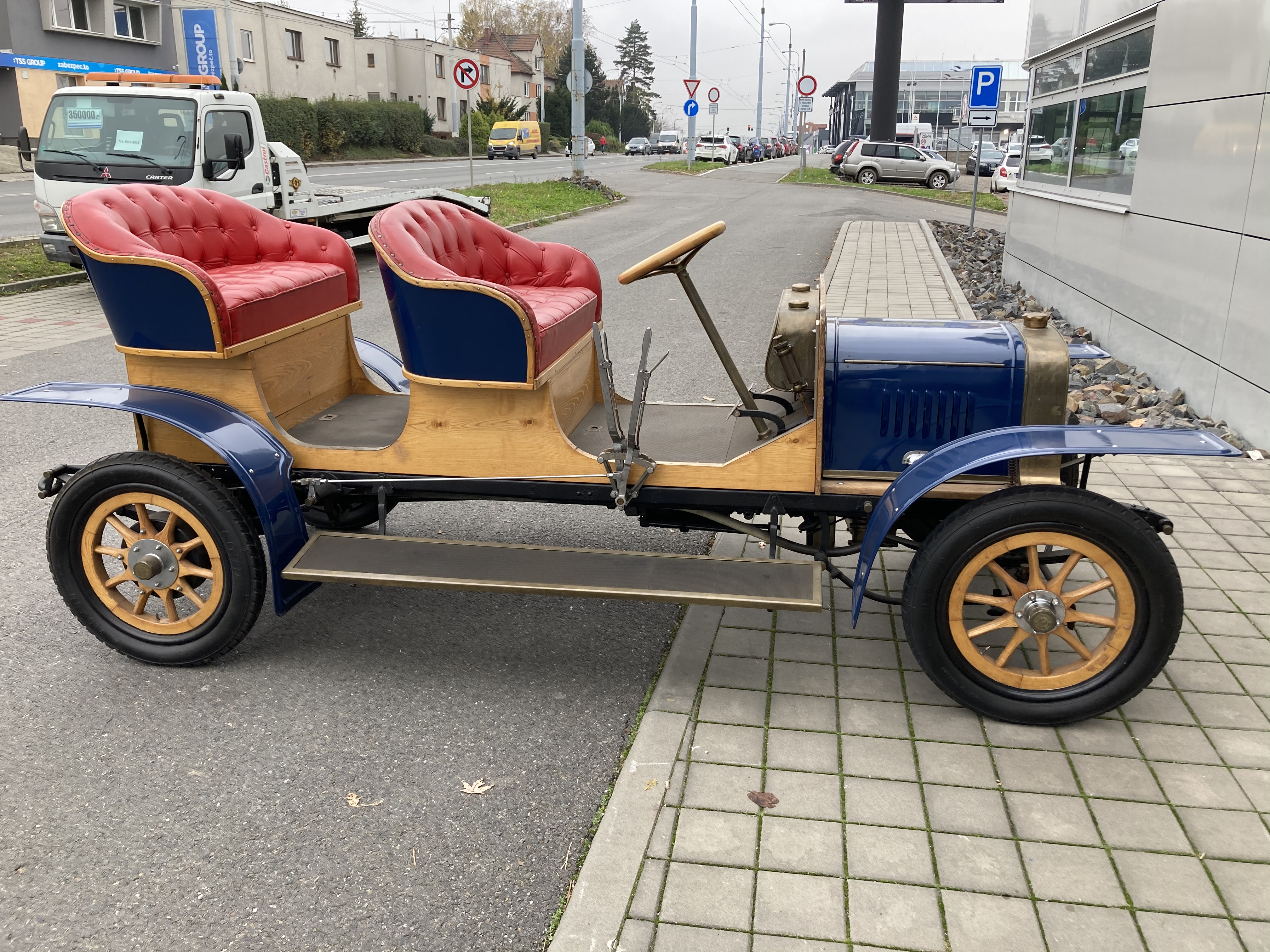
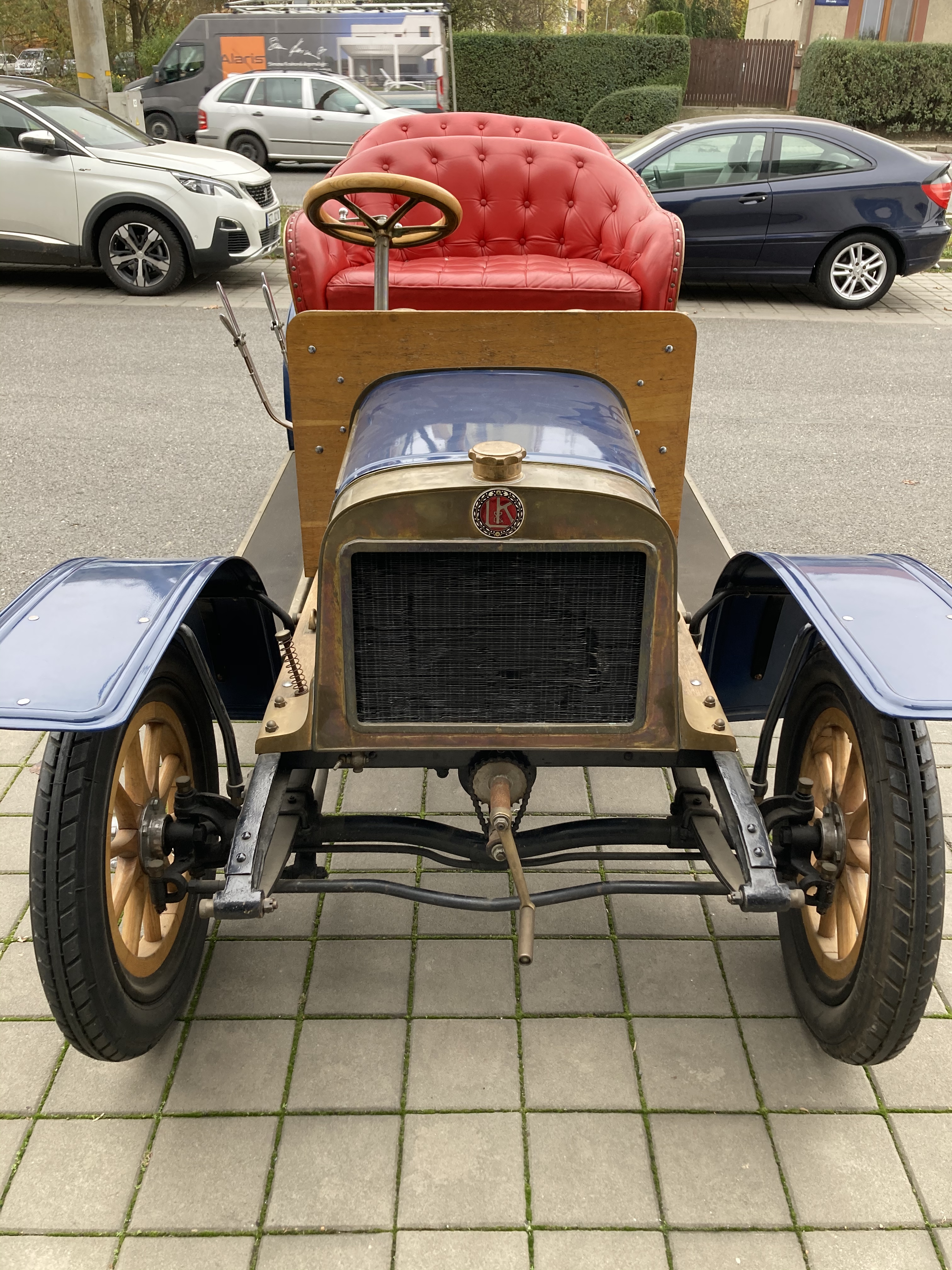
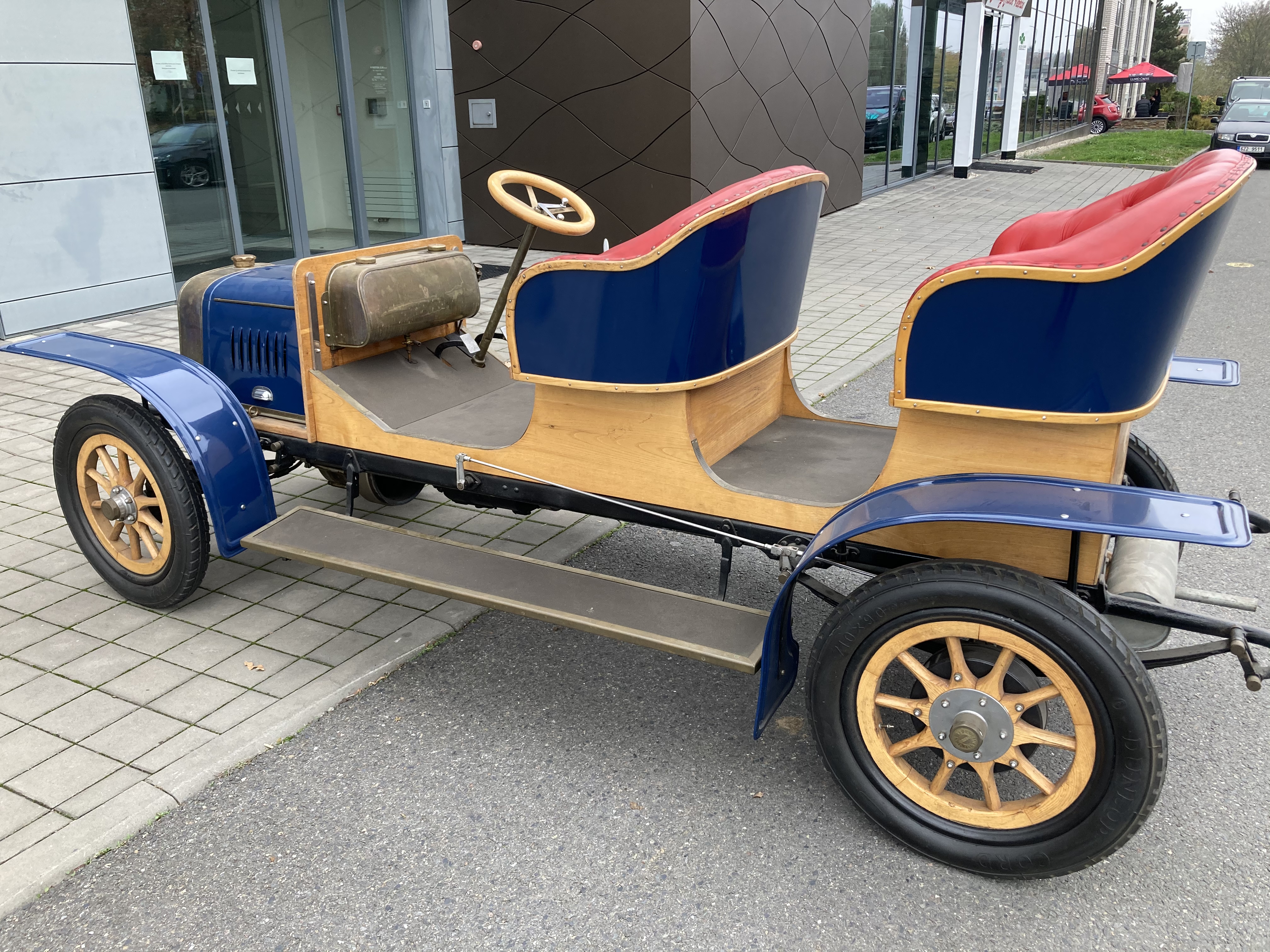
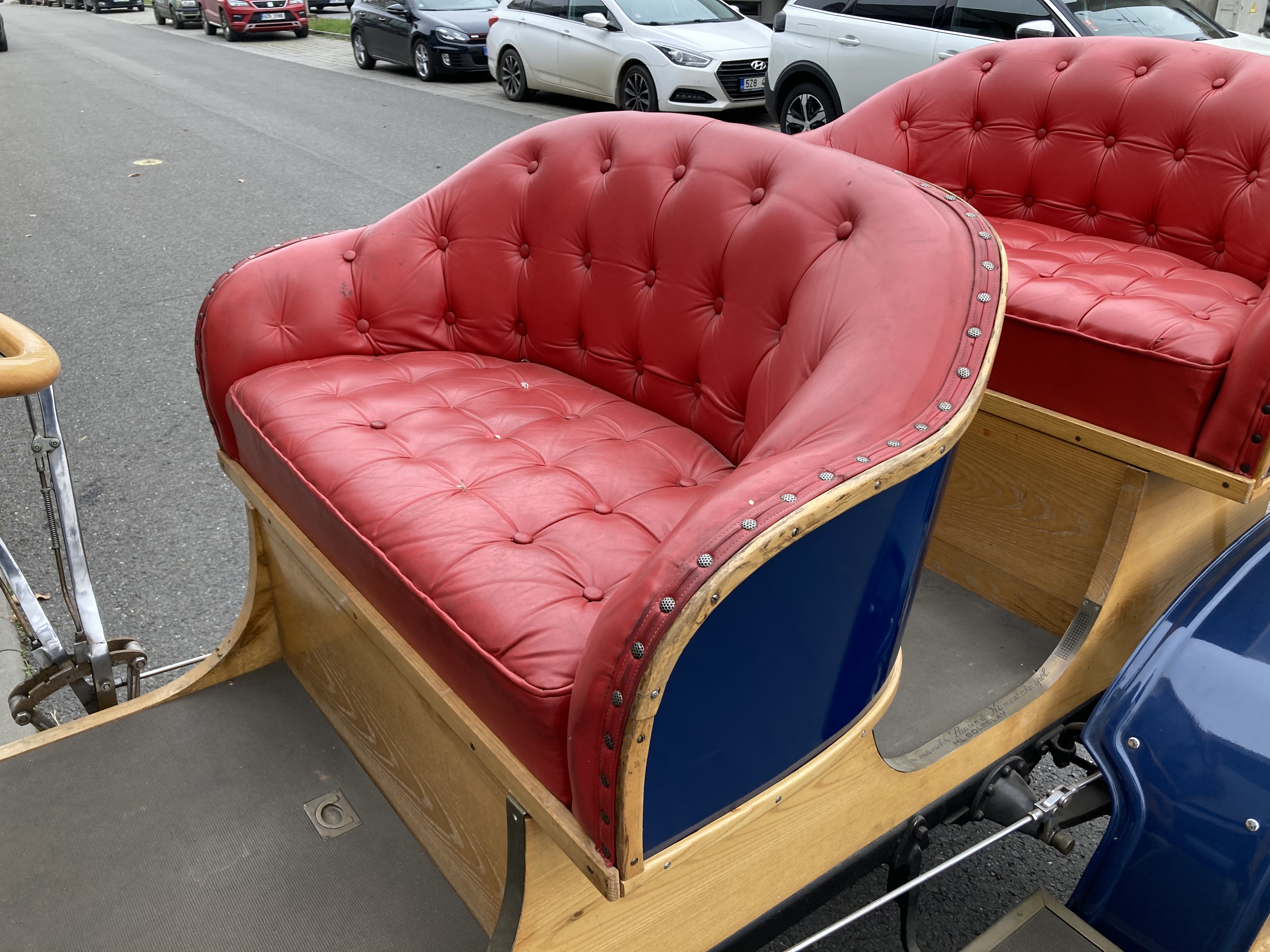
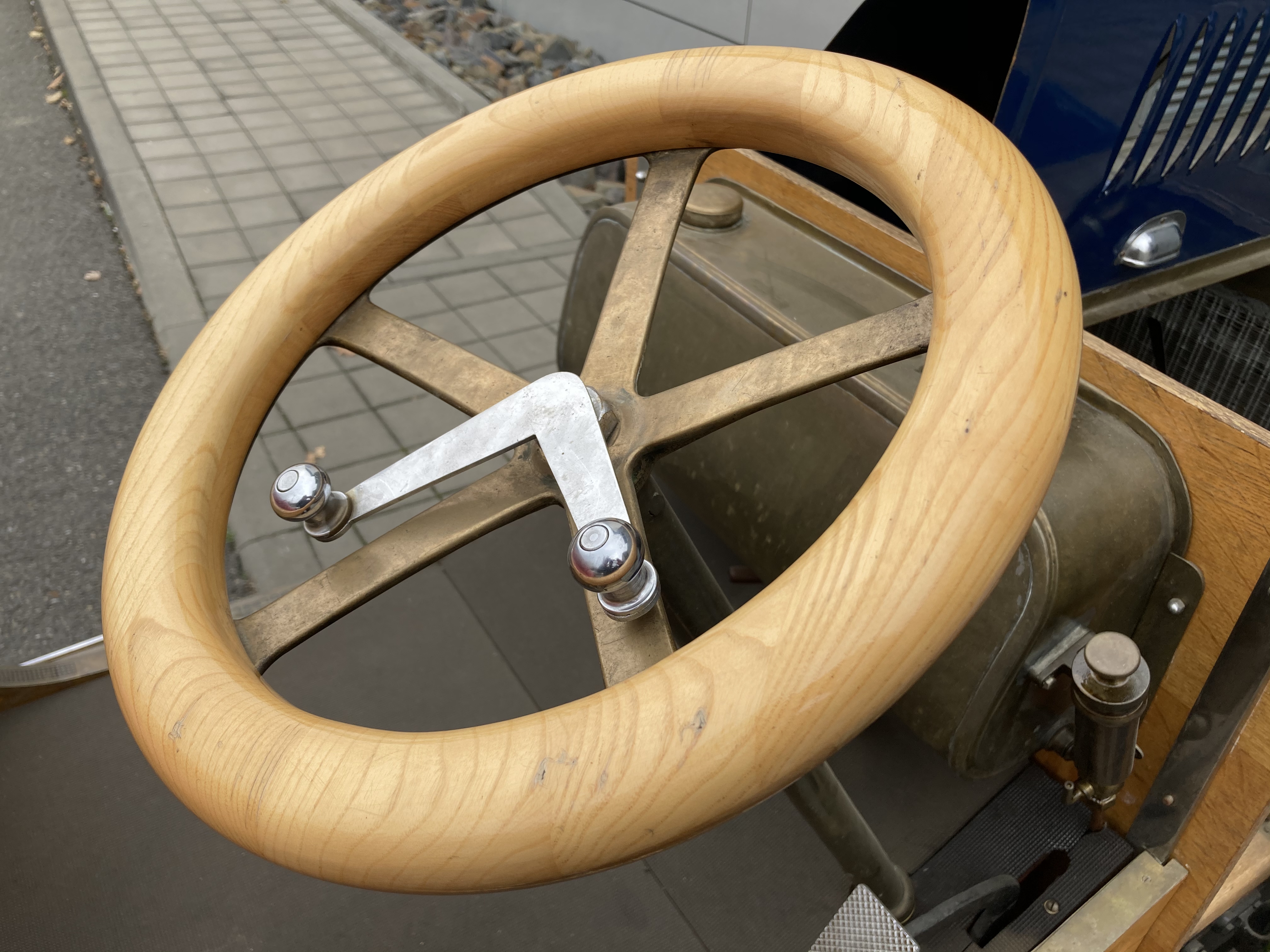
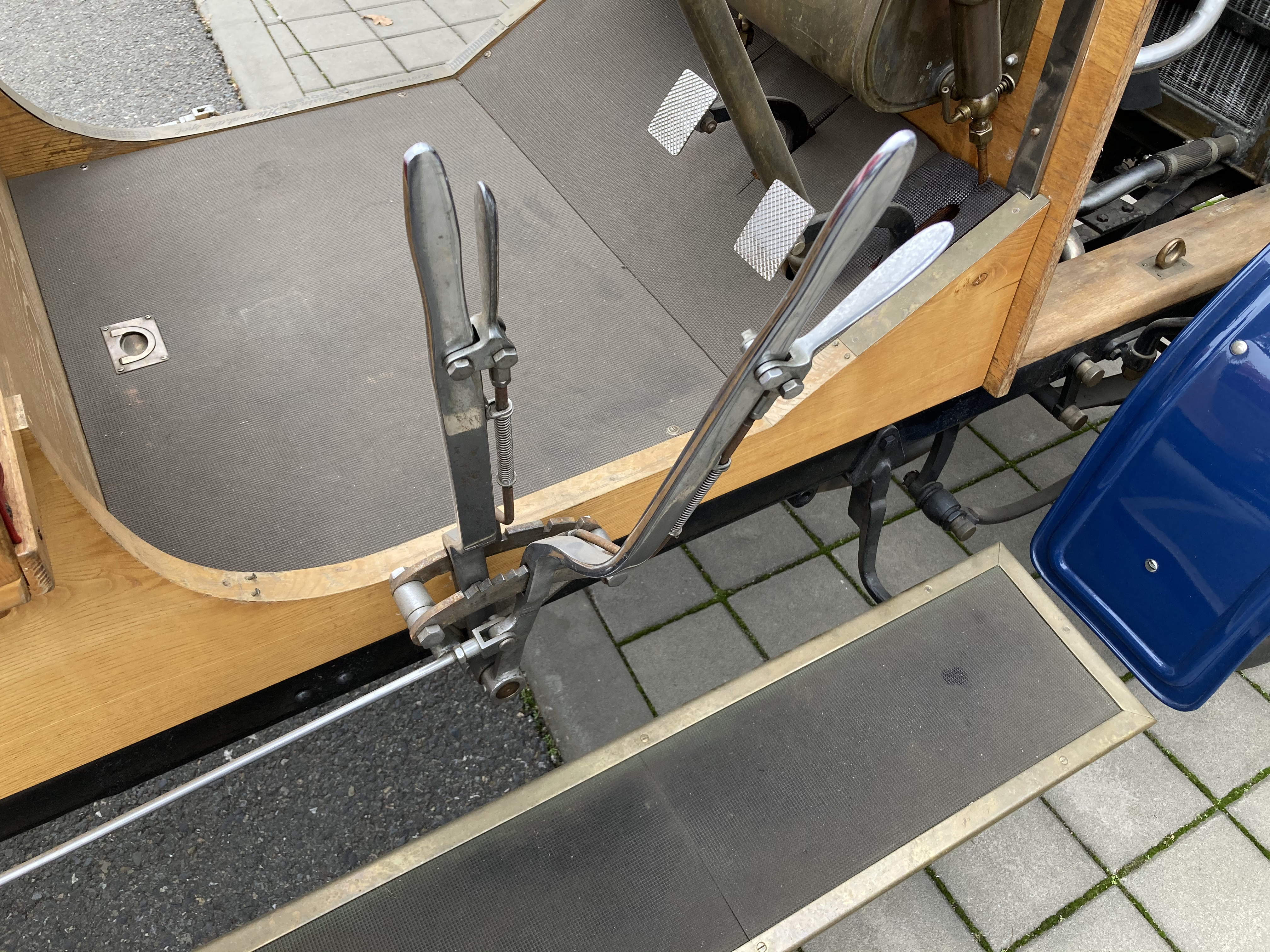

Laurin & Klement B Voiturette
Year of Manufacture: 1907 Power: 9 hp Displacement: 1,399 cm3
Number of Cylinders/Valves: 2/2
Condition: perfect Catalog Number: 165
The Laurin & Klement Voiturette B is the successor and continuation of the very first serially produced car in the Austro-Hungarian monarchy – the Voiturette A. Let us recall the history of the automobile’s origin on Czech territory.
In 1894, two Václavs, Klement and Laurin, began repairing bicycles in Mladá Boleslav. The following year, they started manufacturing them under the brand Slavia. The next logical step for this very ambitious company was the transition to motorcycle production. By 1899, they had their first motorcycle ready for production. The start of their business was not easy from a commercial perspective. Eventually, it succeeded, and motorcycles sold under the Slavia brand gained great respect and became an excellent commercial product. Thanks to these successes, the small workshop turned into a prosperous factory with an excellent reputation and a range of quality products. By 1905, Laurin & Klement offered nine different types of motorcycles, from twin-cylinder to four-cylinder engines. They had no competition within the then monarchy.
Meanwhile, the time came for another crucial step: the move to automobile production. It was a long road with many development stages. At the April 1905 auto show, Messrs. Klement and Laurin presented their new engine: a V-twin. This was a sign that production of their own car was imminent. Of course, it was based on a motorcycle engine but also met the requirements for powering a true automobile.
By the end of that year, complete functional cars were ready in a verifiable quantity of two units (some contemporary sources even mention three). They were intended for test drives and demonstrations, and their photographs appeared in newspapers of the time. Interestingly, the manufacturer at the time was deciding between rear axle drive by chains or a cardan shaft. Today, this seems amusing, but back then practical experience was lacking, so everyone followed their own path. Only after testing and customer feedback was the proven solution chosen. The car used the French designation “voiturette,” used in the pioneering days for small and light, mostly two-seater, vehicles. The original type still carried the “A” designation. The Mladá Boleslav “A” exactly matched this class. The car was type-approved on January 18, 1906, and officially presented to the public at the 2nd Prague Auto Show in April 1906.
Messrs. Laurin and Klement were guided in the construction of this vehicle by the idea that the car must be popular, i.e., accessible to a broader group of customers than was usual at the time. The automobile was a very luxurious affair back then. Eventually, they succeeded in creating a very attractive, elegant, and practical car at an excellent technical level, which many customers could afford at the offered price. The first Voiturette A is described in detail under catalog number 2 in our collection. So, how did the “B” type in our collection differ from the “A” type?
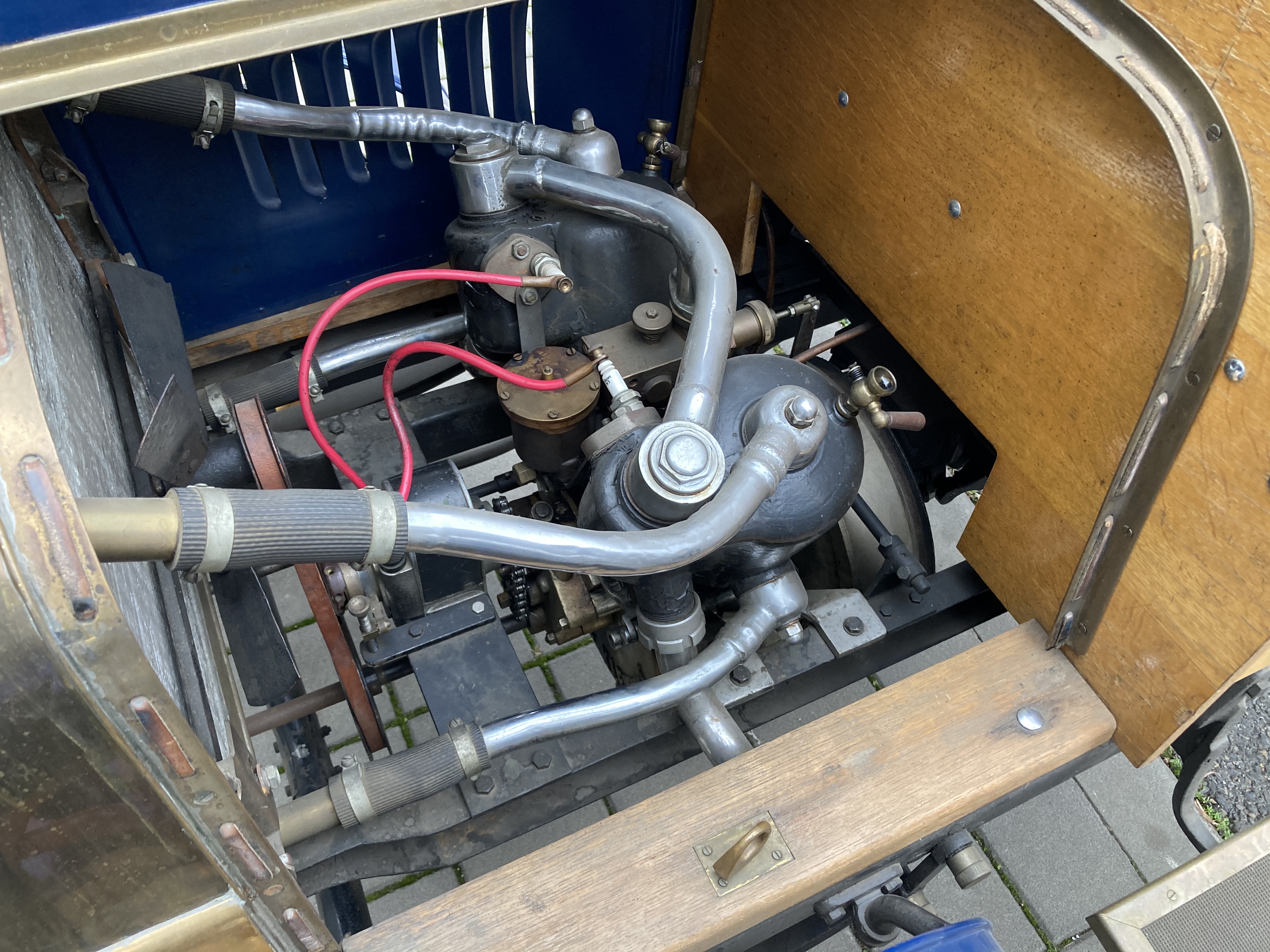
The car has a larger, four-seat open body mounted on a ladder frame made of pressed sheet metal. The four-stroke, two-valve engine with SV valve timing located at the front is structurally identical to its original predecessor. However, the car has an increased displacement of 1,399 cm3, and power increased from 7 hp to 9 hp. All other parameters were identical to the “A” type, and most parts and components were interchangeable. The car also achieved the same operating parameters.
Thanks to the larger chassis, its usage possibilities expanded. Mainly, the option of a four-seat body and use as a delivery vehicle. In fact, two flatbed trucks were even produced. Over three years, an incredible number of these cars were manufactured — exactly 250 units — which was unprecedented at that time.
Both types of these first cars contributed to the development of motorization and stood at the beginning of car production in our country.