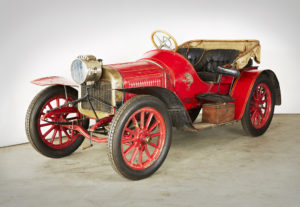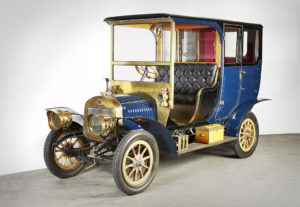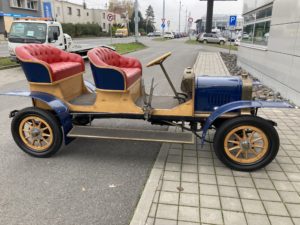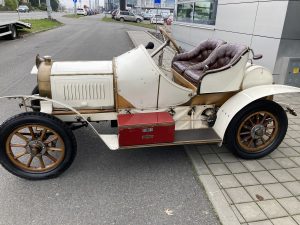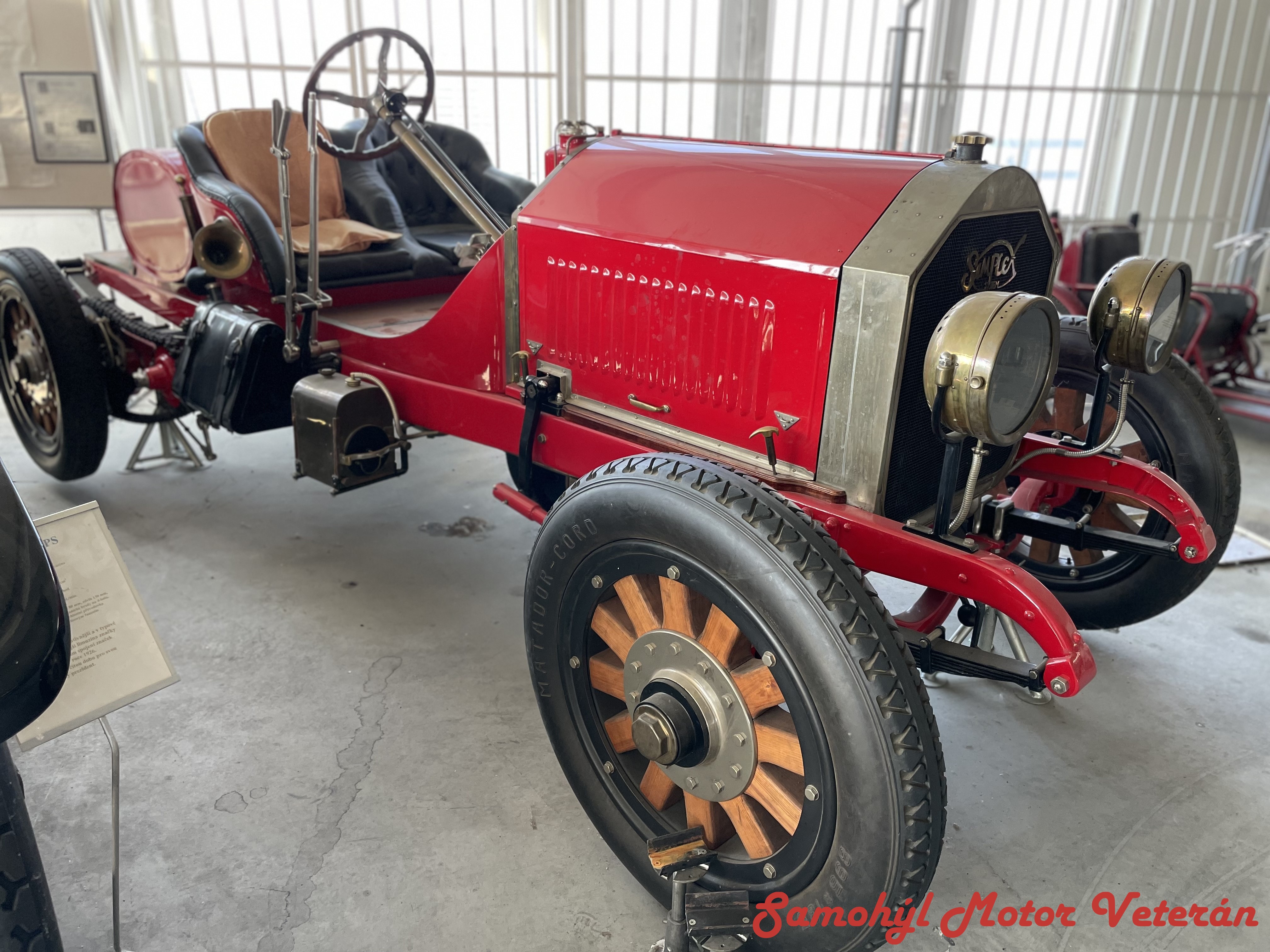
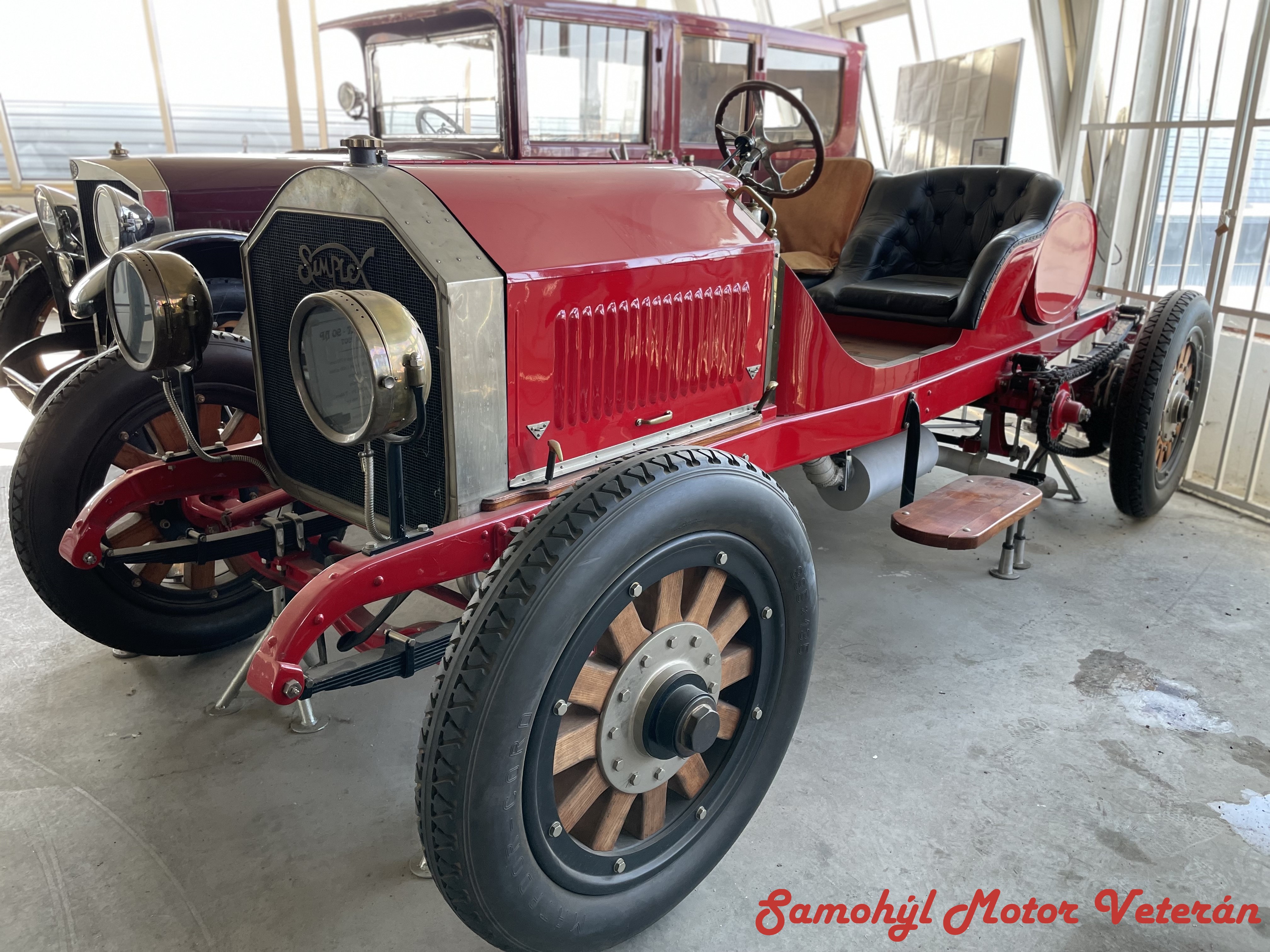
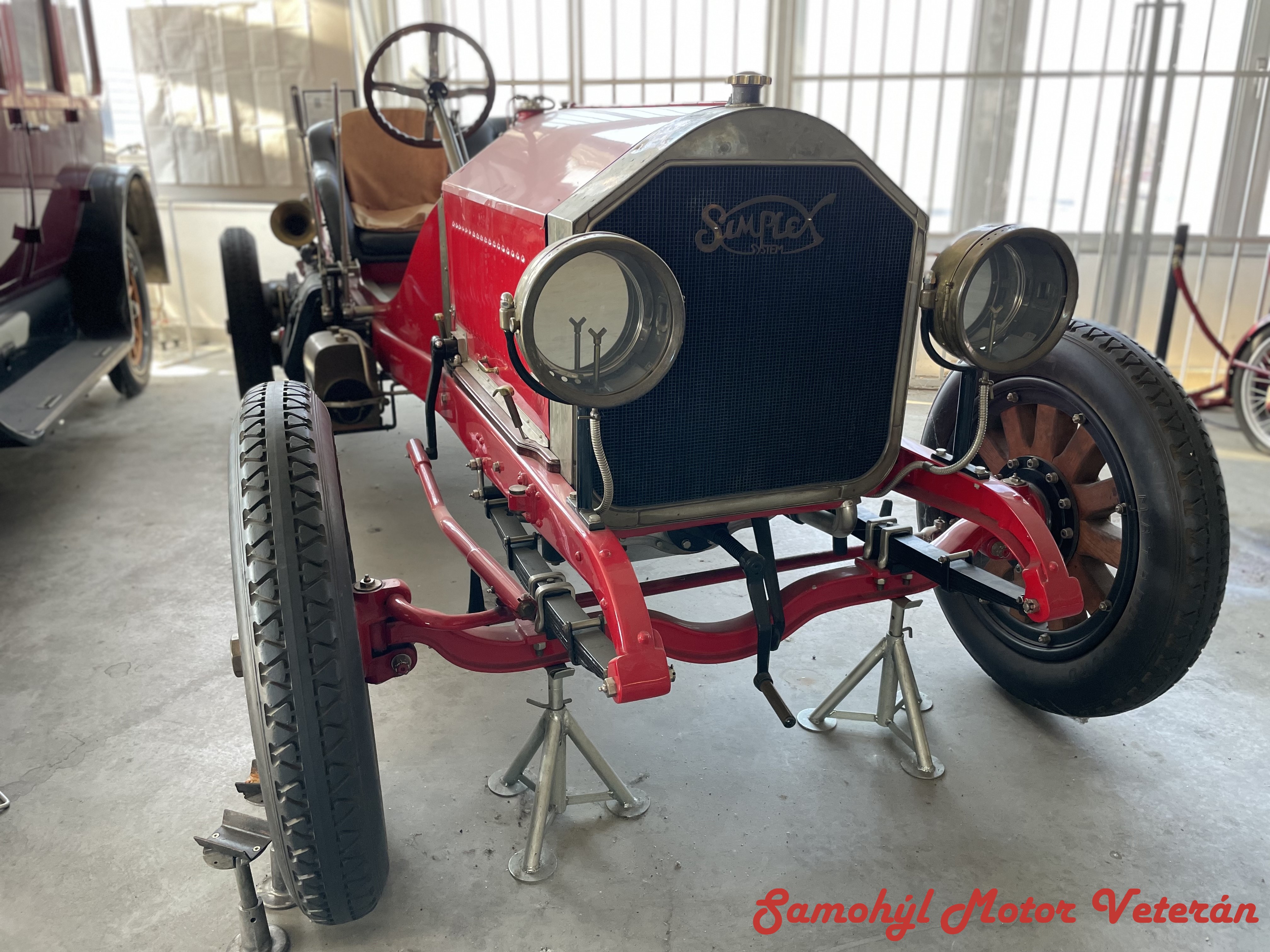
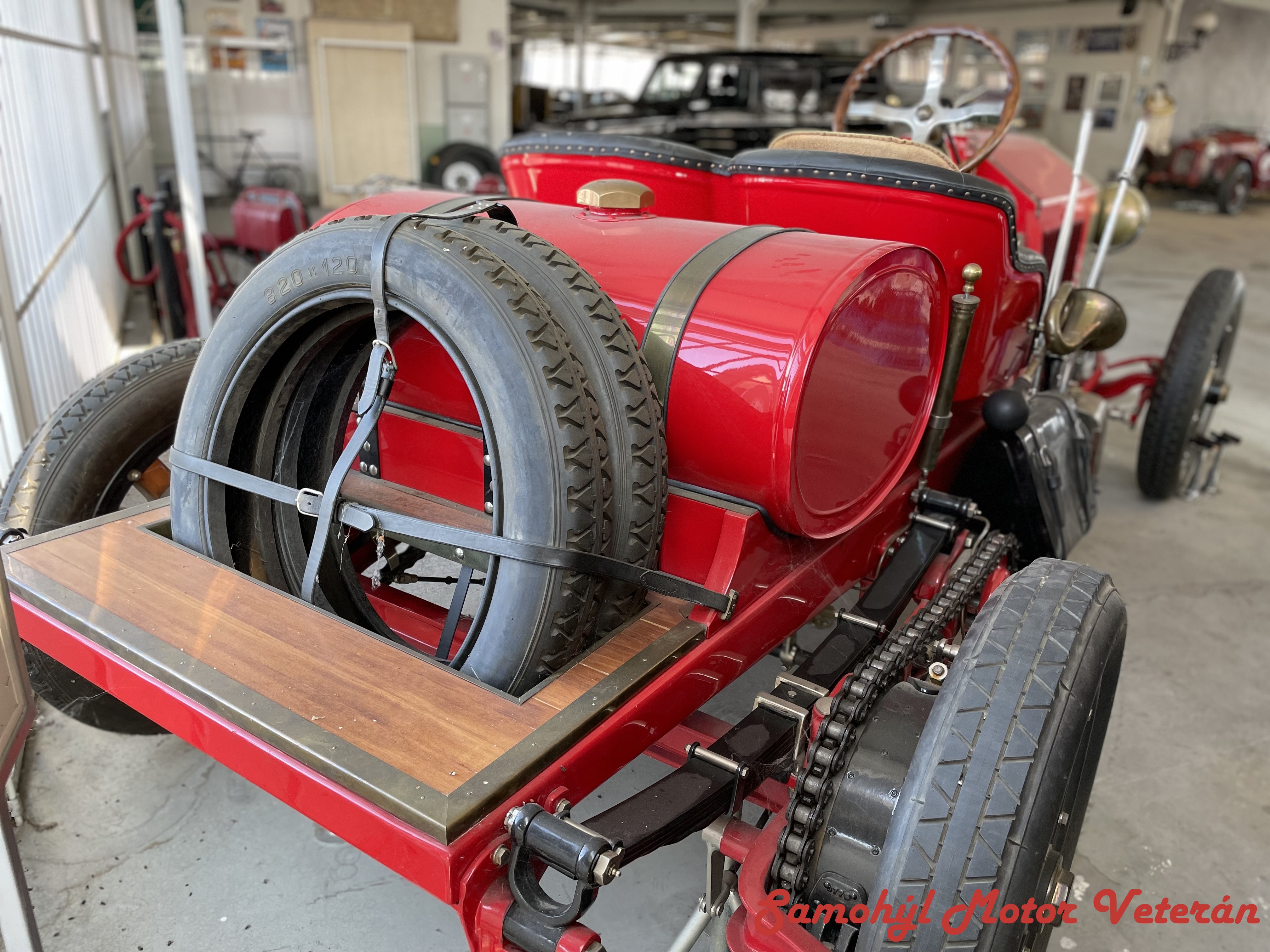
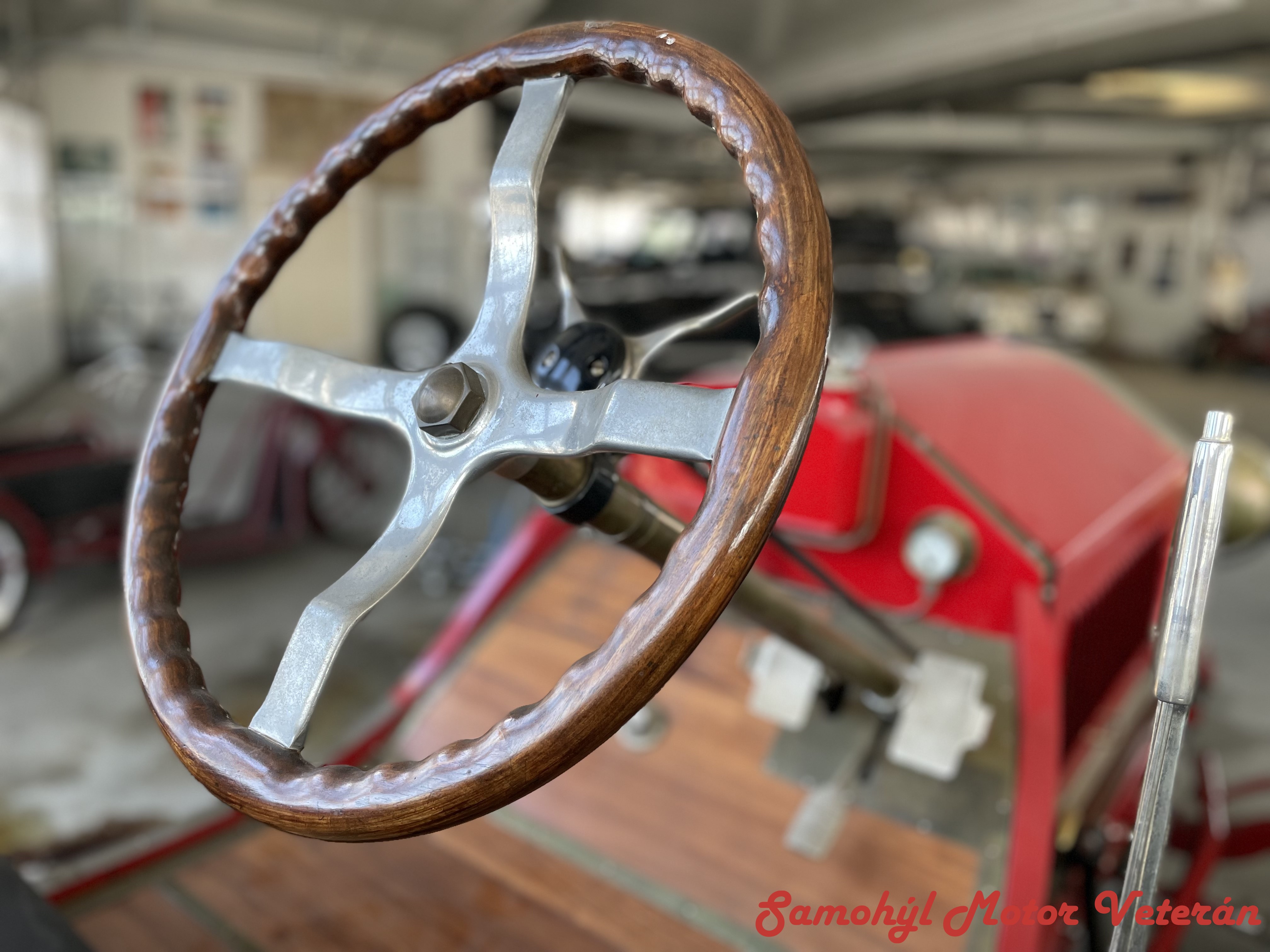
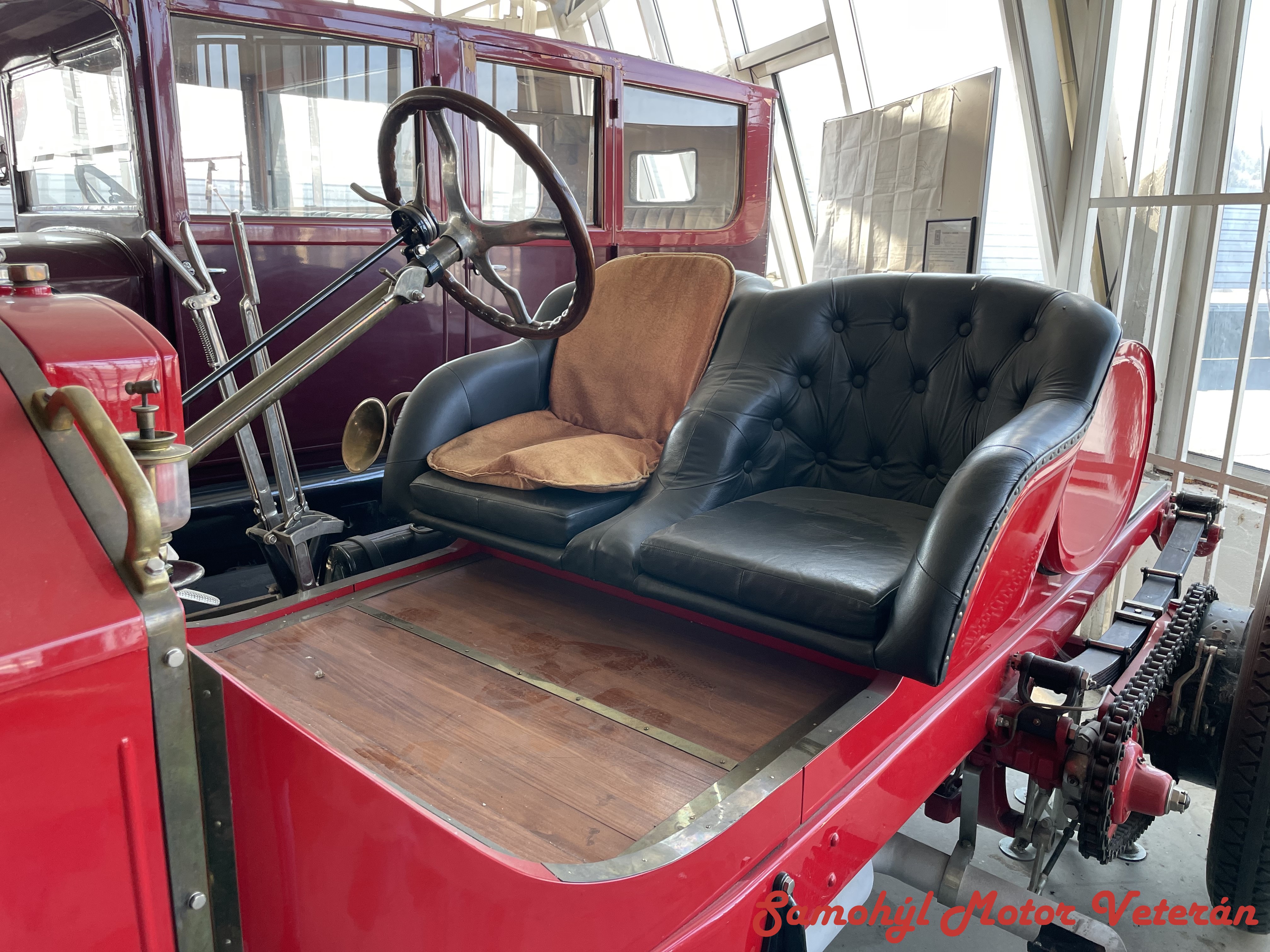
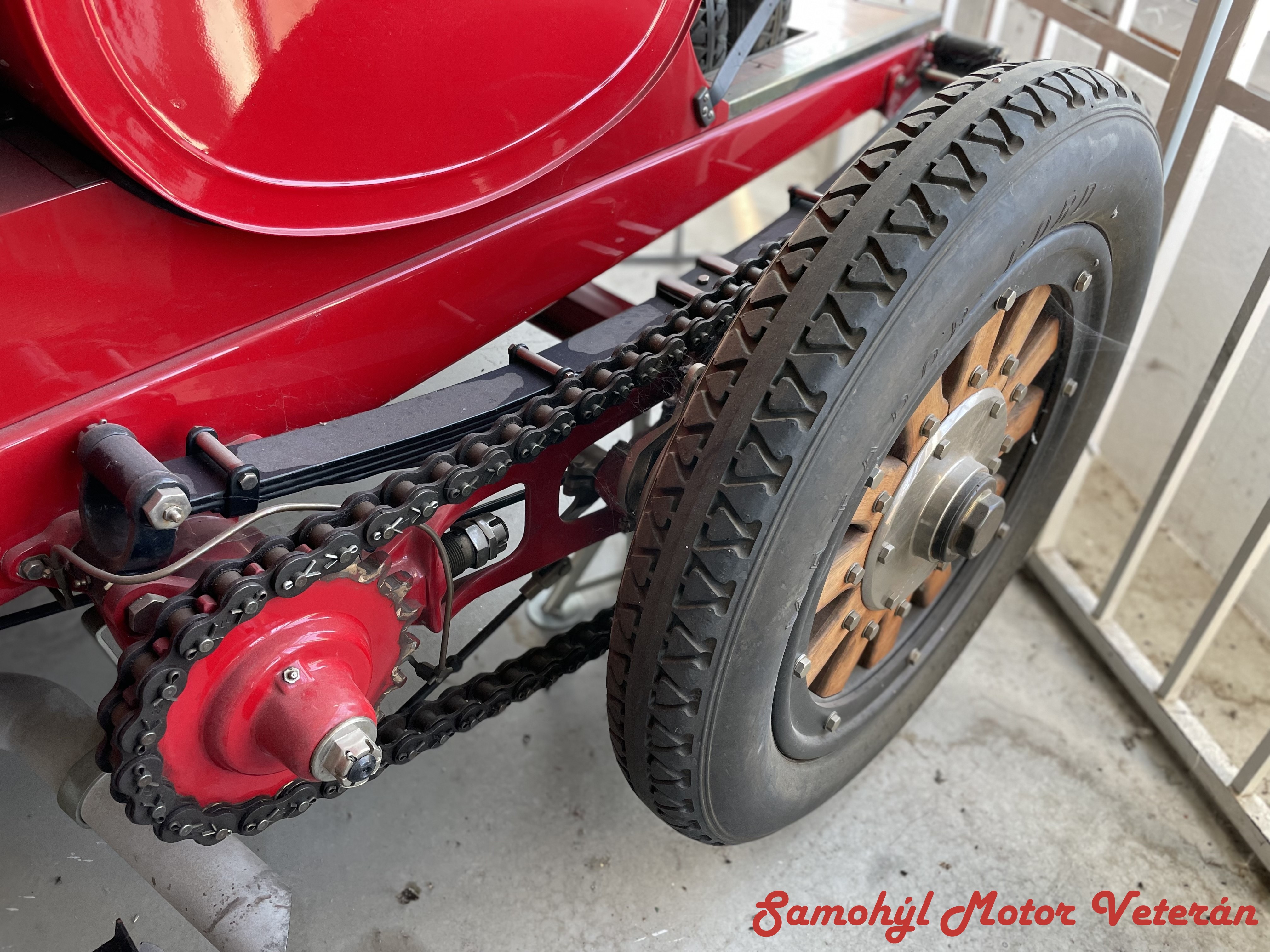
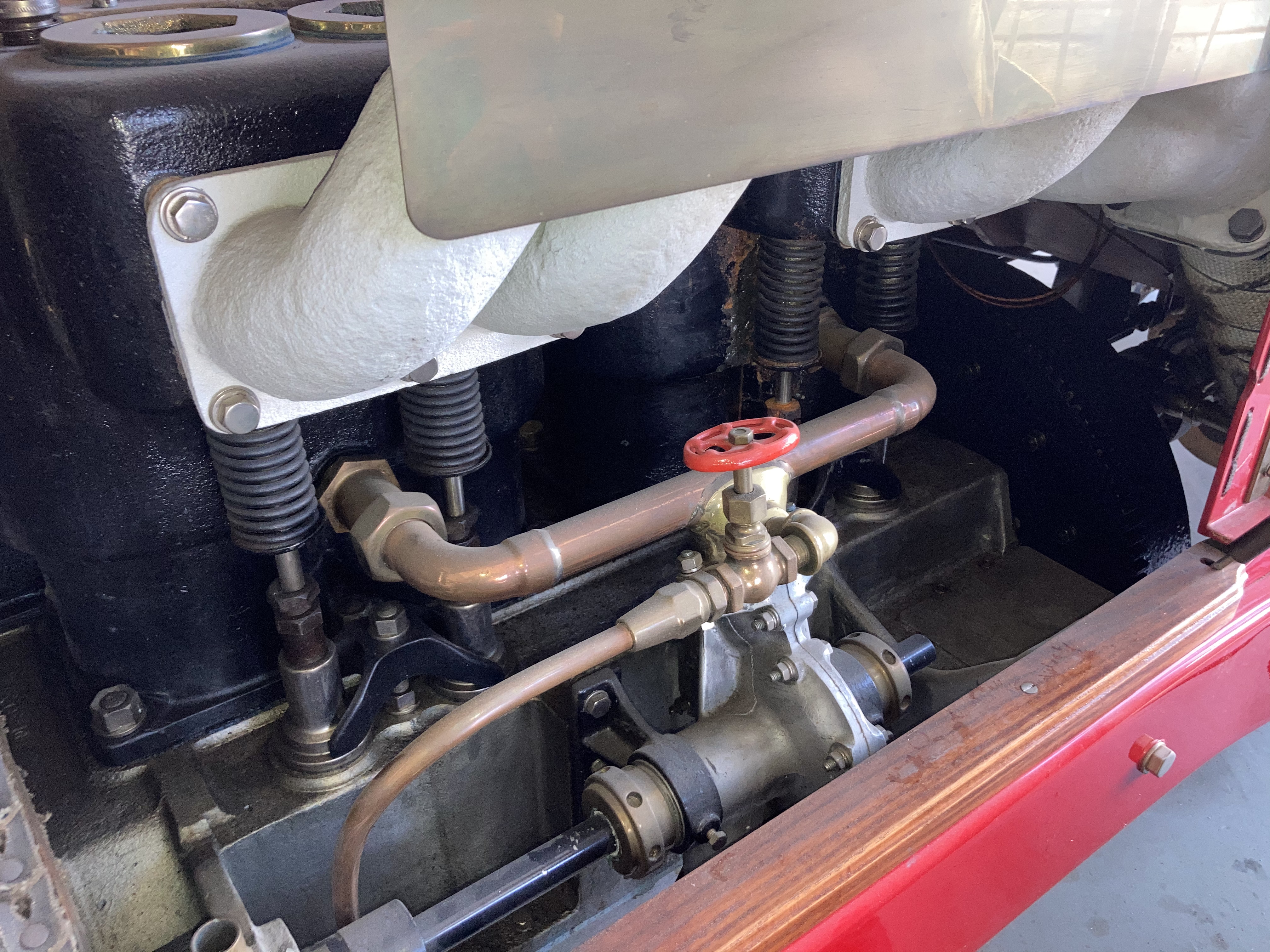
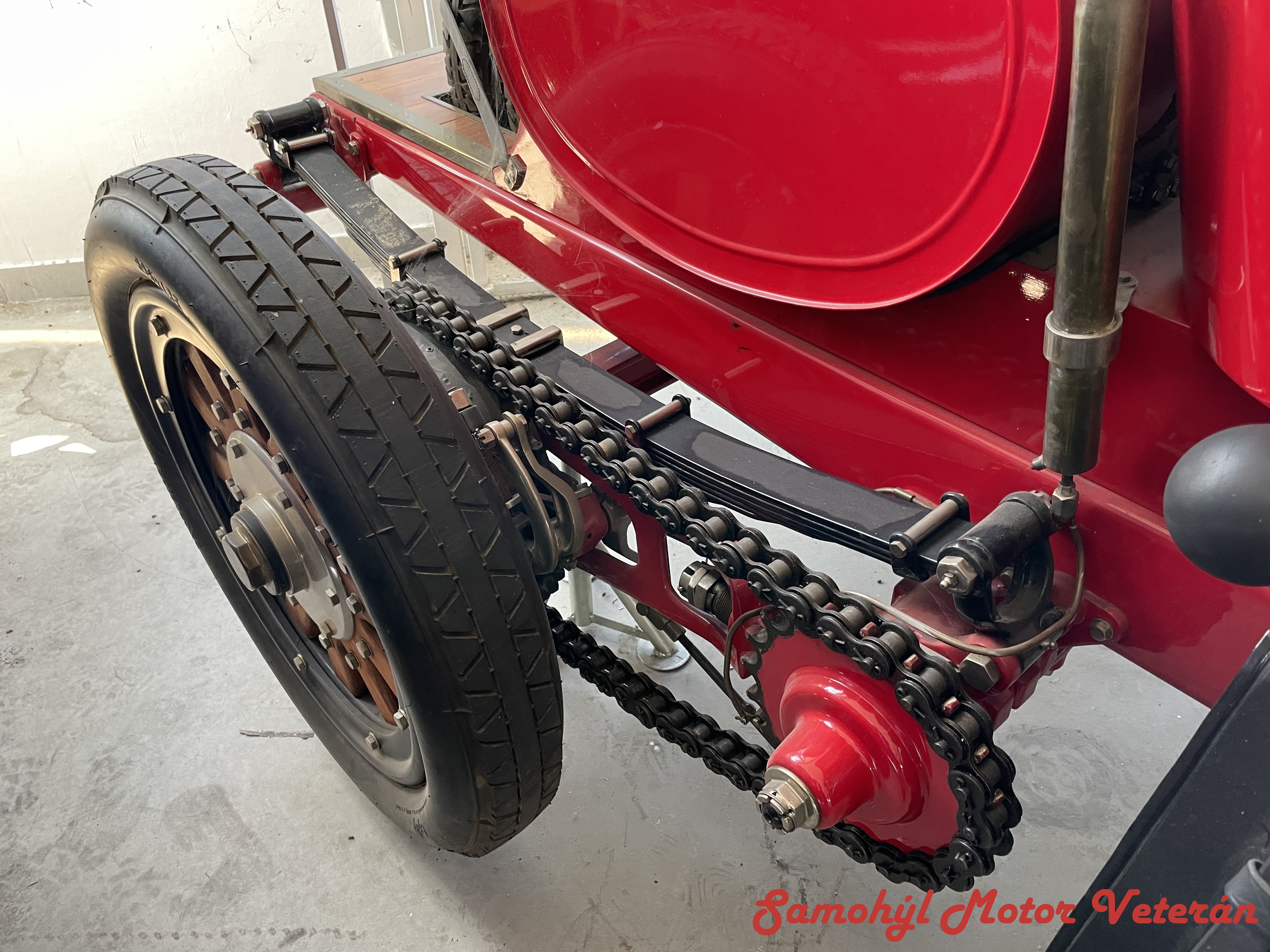
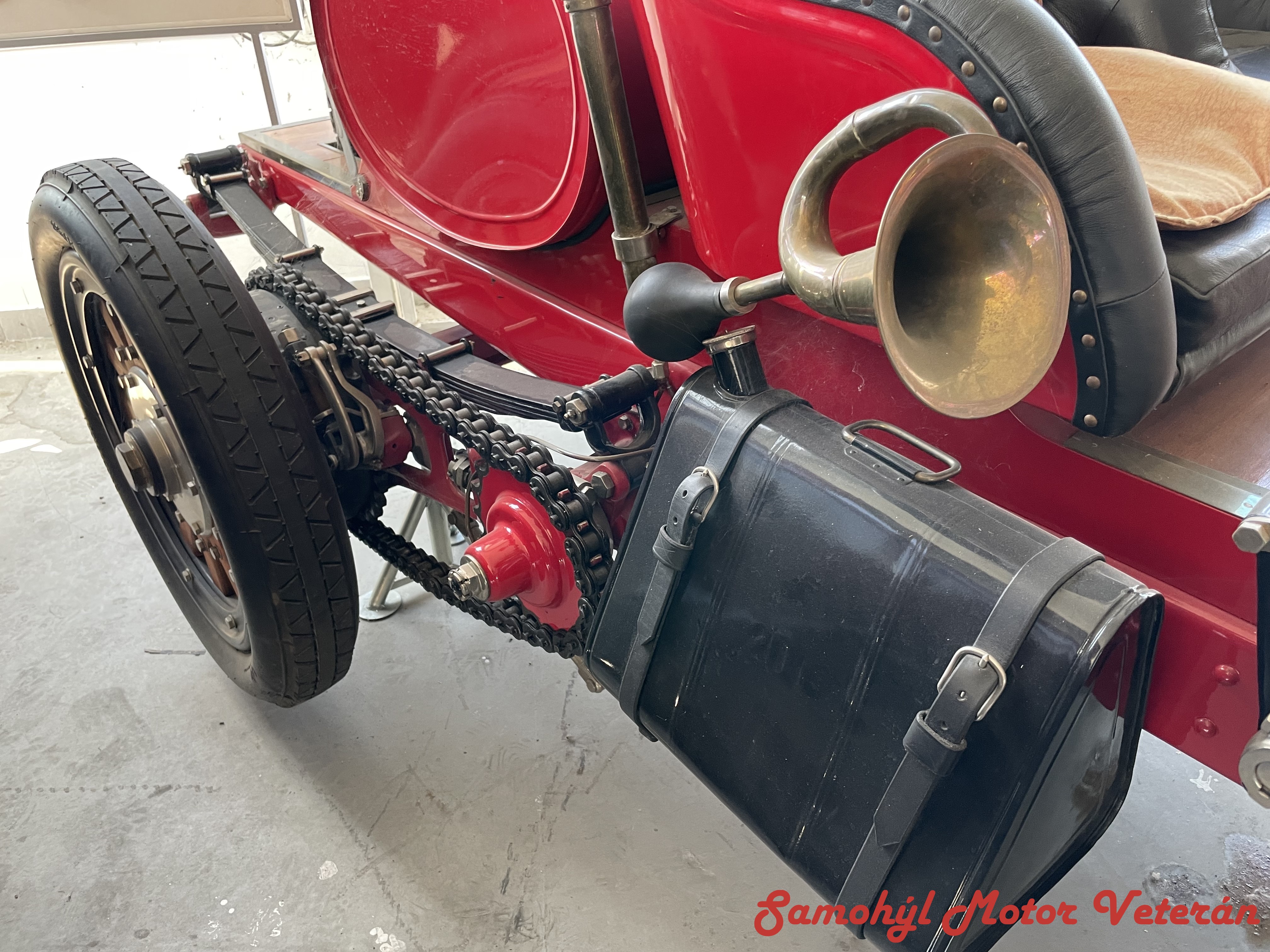
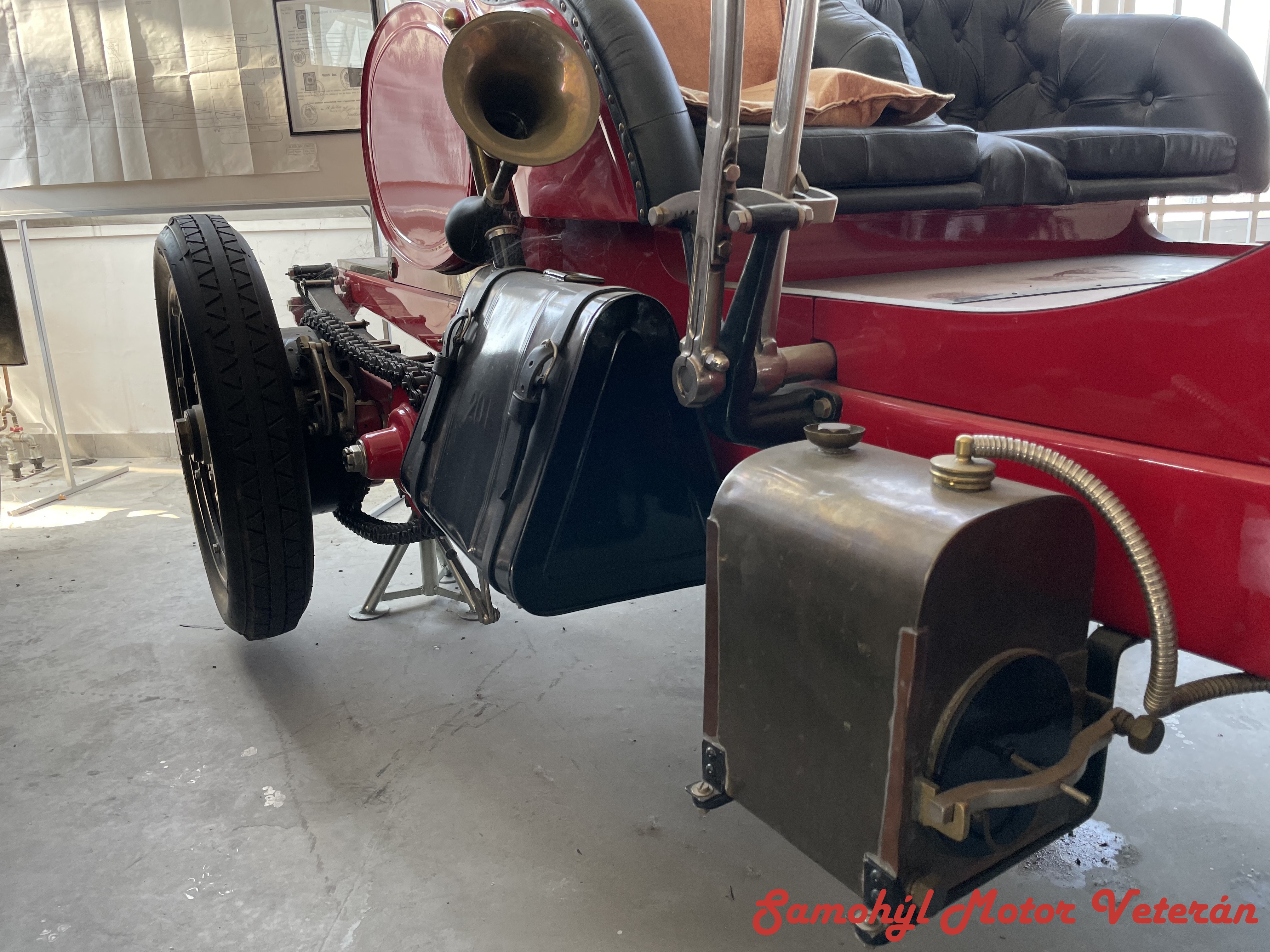
Simplex 90HP
Year of manufacture: 1907
Power: 90 hp
Displacement: 9,750 cm3
Number of cylinders/valves: 4/3
Weight: 1,700 kg
Condition: operational
Catalogue number: 216
The creation of the Simplex brand was actually driven by the economic conditions of passenger car sales in the USA before World War I. Import duties accounted for 40% of the car price, making vehicles nearly inaccessible for the intended clientele.
Therefore, the owners of companies importing European cars simply calculated that if they manufactured the cars themselves in the USA, they could sell them at roughly half the price. And as they said, so they did…
They took high-quality European cars as a model and tried to compete with both performance and especially quality with their products. Although the original owners of the Simplex brand were successfully fulfilling their plans, the company went bankrupt in 1907. The new owner and savior of the brand became Herman Broesel. He began developing the original ideas behind these cars, and the company started to prosper. The most successful car in the short history of Simplex was the 50HP model. It achieved both commercial and racing successes. It was mainly made from German components and stood out for the quality of materials and workmanship.
This was followed by the 90HP model with greater displacement and mainly power. It participated in various races in the USA and was very successful. At the peak of Simplex car production, there were a total of 5 types and 17 versions of these cars. Unfortunately, Broesel died in 1912, the original buildings in New York were sold, and under new ownership, the company moved to New Jersey.
The company continued to experience turbulent developments with changing owners and production programs. It was not until 1918 that the then owners decided to stop car production and continue only with aircraft engine manufacturing. The very last car was sold on February 27, 1920.
Despite its short presence on the automotive scene, Simplex made its mark in automotive history primarily by proving that it was possible to manufacture cars from European components on American soil and thus achieve the quality of European cars. This approach was later continued by other car manufacturers, especially Japanese ones.