
Mercedes Benz 500 N Nurburg
Catalogue Number: 84
It was the first luxury car from Mercedes-Benz equipped with a V8 engine. It was introduced in 1928 at the Paris Motor Show. It was produced in various versions and modernizations until the summer of 1939, making it the longest-produced Mercedes-Benz model.
Nürburg 460
The model was produced from 1928 to 1929. It was developed by Ferdinand Porsche, who was a board member responsible for new product development. The new eight-cylinder Mercedes-Benz was meant to become a serious competitor to the luxury cars from Horch. The car had a traditional chassis with the frame placed above the axles, which gave the vehicle an antique and tall appearance.
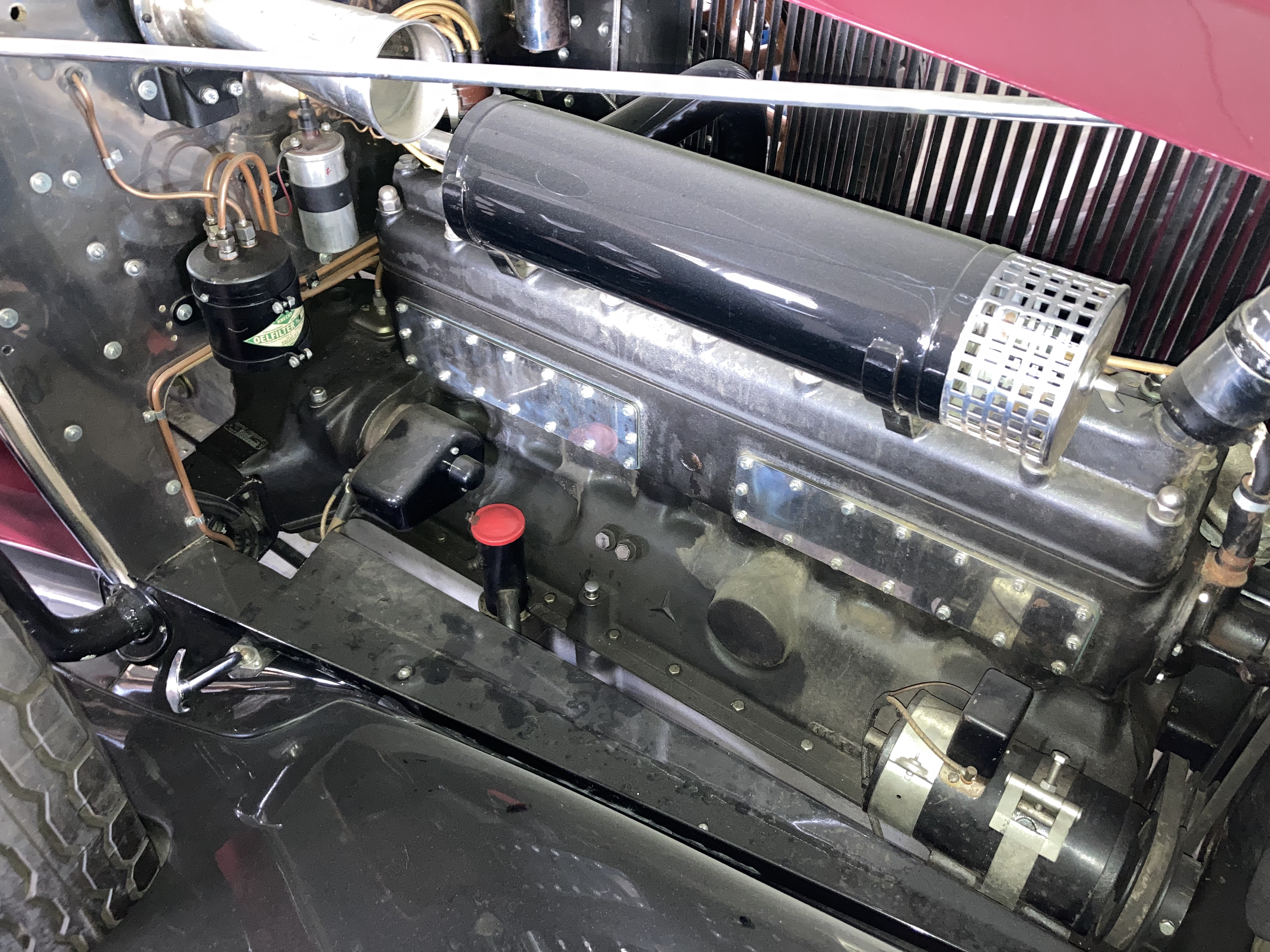
The car was powered by a straight-eight engine with a displacement of 4,622 cm3. It produced a maximum power of 80 hp, enabling a top speed of 100 km/h. The car’s size was similar to the Horch 8, which essentially served as a model for its development.
The 1928 Horch limousine was 5,000 mm long and weighed 2,100 kg. The Mercedes-Benz Nürburg 460 limousine measured 4,890 mm and was extended to 5,200 mm by adding a rear trunk. The Mercedes weighed 2,150 kg. Both cars had a height of 1,900 mm. The large, old-fashioned, and very expensive Mercedes-Benz W08 produced in 1928 found only a few customers and was therefore replaced the following year by a more elegant version with a lower chassis.
Nürburg 460/460 K
This car was produced between 1929 and 1932. For the 1929 season, the company largely redesigned its first eight-cylinder model. The result was a car with a more modern chassis, where the longitudinal frame rails were positioned below the axles. The wheelbase remained unchanged. The engine and most other technical details also stayed the same. Despite all efforts and modifications made in 1929, the Mercedes-Benz W08 was less successful than the competing Horch 8, which was well established on the German luxury car market at that time. The 460 model was also the first popemobile. In 1930, Daimler-Benz presented Pope Pius XI with a specially modified vehicle of this type.
Nürburg 500
1931–1933 – This version had a wheelbase of 3,670 mm and was equipped with a new 4,918 cm3 engine with a twin downdraft carburetor. Maximum power was increased to 100 hp and top speed to 110 km/h.
1932–1936 – In 1932 the car lost the “Nürburg” name and was sold simply as the Mercedes-Benz 500N. It was equipped with the same 4,918 cm3 engine with side-valve (SV) timing and twin downdraft carburetors, as well as a four-speed gearbox and unchanged chassis dimensions. Visible changes included the shape of the radiator and front windshield. Slightly larger wheels allowed speeds up to 120 km/h.
1936–1939 – In 1936 the engine power was increased to 110 hp. The displacement remained the same, but the compression ratio was raised. The highest reported speed was 123 km/h. Visually, the 1936 models differed by a steeper front grille and windshield angle. The competitor Horch 8 disappeared from the market in 1935. Production of the model ended in 1939 without a direct successor. Another V8 appeared in the Mercedes-Benz lineup only in 1963. Between 1928 and 1939, 3,824 vehicles were produced. Its competitor Horch sold approximately 12,000 Horch 8 cars between 1926 and 1934.
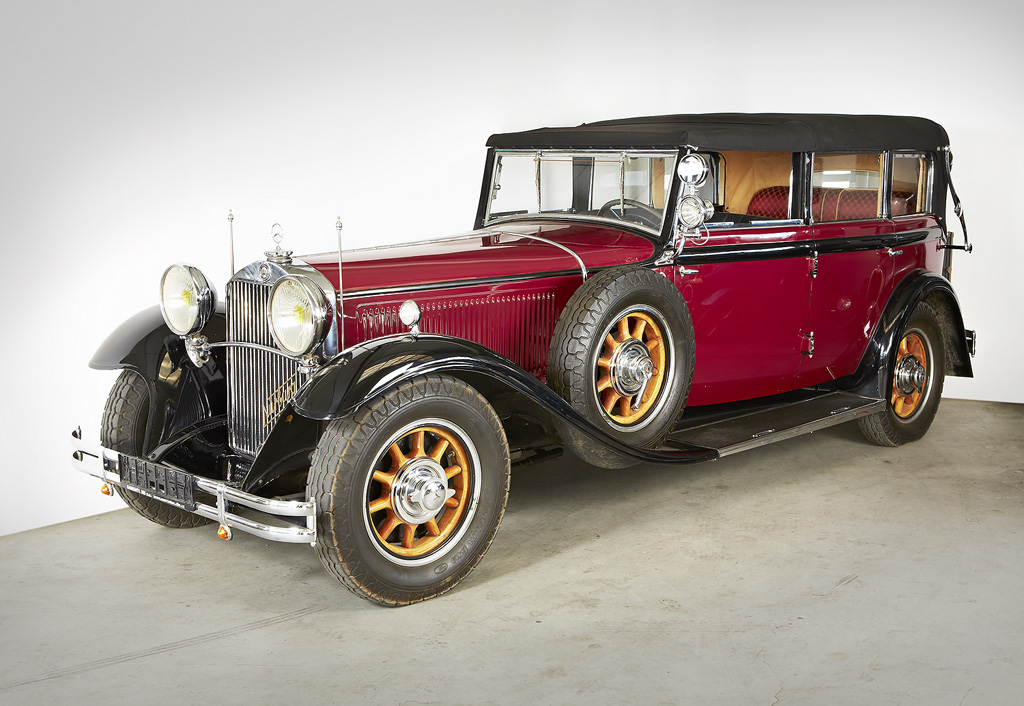
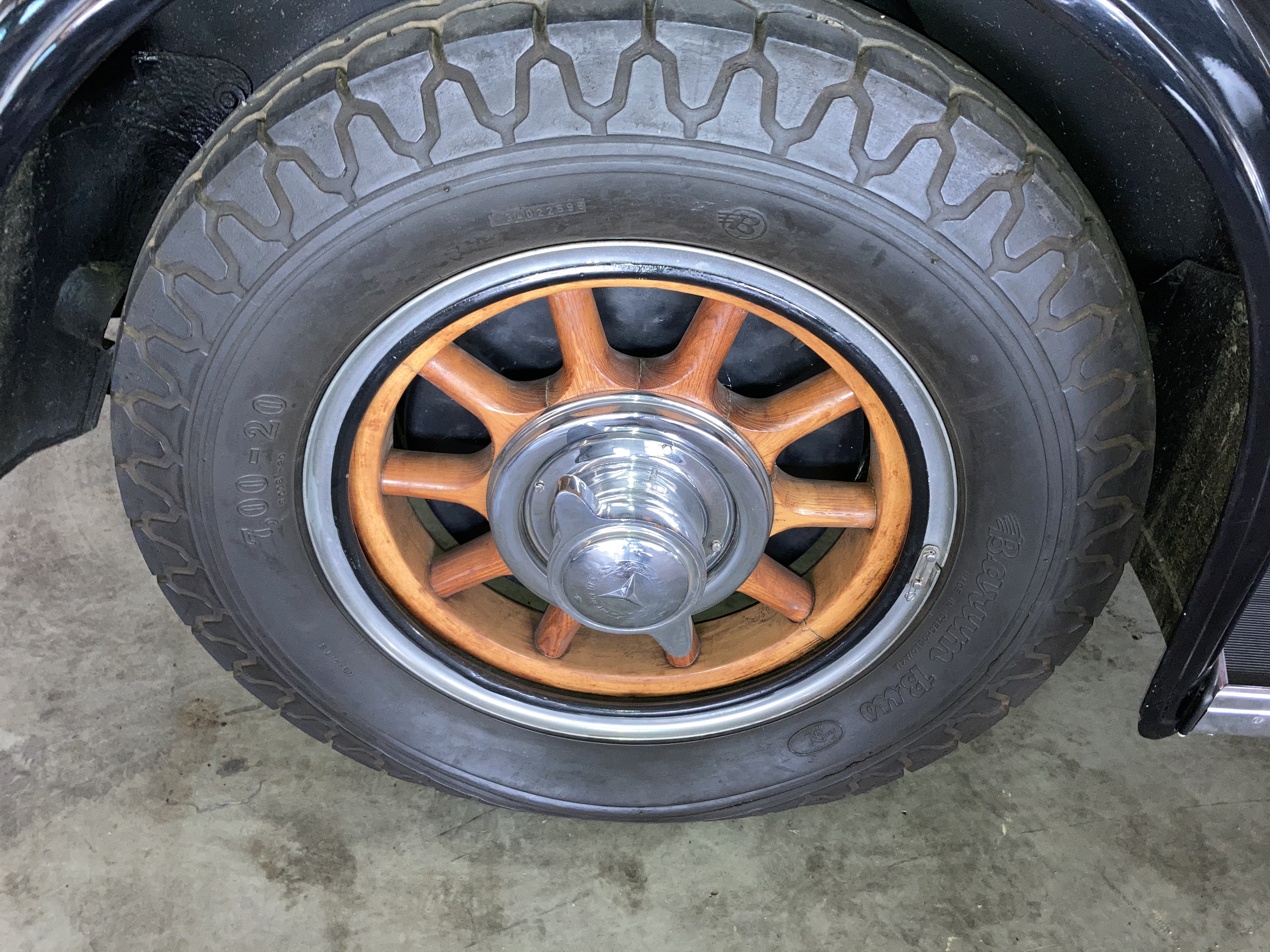
All these models primarily served as luxury and representative vehicles for bankers, industrialists, and high-ranking politicians. This type was also used by Adolf Hitler. They were renowned for incredible reliability and durability. The bodywork itself was among the peak of luxury that customers could afford at that time. Interestingly, throughout the entire 11 years of production, it retained wooden spoked wheels and a very conservative chassis with rigid axles.
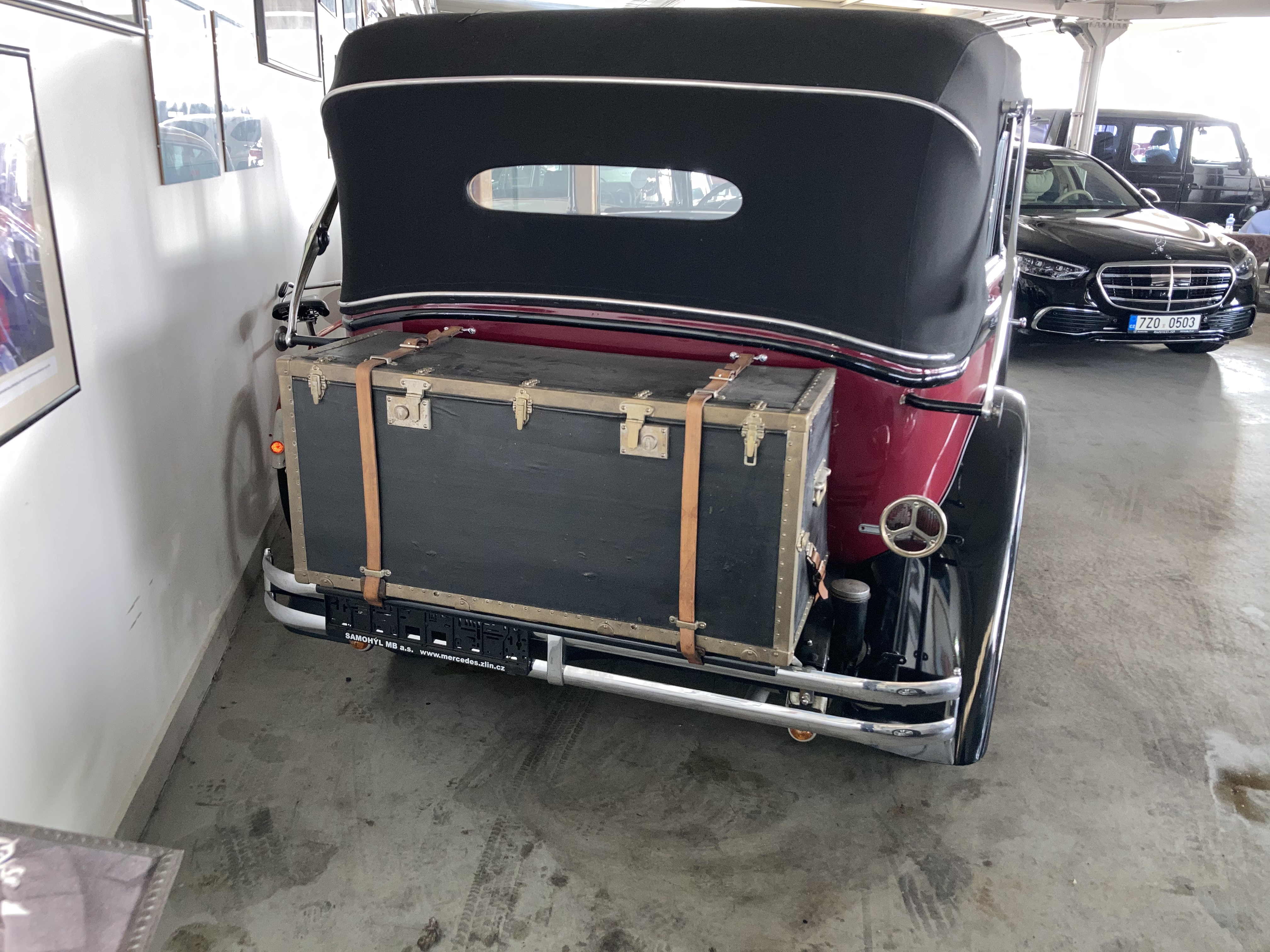
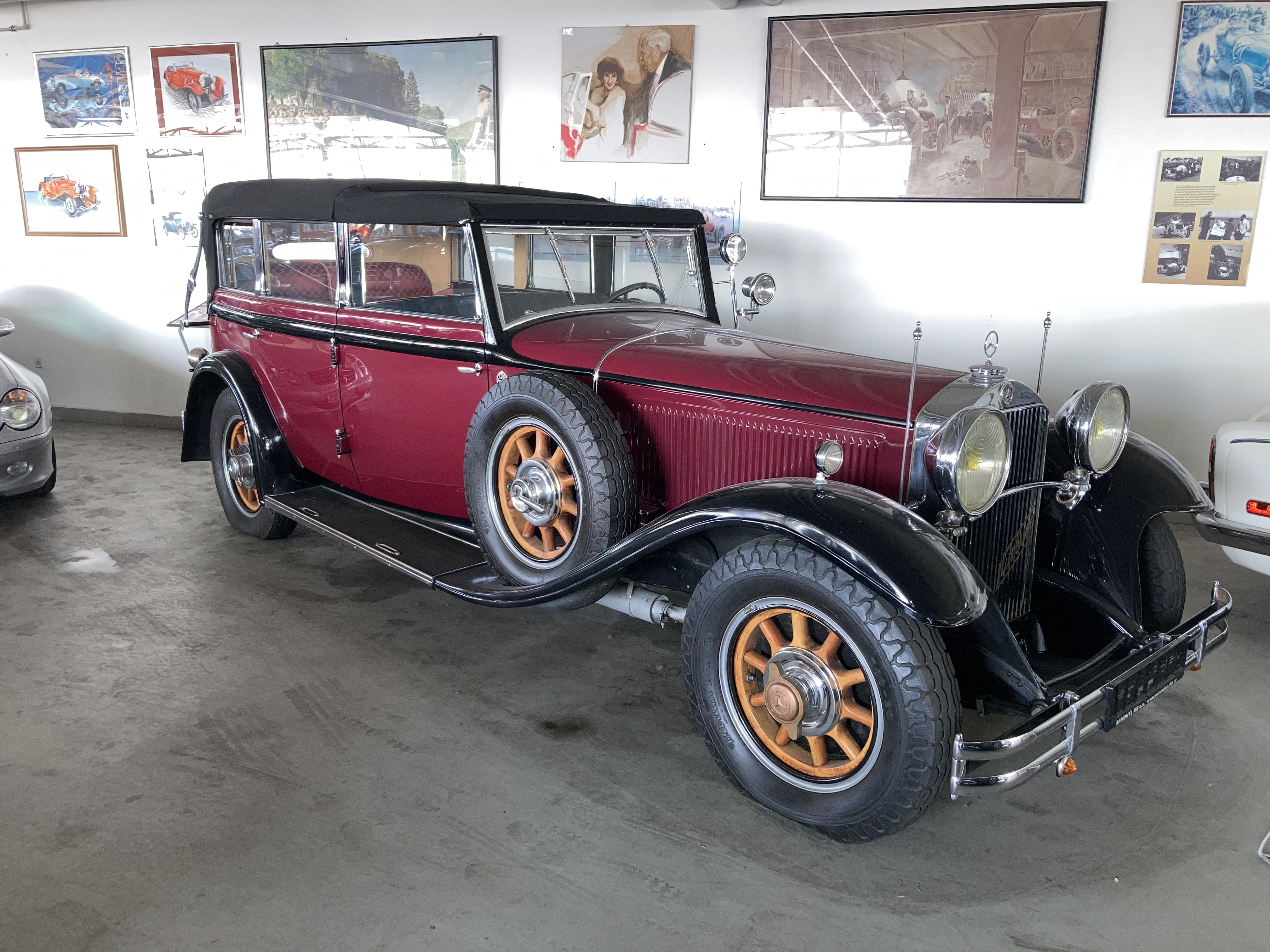
The car from our collection has an interesting history. It was bodied by the famous Glässer coachbuilder in Dresden as a “Type F” cabriolet. This open body had 4 doors, 6 side windows, and was one of the most luxurious versions ever made on this chassis. During the First Republic, the car served as a backup vehicle for President T.G. Masaryk. After the war, it was rebuilt as a limousine. Many elements of the original bodywork were preserved, and after a long and demanding restoration, it was returned to the original Type F cabriolet condition. Today it is one of the highlights of our vintage car collection.