Mercedes Benz 500K
Sure! Here is the English translation with the original HTML formatting preserved:
—
Year of Manufacture: 1934
Power: 115 / 170 hp
Displacement: 5,401 cm3
Number of Cylinders/Valves: 8 / 2
Weight: 1,950 kg
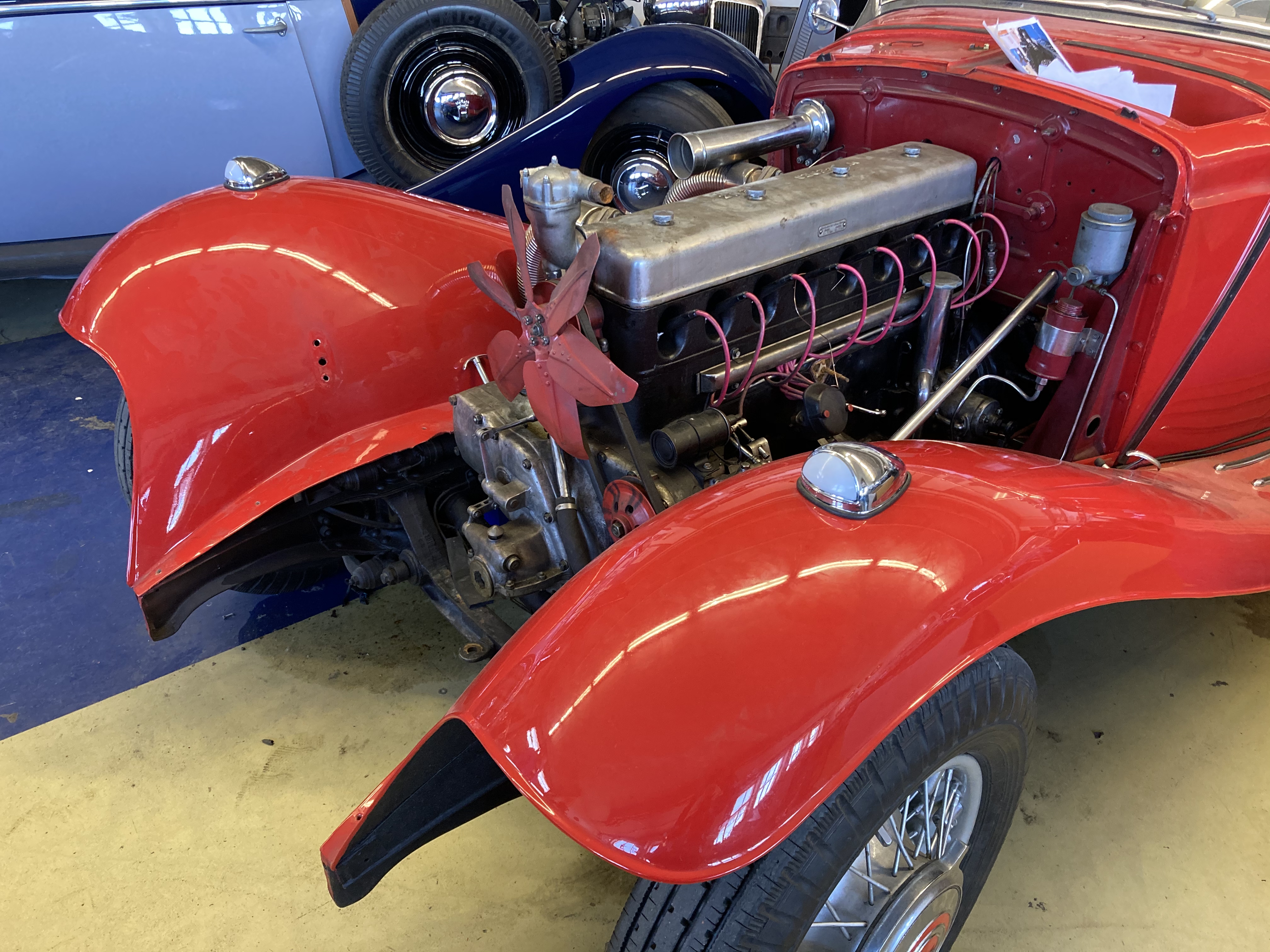
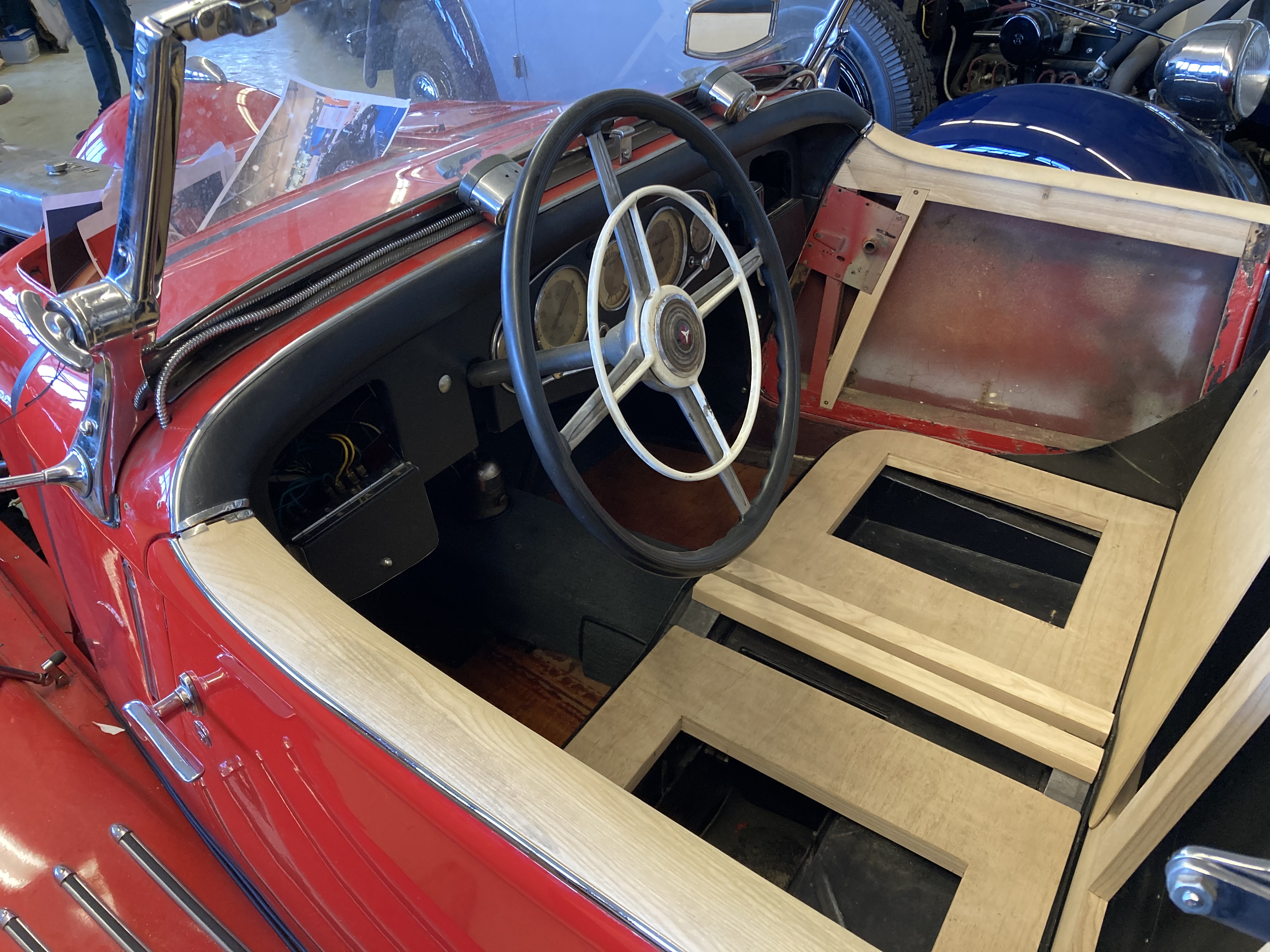
Condition: undergoing restoration
Catalogue Number: 77
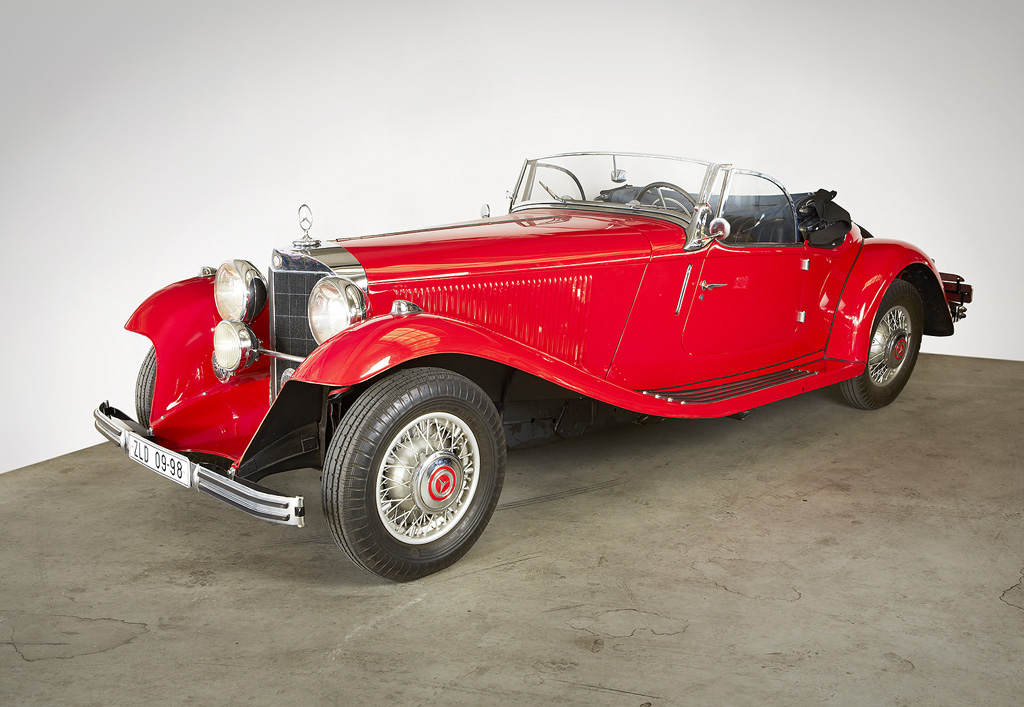
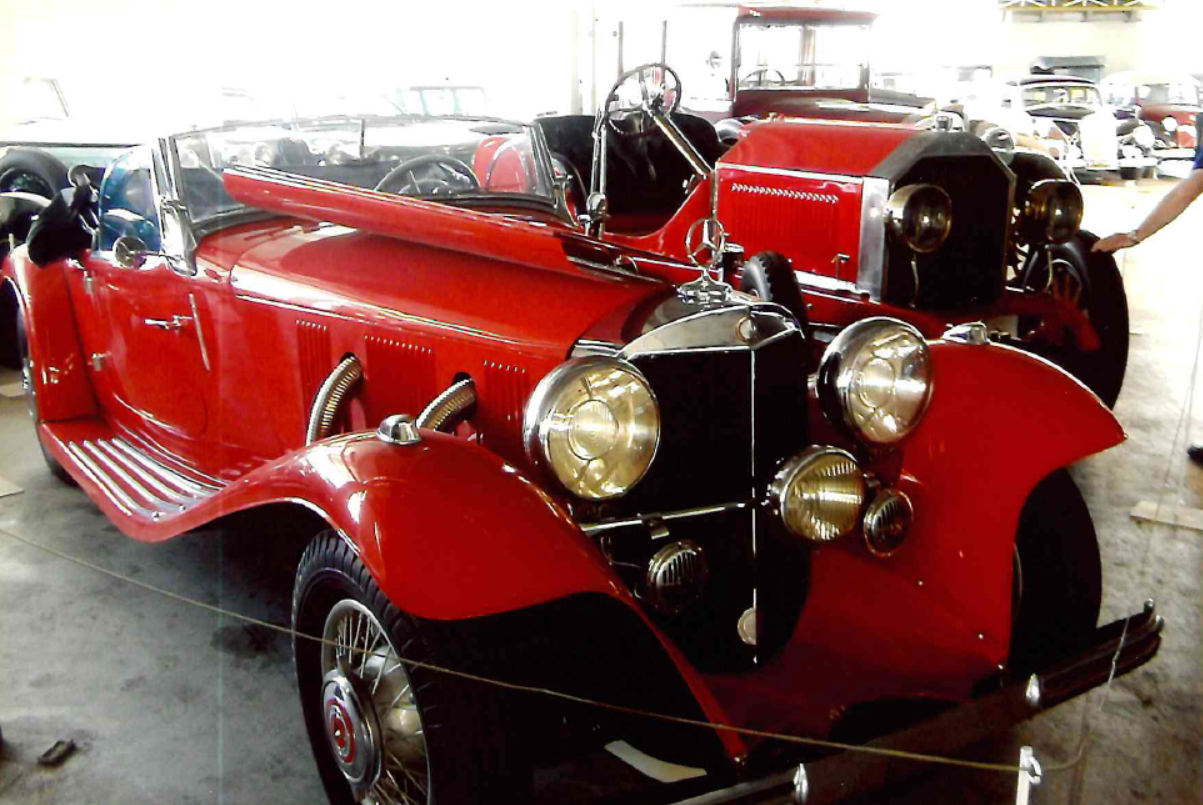
In our collection, we also have one of the most famous cars in automotive history – the Mercedes-Benz 500 K (K stands for Kompressor). Our example is truly exclusive, with an interesting history and remarkable technology.
During the 1930s, the automotive industry experienced a tremendous boom, especially in Germany. These years were marked by Adolf Hitler’s rise to power and the overall easing of economic blockades following the defeat in World War I. The automotive industry, car racing, and all related activities served the emerging fascist regime primarily as a showcase of the economic miracle and prosperity of the “new Germany” under its new leadership.
There was never enough ostentation, and appropriate cars were needed for the ruling elite to publicly present themselves. In February 1933, the model 380 was introduced, but it quickly became apparent that it did not meet performance requirements – due to its weight, it lacked sufficient power. Therefore, work on its further development started immediately.
At the Berlin International Motor Show in March 1934, the Mercedes-Benz 500 K model was presented. This model was developed under the leadership of Technical Director and Chief Designer Dr. Hans Nibel, a Czech native from Olšany near Šumperk. The chassis was slightly modified from the 380 model, but the engine was redesigned. It was again an inline eight-cylinder with an OHV valve train, but with increased displacement to 5,019 cm3. Equipped with a Roots supercharger, it produced 100 hp naturally aspirated and 160 hp with the supercharger engaged.
The car featured a four-speed transmission with an overdrive and, weighing 1,950 kg, could reach speeds of up to 170 km/h. At the time, it represented the pinnacle of automotive technology, and some of its technical solutions remain impressive even today. The 500 K was essentially an interim model produced only from 1934 to 1936. It was followed by the more famous 540 K, but that is another story. Only 354 units of the 500 K were produced, offering great variability in body styles and chassis. Among the most prized were the “Spezial Roadster,” of which only 20 were made.
Today, these cars are extremely valuable, with auction prices reaching several million dollars.
And what about the car in our collection? It was one of the first produced and made specifically for one of the prominent figures of the fascist regime – Adolf Hühnlein (not to be confused with Konrad Henlein). Hühnlein was responsible in Germany for everything related to cars – motorsport, highway construction, driver training, and something akin to today’s automobile club. He was a close collaborator and protégé of Adolf Hitler. Many photographs from that era show him alongside or in the company of Hitler.
In the late 1930s, as leader of the NSAK (National Socialist Automobile Corps), he gained enormous influence over affairs in Germany and contributed significantly to the country’s preparation for war. He died at the height of his power in 1942 after a serious illness and was given a state funeral with full honors attended by the entire government elite of the time.
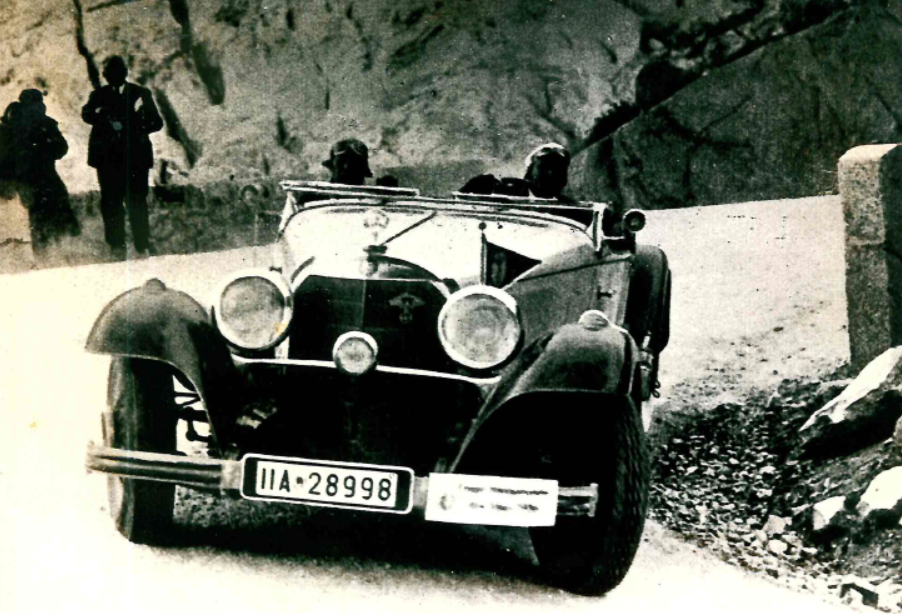
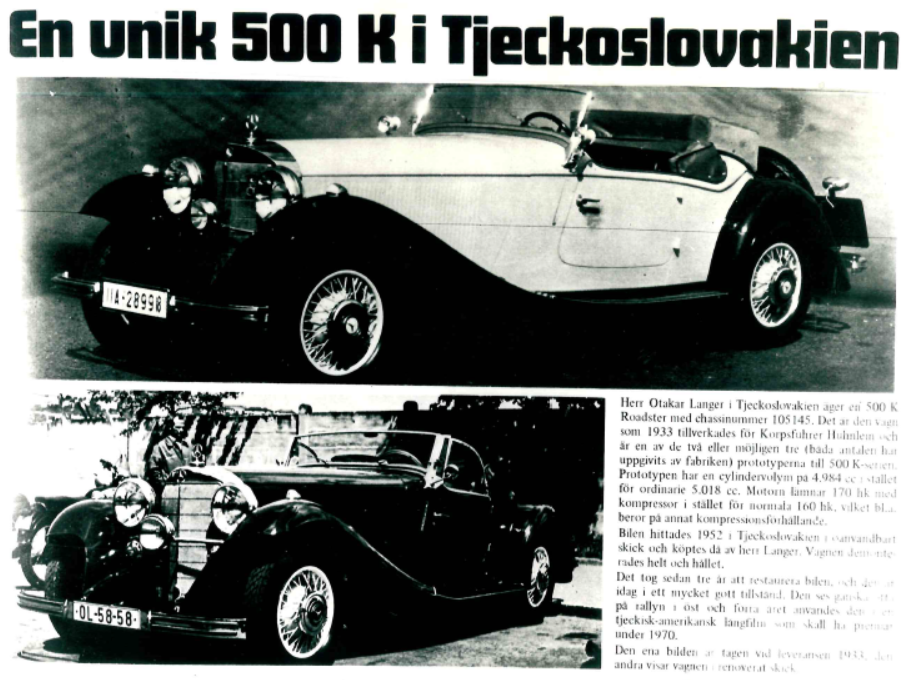
In his official capacity, he used this car to participate in popular long-distance rallies and hill climbs. He appears in many photographs, and his activities served primarily to promote the German automotive industry. The car bore the license plate IIA-28998, and its participation in these events is documented in contemporary records.
What is most interesting about this car? According to Mercedes-Benz’s business records, it was sold directly to A. Hühnlein on July 26, 1934, and on August 21, 1934, the original engine was replaced with a new 5.4-liter engine. The car thus had a power output of 115 hp and 170 hp with the supercharger engaged. However, this engine officially did not yet exist at the time (the 540 K model was introduced only in 1936), so Hühnlein had a still-in-development engine installed in his car. Given his position, the manufacturer fulfilled any of his requests. By coincidence, a true automotive unique was created – the only one of its kind.
After Hühnlein’s death, the car ended up under somewhat unclear circumstances in Prague. It was likely assigned by Heinrich Himmler to people around Reinhard Heydrich during his time in Prague. Later, when Albert Speer brought the car to Panenské Břežany in 1944, it was used by Heydrich’s widow, Lina Heydrich.
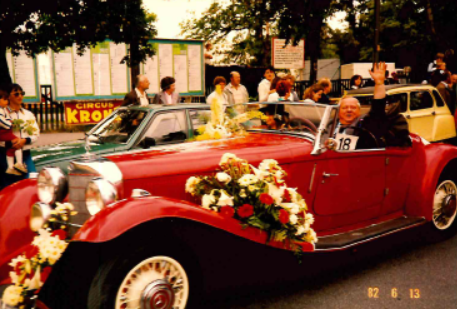
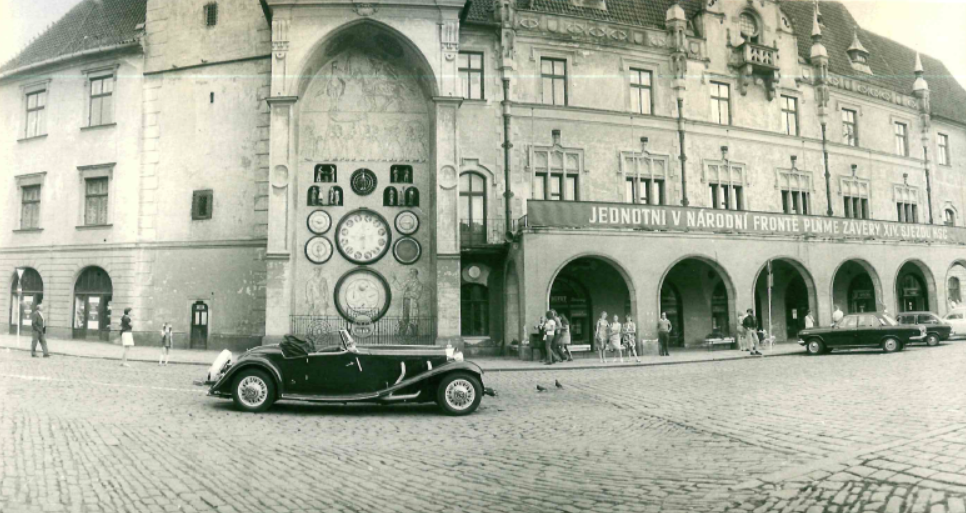
After the war, the car was confiscated and ended up in the National Recovery Fund, along with many other cars from the German occupiers. It was here that Mr. Otto Langer from Olomouc acquired it as compensation for his originally confiscated Opel. He took great care of the car, used it for normal travel, and participated in many veteran car events.
He also tried to gather as much information about the car as possible, corresponding during the deep socialist period with the Mercedes-Benz museum, including Alfred Neubauer himself, the most famous racing manager who was in charge of the museum at that time. This allowed him to obtain additional documentation and technical information.
Later in life, Mr. Langer sold the car to Mr. Alois Samohýl, father of today’s owner. The car immediately became a centerpiece of the private collection, and the Samohýl family participated in various automotive events with it.
Where can the car be seen today? It is currently undergoing partial restoration and is disassembled in the workshop. Over time, it had undergone various modifications, so it was decided to return it to its original condition. The restoration will include repainting in the original color, new interior upholstery, and other adjustments. Once completed, this unique and very rare car will be exhibited in a suitably honorable place. We will inform fans and enthusiasts so they can admire it in its full restored glory.