Showing all 15 results

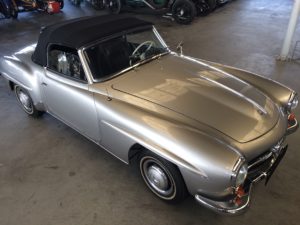
Mercedes Benz SL190 W121

Year of Manufacture: 1963
Power: 105 hp
Engine Displacement: 1,897 cm3

Number of Cylinders/Valves: 4/2
Weight: 1,080 kg

Condition: excellent
Catalog Number: 34


After World War II, the global industry was recovering from wartime production. It tried to quickly reorient itself toward civilian manufacturing but also aimed to successfully sell and capitalize on its products. The same was true in Germany, which had been totally devastated by the war and urgently needed to produce and sell goods.

“Whoever does not export will perish,” echoed through war-ravaged Europe. The domestic market was pushed to the back burner, while foreign currency and barter trades took priority. The greatest attention of exporters was naturally focused on countries with strong purchasing power—the first two post-war decades mainly targeted the United States. Their economy, crippled by the 1930s Great Depression, was revived by the war. However, from 1942 until the end of the fighting, they did not produce passenger cars. After the war, practically anything with wheels found a buyer on the “starved” market. And American automakers had no interest in sports cars—they simply didn’t make them.

Max Hoffman, an American importer of Mercedes-Benz vehicles, was aware of this. He convinced the MB board to develop an expensive, super-sporty model—the Gullwing. He also realized there was a need for a sort of people’s sports car for a broader clientele, preferably a convertible. Thus, the idea of the iconic 190 SL was born, which in its own way conquered America and shifted the brand’s image in the right direction.

The brief was simple: make it resemble the Gullwing as much as possible but with different technology and, most importantly, price. Development was incredibly fast. It was approved in September 1953. By February 1954, the first working prototype was exhibited at the New York Auto Show. The development took only 5 months! The car was still modified and its production version was introduced at the Geneva Motor Show in March 1955. Sales started in May of the same year.

The chassis was based on the production sedan 180 “Ponton.” It was shortened and modified, and the body was welded onto it. The engine hood, trunk lid, and doors were made of aluminum. Given British competition, great attention was paid to neat interior workmanship. Seats upholstered in artificial leather provided good support during cornering. For an extra charge, a third seat was installed, placed perpendicular to the direction of travel. The car could also be purchased with a fixed removable hardtop roof—initially aluminum, later metal.

Among the car’s advantages were precise shifting of the four synchronized gears, effective brakes, and agile handling. The latter, however, was more related to the chassis qualities than the engine performance. Acceleration from zero to 100 km/h in 14.5 seconds was rather average. The excellent driving characteristics were also due to the fact that the suspension design was quite similar to the Gullwing, which transmitted much higher power from its inline six-cylinder engine.

The engine in the 190 SL was newly designed. It was essentially 4 cylinders from the six-cylinder engine of the 300 SL. With a displacement of 1897 cm3, it produced 105 hp, featured an overhead camshaft (OHC), and a three-bearing crankshaft. It was not a super high-performance engine, but with a weight of 1080 kg it allowed a top speed of 170 km/h. There were attempts at racing versions and sporadic participation in motor racing. The car was not designed for this purpose, and although the company offered a racing kit for upgrades, only a few dozen kits were sold, and the 190 MB did not become a racing staple.

The car quickly won the hearts of customers, especially women. In the USA, it was even regarded as a sports car for ladies. It was also comfortable enough for a sports car. The fact that its designers accurately predicted customers’ tastes is evidenced by the few cosmetic improvements it underwent during its production from 1955 to 1963. Almost 26,000 units were produced in total.

Today, these cars are highly sought-after by collectors. The bigger brother, the MB 300 SL Gullwing, commands astronomical prices and is becoming unaffordable for the average collector. Therefore, the smaller MB 190 SL is experiencing a great renaissance, and its price has also begun to soar in recent years.

The car in our collection is from the last series produced. It has undergone a complete restoration and is in like-new condition.
Škoda Felicia Super

Year of Manufacture: 1964
Power: 55 hp
Displacement: 1,221 cm3

Number of Cylinders/Valves: 4/2
Weight: 895 kg

Condition: good
Catalogue Number: 104

Škoda Felicia Super

The Škoda Felicia Super was born in Kvasiny already at the end of 1959 (development lasted about a year and a half) and followed the preceding Škoda 450 model. It was first presented in March 1959 at the Leipzig Motor Show.

The greatest paradox is that even after more than 60 years, it remains a fact that this very Felicia Super is actually the last serially produced convertible of the Škoda brand. Therefore, it still enjoys the reputation of a legend and evokes proper enthusiasm and admiration from fans of beautiful cars wherever it appears.

Nimble Convertible

The original Felicia remained in production until 1964, during which the original 1,089 cm³ engine was replaced in the last 3 years by a larger 1,221 cm³ engine. This engine was 5 horsepower more powerful, totaling 55 hp, which is why the Felicia earned the epithet ‘Super’. The engines were, of course, typical OHV design for Škoda at that time. The car could reach a top speed of 135 km/h and realistically consumed about 9 liters of leaded gasoline per 100 kilometers.

The base of the car was identical to the concurrently produced Škoda Octavia sedans. However, at its time, the car was at a very good level and had some progressive design solutions.

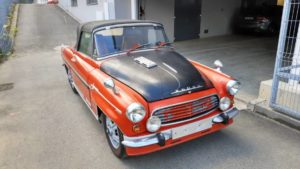
A great curiosity was the possibility of two roofs for the car. The standard fabric roof could be complemented by a fixed fiberglass roof, instantly transforming the car into a beautiful coupe suitable for year-round use.

Timeless Legacy

The Škoda Felicia Super is simply the embodiment of automotive pleasure. Sixty years ago, the Czech industry was truly very advanced, and if it weren’t for the dark parts of our history, everything could have been very different. One is literally fascinated by the materials used. Everything is made either of quality metal, leather, or plastic. The car was also highly sought after abroad, so part of the production was exported. And its price there was not small at all!

And some details? For example, mechanical controls for the wipers, indicators, or the cleverly designed heating system can only be perceived as the cherry on such a timeless automobile. It is a pity that so few have survived to this day in their original condition.

Even today, meetings of these beautiful cars are held, where very valuable vehicles in original condition with just a patina of years of use can be seen. On the other hand, today there are also shiny cars after complete restoration, which are probably in better condition than when they originally left the factory!

The car in our collection is very rare. As can be seen in the attached photographs, the original owner subjected it to extensive “tuning” modifications and in its time won competitions for modified cars with it. That is why it is left in this modified state and demonstrates that the creativity of the Czech people knows no bounds.

Škoda Octavia combi

Year of Manufacture: 1968
Power: 47 hp
Displacement: 1,221 cm3

Number of Cylinders / Valves: 4 / 2
Weight: 965 kg

Condition: drivable
Catalogue Number: 98

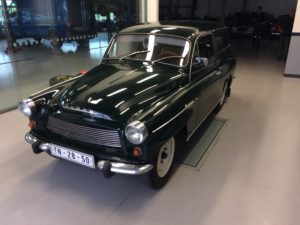
The Škoda Octavia Combi model was produced between 1961 and 1971.

This new Combi body variant appeared in 1960. It stood out with its spacious interior and flat cargo floor, quickly winning the hearts of users. The following year, the Škoda Octavia underwent a visual modernization, most noticeable at the rear of the vehicle. These cars became popular not only in their home country but also abroad. For its time, it was an affordable, reliable, and well-handling car.

It is a three-door, five-seat station wagon. It had a front-mounted engine and rear-wheel drive. It was equipped with a spark ignition, liquid-cooled inline four-cylinder engine. It produced 47 horsepower and had a mechanical four-speed manual gearbox, reaching a top speed of 120 km/h.

The version with the Tudor body ceased production in 1964 and was replaced by the new Škoda 1000 MB model. The Combi body versions remained in production until 1971.

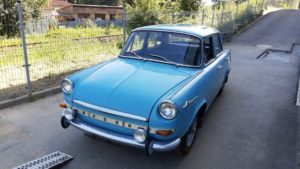
Škoda 1000 MB

Year of manufacture: 1968 Power: 42 hp Displacement: 988 cm3

Number of cylinders/valves: 4/2 Weight: 765 kg

Condition: good Catalogue number: 107

After the nationalization of industry in 1948, all affairs in society were controlled by the central committee of the Communist Party. This included decisions about when a new car would be produced, its specifications, and how much investment would be put into its development and manufacturing technology.

So it was not easy at all, and other party committees had decisive authority—not engineers or customers…

So what was the story behind the Škoda 1000 MB?

In 1954, a commission for a people’s car was established, tasked with recommending the basic characteristics of the proposed car for mass production.

In 1955, the Ministry of Automotive Industry and Agricultural Machinery officially approved these recommendations. The car was to be at least a four-seater, have a curb weight around 700 kg, and fuel consumption between 6 and 7 liters per 100 km.

It was the first Škoda serial production car with a unibody structure and also the first with the “all rear” drive concept (engine in the rear and rear-wheel drive). From early 1956, the first prototypes of the people’s car were developed. By May of that year, AZNP had three prototypes: 976, 977/I, and 978. Remaining prototypes were to be built by the end of the year.

The first prototype bodies were characterized by two-door designs and somewhat modest dimensions, reflecting caution due to limited experience with unibody construction. Engineer Rudolf Vykoukal, creator of the Jawa Minor I and II, worked on project 976.

Driving tests took place throughout 1956. Results indicated a decision would be made between the “all rear” and “all front” concepts. The primary consideration was, naturally, manufacturing cost. The motto was “a lot of music for little money.” At that time, company leadership was caught between customer expectations and the demands of party and government bodies, which had a fundamental requirement: no import of parts, no foreign currency purchases, everything must be produced domestically.

After long deliberations, they favored the rear engine and rear-wheel drive option while maintaining low weight. Proponents of this concept in the late 1950s and early 1960s included Volkswagen, Fiat, Renault, and NSU. At that time, rear-engine small European cars made up more than 50% of the lower-class vehicle production. However, this concept limited product variability—no station wagons, pickups, or other utility versions.

In 1957, a four-door “panel” body appeared for the first time. This was a unibody skeleton onto which fenders, doors, hood, and trunk lid were mounted. This principle was tested on two variants: a classic sedan and a wagon. The 989 model had almost no front end. Although this solution met aerodynamic goals, its aesthetics were lacking.

In 1958, it was decided the future car would have a four-door sedan body with an appealing basic shape. Early in 1959, the first prototype embodying all prior requirements was created. Further modifications led to a prototype so close to the final shape it was named Favorit. In 1963 and 1964, the body was adjusted to accommodate subcontractors, enabling presentation of the final version. Reportedly, coachbuilder Jaroslav Kindl modified the fender shape for the main headlights at the last moment, moving them back 120 mm to improve stability in crosswinds. The overall body development required half a million man-hours. The body was ultimately resolved to general satisfaction, being spacious and comfortable despite small dimensions.

The Mladá Boleslav technicians achieved a very high level in a short time. The new Škoda had a four-cylinder water-cooled engine with a displacement of 988 cm3 and 42 hp. Its top speed reached up to 120 km/h. The finally chosen OHV four-cylinder was among the most modern 1-liter engines in Europe at the time, mainly due to the production technology of the block and other parts manufactured by aluminum die casting. It was developed by Ing. Josef Polák, who came from a Czech landowner family and patented this principle in 1922. Unfortunately, the planned OHC engine was dropped at the last moment, which would have made the car even better. Even so, the engine was very advanced for its time and was used by Škoda with various modifications for nearly 40 years.

The car was finally named Škoda 1000 MB, not Favorit (which came later). It was a balanced and modern design for its time. To meet production targets, a brand-new factory was built in Mladá Boleslav specifically for this model. Škoda achieved something remarkable again: the factory was state-of-the-art and would be competitive anywhere in Europe. For the first time in history, all necessary operations and technologies were concentrated within the company, eliminating the need to import many components from subcontractors.

The car was officially introduced in mid-1964 and was very well received. It was also highly regarded abroad. Alongside the car’s market launch, the new factory was completed, and full-scale production started in 1965. In 1968, when the plant began three-shift operation, 111,386 “MB” cars were produced. In total, between 1964 and 1969, 443,141 units were built.

This type was originally intended as a people’s car to significantly contribute to motorization of socialist society. It succeeded, though not fully. A substantial portion of production was exported to earn foreign currency for the national economy. Domestic buyers had to wait, often camping out at dealerships overnight with sleeping bags. The main problem was the car’s concept, which quickly became outdated, and the regime’s inflexibility prevented timely and adequate response. Thus, the “all rear” concept persisted for many years after the global automotive industry moved in a different direction. But that is another chapter of history.


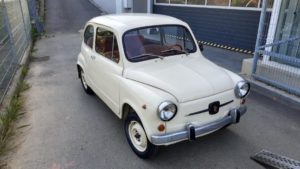
Fiat 600D

Year of manufacture: 1966 Power: 32 hp Displacement: 767 cm3

Number of cylinders/valves: 4/2 Weight: 660 kg

Condition: good Catalogue number: 108

The history of the Fiat 600 dates back to the 1940s and 1950s. The original prototype had an air-cooled engine, but the version presented in March 1955 in Geneva already featured a liquid-cooled inline four-cylinder engine with a displacement of 633 cm3, including a cast iron block, aluminum cylinder head, and a three-bearing crankshaft. The engine produced up to 22 hp. The four-speed gearbox had synchronization on the 2nd, 3rd, and 4th gears. All wheels were independently suspended – the front on a lower transverse leaf spring and the rear axle was an angled swing axle with coil springs and oil dampers.

The main attributes of the Fiat 600 model were low price, simple and robust construction, and low maintenance requirements. In the same year, a Cabrio version with a folding fabric roof and the same engine was introduced.

A revolutionary model was the Fiat Multipla, introduced in Brussels in 1956, which on the Fiat 600 chassis offered seating for up to six passengers. The Multipla could also be used as a van by removing one or both rear rows of seats, and thanks to a modified gearbox, it had better climbing ability, although its top speed was reduced to about 90 km/h.

At the end of the 1950s, the Fiat 600 underwent minor design changes, including an increase in the compression ratio from 7 to 7.5, which raised the power to nearly 25 hp. Improvements were also made to the braking system.

A significant development occurred in 1960 with the introduction of the Fiat 600 D model, featuring a new 767 cm3 engine with a top speed of 110 km/h and an improved lubrication system with a centrifugal oil filter in the pulley.

The top model and highlight of the 600 series was the Abarth version, where the racing model had a 1,000 cm3 engine producing 112 hp. These cars participated in various races and were among the top of their class.

A total of 2,695,197 Fiat 600 cars were produced, and they were also sold in former Czechoslovakia, making them a common sight on roads here. Production in Italy ended at the end of 1969.


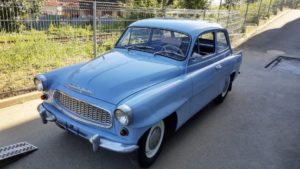
Škoda Octávia

Year of Manufacture: 1963
Power: 40 hp
Displacement: 1,089 cm3

Number of Cylinders/Valves: 4/2
Weight: 920 kg

Condition: fully functional
Catalogue Number: 109

Introduction
The first Škoda Octavia rolled out of Mladá Boleslav in 1959, marking a significant modernization of the Škoda 440 and Škoda 445 models, which were called Spartak. The company implemented not only visual changes and technical innovations but also a name change.

Development
At first glance, one might say that the Octavia does not differ much from the Spartak. Indeed, designers opted for a simpler grille, slightly modified rear lights, and the “Octavia” badge on the front fender, as well as a new instrument panel and steering wheel.

Technical Specifications
From a technical point of view, the engineers introduced a new front axle with a transverse torsion stabilizer and coil springs — the predecessor used leaf springs. Although coil springs were tested, leaf springs remained on the rear axle. During 1959, the model also received more effective asymmetric front headlights and a split front bumper.
The modification of the front axle narrowed the track to 1,200 mm, and the wheelbase of the two-door tudor body was shortened by 10 mm to 2,390 mm. The backbone frame with independently suspended wheels remained the basis of the Octavia, and its length stayed at 4,065 mm. Under the hood was the same inline four-cylinder 1.1-liter engine as in the 440, producing 29.4 kW (40 hp), with a top speed of 110 km/h. Its curb weight was 920 kg. The stronger Octavia Super inherited the larger 1.2-liter engine with 33 kW from the 445 series.
In both cases, power was transmitted to the rear wheels via a four-speed manual gearbox. Combined with the front-mounted engine, the Octavia was one of the last Škoda models with a classic rear-wheel-drive layout. By the way, buyers in Czechoslovakia needed a special permit to purchase this model.

Production
Production lasted 12 years, from 1959 to 1971.
The Octavia Super, with a more powerful 1.2-liter engine producing 33 kW (45 hp), was also offered. The Octavia series enjoyed high demand both in Czechoslovakia and abroad.
The Geneva Motor Show on March 10, 1960, saw the debut of the Škoda Octavia Touring Sport sports version, with power increased to 37 kW (50 hp). FIA homologation for participation in races and competitions in the group of unmodified touring cars opened the way for the car’s motorsport career — for example, from 1961 to 1963, the Octavia TS achieved a hat-trick in its class at the Monte Carlo Rally.

Market
The Škoda Octavia was available as a sedan and station wagon, as the Octavia Super, and as the Touring Sport and Touring Sport 1200. The last original two-door Octavia left the Mladá Boleslav production line on April 11, 1964, to make way for the successor — the completely new Škoda 1000/1100 MB series with a unibody and rear engine.

Sales
About 229,531 cars were sold in total, with the Škoda Octavia sedan being the most popular at 79,489 units, and the Octavia TS the least at 2,273 units.
The last Octavia station wagon left the Kvasiny plant on December 21, 1971, marking the end of Octavia production and sales.

Interesting Facts
An interesting fact is that the name Octavia has symbolic meaning — in Latin, octavia means “eighth.” This model was the eighth car produced by the brand after World War II, and also the eighth car in a row with independent suspension on all wheels.

Car in Our Collection
Our collection includes both Škoda Octavia sedan and station wagon, both fully restored and in fully functional and drivable condition.

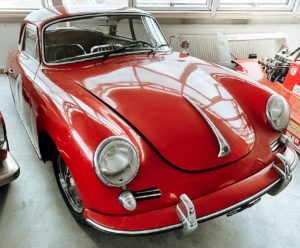
Porsche 356

Year of manufacture: 1961

Power: 75 hp
Engine displacement: 1,582 cm3

Number of cylinders/valves: 4/2
Weight: 935 kg

Condition: functional

Catalog number: 53

Ferdinand Porsche founded his design studio back in 1931. However, the first car to bear his name was the Type 356 from 1950. These were small sports cars that showed clear resemblance to another vehicle designed by Ferdinand Porsche — the Volkswagen Beetle. This car secured an excellent reputation for its designer Ferdinand Porsche in the 1950s. It was offered in coupe, convertible, and speedster versions.

The car from our collection is the 356 B model from 1961, but already the 1962 version. Compared to the original, it differed mainly by a higher front end and different ventilation grilles at the rear. It was available as a Roadster (derived from the speedster) or as a Karmann coupe with a stepped rear. The best offered model was the Super with a top speed of 175 km/h.

The 356 C version became the last model of the series. It was equipped with disc brakes on all wheels and had power up to 80 hp.

Our car has 75 hp, an engine displacement of 1,600 cm3, and is the “S” version. The engine was a classic flat-four from the VW Beetle, suitably modified for higher performance with a sporty character. The car was very sporty for its time, boasting excellent aerodynamic shape, perfect chassis, and outstanding craftsmanship.

From its very beginnings, the Porsche brand has served as a foundation for racing cars that have achieved excellent results. The Type 356 contributed significantly to Porsche’s fame and also had notable commercial success. More than 76,000 units were produced between 1950 and 1965. Its successor was the equally famous Type 911, but that is another story.

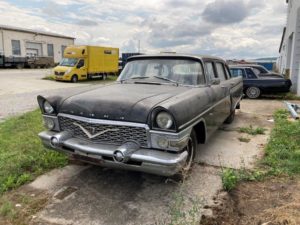
GAZ M13A Čajka

Year of Manufacture: 1963
Power: 195 hp
Displacement:4,890 cm3

Number of cylinders/valves: 8/2

Weight: 2,050 kg

Condition: drivable

Catalog Number: 251

The automobile factory in Gorky needed to replace the somewhat outdated, bulky GAZ M-12 ZIM in the 1950s, even though its production had only started at the beginning of that decade. The new luxury car, a less ostentatious contemporary of the Moscow ZIL 111 (1959–1967), was mainly intended for Soviet state organs and the country’s diplomatic missions abroad, as well as for the KGB secret police. It also reached the “friendly” Eastern Bloc countries including Czechoslovakia. It complemented the aforementioned ZILs and was very similar to them, although smaller.

This car served exclusively prominent figures of the communist regimes. In the USSR, it was driven by the most important officials and representatives of that era, and the same applied in allied communist countries. Several vehicles were also gifted to artists and cosmonauts.

The design of the car was inspired by some American car models of the time, and in many respects, it resembled them quite closely.

It had a modern all-aluminum 5-liter V8 engine with a power output of 195 hp, reaching a top speed of 160 km/h. A distinctive feature was the three-speed automatic transmission controlled by buttons next to the steering wheel.

Great emphasis was placed on space and comfort for passengers in the rear seat. There was an above-average amount of space and some technical innovations that were not yet common in ordinary Eastern Bloc cars – electric windows, remote radio control, and similar features. The car could also be configured with three rows of seats in a 2+2+3 layout.

Over time, several other body variants were produced, mainly four-seat convertibles for military parades and official visits. Several station wagons were made for ambulances or hearses.

Production ended in 1982. A total of 3,179 units were produced, and today these cars are valued collector’s items.

This particular car from our collection served in the 1960s a leading official of the Communist Party and president of the Czechoslovak Socialist Republic, Antonín Novotný.

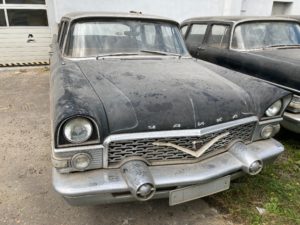
GAZ M13A Čajka

Year of Manufacture: 1963
Power: 195 hp
Displacement:4,890 cm3

Number of cylinders/valves: 8/2

Weight: 2,050 kg

Condition: drivable

Catalog Number: 245

The automobile factory in Gorky needed to replace the somewhat outdated, bulky GAZ M-12 ZIM in the 1950s, even though its production had only started at the beginning of that decade. The new luxury car, a less ostentatious contemporary of the Moscow ZIL 111 (1959–1967), was mainly intended for Soviet state organs and the country’s diplomatic missions abroad, as well as for the KGB secret police. It also reached the “friendly” Eastern Bloc countries including Czechoslovakia. It complemented the aforementioned ZILs and was very similar to them, although smaller.

This car served exclusively prominent figures of the communist regimes. In the USSR, it was driven by the most important officials and representatives of that era, and the same applied in allied communist countries. Several vehicles were also gifted to artists and cosmonauts.

The design of the car was inspired by some American car models of the time, and in many respects, it resembled them quite closely.

It had a modern all-aluminum 5-liter V8 engine with a power output of 195 hp, reaching a top speed of 160 km/h. A distinctive feature was the three-speed automatic transmission controlled by buttons next to the steering wheel.

Great emphasis was placed on space and comfort for passengers in the rear seat. There was an above-average amount of space and some technical innovations that were not yet common in ordinary Eastern Bloc cars – electric windows, remote radio control, and similar features. The car could also be configured with three rows of seats in a 2+2+3 layout.

Over time, several other body variants were produced, mainly four-seat convertibles for military parades and official visits. Several station wagons were made for ambulances or hearses.

Production ended in 1982. A total of 3,179 units were produced, and today these cars are valued collector’s items.

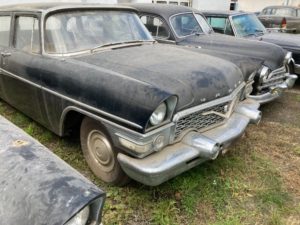
GAZ M13A Čajka

Year of Manufacture: 1963
Power: 195 hp
Displacement:4,890 cm3

Number of cylinders/valves: 8/2

Weight: 2,050 kg

Condition: drivable

Catalog Number: 246

The automobile factory in Gorky needed to replace the somewhat outdated, chunky GAZ M-12 ZIM from the 1950s, even though its production had only started at the beginning of that decade. The new luxury car, a less ostentatious contemporary of the Moscow ZIL 111 (1959–1967), was intended primarily for Soviet state organs and the country’s diplomatic missions abroad, as well as for the KGB secret police. It also made its way to “friendly” Eastern Bloc countries, including Czechoslovakia. It complemented the mentioned ZILs and was very similar to them, though smaller.

This vehicle was used exclusively by prominent communist regime figures. In the USSR, it was driven by the most important officials and representatives of the era; the same applied to allied communist countries. A few cars were gifted to artists and cosmonauts as well.

The car was modeled on some American automobiles of the time and bears many resemblances to them.

It had a modern all-aluminum 5-liter V8 engine producing 195 hp, with a top speed of 160 km/h. A special feature was the three-speed automatic transmission controlled by buttons next to the steering wheel.

Great emphasis was placed on space and passenger comfort in the rear seats. There was an above-average amount of room and several technical features not yet seen in normal Eastern Bloc cars – electric windows, remote radio control, and similar amenities. The car could also operate with three rows of seats in a 2+2+3 arrangement.

Several other body variants were produced over time, mainly four-seat convertibles for military parades and official visits. Some station wagons served as ambulances or hearses.

Production ended in 1982. A total of 3,179 units were produced, and today these cars are highly valued collectors’ items.

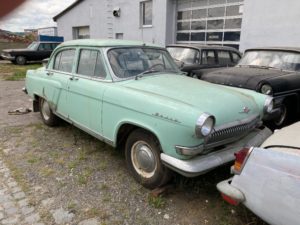
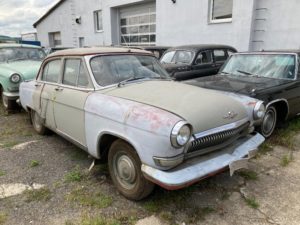
GAZ Volha 21

Year of Manufacture: 1964
Power: 71 hp
Displacement:2,445 cm3

Number of cylinders/valves: 4/2

Weight: 1,300 kg

Condition: good

Catalog Number: 250

This car was a Soviet upper-middle-class vehicle produced between 1956 and 1970. Nobody called it anything but Volga, and its most famous nickname was “Tsarevna.”

It was the successor to the Pobeda, which was the first Soviet car with a unibody construction. Development began in 1954, and production started in 1956. The design was inspired by some American cars of the time, and the Volga was indeed a good car for its era. It is a four-door sedan with a spacious interior.

The engine in the first series was only a modified Pobeda engine. From 1957 onwards, it received a completely new engine with an aluminum block and OHV valve train. It had a displacement of 2,445 cm3 and produced 71 hp. The car reached a top speed of 130 km/h. The transmission had 3 speeds, and thanks to the excellent flexibility of the engine, the car could handle almost everything in third gear. The front axle had independent suspension, while the rear axle was rigid.

The car underwent three modernizations, and from 1962 it was known as the so-called 3rd series. The modernizations mainly involved changes to the exterior bodywork, especially the radiator grille. It also received a new carburetor, and its power increased to between 75 and 85 hp.

It was also produced as a station wagon under the designation GAZ-22 Universal.

The car from our collection is a 3rd series model.

GAZ Volha 21

Year of Manufacture: 1964
Power: 71 hp
Displacement:2,445 cm3

Number of cylinders/valves: 4/2

Weight: 1,300 kg

Condition: good

Catalog Number: 249

This car was a Soviet upper-middle-class vehicle produced between 1956 and 1970. Nobody called it anything but Volga, and its most famous nickname was “Tsarevna” (The Tsarina).

It was the successor to the Pobeda, which was the first Soviet car with a unibody construction. Development started in 1954, and production began in 1956. The design was inspired by some American cars of that time, and the Volga was indeed a good car for its era. It is a four-door sedan with a spacious interior.

The engine in the first series was only a modified Pobeda engine. From 1957 onward, it received a completely new engine with an aluminum block and OHV valve train. It featured a displacement of 2,445 cm3 and produced 71 hp. The car could reach a top speed of 130 km/h. The transmission had 3 speeds, and due to the excellent flexibility of the engine, the car could handle almost everything in third gear. The front axle had independent suspension, while the rear axle was rigid.

The car underwent three modernizations, with the so-called 3rd series introduced from 1962. The updates mainly involved exterior modifications, especially the radiator grille. It also received a new carburetor, and its power increased to 75 to 85 hp.

It was also produced as a station wagon under the designation GAZ-22 Universal.

The car from our collection is a 3rd series model.

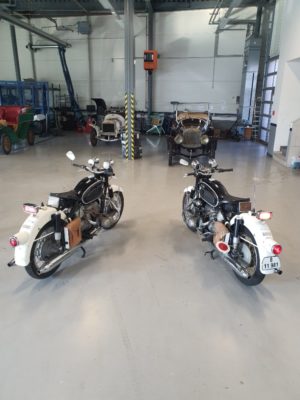
BMW R69S

Year of Manufacture: 1968
Power: 42 horsepower
Displacement:590 cm3

Number of Cylinders/Valves: 2/2
Weight: 202 kg

Condition: operational

Catalogue Number: 257

This is a motorcycle manufactured in Germany.

The year is 1960, and the very reliable and proven chassis platform from the R50, R60, and R69 models received a new heart. The engine had a displacement of 594 cm3 and produced 42 horsepower at 7,000 rpm. At first glance, the motorcycle differed only slightly, with more robust heads and cylinders. The air filter housing lacked a cold start valve, and the intake pipes to the carburetors were mounted directly onto the flanges. The exhausts had aluminum star nuts securing them to the heads instead of smooth steel ones.

This motorcycle was widely used by police forces around the world. For an additional fee, BMW offered optional upgrades such as different seats, tanks, handlebars, spotlights, tachometers, mirrors, turn signals, and more.

One unique feature is the sideways engine kickstart from the motorcycle’s longitudinal axis. Due to the engine’s high compression, a strong kick is recommended for a proper start.

What makes the “S” version special is its performance. A major advantage during smooth cornering is the low center of gravity and overall weight of the motorcycle. The characteristic front fork design also plays a key role in its specific handling behavior. A downside, however, is the drum brakes. The R69S features a classic steering damper like today’s sport motorcycles, which can be disengaged at any time.

More than 11,000 units were produced between 1960 and 1969, including a U.S. version with a conventional front fork.

We own two of these motorcycles in a special configuration, which were used as police escorts for official state visits.

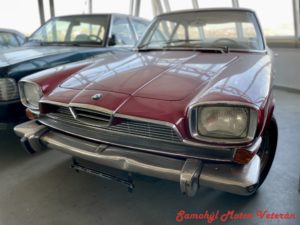
BMW Glas 3000 V8

Year of Manufacture: 1968
Power: 160 hp
Engine Displacement: 2,982 cm3

Number of Cylinders/Valves: 8/2
Weight: 1,350 kg

Condition: drivable
Catalog Number: 111


Introduction

The German company BMW was founded in 1916 as a manufacturer of aircraft engines, later producing motorcycles as well. In 1928, it started manufacturing passenger cars by acquiring the Dixi factory and its car, which was produced under license from the Austin Seven. Before World War II, the main production plant was located in Eisenach, which became part of East Germany after the war. The Eisenach factory produced cars under the BMW brand between 1948 and 1951, but was later forced to change its name to EMW. The West German company, based in Munich, resumed passenger car production only in 1951. In 1966, BMW took over the Glas company to expand its manufacturing capacities and gradually phased out its production by 1969. Today, BMW is one of the most prominent global manufacturers of premium sports-oriented cars.


Development

This little-known chapter in BMW’s history involved an interesting collaboration between the small German car manufacturer Hans Glas GmbH and Pietro Frua, one of the most significant Italian designers of his time. Frua designed a series of cars that Glas hoped would save its struggling company. He also designed the Glas 3000 V8 coupe, which was produced between 1965 and 1968. Approximately 389 units were made in total.


Technical Specifications

The car body was designed by the Italian company Frua from Moncalieri. The car has a 2,982 cm3 front-mounted V8 engine designed by Glas. The BMW Glas 3000 V8 produces 160 hp and is equipped with a 4-speed manual transmission. The chassis was high-quality and very modern for its time. At the front, the car has independent suspension with coil springs, and at the rear, a De Dion axle suspended by leaf springs.


Car in Our Collection

The car in our collection dates from 1968 and is in fully functional and drivable condition.

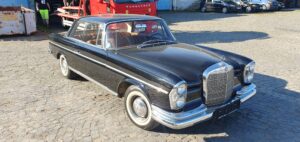
Mercedes-Benz 220 SE W111

Year of manufacture:  1964
Power:  120 hp
Displacement:  2,195 cm3

Number of cylinders/valves:  6/2
Weight:  1,410 kg

Condition:  drivable
Catalogue number: 31


Introduction

In August 1959, the company introduced a thoroughly redesigned line of passenger cars. Under the slogan: “New six-cylinders – a class of their own” and as successors to the existing six-cylinder models, three completely redesigned models were launched – 220 b, 220 Sb, and 220 SEb of the W111 series, the so-called large tailfins.


Development

Mercedes-Benz has been using one of the automotive safety features – crumple zones – for more than half a century. They first appeared in the six-cylinder W111 series in August 1959. However, their history is a decade older and is the work of one of the most famous engineers in the field – the Hungarian-born Béla Barényi.

He worked for Daimler-Benz AG between 1939-1946 and signed a new contract with the company two years later, in August 1948. He was the first to realize that kinetic energy during a crash must be absorbed so passengers inside the car would not be endangered. Therefore, he logically divided the car body into three parts, with a rigid safety cell in the center for passengers. The front and rear were soft crumple zones.


Technical specifications

The large tailfins were designed according to the fashion of the time, clearly inspired from overseas, although their rear part could not compare with the huge fins of American highway cruisers. The design was also inherited by the smaller W110 series launched in 1961. The cars offered sufficient comfort as well as sporty driving characteristics – according to the standards of the time. Modern passive safety features were implemented during the development of the Mercedes-Benz W111 and W112 series.

The steering wheel was padded to reduce the risk of head injury in a crash – customers of the three-pointed star had to wait more than two decades longer for airbags. The doors were for the first time equipped with locks on the inside (so-called pins). These were useful not only in theft attempts but also in case of an accident. The pioneer of three-point seat belts for front seats was Swedish Volvo. Stuttgart was not far behind and offered them to its clients as well. The 300 SE model, which entered production two years after the basic types 220 b, 220 Sb, and 220 SEb, featured disc brakes, air suspension, and was also available with a long wheelbase (SEL). New additions included a four-speed automatic transmission and power steering.

Why did the letter b appear in the names? Internal codes were not used in commercial designations, and the new large tailfins had to be distinguished from the previous large Pontons with the same names. However, the W111/112 series was spacious and elegant – not a “b” (béčko). For example, the dashboard partially recessed some controls – safety was given the highest priority during development.

The basic 220b version with two carburetors differed externally from its more luxurious siblings – it lacked most of the chrome. The 220 Sb and 220 SEb models featured chrome strips on both sides of the grille. This metal also adorned the air intake grilles in the front of the windshield, wheel centers, strip above the rear window, and decorative strips on the trunk lid. The fins were also chromed, not only at the rear but also on the upper edge. The 220b had simpler bumpers, while the Sb and SEb had two-piece bumpers. They also had larger rear lights with integrated license plate lighting.

The engines were inherited from the predecessor but with minor modifications. The six-cylinder 2.2-liter engines received new valve control linkages and sharper camshafts. The basic 220 b had two carburetors and 70 kW (95 hp), while the 220 Sb had 81 kW (110 hp). The SE in 220 SEb stood for “Einspritzmotor” – meaning “injection engine” – and produced up to 88 kW (120 hp).

The chassis also saw changes. The self-supporting body with front auxiliary frame remained, but the simple cross member was attached to the floor only at two points. The rear single-joint swing axle additionally received a compensating spring placed horizontally above the pivot. This ensured even load distribution on the driven rear axle. Shock absorbers were mounted externally both front and rear, making shock and vibration absorption more effective. The braking system underwent two modifications during production. The more luxurious Sb and SEb got front disc brakes in April 1962. The basic 220 b received the same upgrade in August 1963, along with an effective power booster, which had been optional before. At that time, the entire series received a dual-circuit deceleration system, allowing safe stopping even if one circuit failed.

At the Geneva Motor Show in March 1963, Daimler-Benz unveiled another novelty – the long version of the 300 SE with the suffix L (lang – long). It had a 100 mm longer wheelbase, significantly increasing rear passenger legroom. The doors were also wider. As an option, the front compartment could be separated by a partition with electrically operated glass. The exterior was distinguished by the C-pillar – ventilation was redesigned and no decorative trims or openings were present. The extended version also introduced a four-speed manual transmission.

The turn of July and August 1965 marked the farewell of the large tailfins with 2.2 and 3.0 L engines. The successor models 250 S, 250 SE, and 300 SE featured a new, more modern body and belonged to the W108 series. However, this did not mean the definitive end. The basic 220 b (W111) successor was the 230 S. Despite the unusual designation, it was a familiar face, differing only by the badge on the rear. However, the powertrain was modified: the bore was increased, bringing displacement close to 2.3 liters. Compression also rose, with the engine delivering 88 kW (120 hp). The rear axle featured a hydropneumatic spring replacing the traditional coil spring and maintaining constant ground clearance. By January 1968, 41,107 units of the 230 S were produced. Of these, 341 were chassis for special bodies. One deserves a brief mention: a wagon built by Belgian coachbuilder IMA. It was sold directly through Daimler-Benz dealers under the supplementary designation Universal from August 1966. A similar model was offered in the smaller W110 series as well.

From 1959 to 1968, a total of 344,751 sedans and separate chassis of the W111 and W112 series were produced in Sindelfingen.