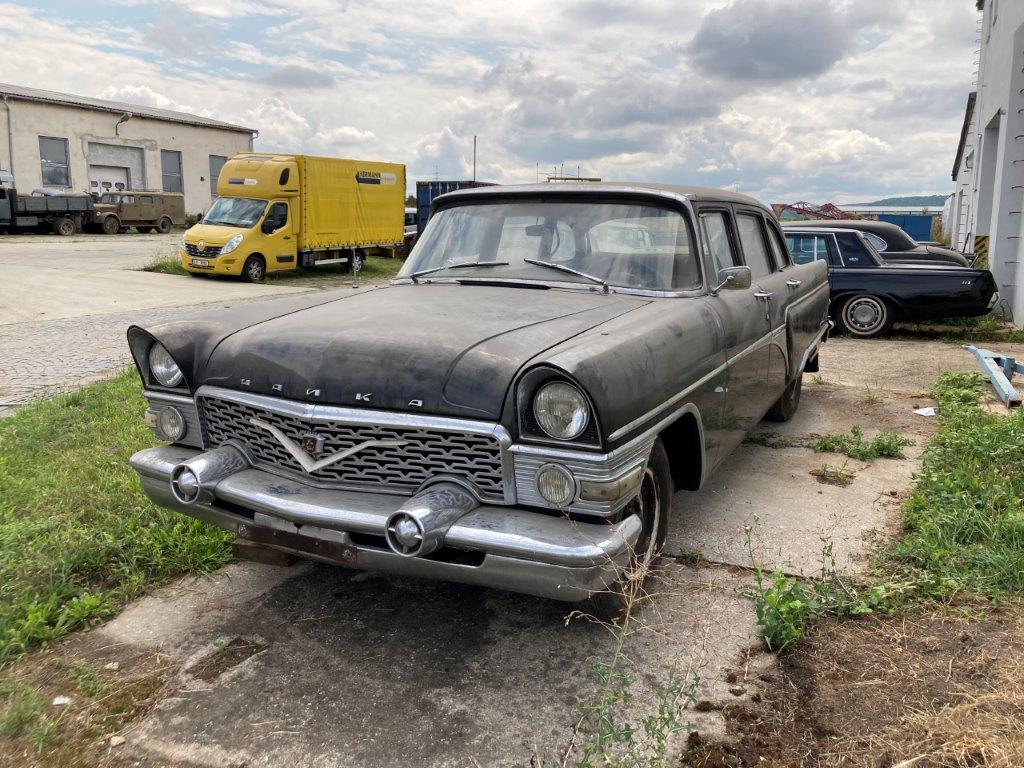
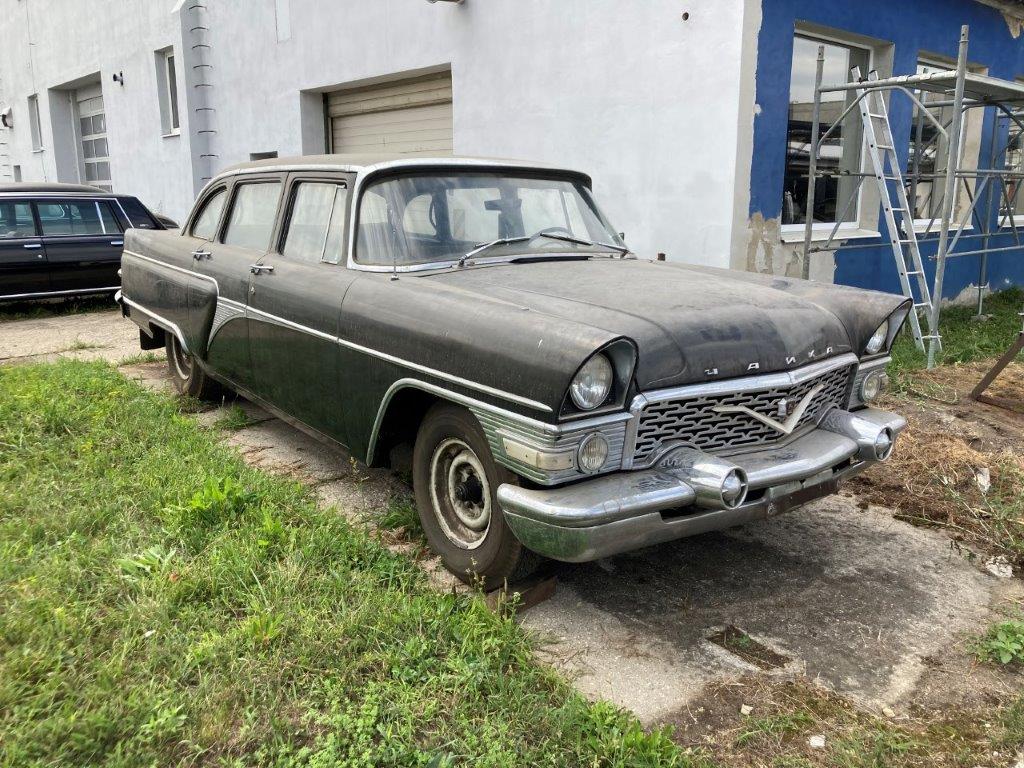
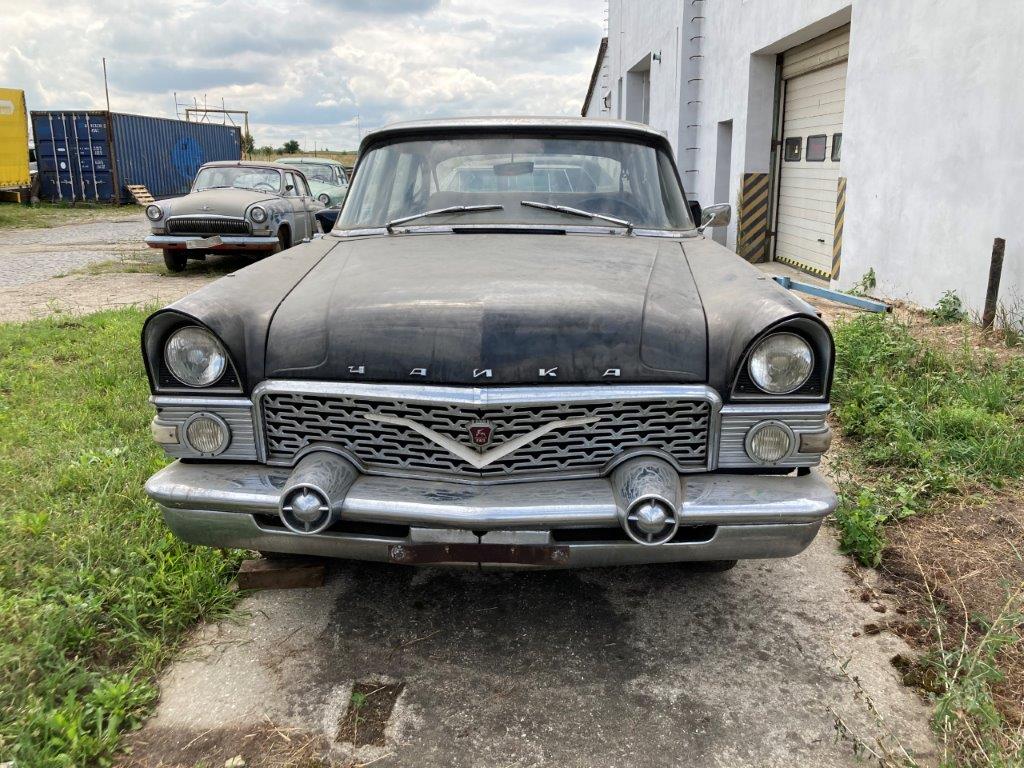
GAZ M13A Čajka
Year of Manufacture: 1963
Power: 195 hp
Displacement:4,890 cm3
Number of cylinders/valves: 8/2
Weight: 2,050 kg
Condition: drivable
Catalog Number: 251
The automobile factory in Gorky needed to replace the somewhat outdated, bulky GAZ M-12 ZIM in the 1950s, even though its production had only started at the beginning of that decade. The new luxury car, a less ostentatious contemporary of the Moscow ZIL 111 (1959–1967), was mainly intended for Soviet state organs and the country’s diplomatic missions abroad, as well as for the KGB secret police. It also reached the “friendly” Eastern Bloc countries including Czechoslovakia. It complemented the aforementioned ZILs and was very similar to them, although smaller.
This car served exclusively prominent figures of the communist regimes. In the USSR, it was driven by the most important officials and representatives of that era, and the same applied in allied communist countries. Several vehicles were also gifted to artists and cosmonauts.
The design of the car was inspired by some American car models of the time, and in many respects, it resembled them quite closely.
It had a modern all-aluminum 5-liter V8 engine with a power output of 195 hp, reaching a top speed of 160 km/h. A distinctive feature was the three-speed automatic transmission controlled by buttons next to the steering wheel.
Great emphasis was placed on space and comfort for passengers in the rear seat. There was an above-average amount of space and some technical innovations that were not yet common in ordinary Eastern Bloc cars – electric windows, remote radio control, and similar features. The car could also be configured with three rows of seats in a 2+2+3 layout.
Over time, several other body variants were produced, mainly four-seat convertibles for military parades and official visits. Several station wagons were made for ambulances or hearses.
Production ended in 1982. A total of 3,179 units were produced, and today these cars are valued collector’s items.
This particular car from our collection served in the 1960s a leading official of the Communist Party and president of the Czechoslovak Socialist Republic, Antonín Novotný.