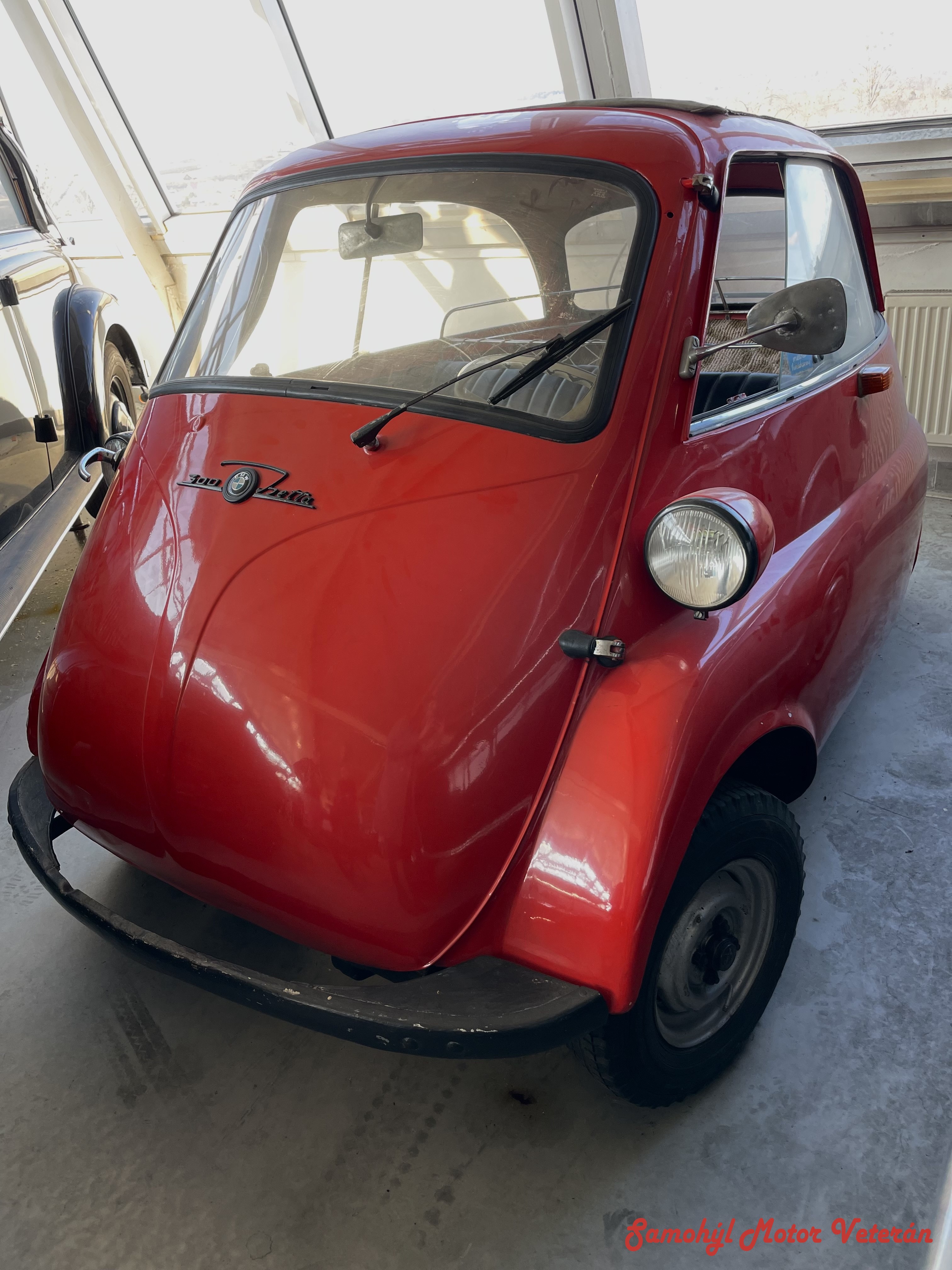
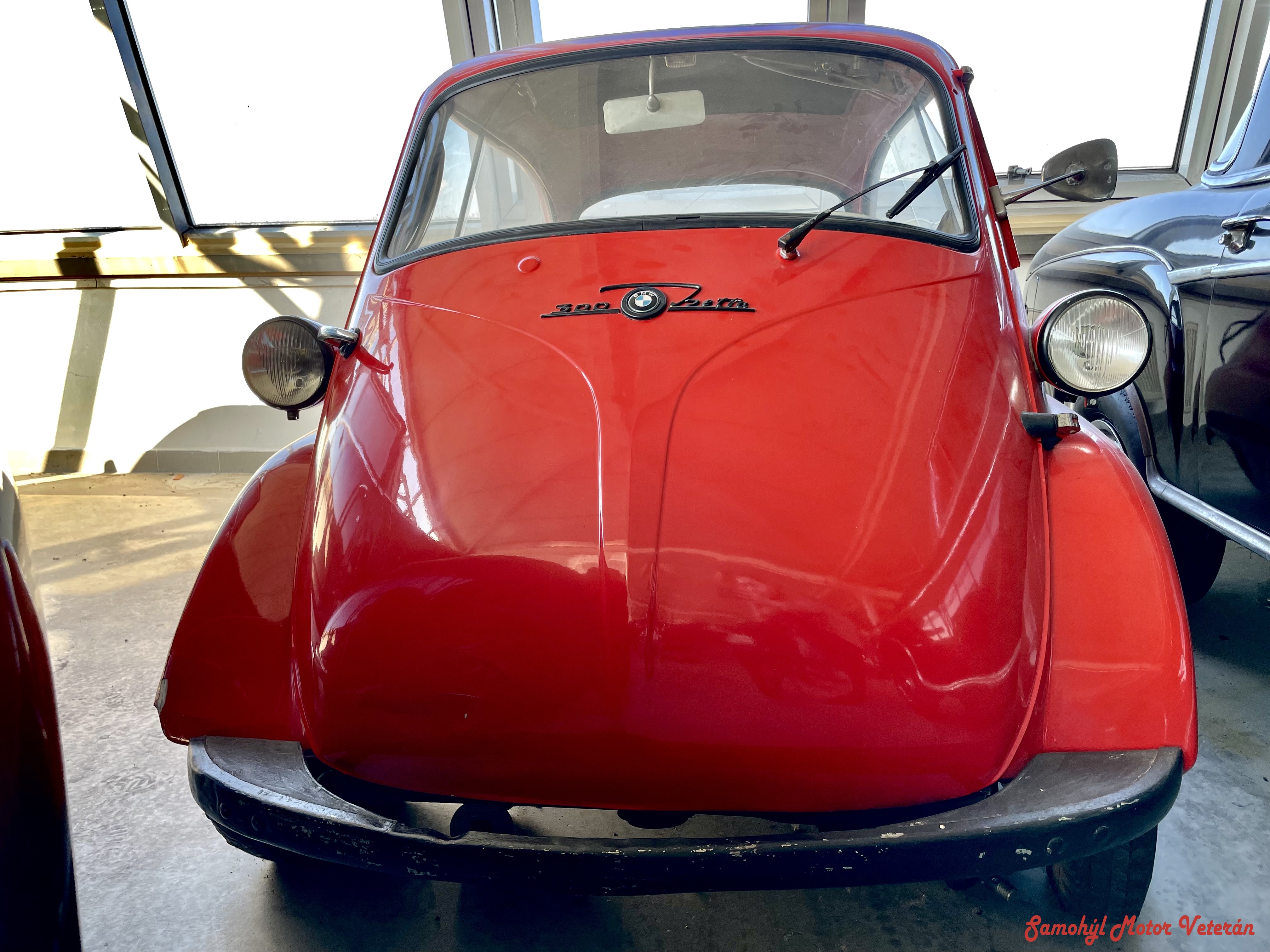

BMW ISETTA
Year of Manufacture: 1955 Power: 12 hp Engine Displacement: 247 cm3
Number of Cylinders/Valves: 1/2 Weight: 360 kg
Condition: drivable Catalog Number: 263
Introduction
The car was designed by the Italian company Iso SpA. In the early 1950s, the company manufactured refrigerators, motor scooters, and small three-wheeled trucks. Iso’s owner, Renzo Rivolta, decided to build a small car for mass distribution. In 1952, engineers Ermenegildo Preti and Pierluigi Raggi designed a small car powered by the Iso Moto 200 motorcycle engine and named it Isetta.
Development
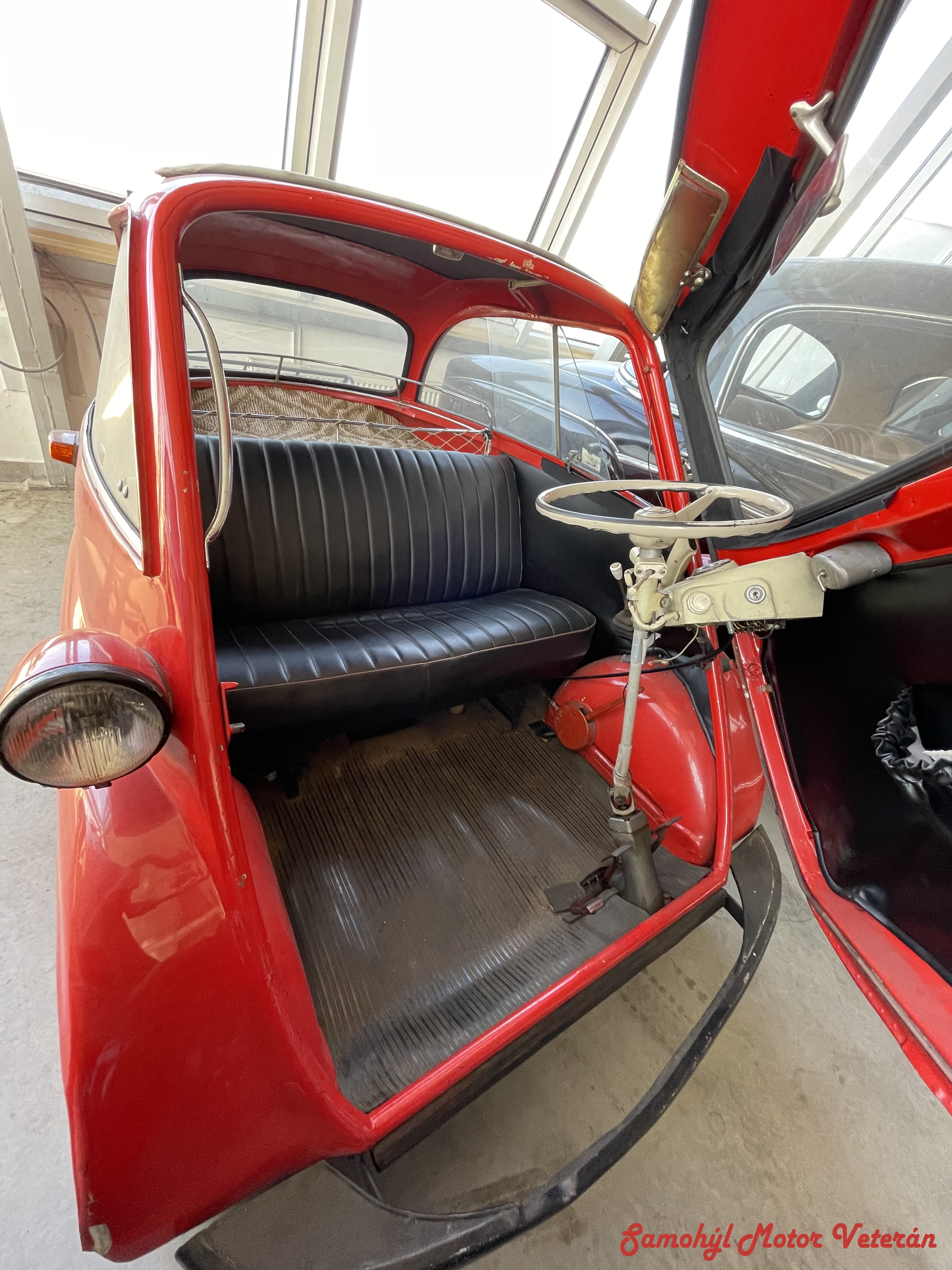
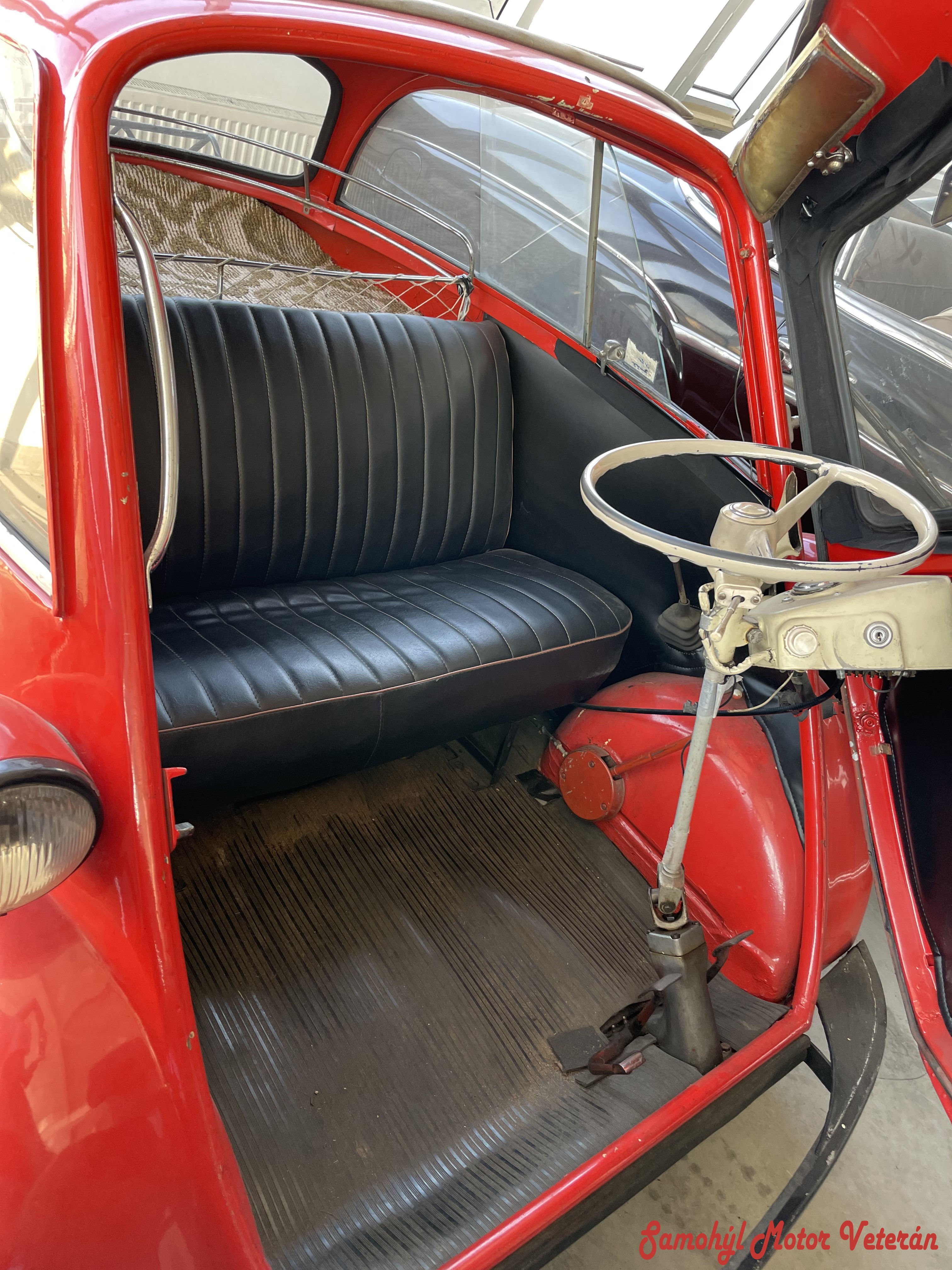
The Isetta caused a sensation when introduced to the automotive press in Turin in November 1953. It resembled nothing seen before. The small egg-shaped car featured bubble-type windows and a front end that hinged outward to allow entry.
Technical Specifications
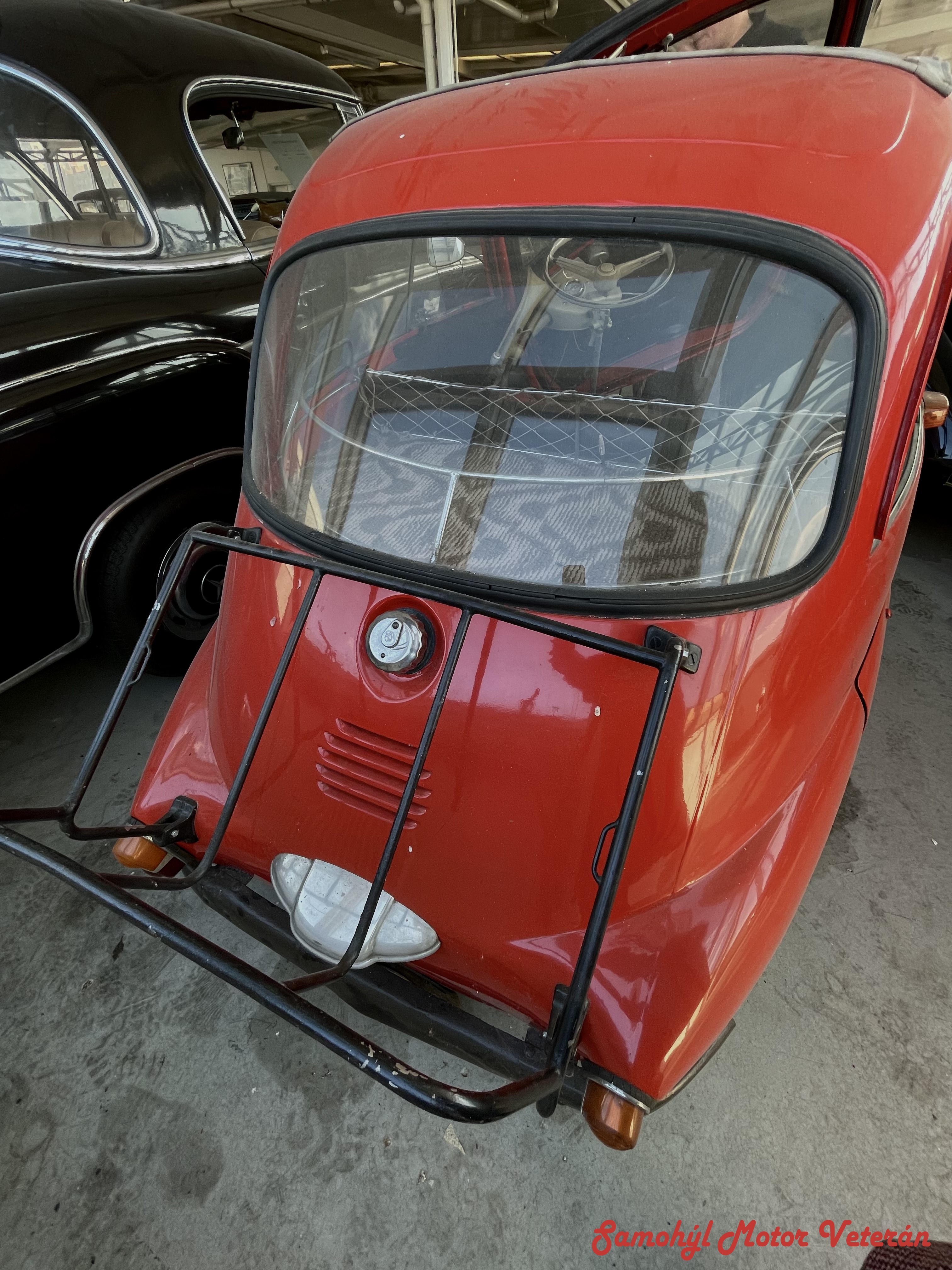
The original Isetta was powered by a 236 cm3 motorcycle engine producing 9.5 hp, with a top speed of 75 km/h. It took more than 30 seconds to reach 50 km/h. The engine was started by a combined generator-starter called Dynastart. The fuel tank held only 13 liters. The manual gearbox offered four forward speeds and one reverse. A chain drive connected the gearbox to the fixed rear axle with a pair of closely spaced rear wheels 25 cm in diameter. Early prototypes had only one rear wheel, but the car was prone to tipping, so the rear wheels were spaced 48 cm apart. This narrow track eliminated the need for a differential.
Production
The car was produced from 1953 to 1958. In 1954, Iso entered several Isettas in the legendary Mille Miglia, achieving the top three positions in the economy class. Over a distance of 1,600 km, drivers averaged 70 km/h. Despite initial success, the Isetta’s popularity waned at home, mainly due to renewed competition from Fiat with the 500C model. Renzo Rivolta focused on developing his new sports car, the Iso Rivolta (later Iso Grifo), and sought to sell licenses for Isetta production. Factories in Spain and Belgium began assembling Isettas using components made by Iso in Italy.
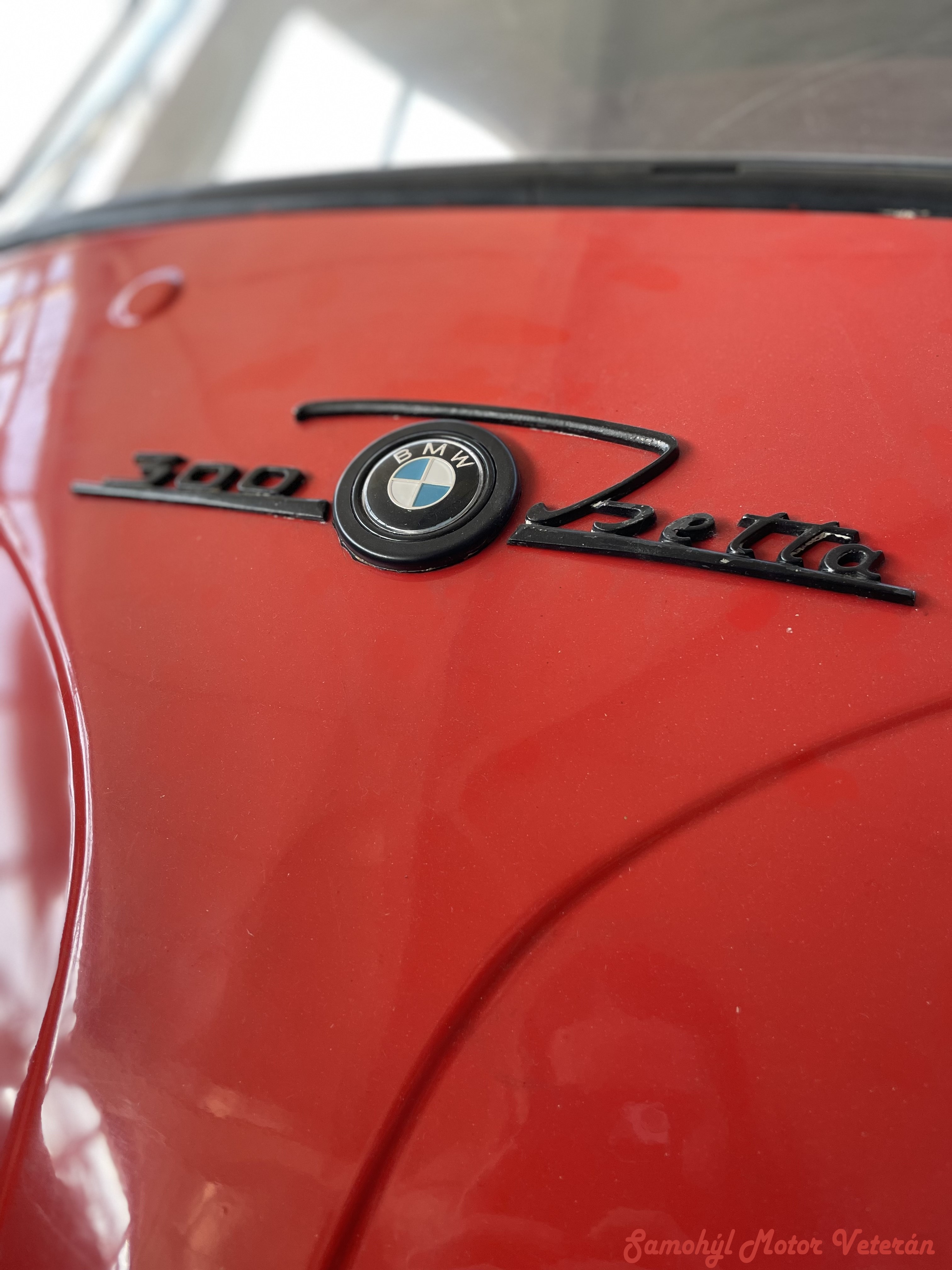
BMW began negotiations with Rivolta and in mid-1954 purchased not only the license but also the complete tooling for the Isetta body. BMW was struggling to sell its expensive six- and eight-cylinder models, so it took the opposite approach by licensing the production of a small people’s car. BMW fitted the car with a single-cylinder four-stroke 247 cm3 engine producing 12 hp and extensively reworked much of the car, making parts non-interchangeable with the original Isetta. Given the post-war German market conditions, the car sold very well. It was the first car with a fuel consumption of 3 l/100 km. Yet in 1956, BMW introduced the Isetta 300 with a larger engine and other improvements.
The peak of these cars was the BMW 600, which was almost a fully-fledged car. It had four wheels and four seats like a normal car but still featured front-hinged front doors. The engine was a two-cylinder from the R67 motorcycle. This model marked the end of the era of small, specialized Isetta vehicles. The car left an indelible mark on automotive history and attracted many customers in its time and under the given conditions. Over 200,000 Isettas were produced in total, with BMW manufacturing 161,230 units alone.
Market
The car became very popular due to its affordable price and low fuel consumption. It was cheap, simple, and very economical in times of fuel shortages. It was perfectly timed for the market.
Trivia
The model appeared in the films *Smiling Face* and *Lisbon Story*.
Car in Our Collection
The car in our collection dates from 1955 and is in fully functional drivable condition.