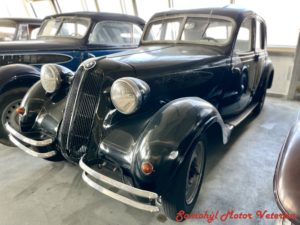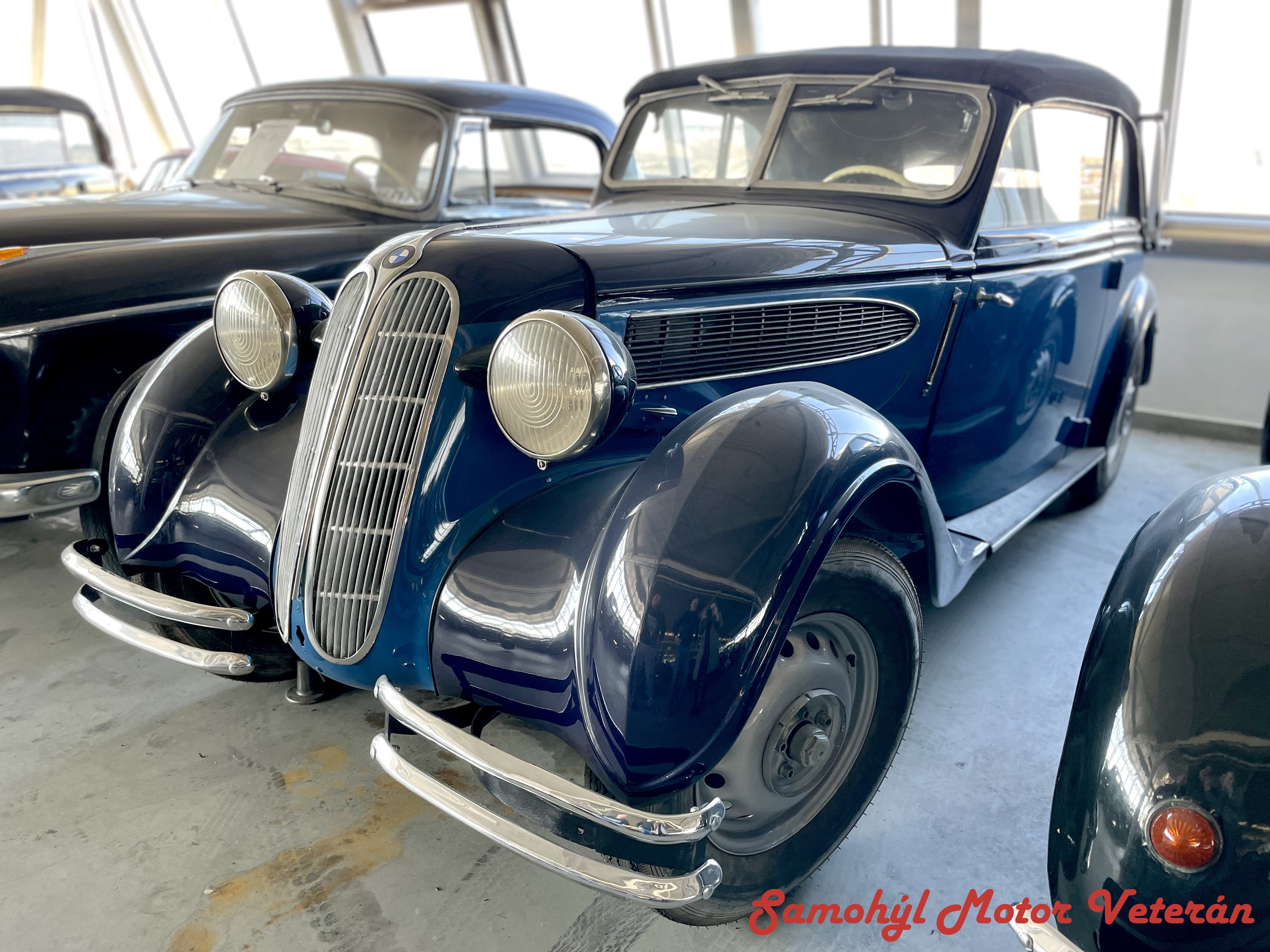
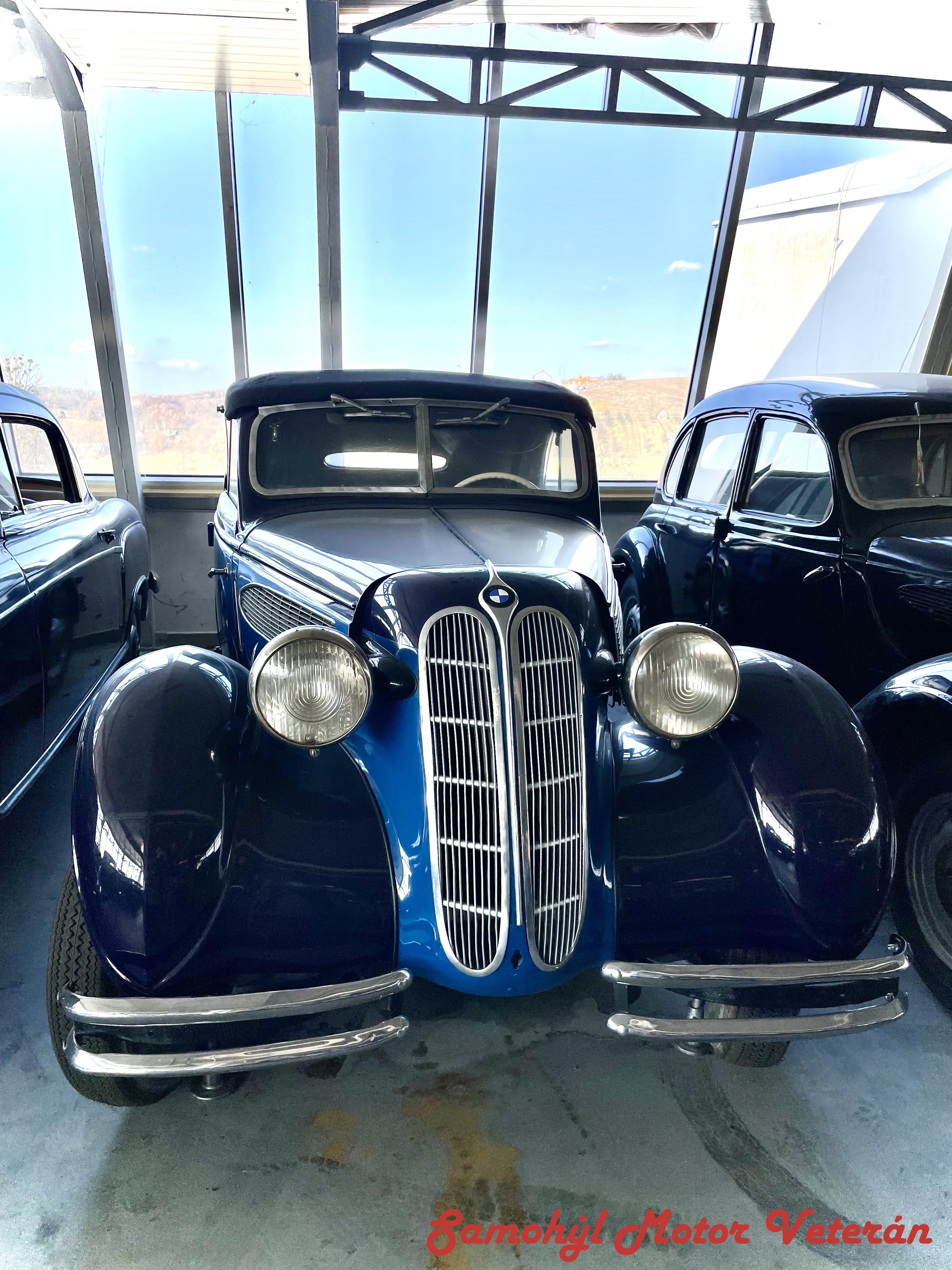
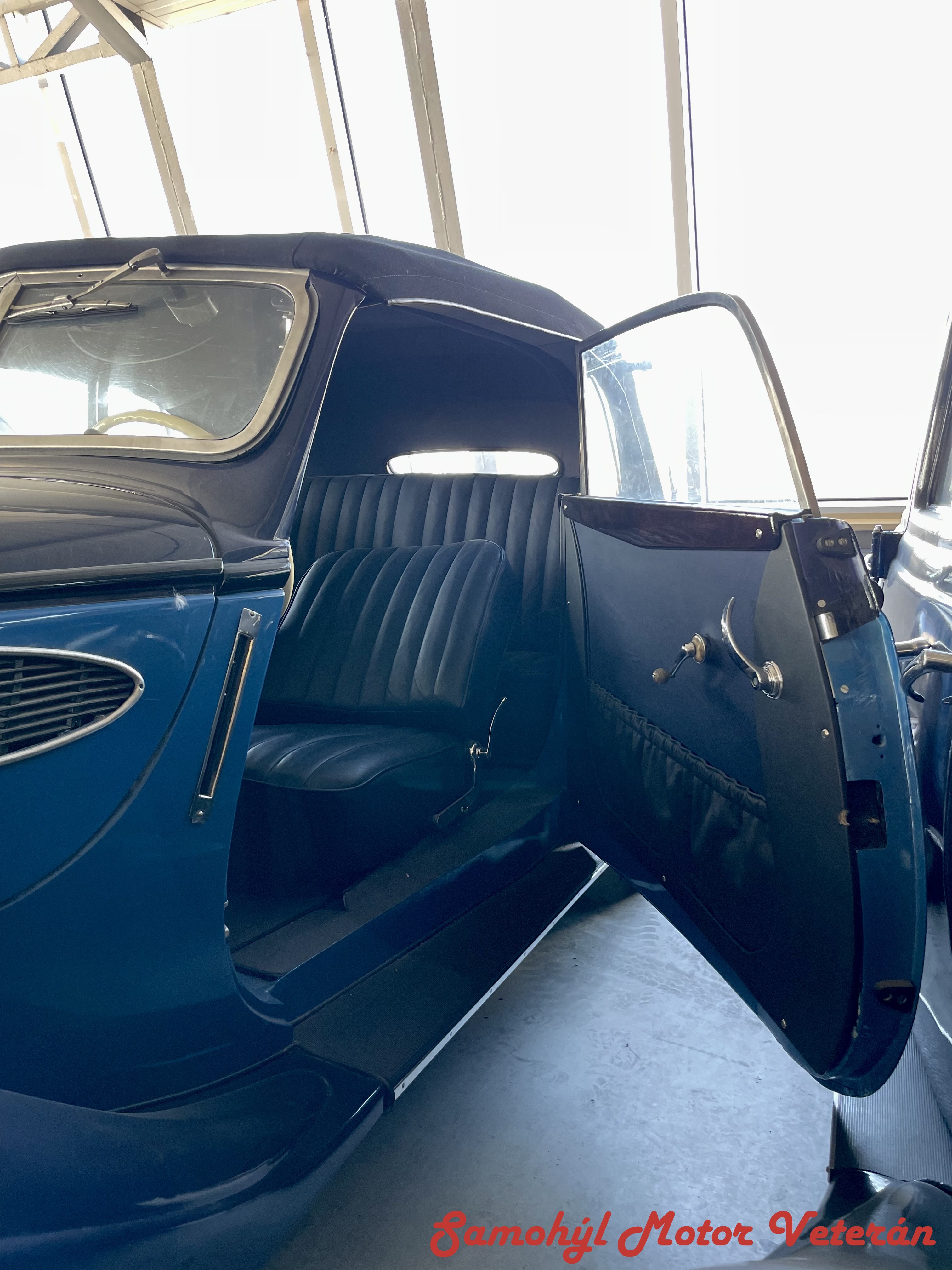

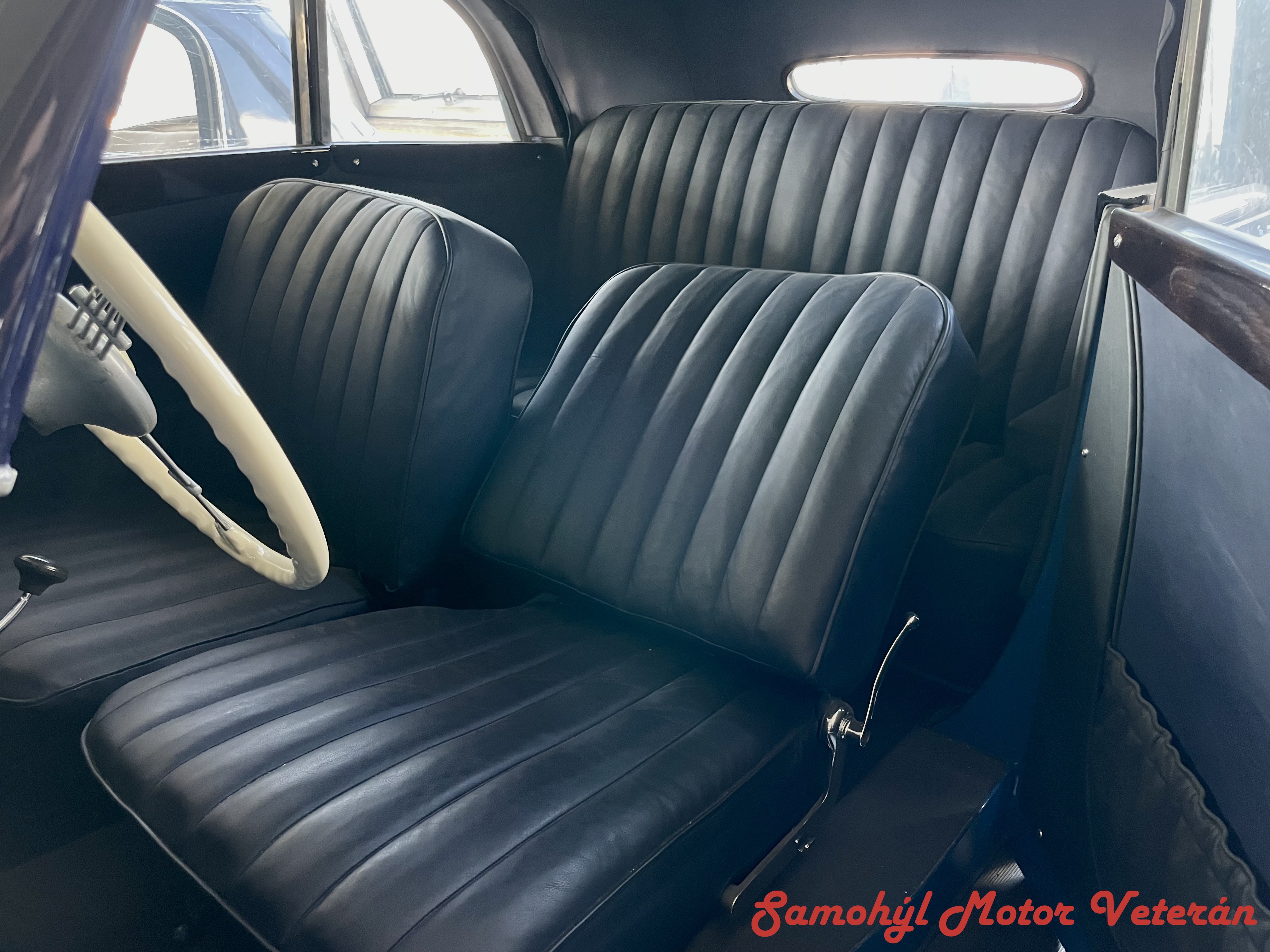
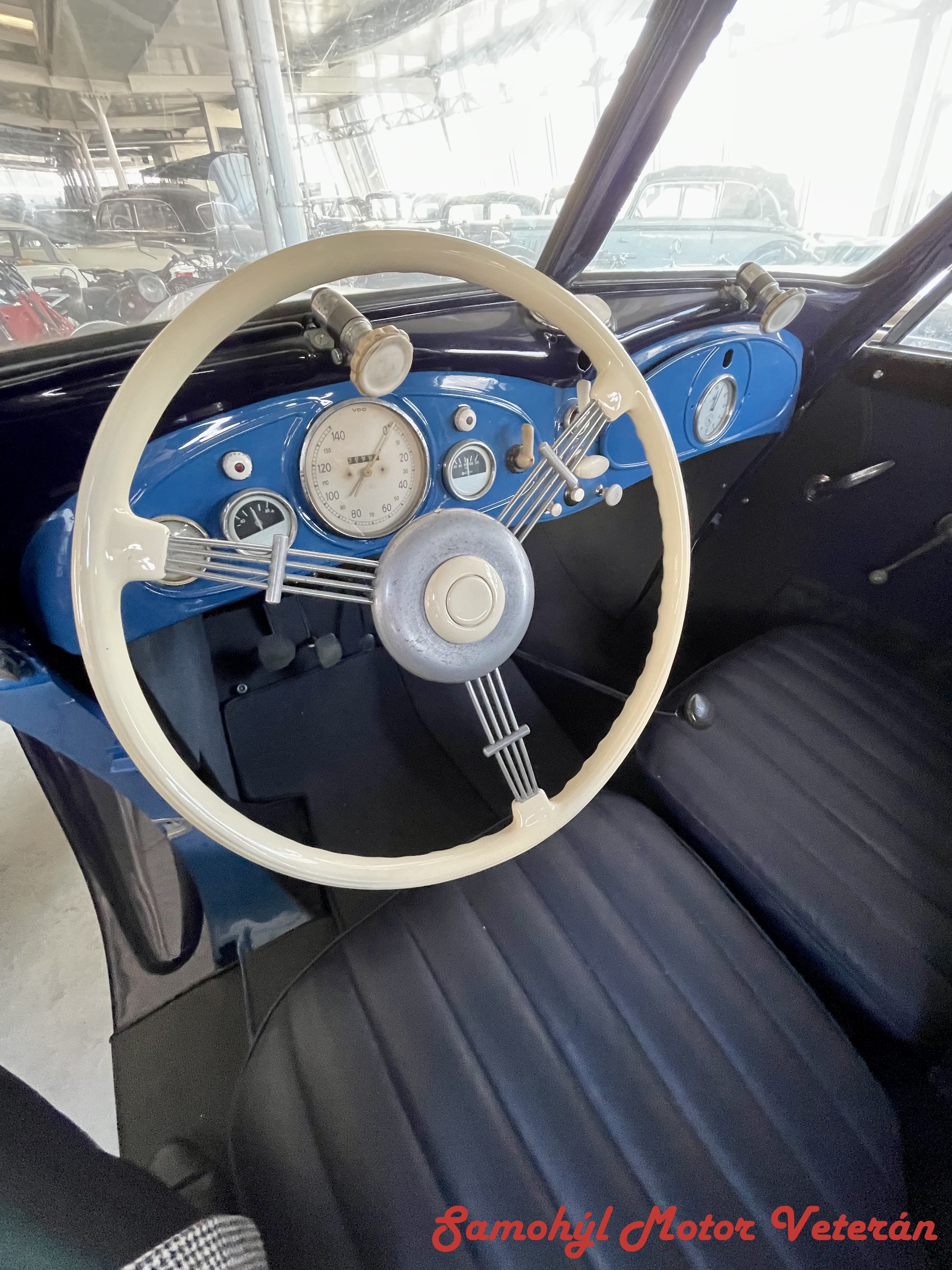
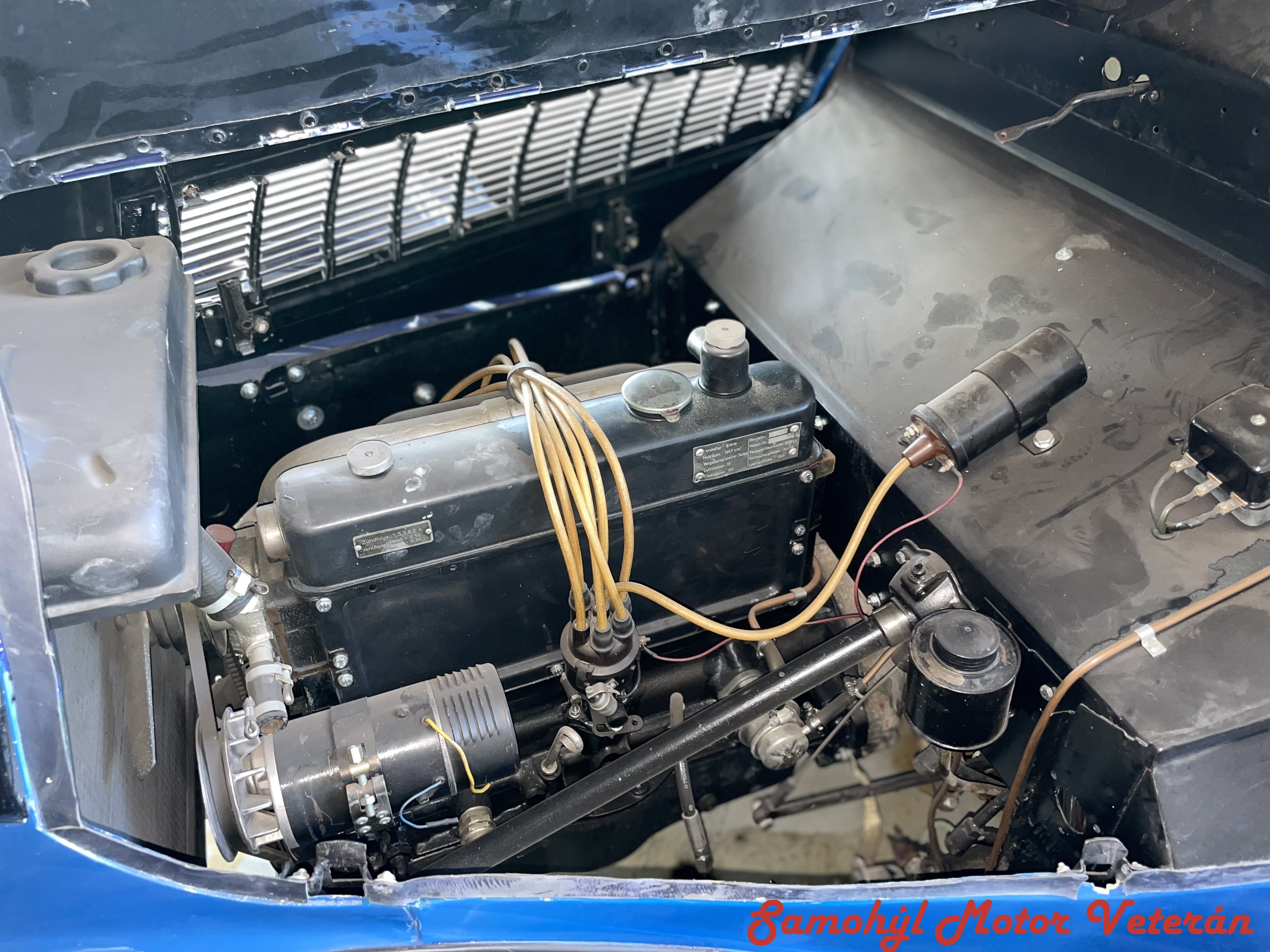
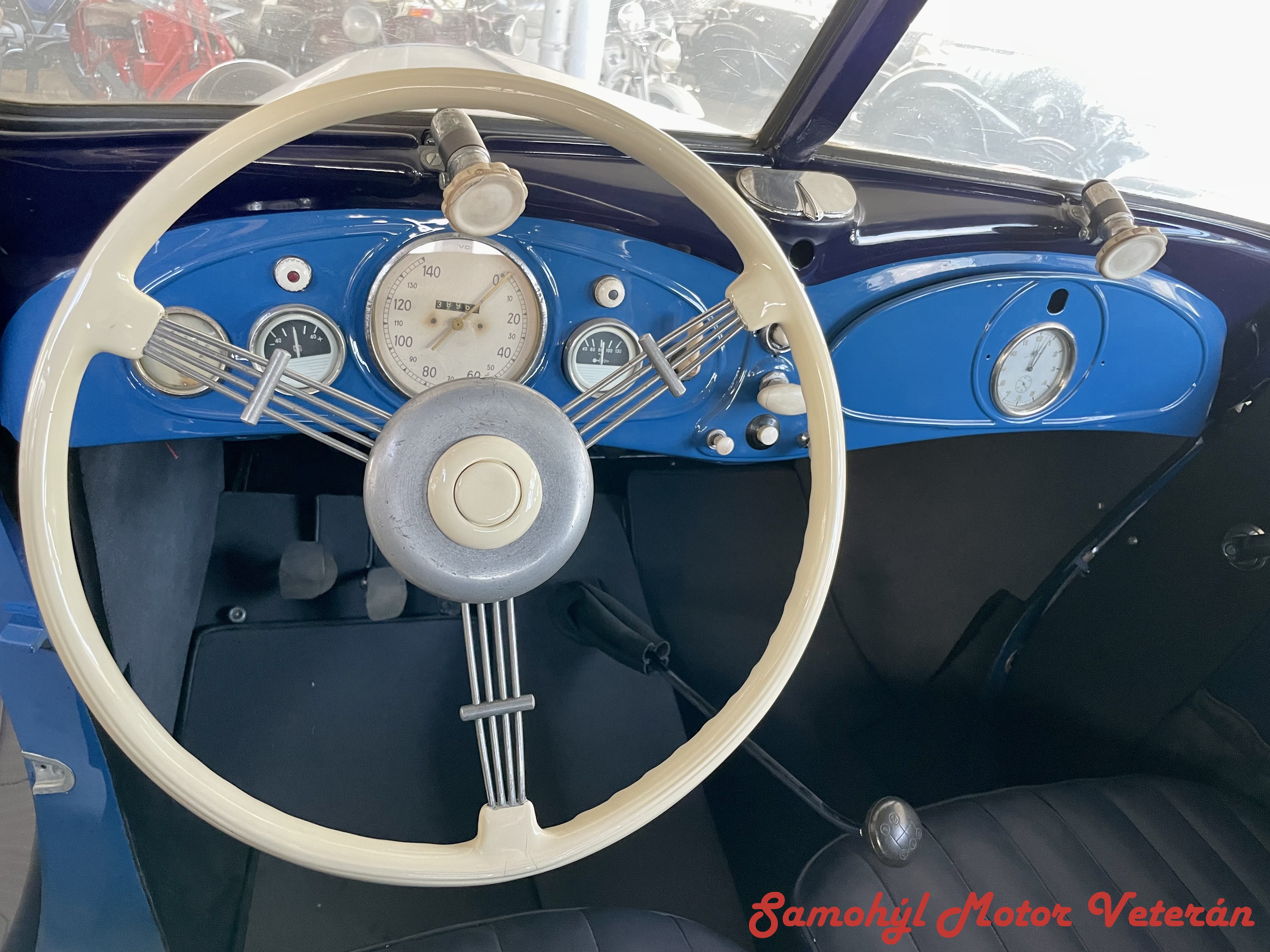
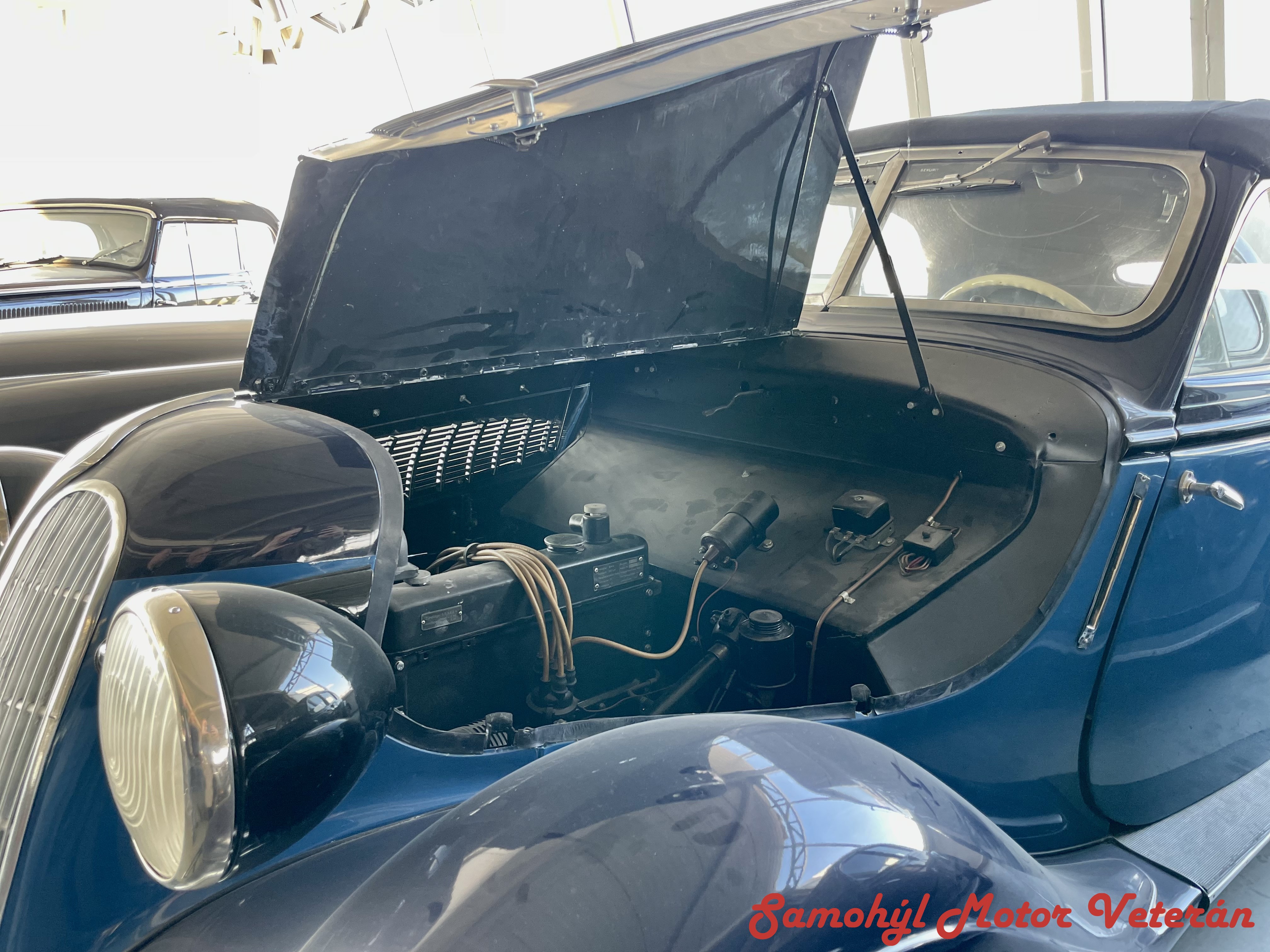
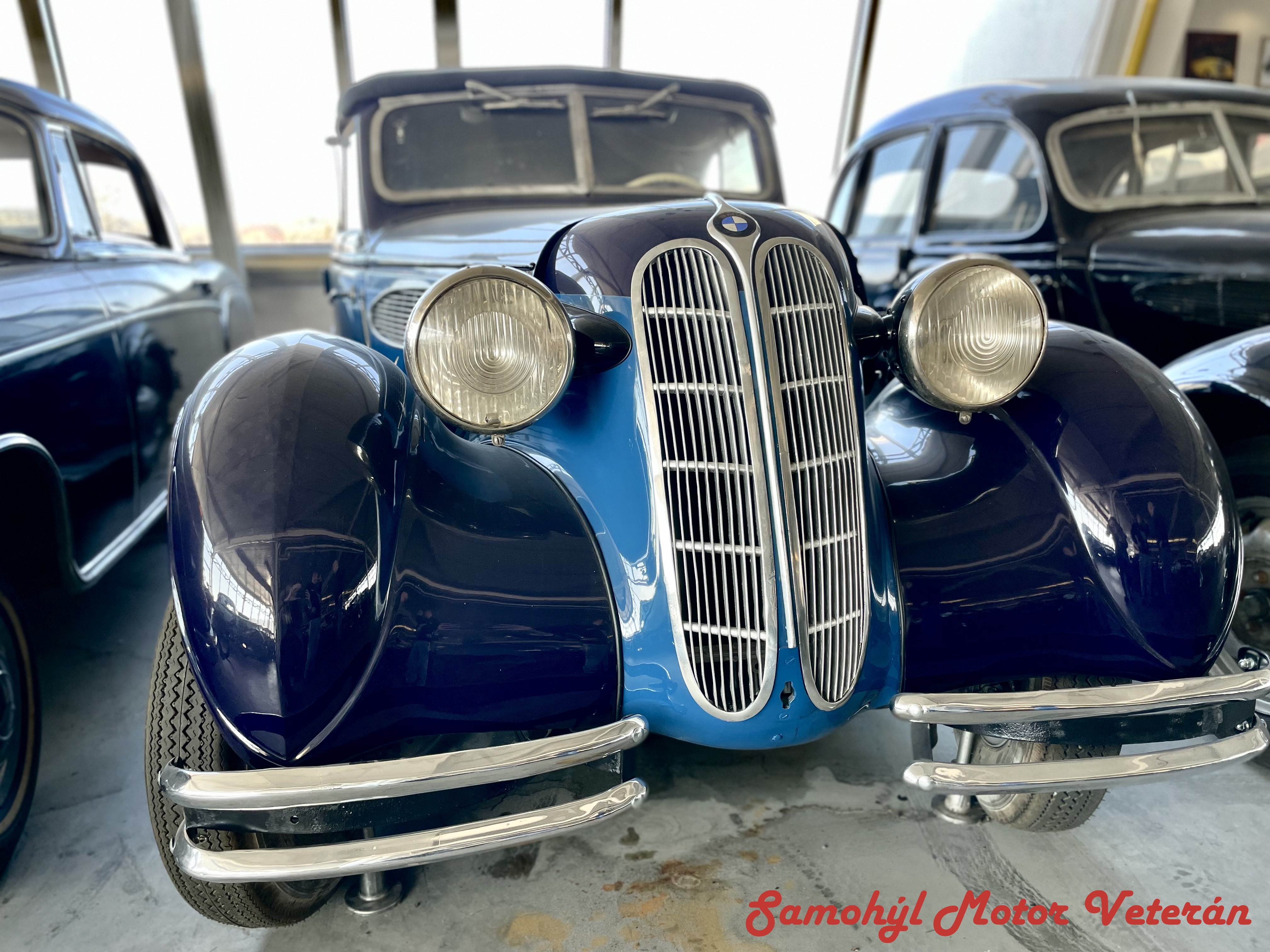
BMW 326 convertible
Year of Manufacture: 1937 Power: 50 hp Engine Displacement: 1,971 cm3
Number of Cylinders/Valves: 6/2 Weight: 1,700 kg
Condition: excellent Catalog Number: 265
Introduction
The company BMW (Bayerische Motoren Werke) did not initially manufacture automobiles. Instead, it entered automobile production somewhat indirectly, starting as a manufacturer of aircraft engines and motorcycles. In the field of cars, BMW first produced and improved Dixi vehicles after acquiring a competing factory. The first car fully designed and developed by BMW was the 3/20 PS model powered by a four-cylinder engine.
The first inline six-cylinder engine, now so typical of the brand, was introduced by the Bavarian automaker in 1933. The BMW 303 model was the first to feature the characteristic “kidney” grille covering the radiator. This model later led to the development of four-cylinder models 309, 315, and 319. Three years later, a larger and more luxurious car with a sturdier construction appeared on the market—the four-door sedan BMW 326. A shortened version of its chassis was used in the 320, 321, and BMW 327 coupe models. The highlight of this series based on the 326 was the sporty and racing model 328, which achieved excellent sporting results shortly before the war.
Development
The BMW 326 was introduced at the Berlin Motor Show in 1936 and was offered for sale in May of the same year. The model was designed by Fritz Fiedler, an outstanding automotive engineer. It was produced until 1941, with a total of 15,949 units made. It was available as a four-door sedan, but also as two- or four-door convertible versions.
Technical Specifications
The inline six-cylinder engine with a displacement of 1,971 cm3 was a version of the original 319 engine with the bore increased from 65 mm to 66 mm while retaining the unchanged stroke of 96 mm. The BMW 326 was equipped with two Solex carburetors, producing a maximum power of 50 hp at 3,750 rpm.
The four-speed gearbox featured a freewheel and synchronization on the top two gears. The car had an excellent chassis design for its time and very good driving characteristics. The quality of the model is demonstrated by the fact that many of these cars have survived to this day and actively participate in various sporting events and vintage car meetings.
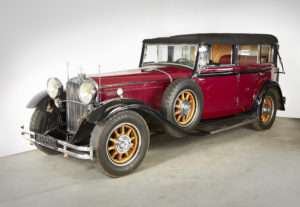
The car from our collection is a convertible with a custom body by the famous Gläser coachbuilder, fully restored and in excellent condition.