
Tatra 49
Year of Manufacture: 1936
Power: 7 hp
Engine Displacement: 528 cm3
Number of Cylinders/Valves: 1/2
Weight: 515 kg
Condition: drivable
Catalog Number: 268
Introduction
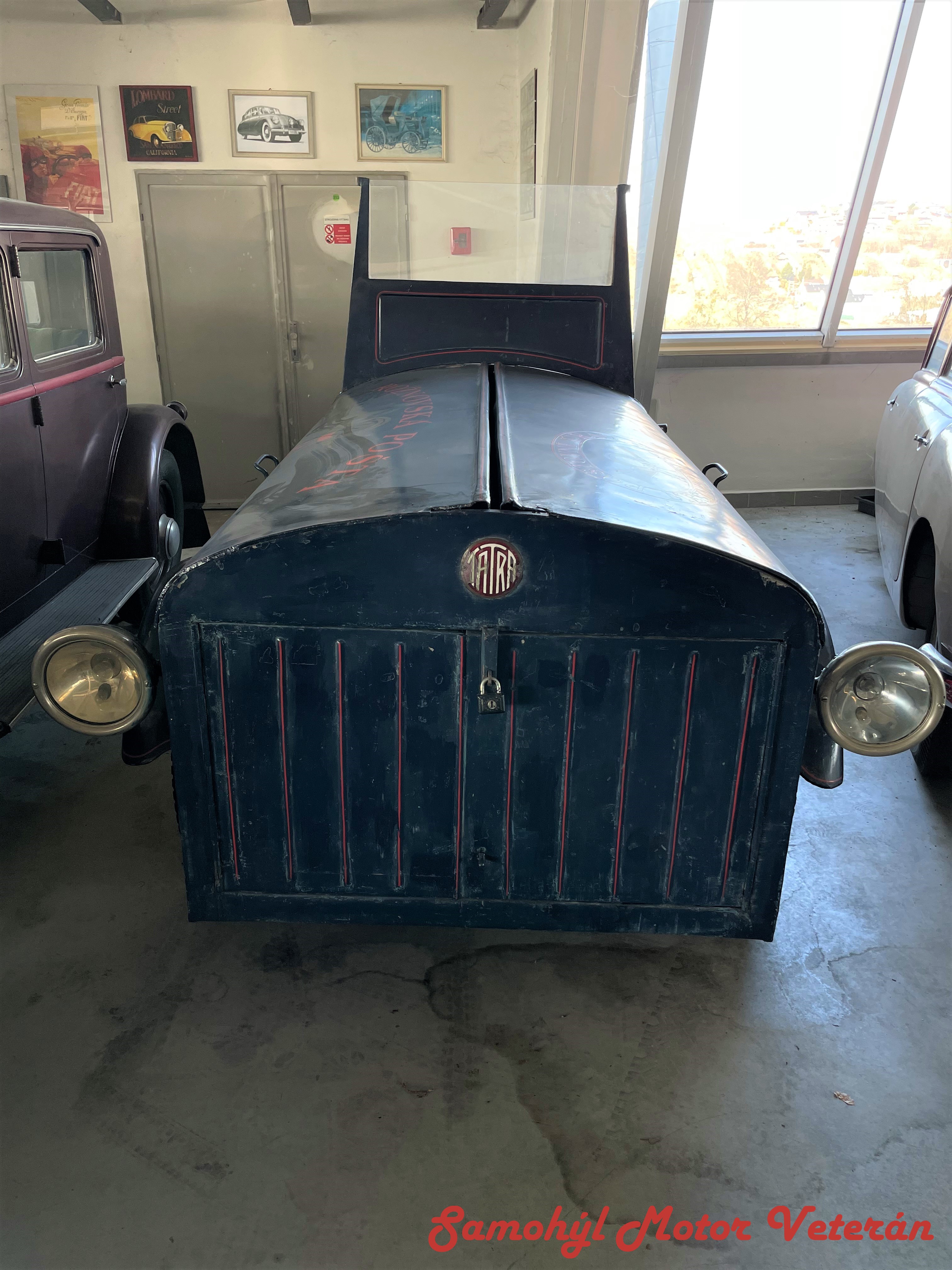
The Tatra 49 is a three-wheeled two-seater delivery vehicle produced between 1929 and 1939 by the Kopřivnice automobile factory in northern Moravia.
Development
The development of the Tatra 49 was inspired by the Tatra 12 and Tatra 30 models.
Technical Specifications
The three-wheeler adopted a rigid front axle suspended on a transverse leaf spring and equipped with mechanically operated drum brakes from the four-cylinder Tatra 30. The front axle was mounted at the front end of a backbone frame made from a circular steel tube, to the rear end of which the drivetrain was attached. Ahead of the driven rear wheel was a transversely mounted, air-cooled, upright single-cylinder OHV engine with a displacement of 528 cm3, having the same bore (82 mm) and stroke (100 mm) as the horizontally opposed cylinders of the Tatra 12 two-cylinder engine. The single-cylinder engine was cooled by a blade fan and produced 7 hp at 2,500 rpm. It was started by a foot pedal in motorcycle style.
To the right of the engine was a two-plate clutch, and to the left a three-speed gearbox controlled by a lever operated by the driver’s left hand. The single rear wheel was cantilevered on the left side on a hollow swing arm through which a driveshaft passed. Torque was transmitted from the gearbox output to the driveshaft and then to the rear wheel by a pair of bevel gears.
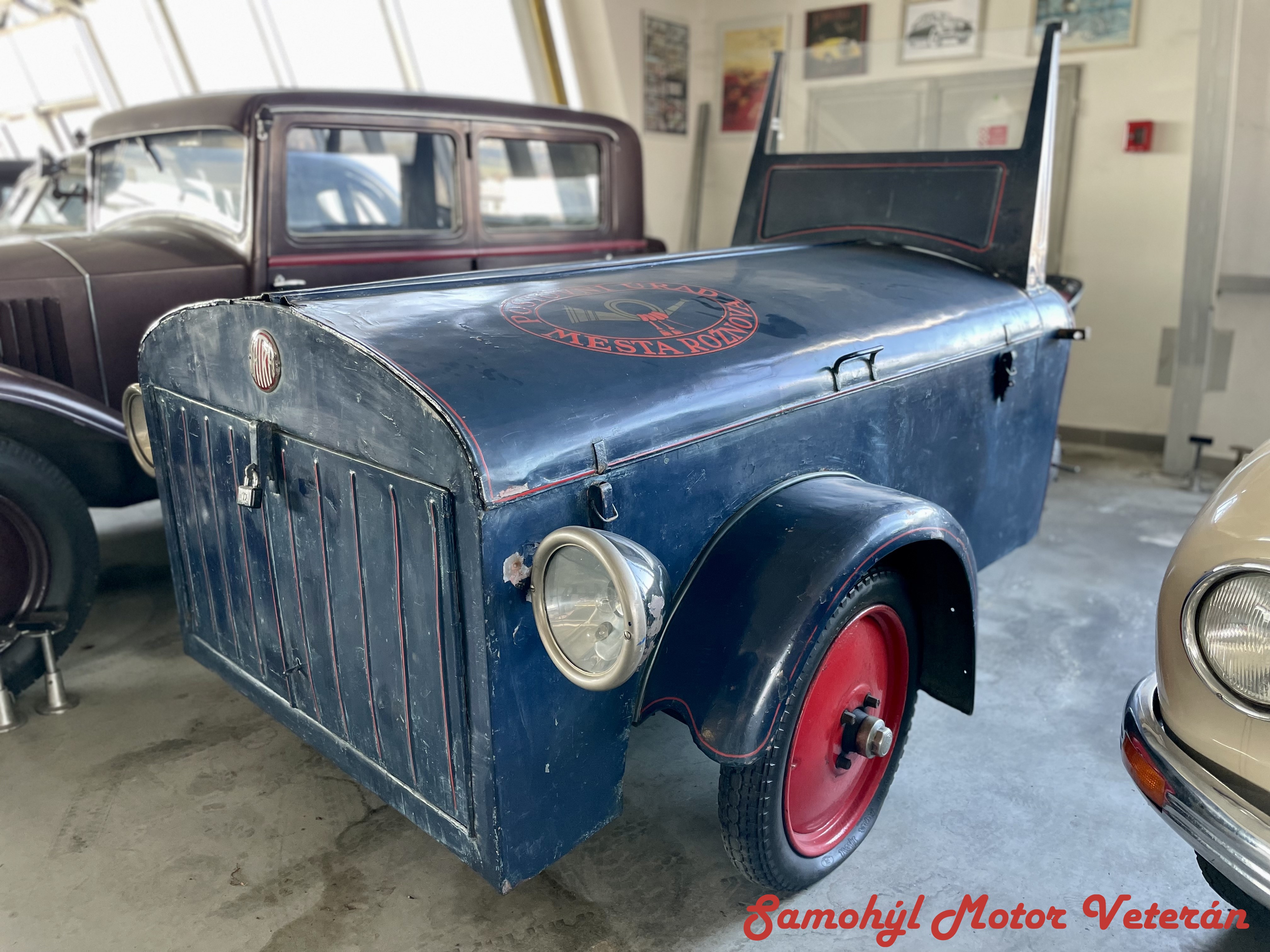
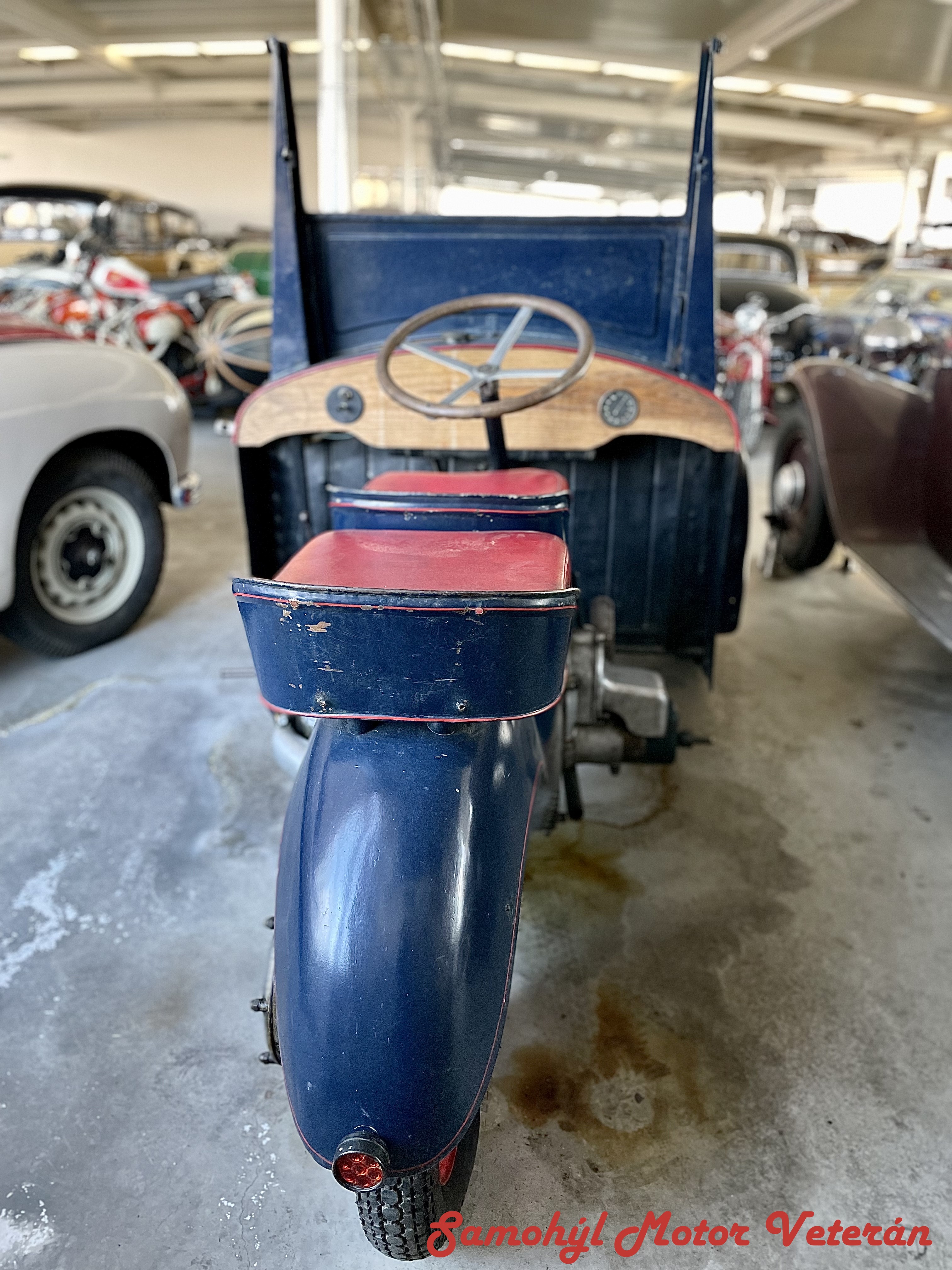
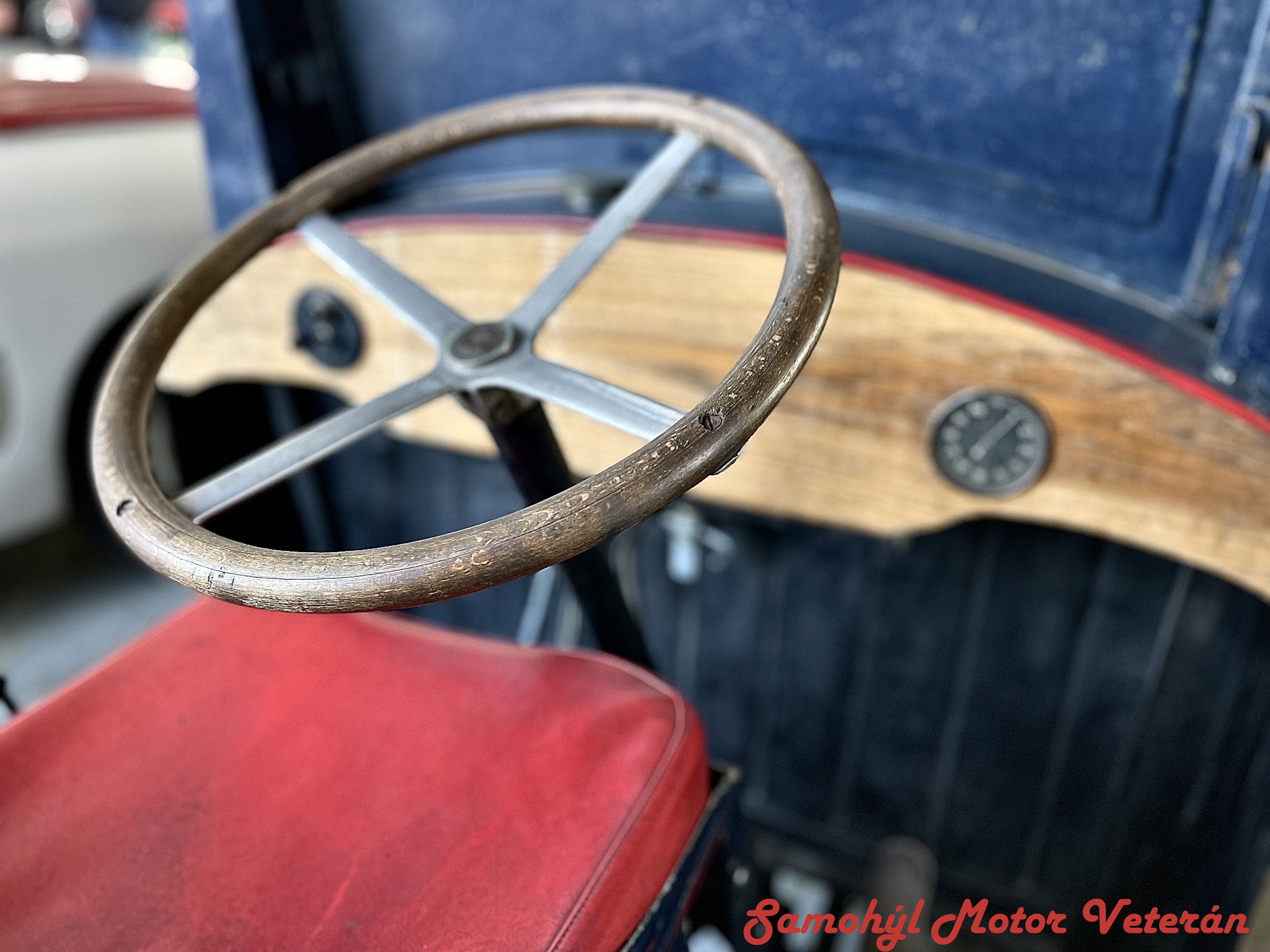
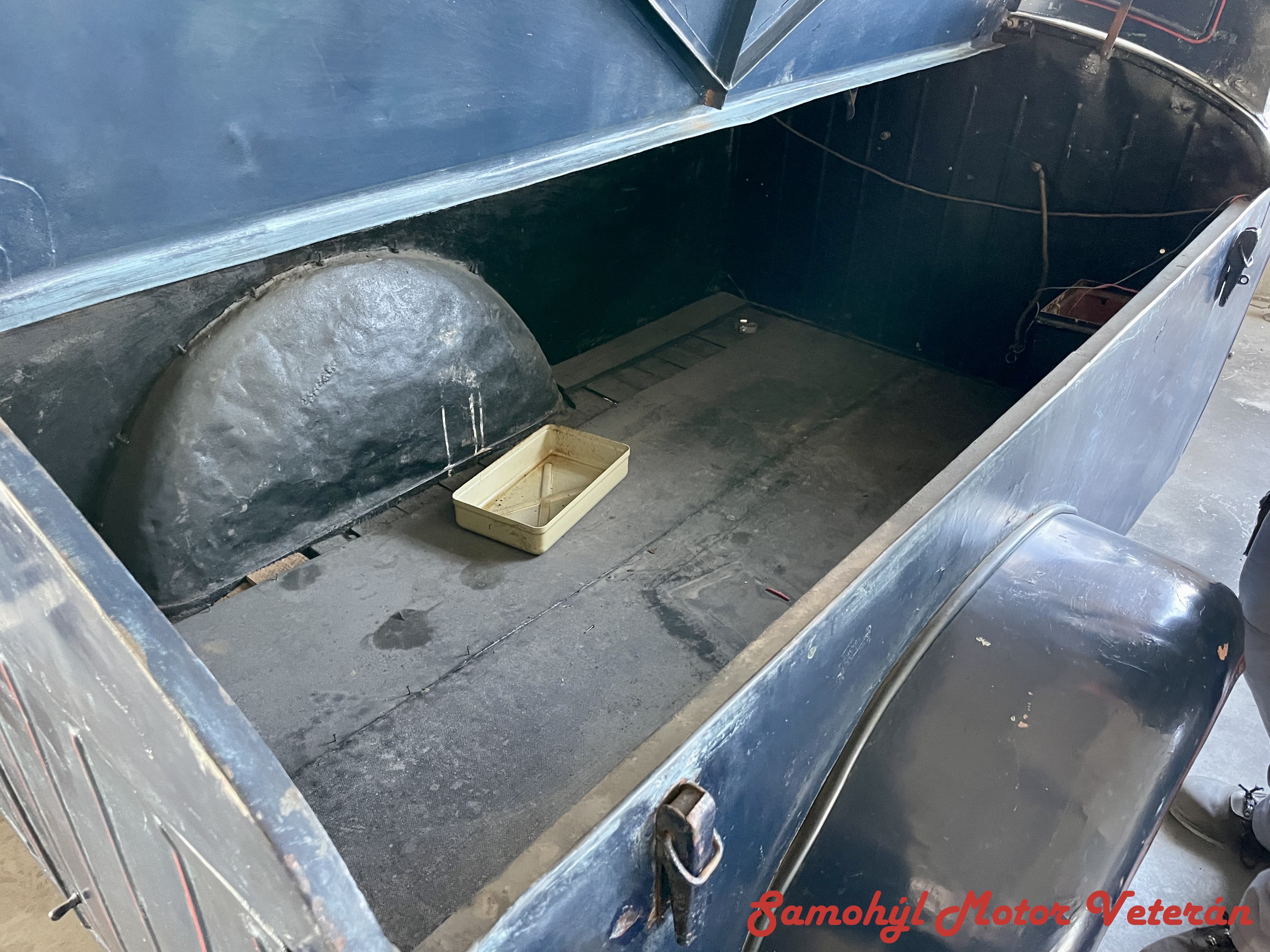
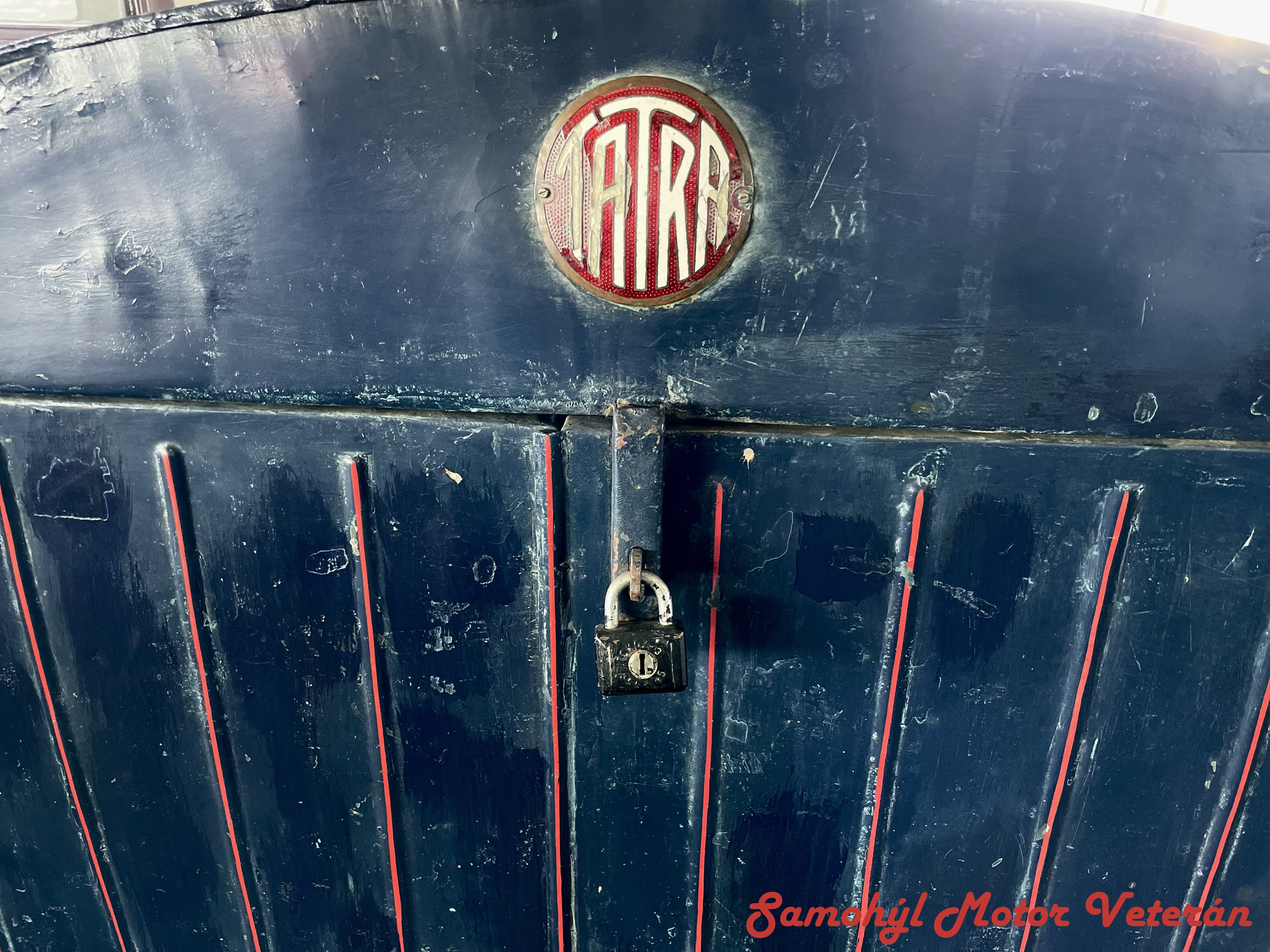
The utility version of the tricycle had the driver’s seat above the engine and a steering column with a steering wheel positioned centrally in front of the driver. The cargo space was located above and behind the front axle, usually in the form of a metal box with double-wing doors in the front wall and on top. The box measured 1,640 mm long, 1,100 mm wide, and 950 mm high and could carry up to 400 kg of cargo.
Between the cargo area and the driver was a double partition wall, with the fuel tank (12 liters) on the left and the battery on the right. The simple dashboard carried an ignition switch and a speedometer with an odometer, although period photos suggest that some three-wheelers might have lacked a speedometer. The cargo tricycle had a wheelbase of 2,265 mm and a front track of 1,300 mm. Its overall length was 3,300 mm, width 1,600 mm, and height up to the top of the steering wheel 1,300 mm. It weighed 515 kg and reportedly reached a top speed of 55 km/h with fuel consumption between 6 and 8 liters per 100 km.
The chassis of the passenger version was modified in several ways. The steering wheel was moved forward and to the right, and the gearshift lever was relocated forward and to the center, requiring a new shifting mechanism. On Tatra 49 passenger tricycle prototypes, the foot brake acted only on the front axle, while the hand brake controlled the rear wheel brake.
Production
The passenger tricycle resembled its four-wheeled sister Tatra 12, including a shortened front end shaped like Kopřivnice’s “iron.” The two-seat cabin was made of wood covered with artificial leather, with doors on both sides fitted with sliding windows. The windshield had a manual wiper. The engine was equipped with an electric starter, and the exhaust with a silencer exited near the rear wheel. The equipment included an electric horn, but the driver still had the classic bulb horn at hand. The spare wheel was mounted on the rear fender.
The passenger version was 3,100 mm long, 1,600 mm wide over the front fenders, and 1,680 mm tall. Its weight was around 600 kg, with a top speed estimated not to exceed 50 km/h. Probably only two passenger Tatra 49 tricycles were made, which remained prototypes. However, in March 1930 the magazine Auto announced that Tatra had completed a small series of utility three-wheelers type 49 and would soon launch them on the market for less than 20,000 Kč.
According to factory records, the first series included 100 utility three-wheelers T 49 in several variants, mainly with metal boxes but also with open wooden beds. For an additional fee, the factory offered a second seat in tandem behind the driver on the rear fender, a protective windshield in front of the driver, and a simple fabric roof.
Market
Nearly twenty T 49 chassis were delivered in 1930 and 1931 to the Austro-Tatra company in Vienna, where they received utility superstructures. In October 1930 and again the following year, Tatra 49 three-wheelers were repeatedly displayed at the Prague Motor Show in the Kopřivnice commercial vehicle exhibit—two each time, one with a closed and one with an open cargo box.
The second 100-unit series of Kopřivnice three-wheelers began production in 1934. Their exclusive dealer from spring 1934 was the Prague firm Bratří Šulcové, which also represented British BSA motorcycles and Strakonice ČZ machines. The single-seat delivery tricycle with a metal box was offered for 12,300 Kč; the two-seat version was available at an extra charge.
“The ideal vehicle of today that truly reduces transport overhead to a minimum is the Tatra cargo tricycle,” proclaimed a Bratří Šulcové advertisement published in early April 1934 in Národní listy.
The last of the 200 utility Tatra 49 three-wheelers were reportedly assembled and sold in the late 1930s, after which these uniquely designed vehicles nearly faded into oblivion. Only a few examples have survived to this day and enjoy great interest and affection among vintage vehicle enthusiasts.
Sales
Over 9 years of production, the company sold nearly 210 units.
Trivia
An interesting fact is that on May 1, 1931, the same advertisement featuring drawings of the Tatra 49 delivery tricycle and the slogan “A helper that pays off for you. Tatra tricycle.” appeared simultaneously in three major newspapers: Národní listy, Národní politika, and Lidové noviny. The ad did not state the selling price.
Vehicle in Our Collection
The vehicle in our collection is in fully drivable condition.