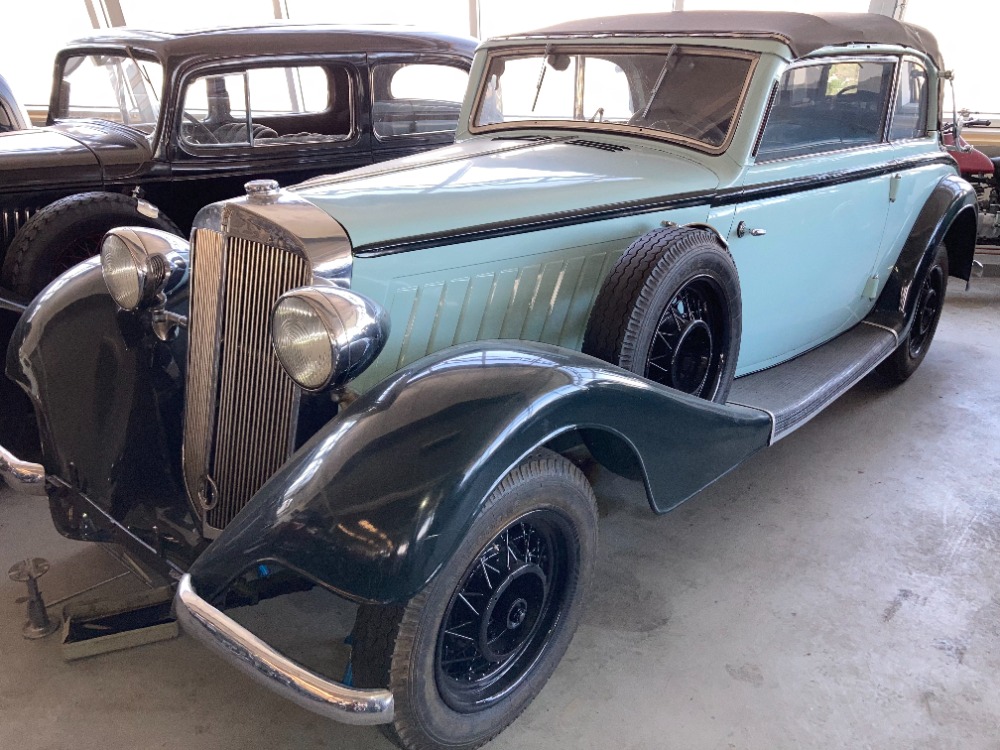
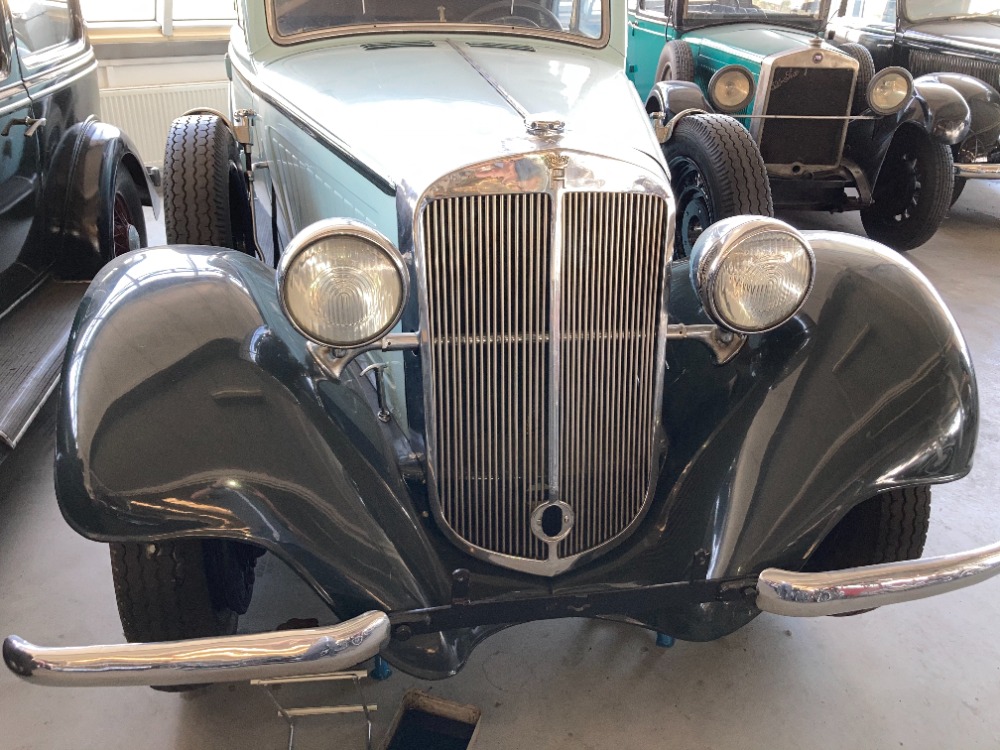
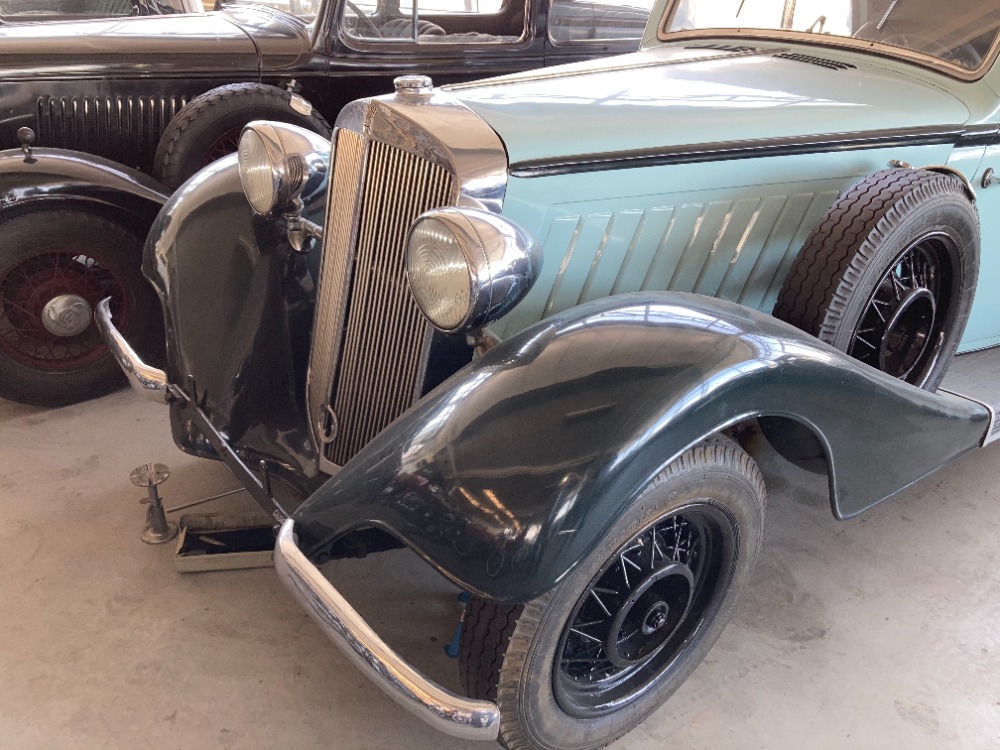
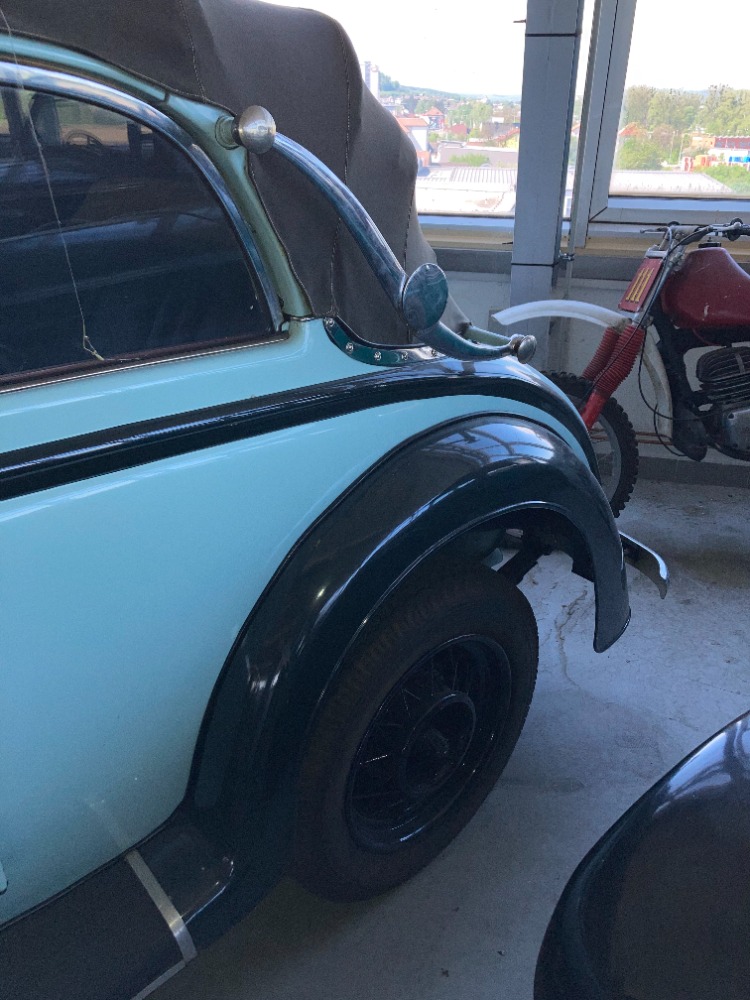
Horch 830 cabrio
Year of Manufacture: 1939
Power: 92 horsepower
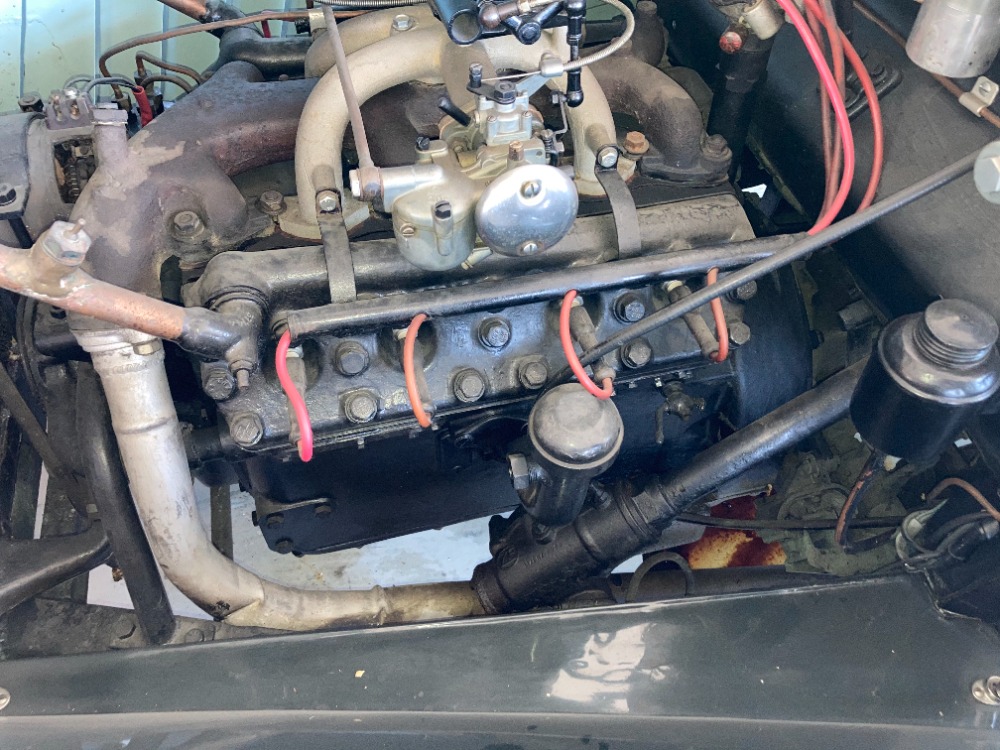
Displacement:3,823 cm3
Number of Cylinders/Valves: 8/2
Weight: 1,960 kg
Condition: after renovation
Catalogue Number: 228
Horch automobiles were among the most prestigious representatives of the top class between the wars and in some respects even surpassed Mercedes-Benz vehicles.
The Horch 830 featured a V8 engine with a displacement ranging from 3.0 to 3.8 liters. Initially, inline six- and eight-cylinder engines were used. Horch was one of the few manufacturers daring enough to produce a V12 engine. However, this engine was very complex, expensive, and had limited use. The new V8 engine was structurally derived from the V12. It was completed in 1932 and introduced in a production vehicle the following year. It was simpler and more affordable in design. Among the unique features borrowed from the V12 were the “horizontal” valves driven by a camshaft located between the cylinders, which formed a 66-degree angle. The engine had only three crankshaft bearings and was significantly shorter than an inline-eight or V12 engine. The original engine had a displacement of 3.0 liters, and the final version from 1938–1940 increased it to 3.8 liters.
The Horch 830 was a luxury-class car, sold in several versions, including a short sedan, an extended Pullman version, and various cabriolet body styles.
The vehicle was produced for a relatively long period, from 1933 to 1940, when the war halted its production. As the engine evolved, the chassis and other components were gradually improved as well. The engine was located in the front, and power was delivered to the rear wheels via an original four-speed transmission, later upgraded with a fifth gear as an overdrive. The axles were initially rigid, and the brakes mechanical and cable-operated. Later, the front axle was replaced with independent suspension, and the rear with a De Dion axle. Hydraulic brakes were also introduced.
A total of 11,625 units of types 830 and 930 were produced. Additionally, 4,536 off-road 830 R Kübelwagen vehicles were built for the German army with all-wheel drive.
At the end of the war, the production plant in Zwickau was heavily damaged by Allied bombing and after the war fell into the Soviet zone. Later, instead of Horch vehicles, the Trabant was produced there—a paradox of war.
In parallel with the 830, the 930 model was produced, which differed mainly in body design. In 1940, improved versions of the 830 and 930 were ready for production, but due to wartime events, they were never realized.
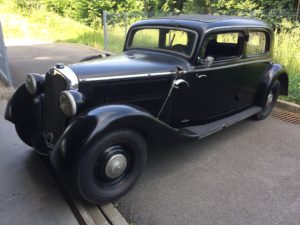
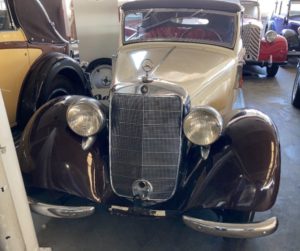
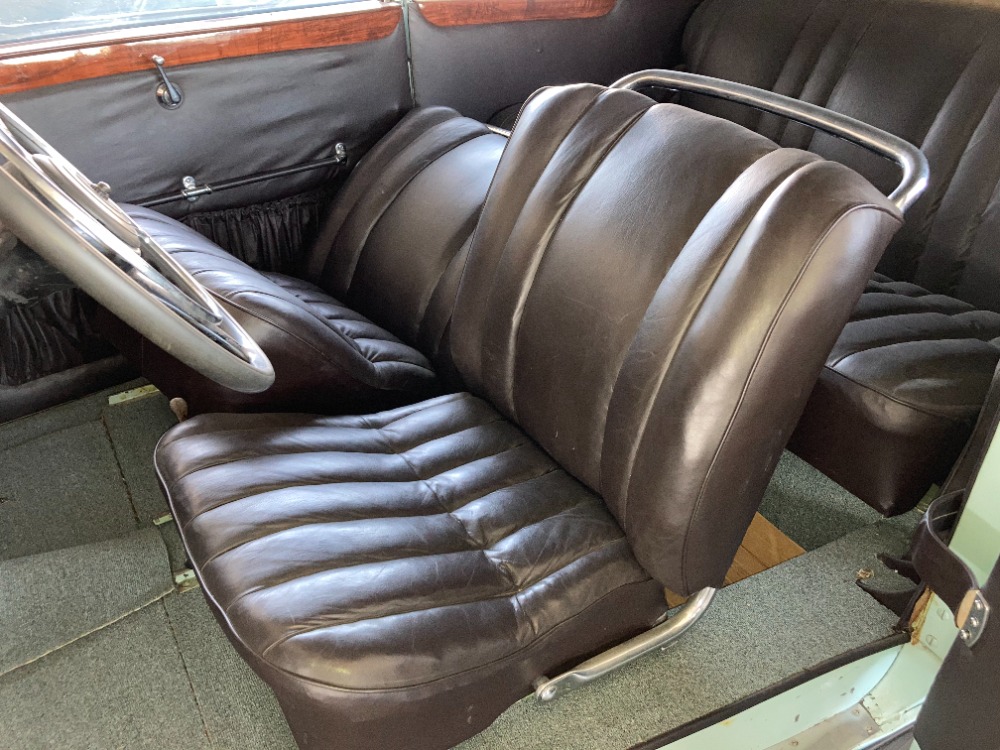
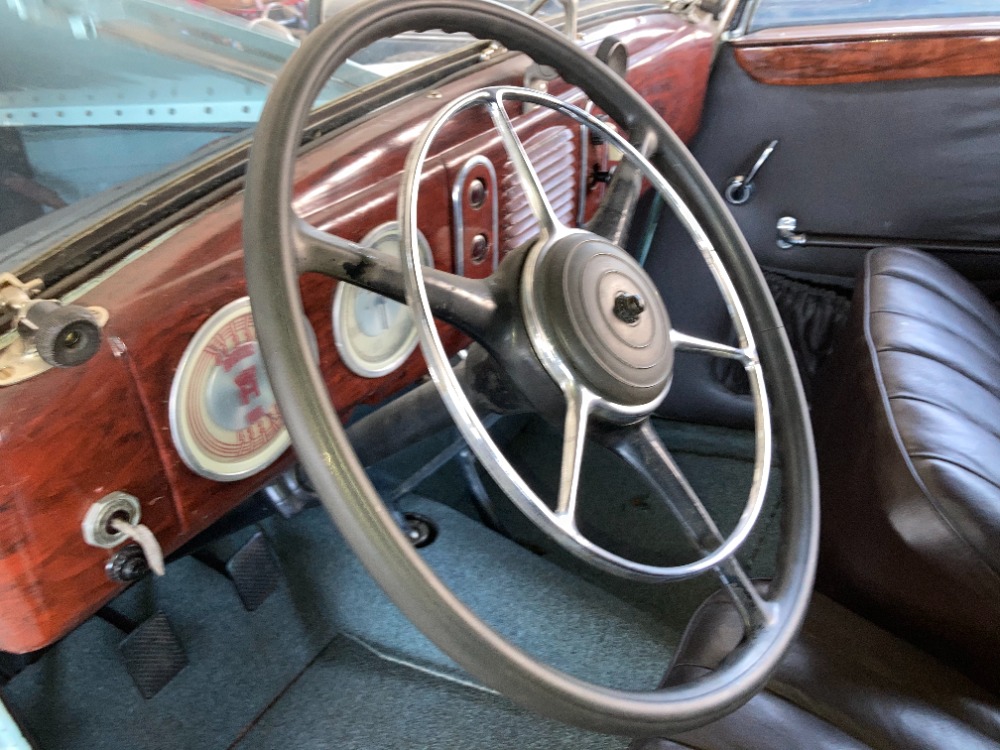
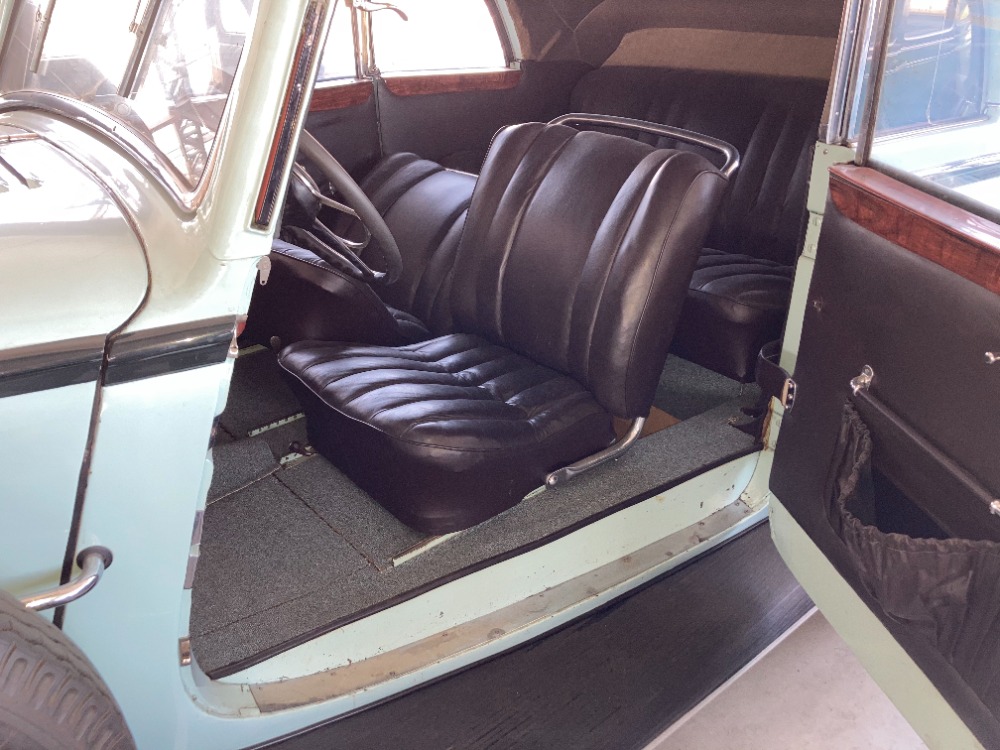
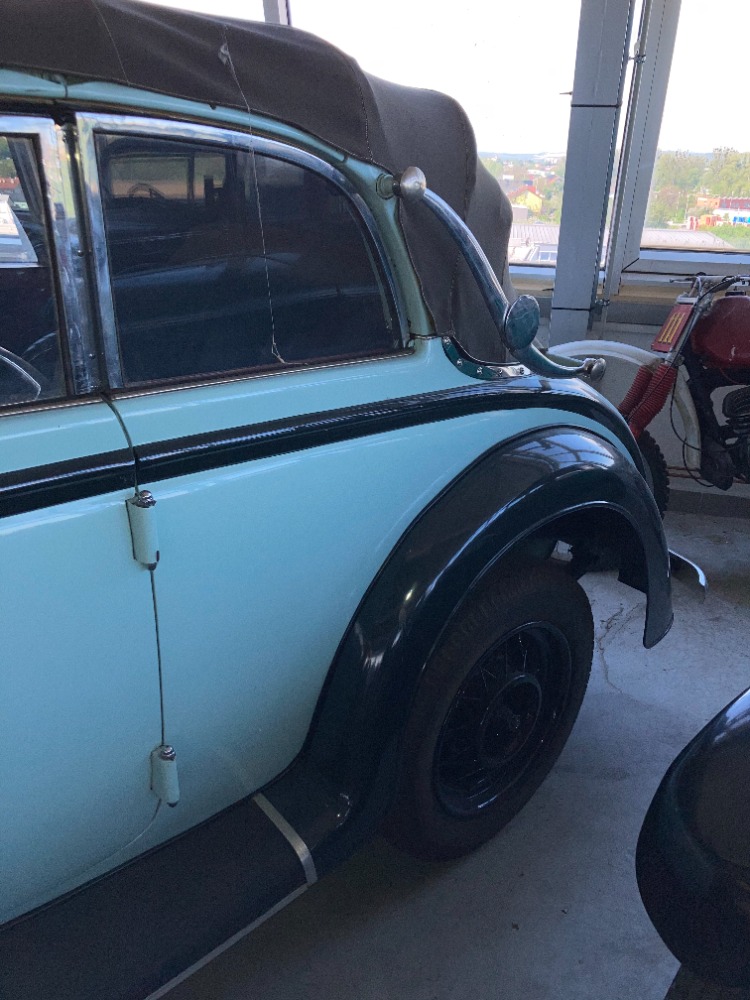
The vehicle from our collection is a two-door, four-seat convertible. It has been renovated and is in operable condition. It has appeared in several films and TV series.