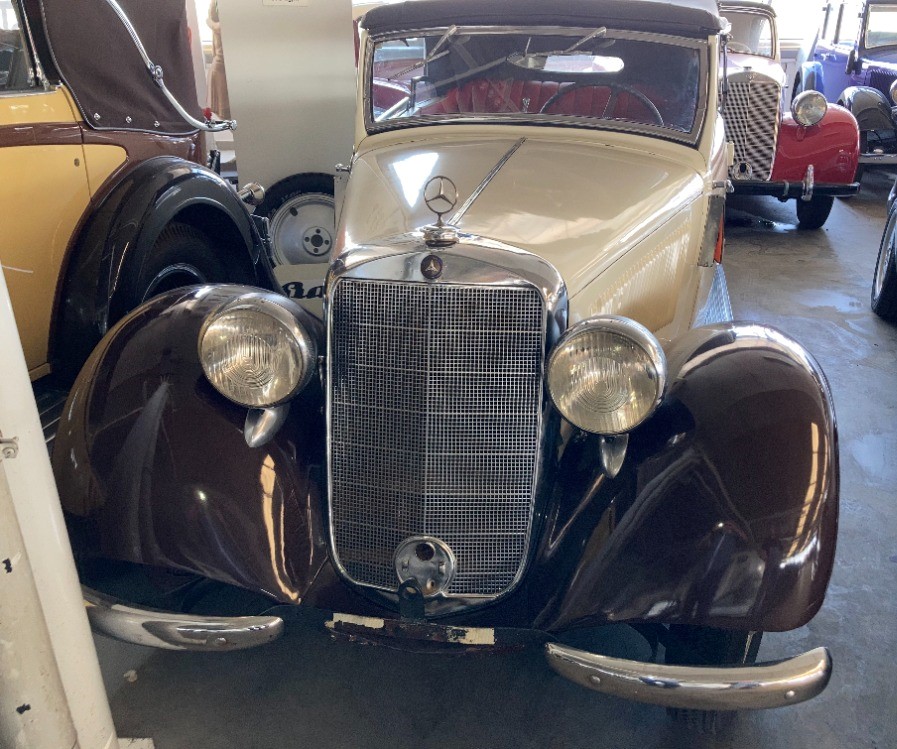
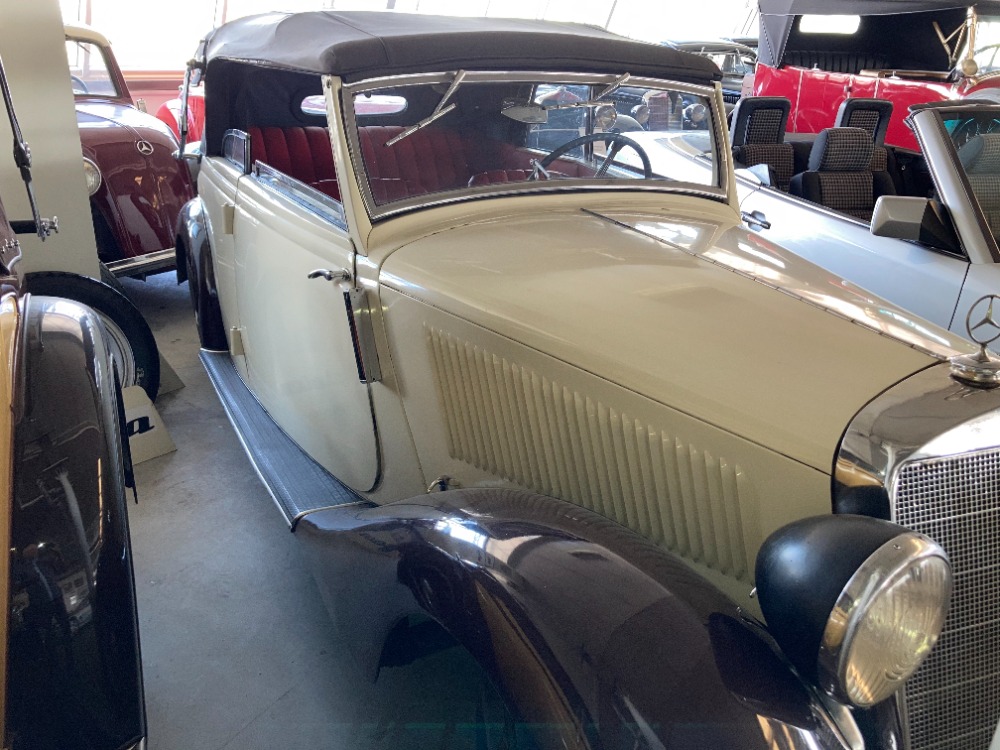
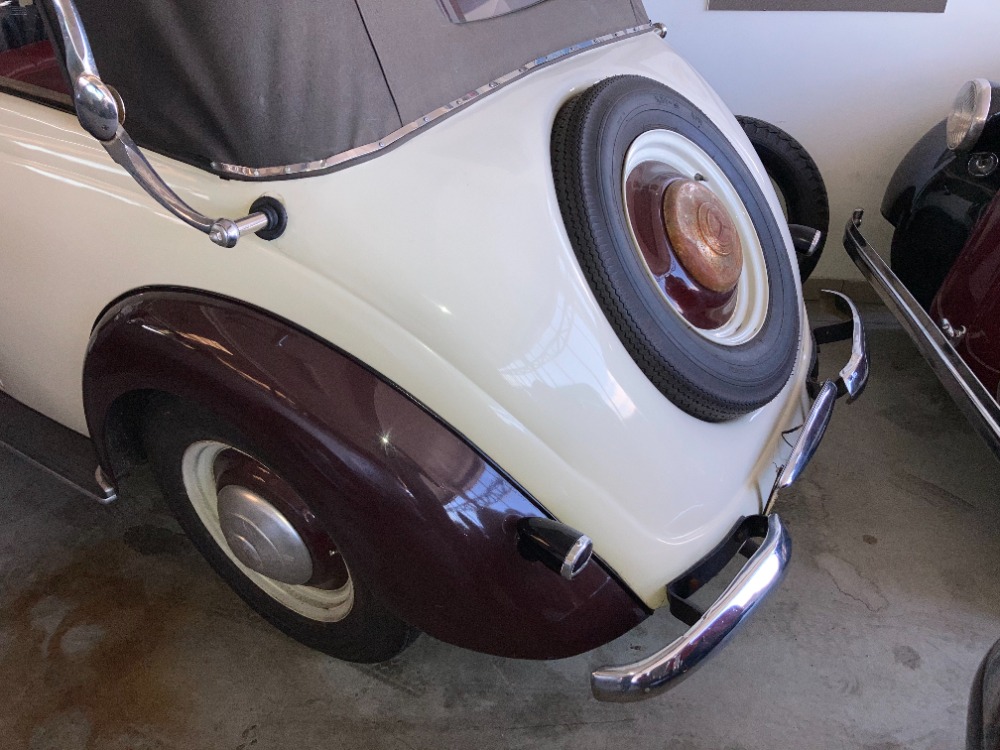
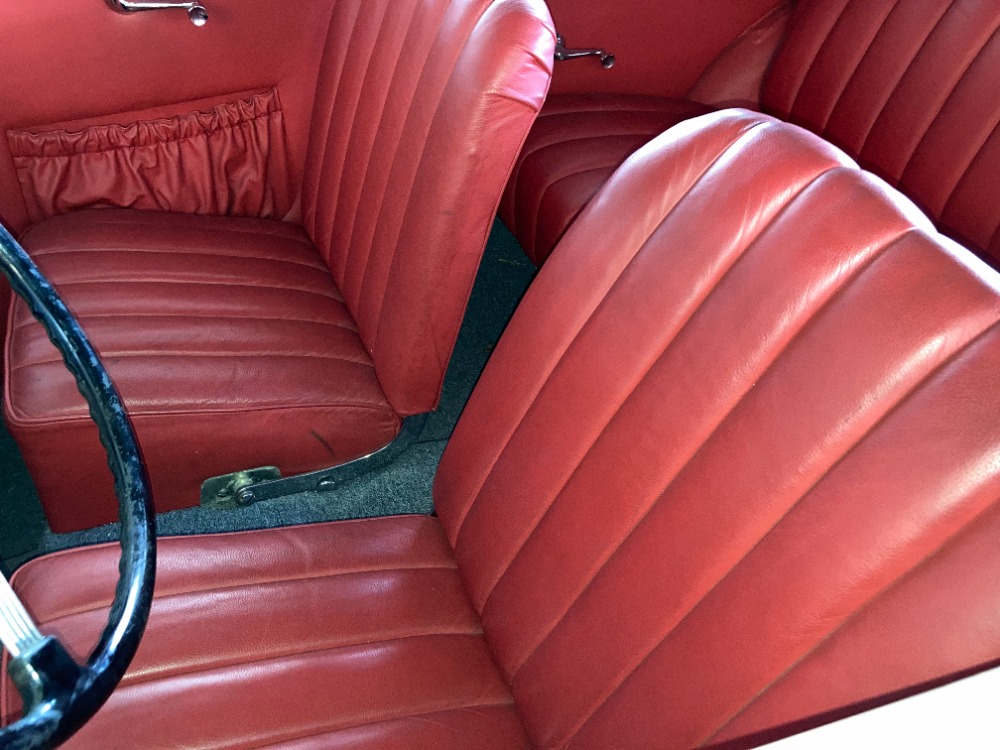
Mercedes-Benz 170V W136
Year of manufacture: 1939
Power: 38 hp
Displacement: 1,697 cm3
Number of cylinders/valves: 4/2
Weight: 1,160 kg
Condition: restored
Catalog number: 221
The Mercedes-Benz 170 V was first introduced on February 15, 1936, at the Berlin Motor Show. It was the W136 model, which almost immediately became the benchmark for a modern European car at the end of the pre-war era. Although it was the smallest car from Daimler-Benz A.G., with its 1.7-liter engine and for its time spacious interior, it also ranked among the “better” mid-range cars. By 1942, this model was the best-selling vehicle, with over 75,000 units sold. Its direct predecessor was the Mercedes-Benz 170 type W15, produced between 1931 and 1935. That model had an engine of the same displacement, even a six-cylinder, but with 6 hp less power.
The model was produced as two- and four-door sedans, cabriolets, two-seat roadsters, and also adapted utility versions such as ambulances or cars for police, mountain rescue, and the military. For military use, Mercedes-Benz produced over 19,000 units with the so-called “Kübelwagen” body.
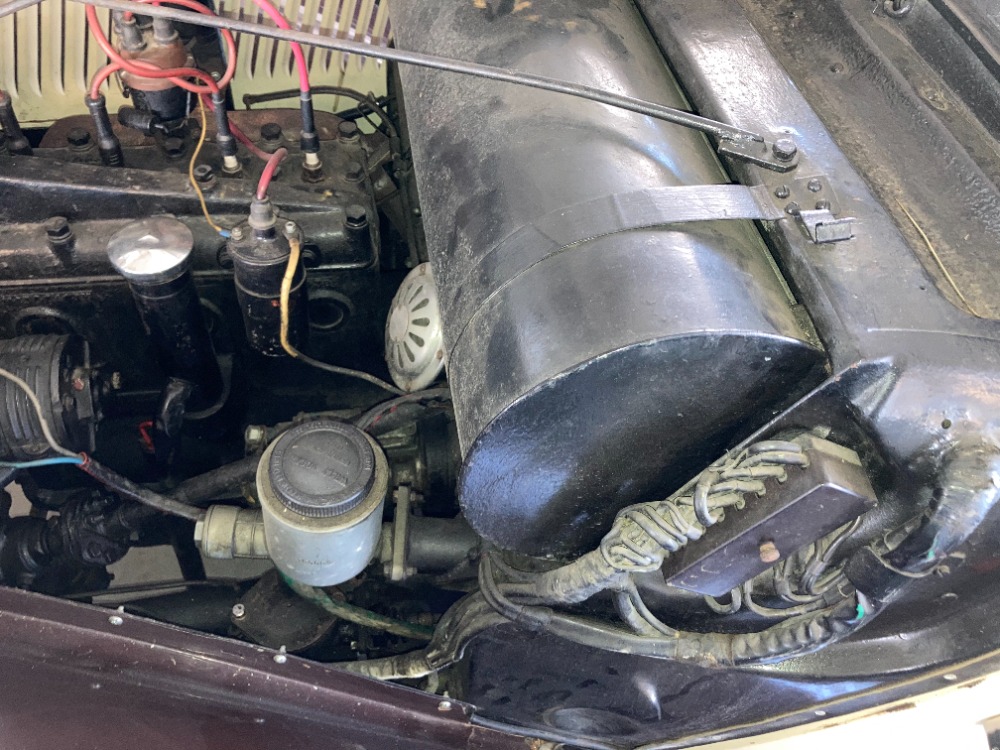
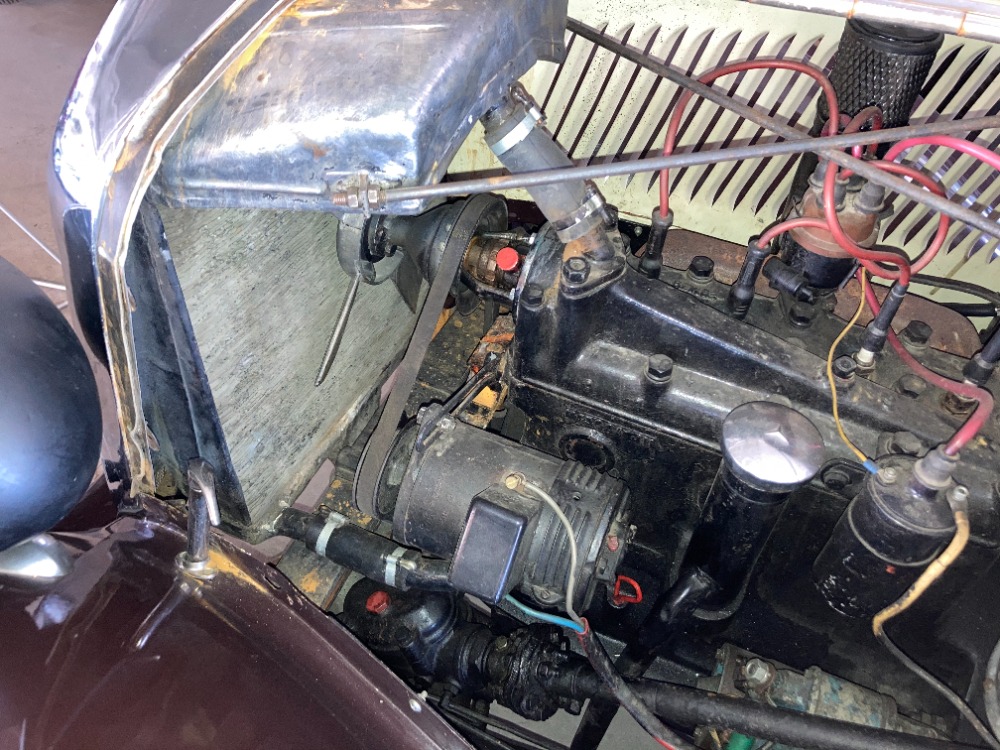
The vehicle’s body was very advanced, made entirely of metal. Unlike previous practice, no wooden frames covered with sheet metal were used. The engine was front-mounted, and rear-wheel drive was delivered by a driveshaft. It featured an inline four-cylinder SV (side valve) engine with a displacement of 1,697 cm³, bore of 73.5 mm, and stroke of 100 mm. During and after the war, some cars were converted to run on gas generator wood gas, which reduced engine power and caused various operational issues.
The Mercedes-Benz 170 V was gradually improved and refined. Starting in May 1949, a diesel engine with 38 hp was even offered. The car reached a top speed of 116 km/h. With normal fuel, the engine delivered 28 kW at 3,400 rpm. The four-speed gearbox transmitted power to the rear axle equipped with a differential. The wheelbase was 2,850 mm, and the weight was 1,120 kg. Popular optional accessories included practical fog lamps, which were not commonly installed at that time.
The car from our collection is a Cabriolet type B and has been fully restored and is in operational condition.