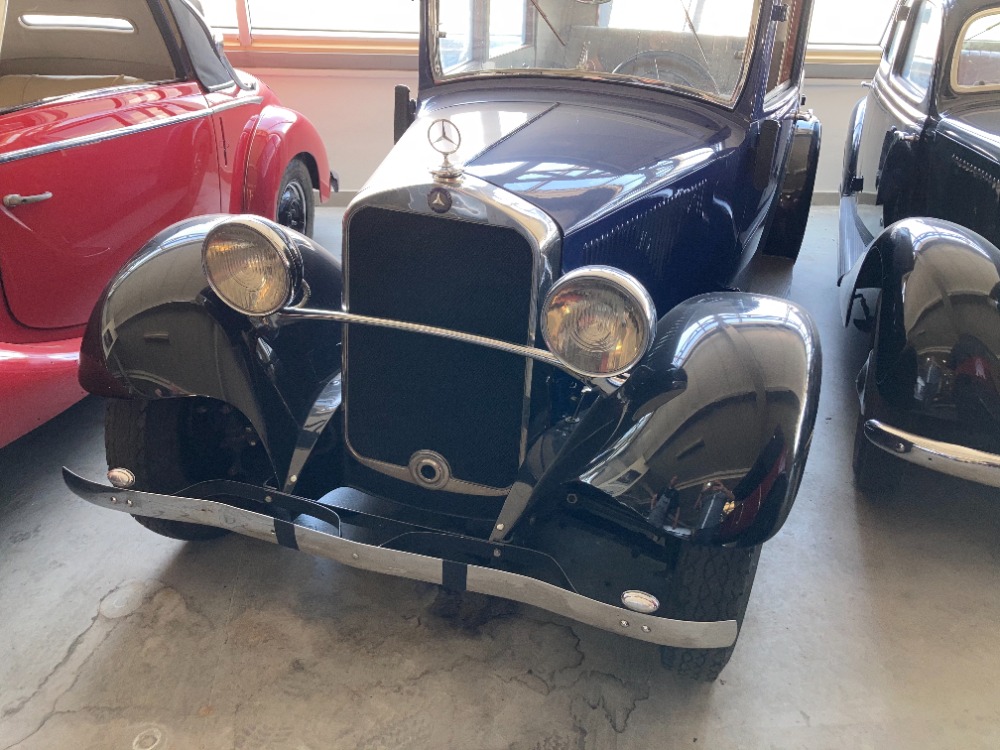
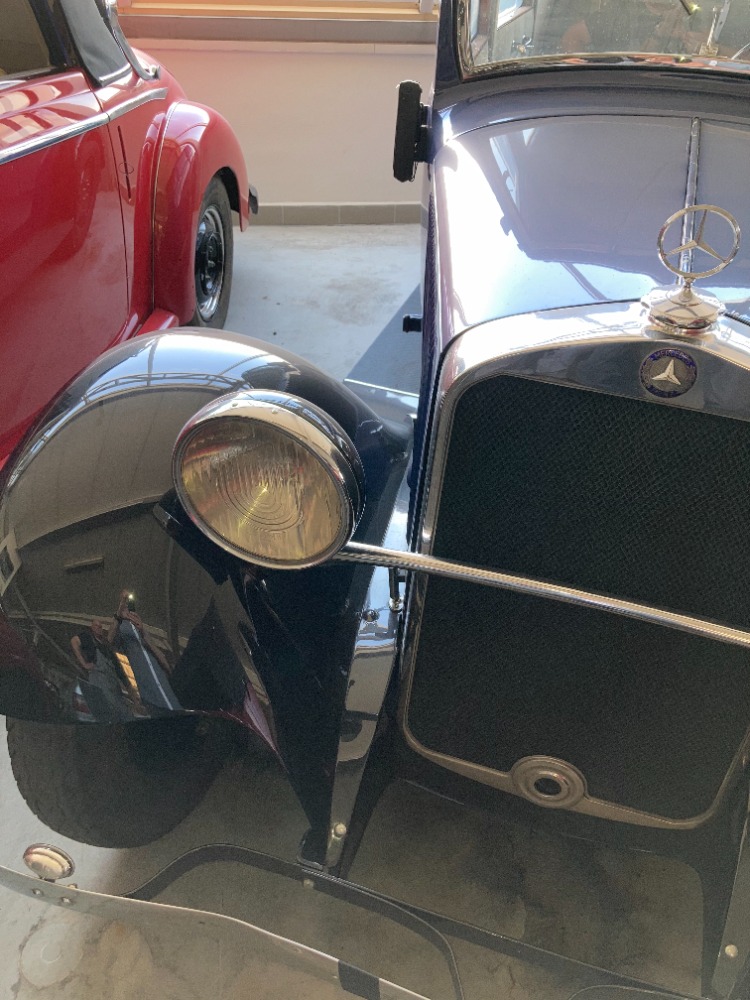
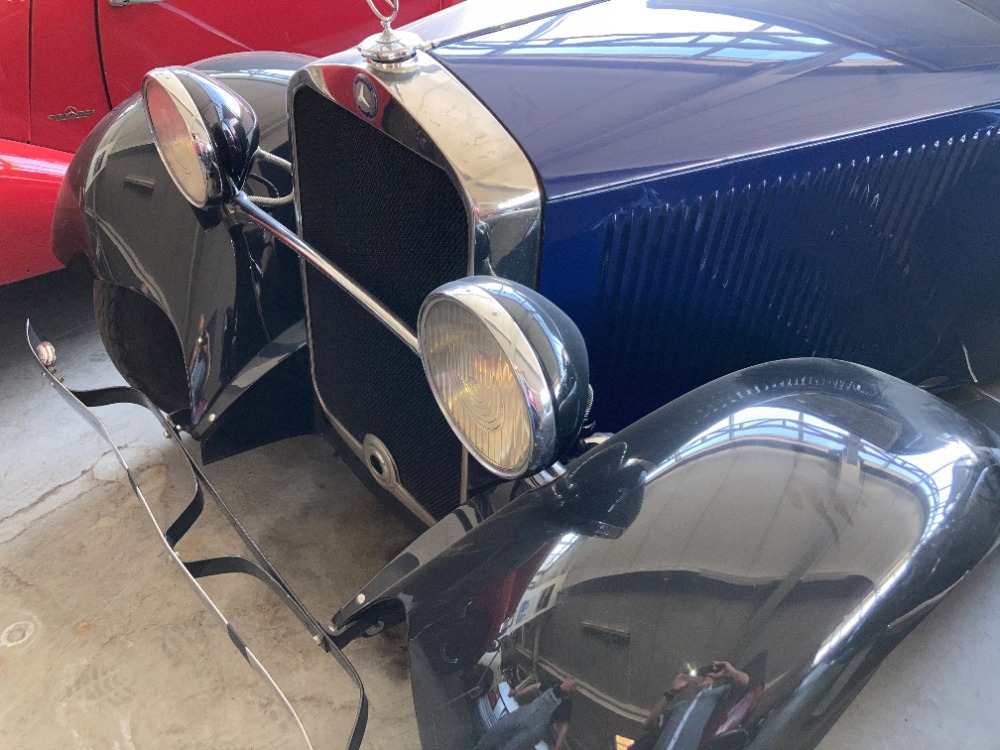
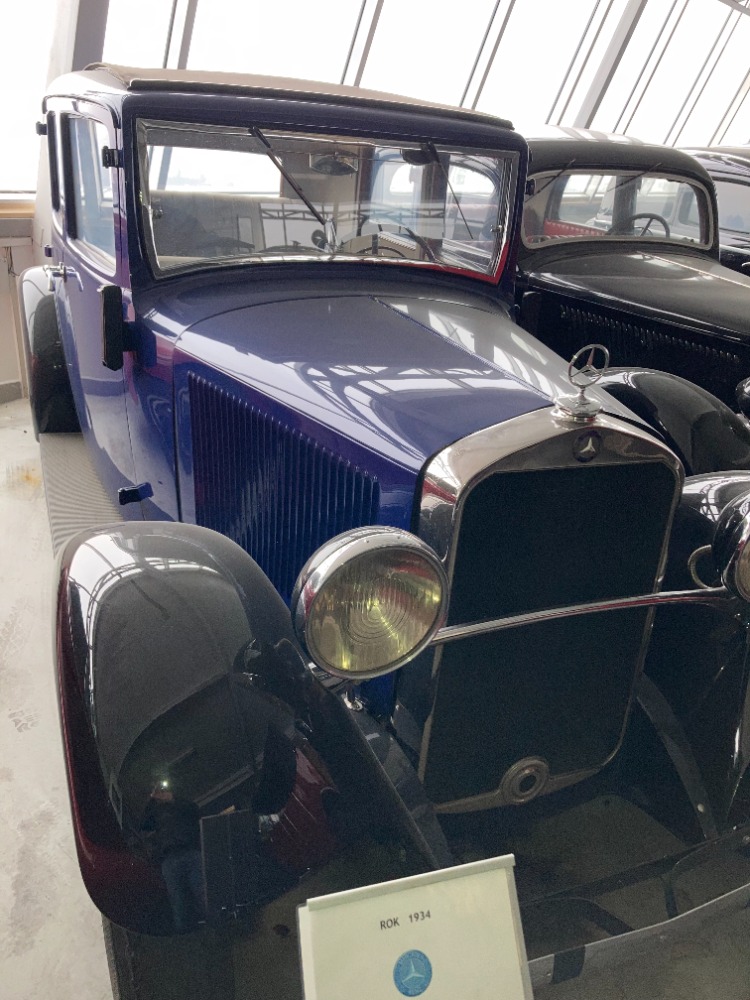
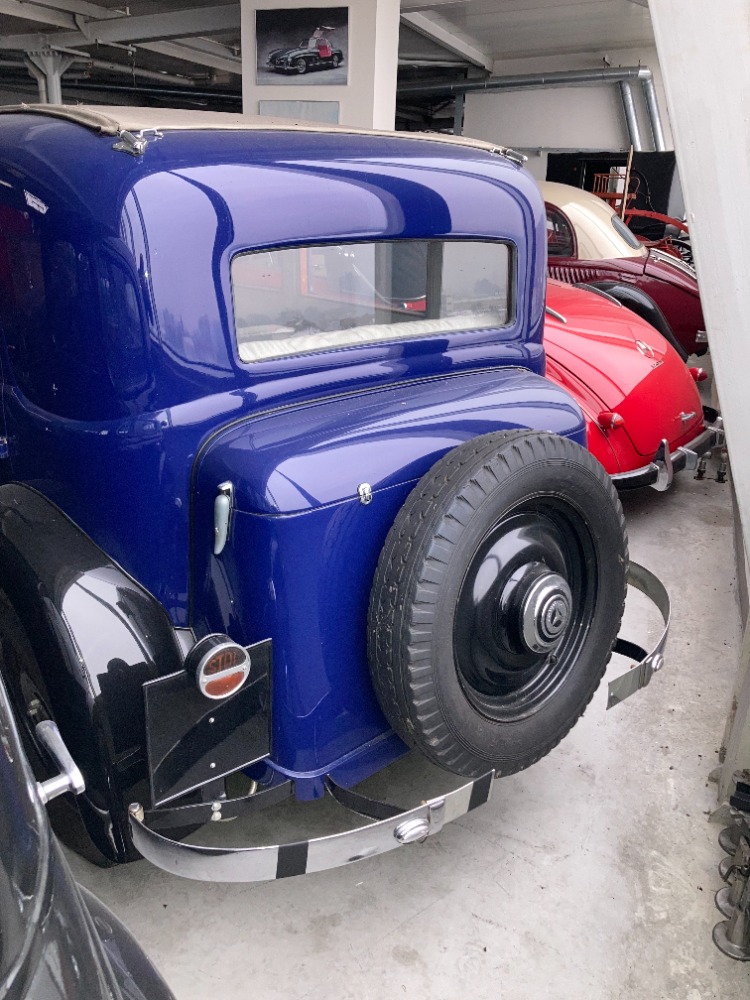

Mercedes-Benz 200 (W21)
Year of manufacture: 1933
Power: 40 hp
Displacement: 1,961 cm3
Number of cylinders/valves: 6/2
Weight: 1,160 kg
Condition: restored
Catalog number: 224
The Mercedes-Benz 200, designated by factory number W21 and introduced in February 1933, was the successor to the previous type 170, which had slightly less power and interior space. At the International Motor Show in Berlin, the more powerful and somewhat roomier versions 200 (W21), 290 (W18), and 380 (W22) were presented.
The six-cylinder side-valve engine had a displacement of 1,961 cm3 and produced a maximum power output of 29 kW, or 40 hp, at 3,200 rpm. The power was transmitted to the rear wheels through a four-speed manual gearbox, where the highest gear functioned practically as an overdrive. The two highest gears were synchronized. The brakes operated on all four wheels via hydraulic linkage. The engine shared its 85 mm (3.3 inch) piston stroke with a smaller six-cylinder unit. However, the manufacturer increased the bore by 5 mm (0.20 inches) to 70 mm (2.8 inches) for the W21.
During the last year of this model, in June 1936, Mercedes-Benz announced the availability of a more powerful 2,229 cm3 engine delivering 55 hp, which was seen as a necessary response to criticism about the car’s relatively low power output.
In 1933, the choice of body styles was still modest, consisting of a four-door sedan with an integrated trunk, optionally available from the factory with a sunroof, a Cabriolet C, and a two-seat special roadster.
In its second model year starting February 1934, the 200 underwent a significant modernization. The flat radiator gave way to a more stylish, gently wedge-shaped variant, which became the face of common Mercedes-Benz passenger cars for decades. The body style selection also expanded. Besides Cabriolet A, the lineup included two four-seat touring cars: a two-door version with a body by another coachbuilder and a four-door version with a body made in Sindelfingen. The roadster and Cabriolet A had a 2,600 mm wheelbase, the same as the 170 (W15), and 100 mm shorter than the four-seat versions. The price tag of 7,800 RM made the Cabriolet A the most expensive 200 variant.
The addition of a longer 3,050 mm wheelbase version proved to be a wise move. This same wheelbase served as the basis for generously sized limousines until the arrival of the 300 in 1951. The longer wheelbase was used for the four-seat Cabriolet B as well as three six-seat coach-built variants: besides the Pullman sedan and Pullman landaulet, there was an open tourer originally available with a body from another coachbuilder, and from June 1934 it could be ordered with a body made in Sindelfingen. Thanks to the spacious interior, the Pullman sedan was especially suitable for use as a taxi.
In February 1935, a year after introducing the long-wheelbase version, prices for both chassis types and most body variants were reduced. The body selection was also expanded with three new long-wheelbase variants. The four/five-seat four-door sedan was aimed at satisfying the growing customer demand for space. The target group for the aerodynamically styled progressive sedan with excellent quality was avant-garde clients. However, the price was an additional 3,700 RM. The price was even higher for the equally new “Special Cabriolet A,” which at 11,500 RM became by far the most expensive W21 variant — at the same price, two four/five-seat sedans of the two-liter swing-axle version could be purchased.
February 1935 brought a greatly expanded offer for customers who wanted a sedan but did not want to give up the advantages of an open roof. The standard-wheelbase limousine was optionally available not only with a sunroof made in Sindelfingen but also alternatively with a sliding roof by Happich. The long-wheelbase limousine could be ordered optionally with a sliding roof by Happich or Webasto, while the Pullman sedan was optionally available with either a standard or special version of the Webasto sliding roof.
Other changes for the 1935 model year included larger dials on the instrument panel, a stiffer front end with a metal bulkhead to reduce body vibrations, and a reinforced frame. In April 1935, the option to order a sedan with a sunroof made in Sindelfingen was discontinued. Instead, as an alternative to the Happich sliding roof, a roof from Webasto could be ordered.
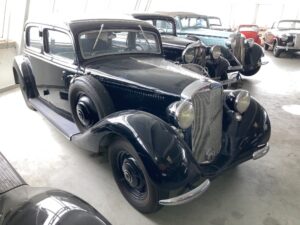
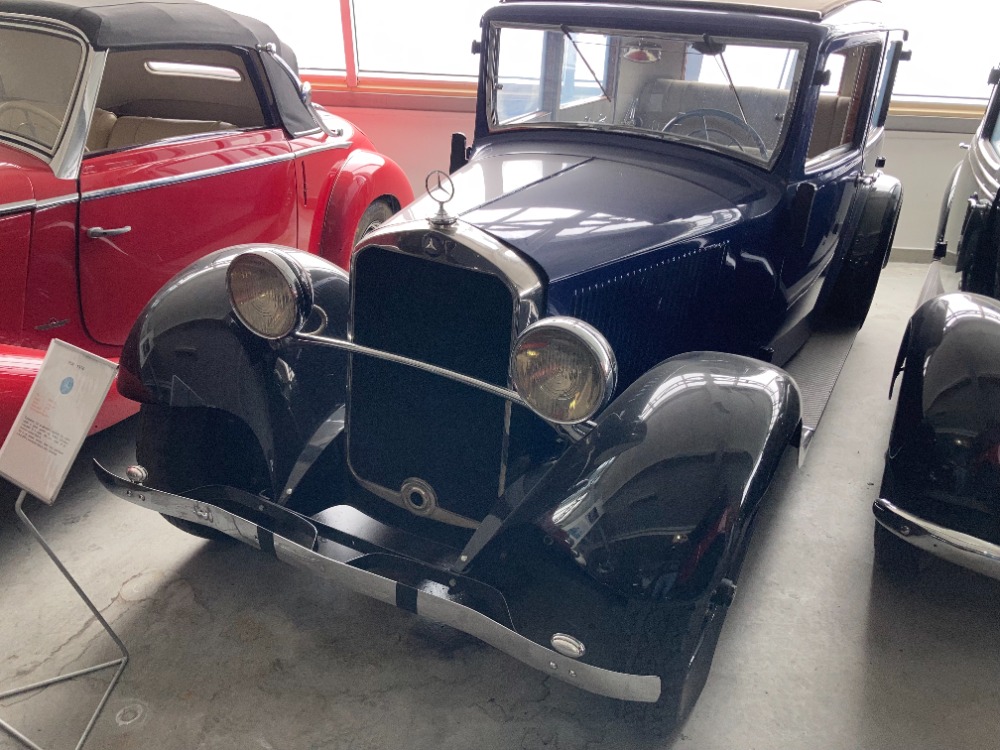
A total of 15,622 units of the 200 model were produced — the car in our collection is from 1933, from the first series, and is a classic sedan. It has been fully restored and is in drivable condition.