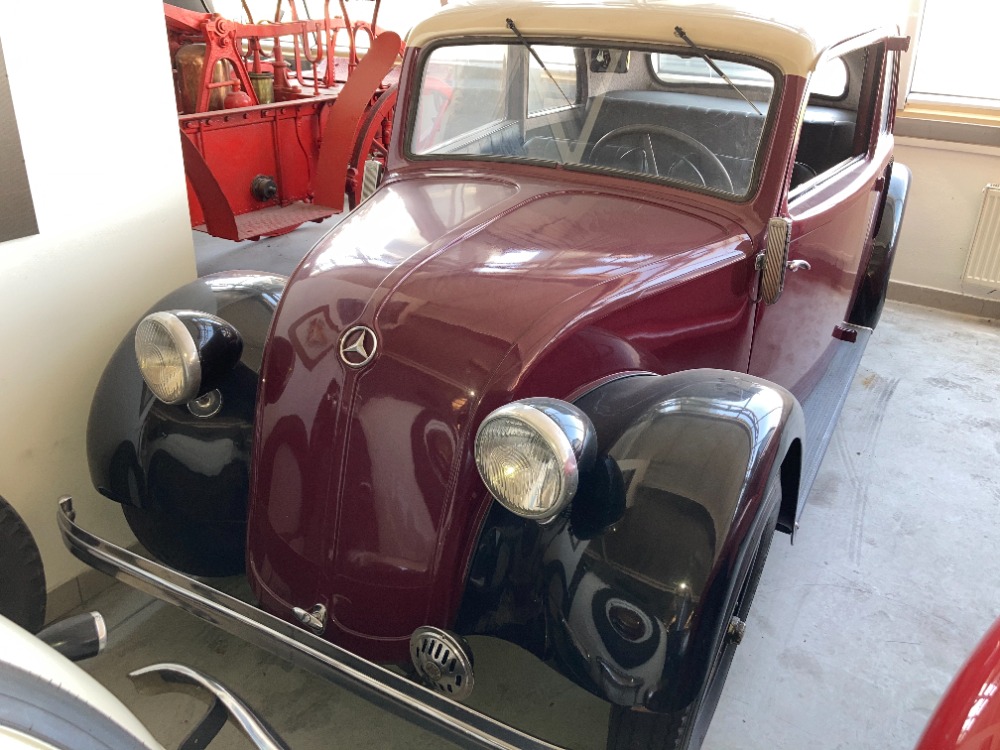
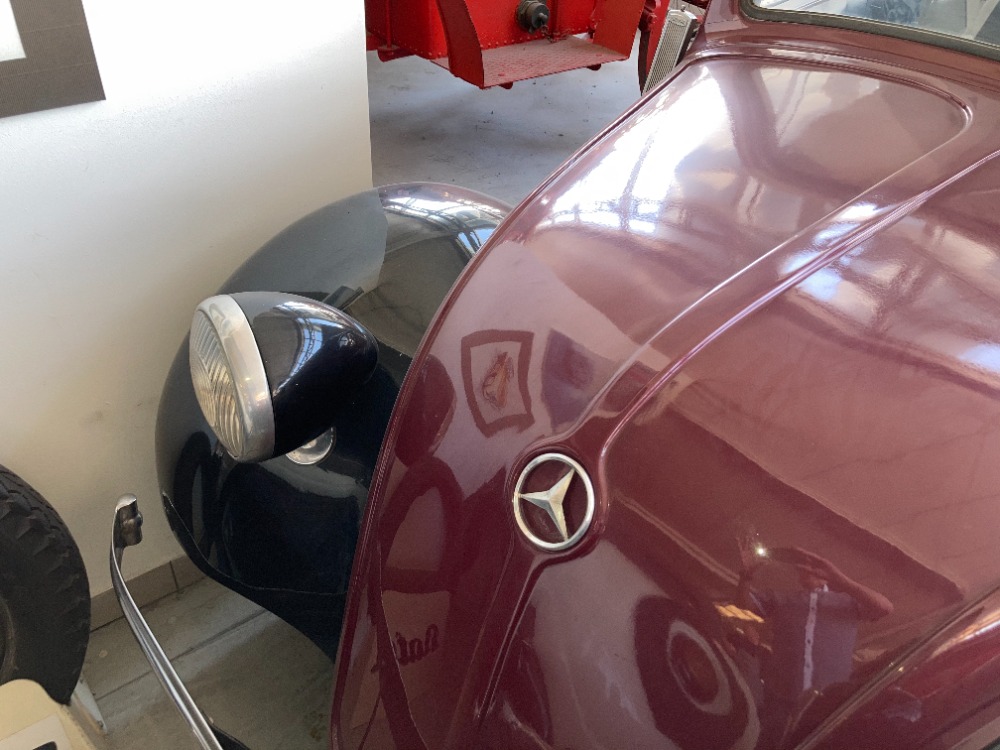
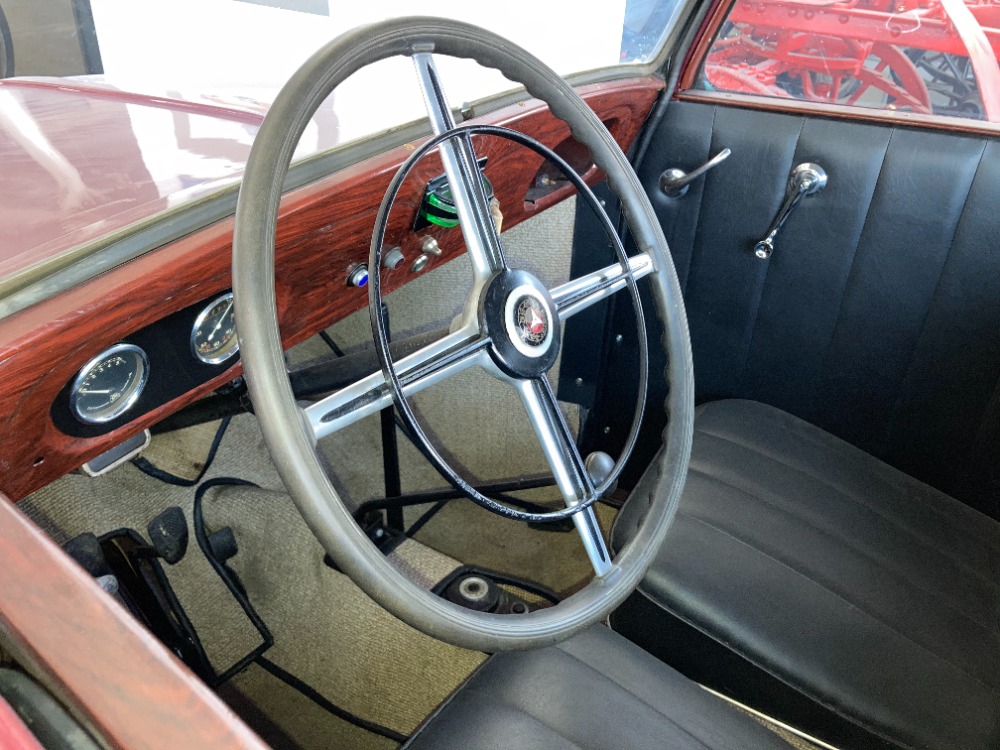
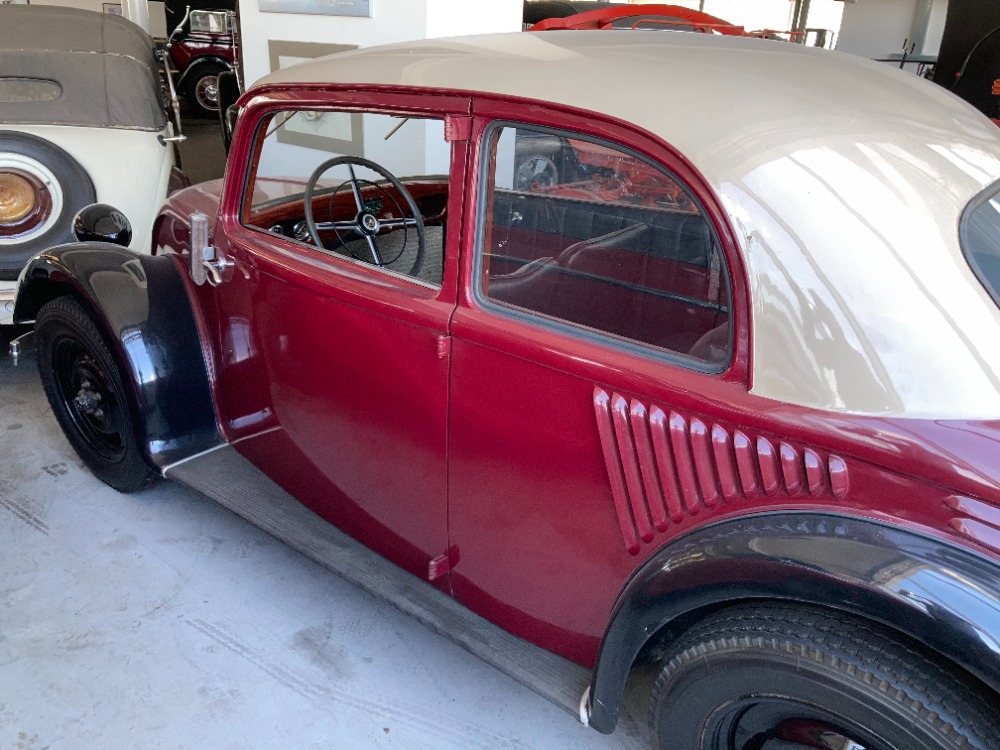
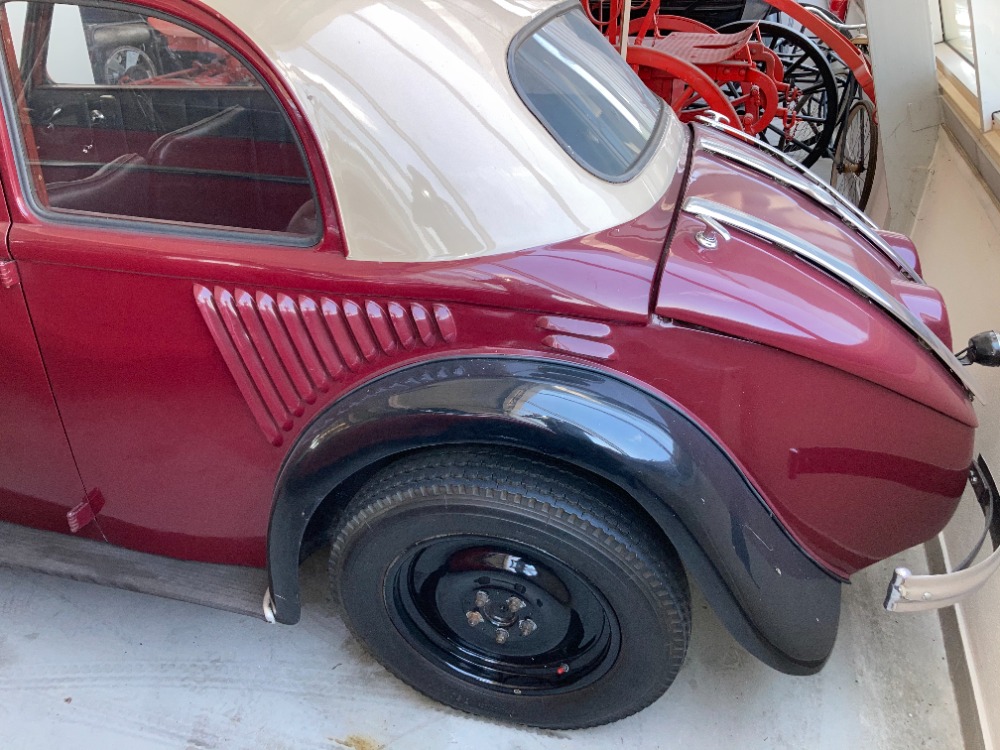
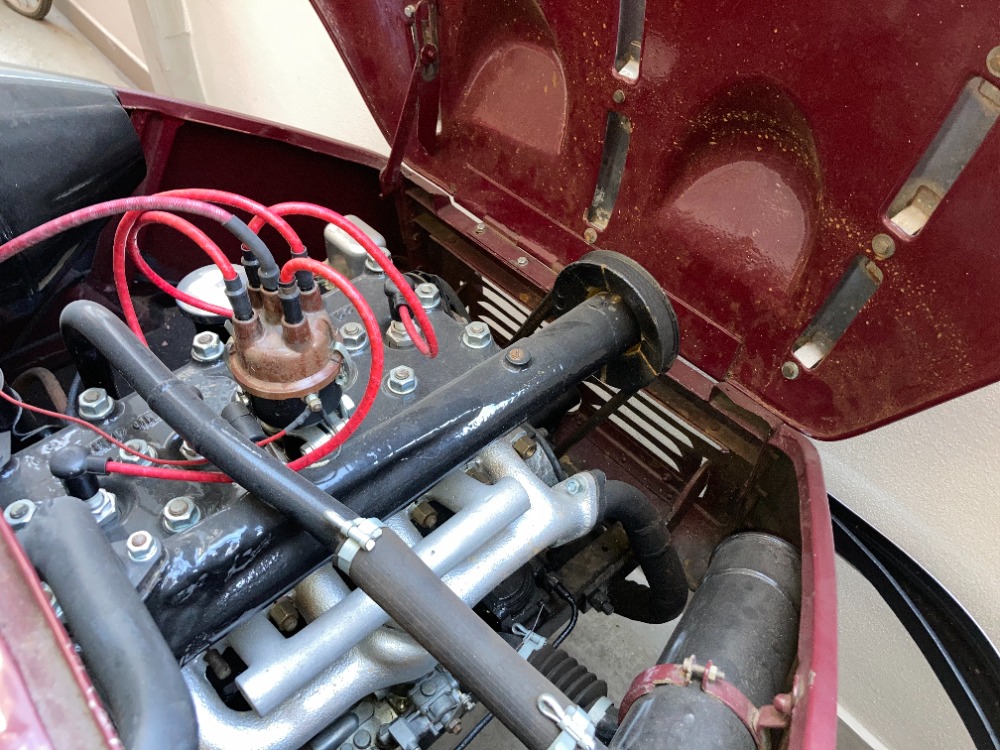
Mercedes-Benz 130H cabrio
Year of manufacture: 1934
Power: 26 hp
Displacement: 1,308 cm3
Number of cylinders/valves: 4/2
Condition: restored
Catalog number: 222
At the beginning of the 1930s, attempts were increasing in Europe to create more aerodynamic car designs, including relocating the engine from the front to the rear. Between 1931 and 1939, Daimler-Benz AG produced the Mercedes-Benz 130, 150, and 170 H models. Production numbers for each of these models remained relatively low, especially compared to the output of classic front-engine Mercedes-Benz cars.
The 130 H was introduced at the International Motor Show in Berlin in 1934. Not only was it the smallest mass-produced car and the first four-cylinder model by Daimler-Benz, but it was also the first large-scale German car with a rear engine, if we exclude various miniature vehicles.
This model was inspired by Edmund Rumpler’s car called the Rumpler Tropfenwagen, which ran from 1923 to 1926. Hans Nibel, Mercedes’ chief engineer, drew inspiration from the Tropfenwagen (teardrop-shaped car) designed in 1921 by the Austrian-born engineer Edmund Rumpler. Nibel began developing the 130 in 1931 and chose a 1.3-liter four-cylinder SV engine mounted at the rear to drive the rear wheels.
The letter H, indicating engine placement (from the German word Heck, meaning rear), was not yet used. The car had a synchronized three-speed transmission with a semi-automatic fast-shift (no clutch required) and a final drive housed in the same unit as the engine. The car featured a backbone chassis with a central tube; the front wheels were independently suspended on two transverse leaf springs, and the rear swing axle was sprung by two coil springs.
The engine produced 26 hp (19 kW) and could propel the small two-door sedan to a top speed of 92 km/h. The synchronized four-speed gearbox was located ahead of the rear axle, balanced by coil springs. The front axle had two transverse leaf springs. The two-door Mercedes-Benz 130 H had a wheelbase of 2,500 mm and overall dimensions of 4,050 x 1,520 x 1,510 mm.
The car was sold as a sedan, a sedan with an open roof, or a convertible (with or without a convertible top and without side windows), each equipped with two doors. Nearly 4,300 units were sold before production ended in 1936.
The car in our collection is a beautifully fully restored cabriolet.