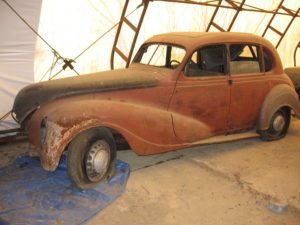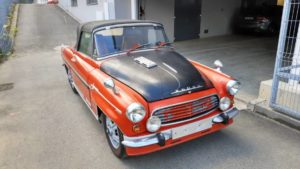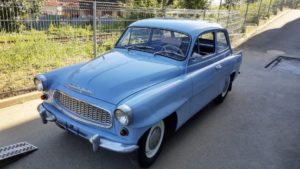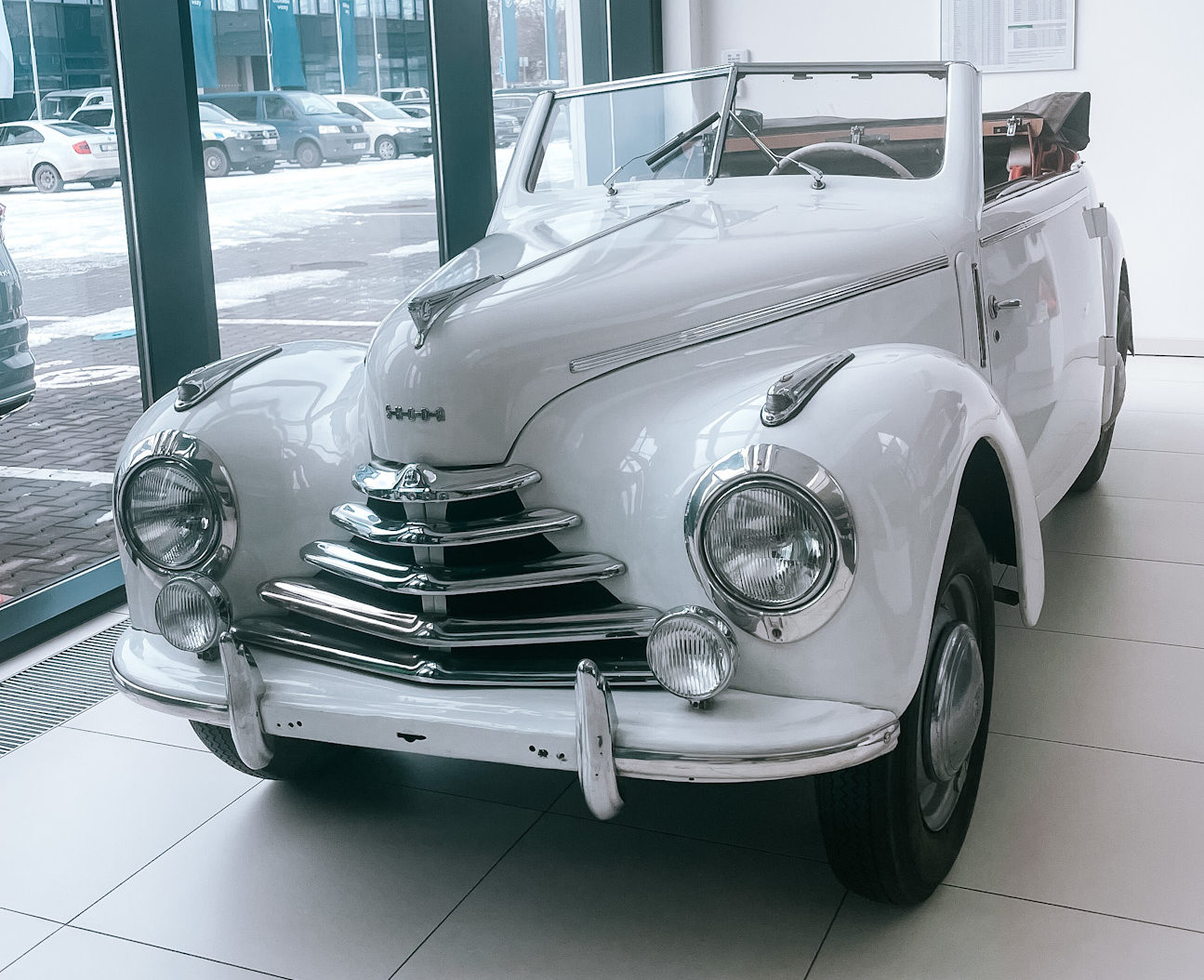
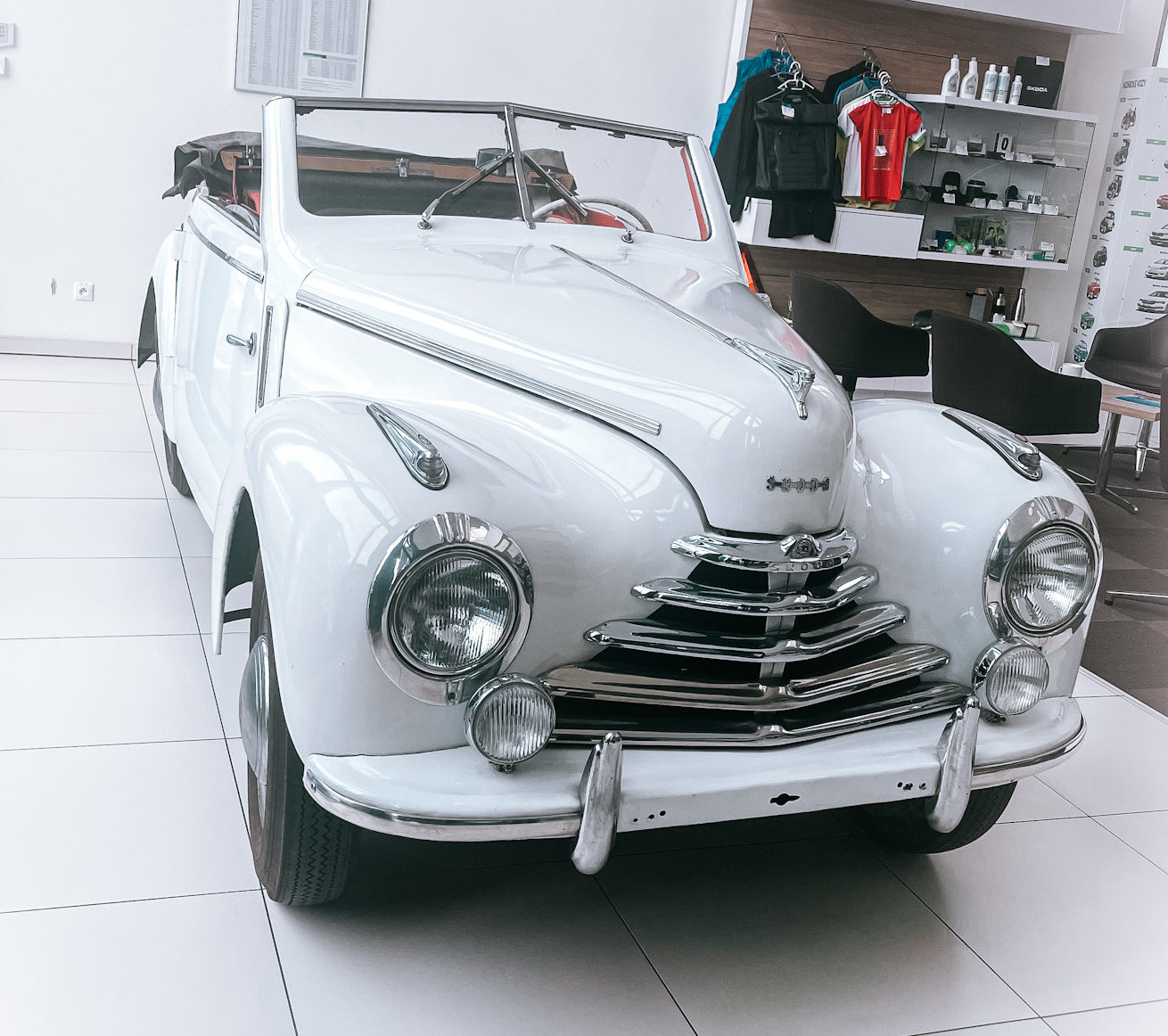
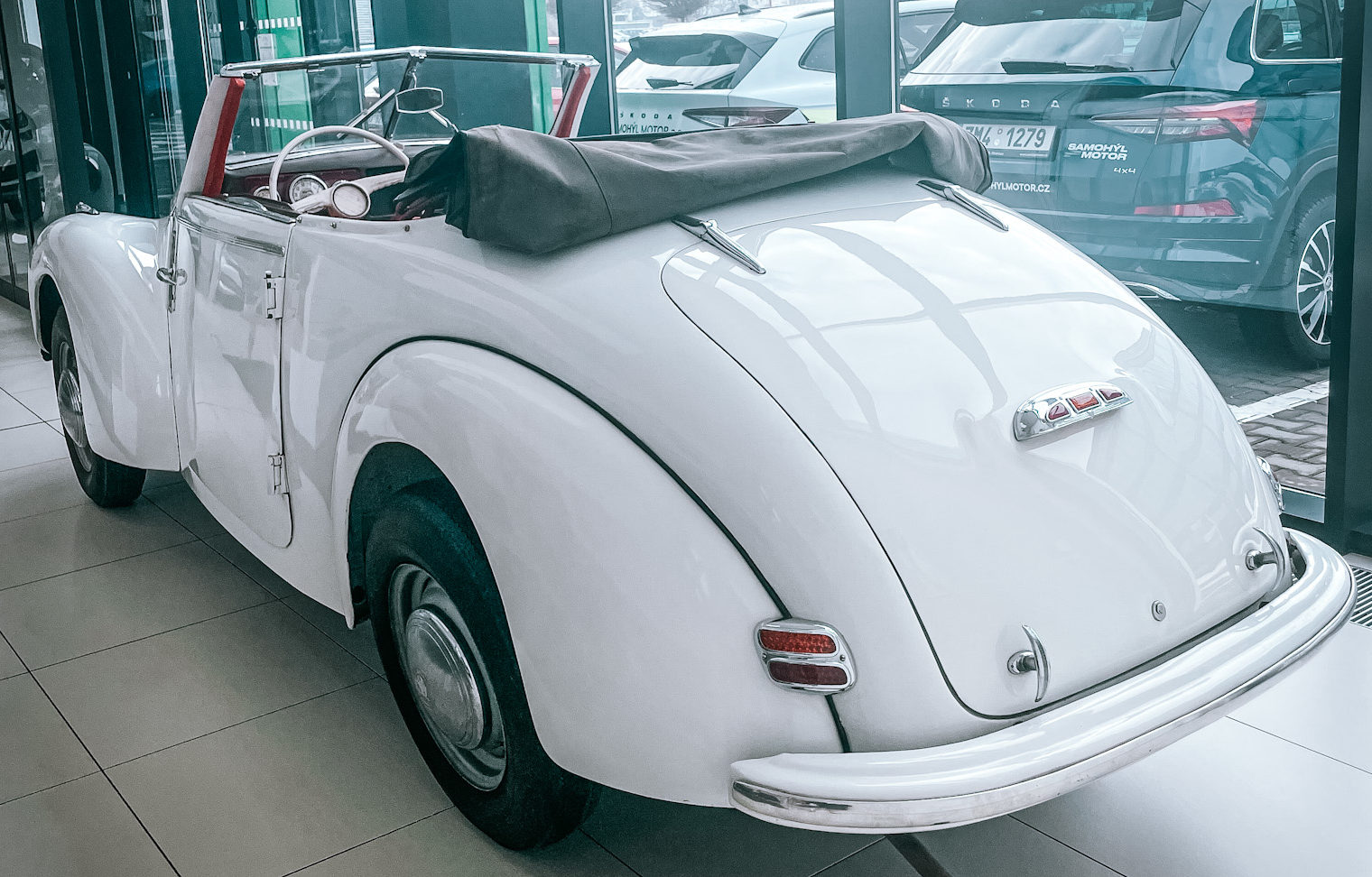
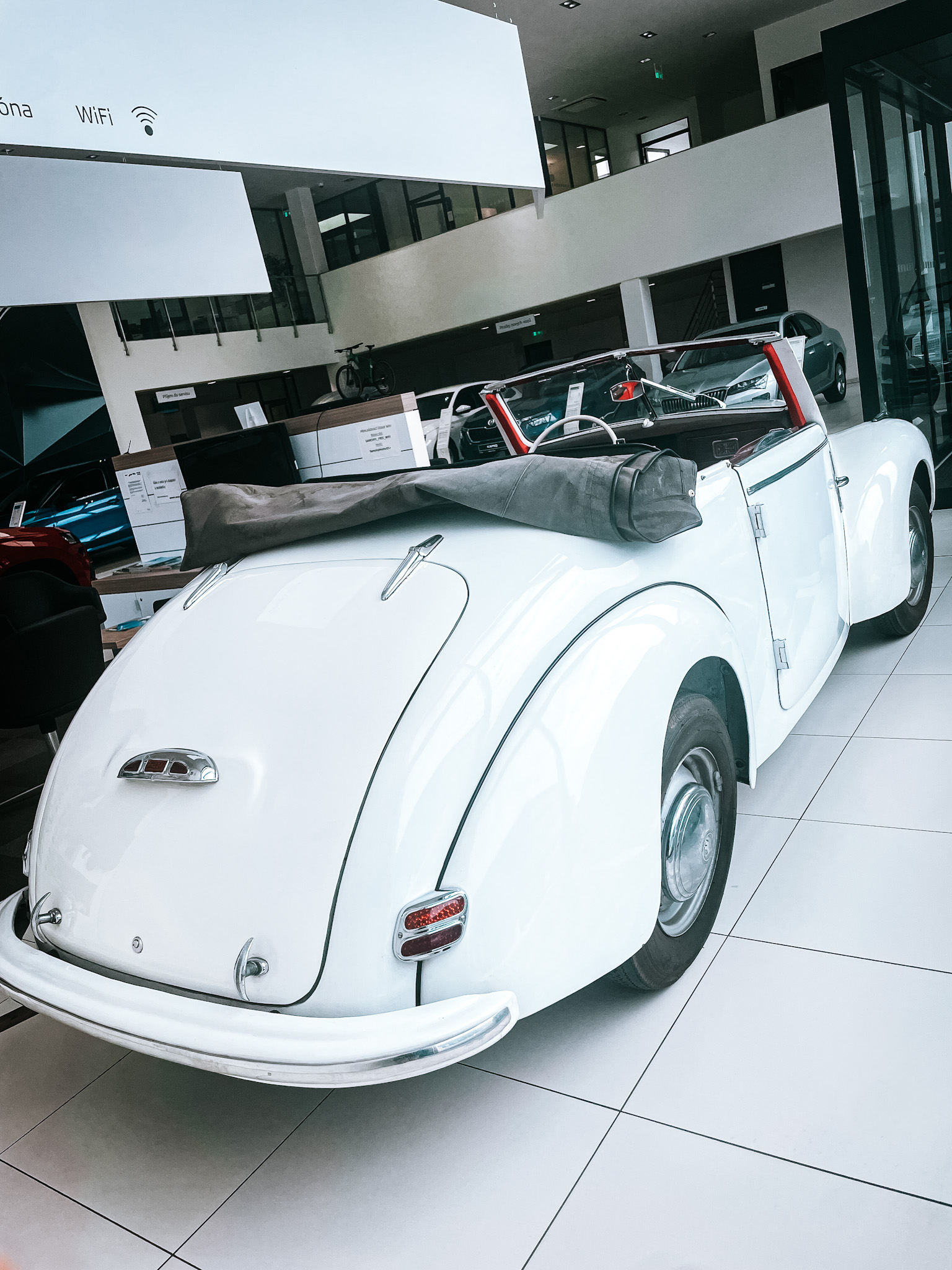
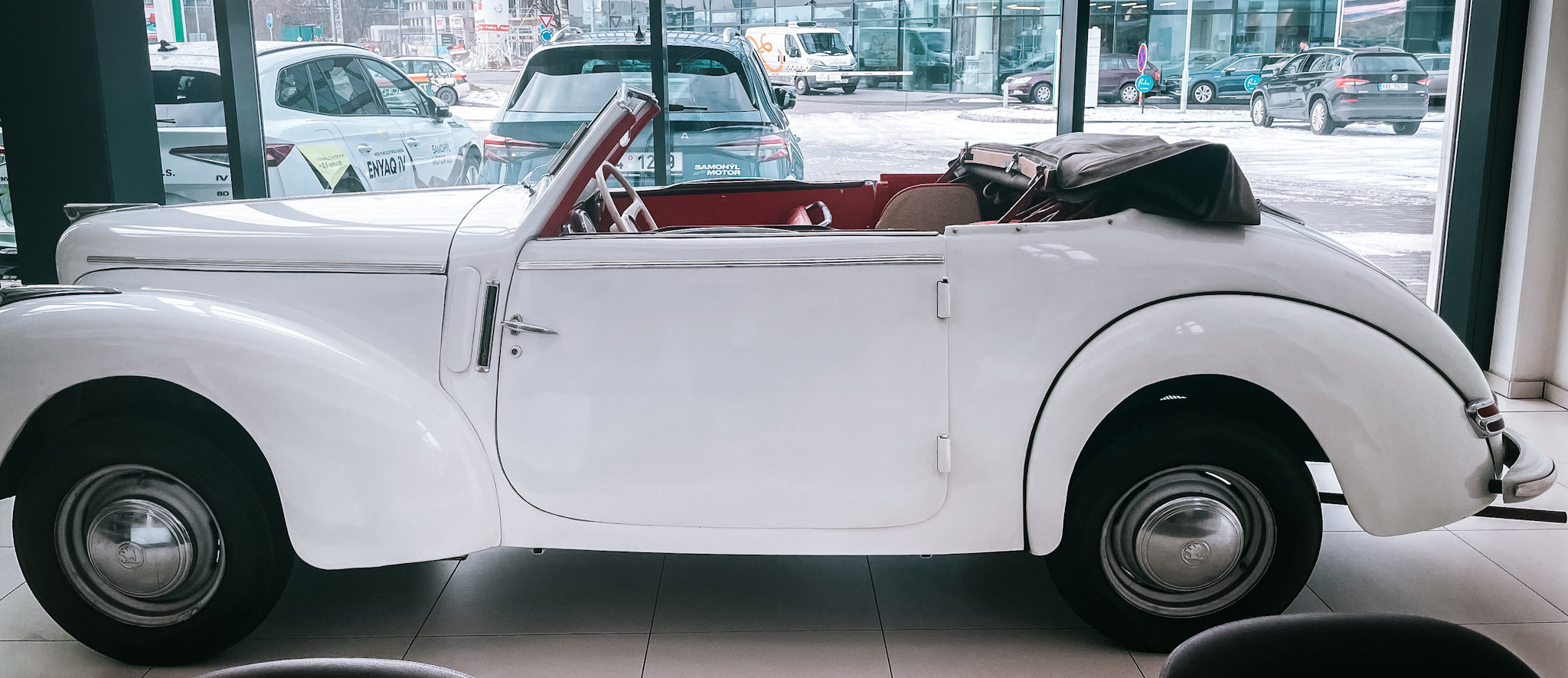
Škoda 1102 Tudor Roadster
Jasně, tady je překlad do angličtiny se zachováním formátování:
—
Year of manufacture: 1951 Power: 32 hp Displacement: 1,089 cm3
Number of cylinders/valves: 4/2 Weight: 960 kg
Condition: drivable Catalog number: 261
These passenger and light utility vehicles were produced in Mladá Boleslav and its branch plants, primarily in Kvasiny and Vrchlabí. The Škoda 1101, or Škoda 1102, also popularly known as Tudor, was a modernization of the pre-war Škoda Popular 1101, mainly distinguished by an updated body. Between 1946 and 1952, a total of 71,591 units of all versions were produced, most of which were exported to various countries, especially Poland, the Netherlands, and Belgium.
Technical data
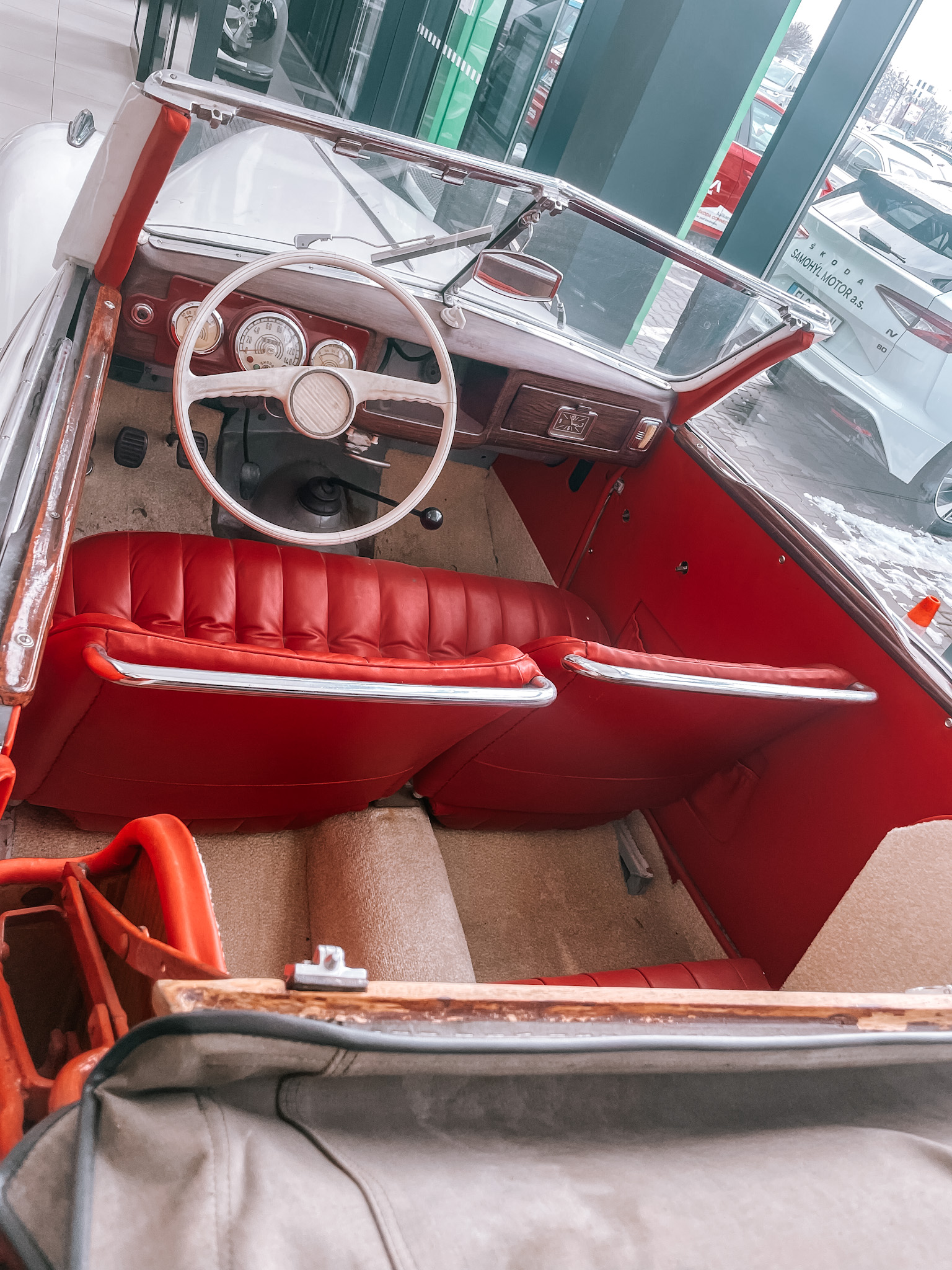
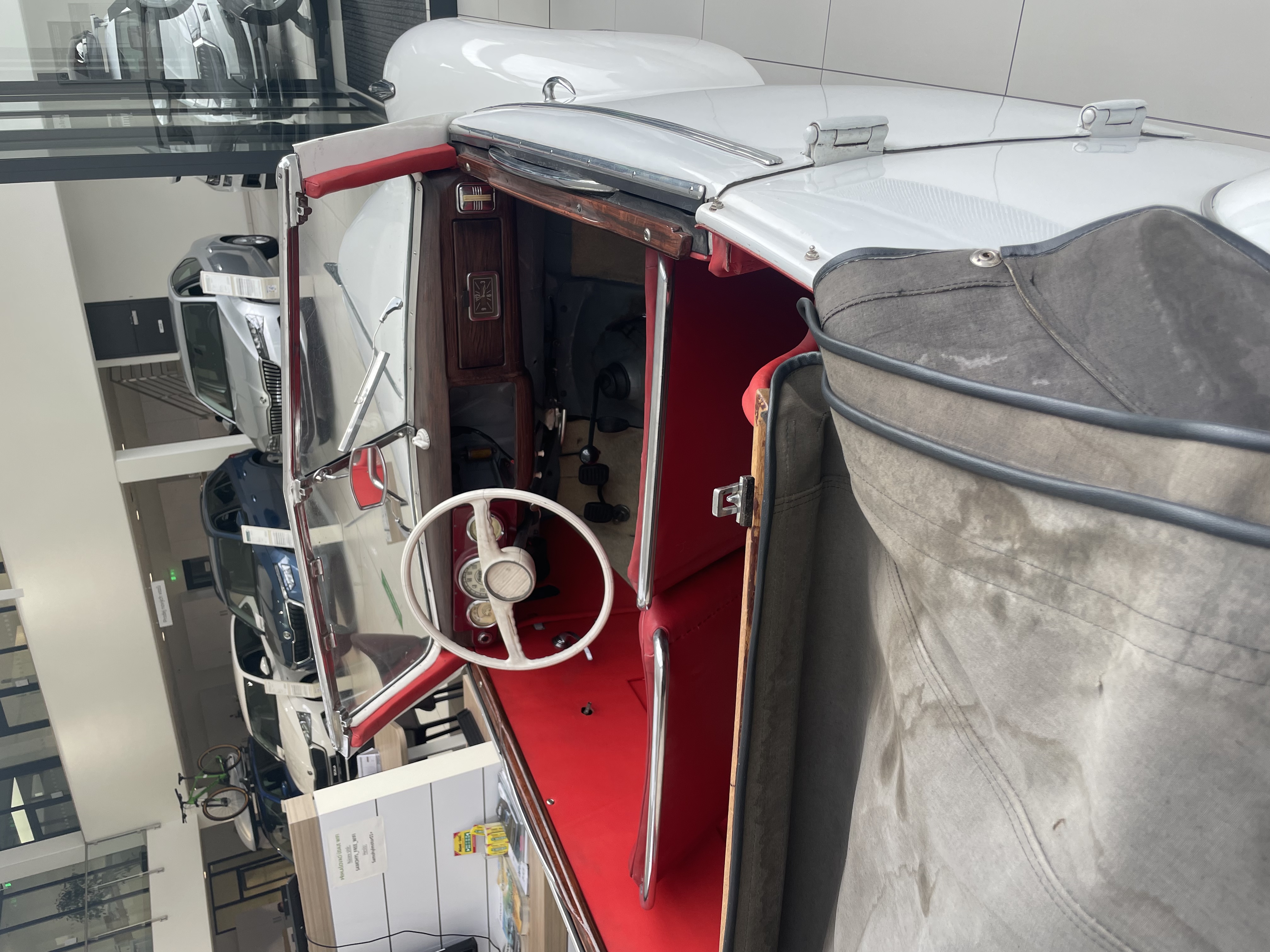
Compared to its predecessor, the Škoda 1102 had a slightly modernized engine with the same power output. The flexible Hardy couplings on the drive shaft were replaced by universal joints, and the original friction shock absorbers on the front axle were replaced by lever-type hydraulic shock absorbers. A four-speed gearbox was standard. The entirely new dashboard replaced individual gauges with a combined instrument panel, and in the center, a grille prepared for a car radio appeared. The vehicle was not equipped with heating as standard (except for the ambulance version).
Vehicle development
The most modern pre-war model of the Mladá Boleslav automaker Škoda Popular was produced between 1940 and 1944. Development of the new car took place secretly during the war. A 1944 brochure already showed a drawing of a car with a body very similar to the eventual production version. The final design was completed during 1945 shortly after the war ended. In the 1102 version, passenger cars (mainly four-door sedans) were produced, while utility variants were mostly built on the 1101 chassis.
Production variants
An unfinished first prototype, still based on the old Popular 1101 chassis, was presented to journalists at the end of 1945. The prototype was completed in March 1946 and then underwent a promotional tour around Czechoslovakia. This first car had a Tudor body. Between April and October 1946, the body variants gradually emerged: ambulance, roadster, four-door sedan, Tudor convertible, and delivery van.
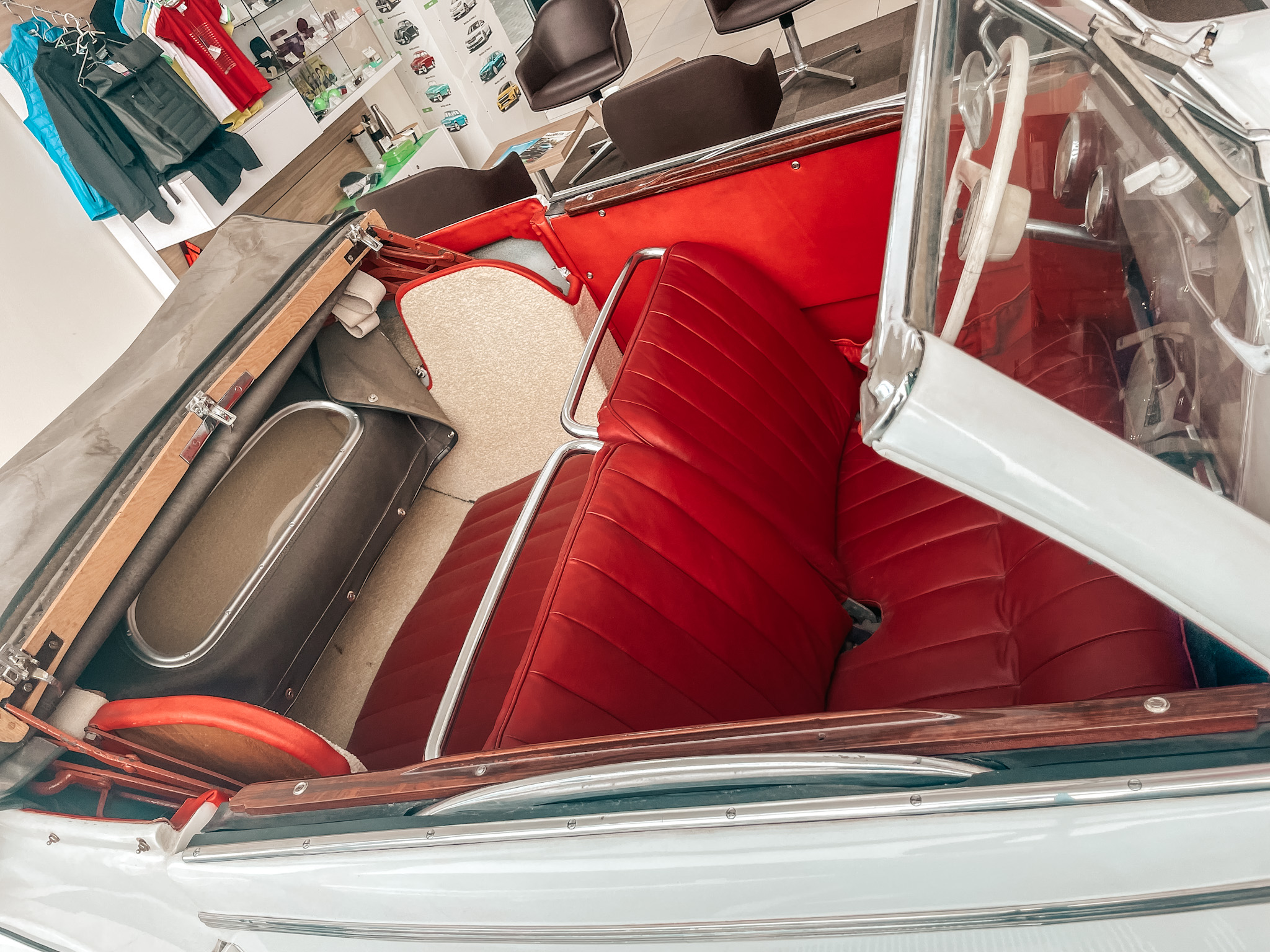
The roadster model differed from other versions by its two-piece, arrow-shaped windshield. The upper part of the windshield frame was made of a chrome strip. The roadster’s doors were frameless, and the curved sliding windows were trimmed with a thin chrome strip. The body was four-seater, although the rear seats were only for emergency use.
Modernization
In October 1947, a roadster prototype with a new grille consisting of five thick ribs was presented. This grille was adopted for all series roadsters and sedans. Other passenger versions received the new grille starting in 1948. In mid-1950, a new two-spoke steering wheel began to be installed.
The 1101/1102 series was replaced in 1952 by the Škoda 1200, which inherited the updated engine and chassis.
The vehicle from our collection is fully restored and in drivable condition.