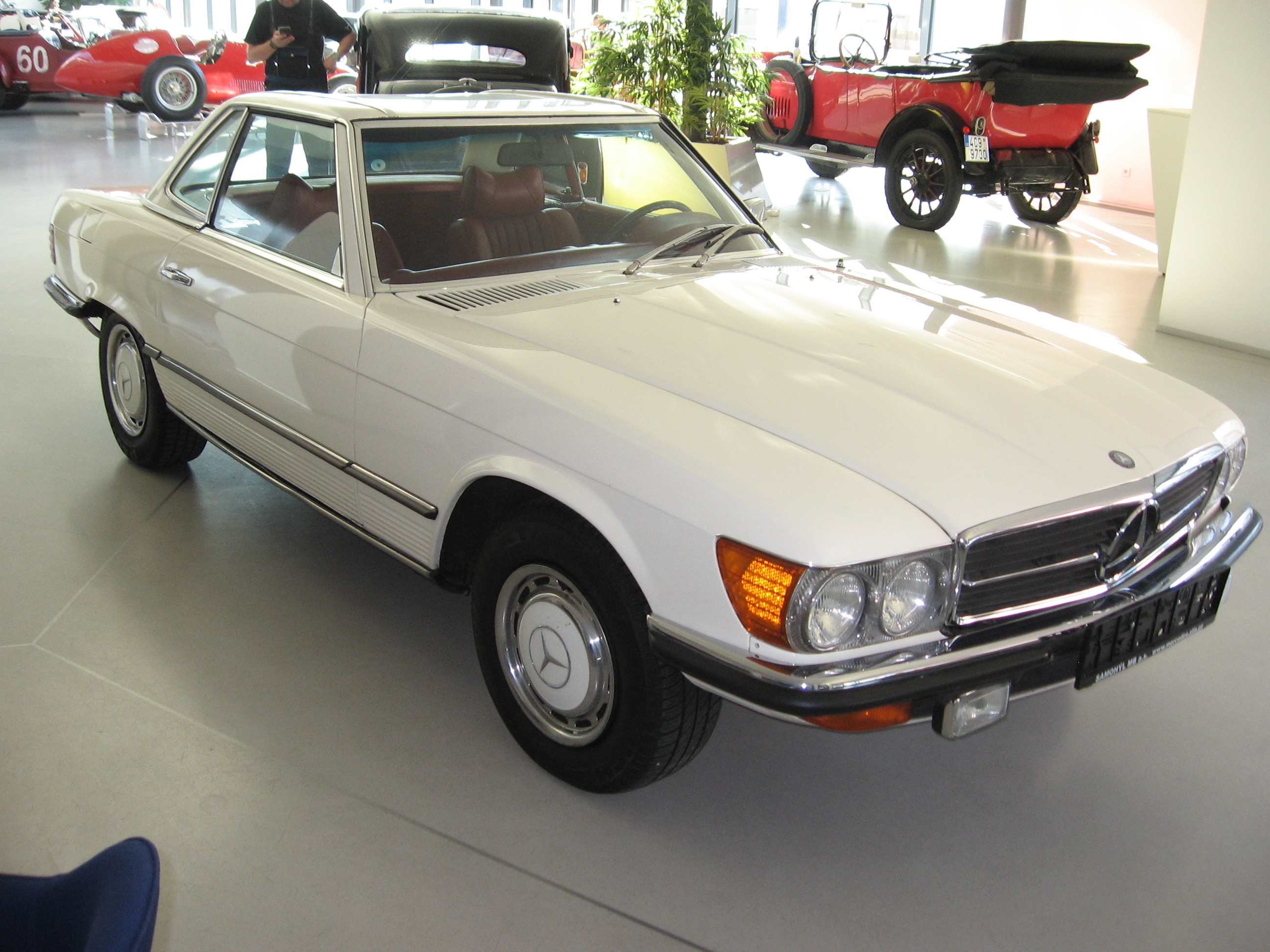
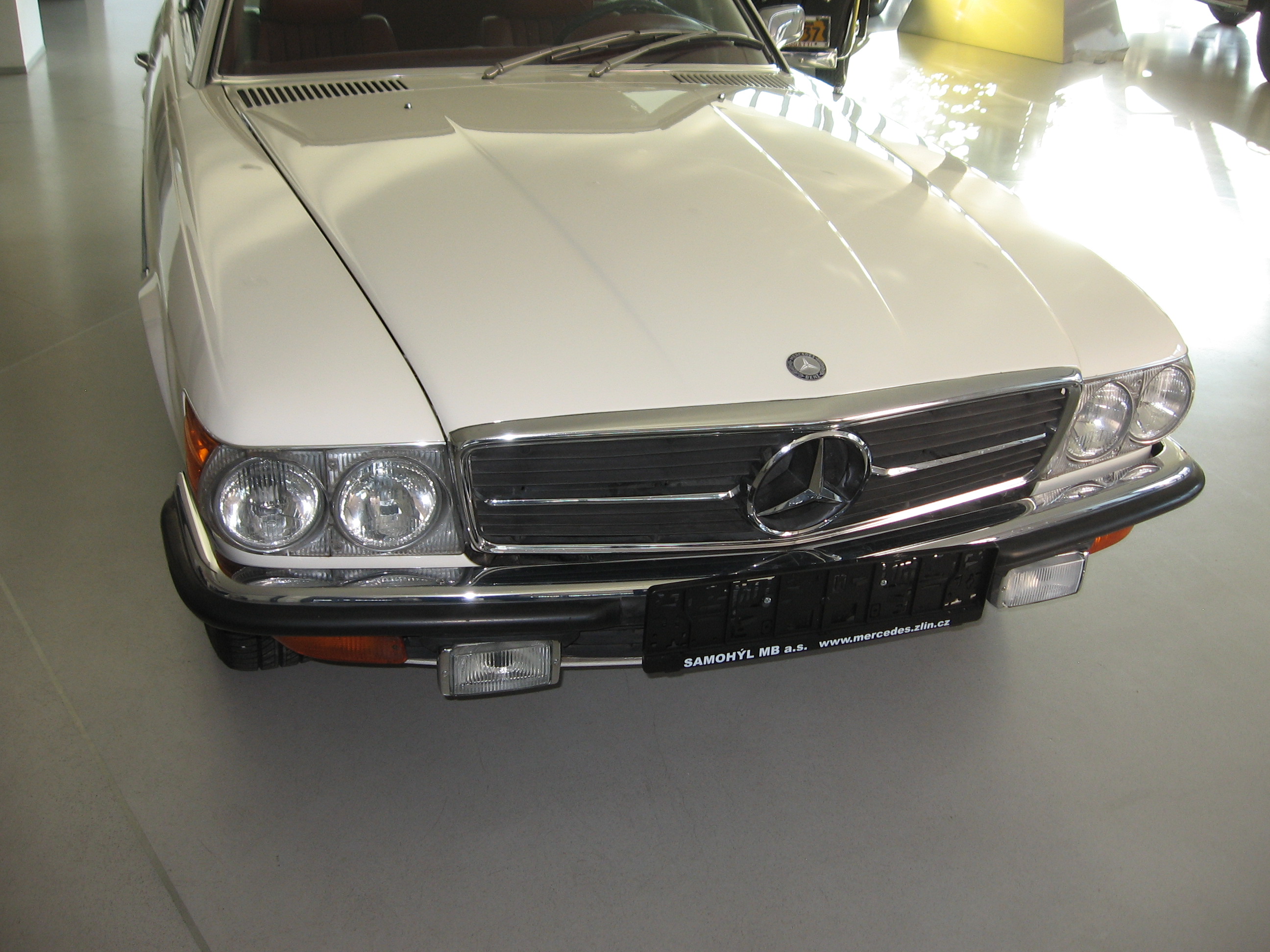
Mercedes-Benz 450 SL R107
Year of Manufacture: 1971
Power: 225 hp
Engine Displacement: 4,520 cm3
Number of Cylinders/Valves: 8/2
Weight: 1,580 kg
Condition: perfect
Catalog Number: 40
History
The Mercedes-Benz W107 was produced between 1971 and 1989. It was the second longest-produced series by the German car manufacturer Mercedes-Benz, following the off-road Mercedes-Benz G-Class. The vehicles were sold under the model designations SL (R107) and SLC (C107).
Development
The R107 and C107 borrowed chassis components from the mid-size W114 model and were originally paired with the M116 and M117 engines used in the W108, W109, and W111 series. In April 1971, mass production of the R107 began, with the 350 SL available with an optional four-speed hydraulic automatic transmission. In March 1973, the 450 SL/SLC was introduced to the North American market.
In September 1977, the 450 SLC 5.0 joined the lineup. It was a homologation version of the large coupé with a new aluminum 5-liter engine. Starting in 1980, the 350, 450, and 450 SLC 5.0 were replaced by the 380 and 500 SLC models. In 1981, production of the 280, 380, and 500 SL ended and was succeeded by the new W126-based 380 and 500 SEC models. From September 1985, the 280 SL was replaced by the new 300 SL and 380 SL, the 500 SL continued, and the 560 SL was introduced for select non-European markets, particularly the USA, Australia, and Japan.
Technical Data
Mercedes-Benz engineers focused on fine details when developing the W107. For example, this model was the first to feature the now-familiar rear light lenses with horizontal ribbing, previously used on trucks, which helped prevent dirt buildup.
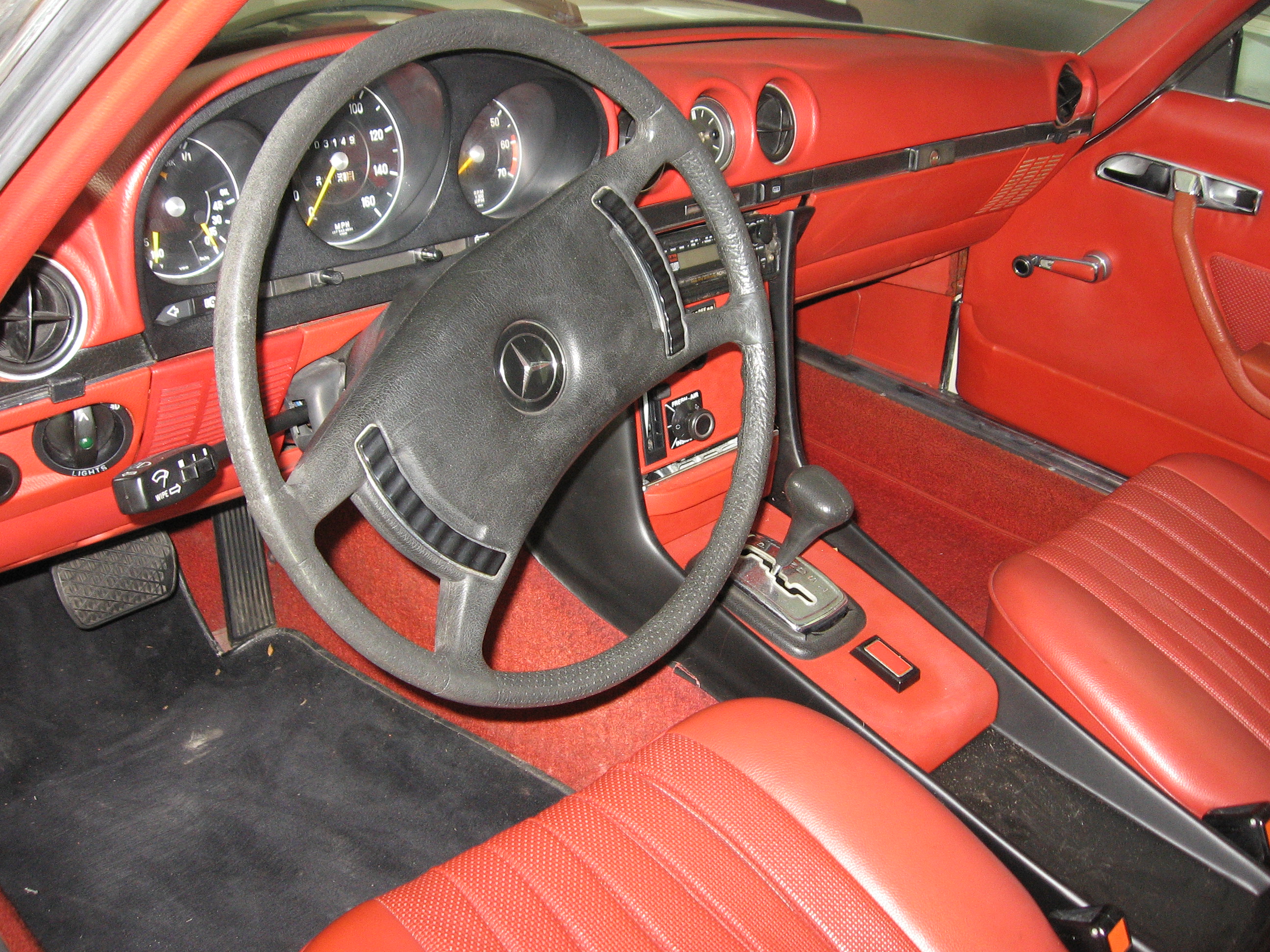
The chassis featured a closed tunnel necessary for the gearbox and driveshaft, with a floor frame of longitudinal and transverse members and a welded body of either a two-seater roadster or a coupé for two adults and two children. The steel used varied in thickness, and carefully designed crumple zones based on Béla Barényi’s patents absorbed most of the impact energy in a crash, allowing the occupants in the so-called safety cell to remain better protected. The four-spoke steering wheel had a telescoping column and a polyurethane-filled hub. The dashboard was padded with foam to absorb impacts. The fuel tank, placed above the rear axle, was protected from rupture in collisions.
All U.S. models used the 4.5-liter engine and were designated 450 SL / SLC.
Interesting Facts
Let’s return to Germany, though we’ll stay a bit in America—further south, in fact. Teaching a 4.75-meter-long car to race was a challenging task, but it succeeded. The SLC coupé achieved great success particularly in rally competitions. In 1978, Andrew Cowan and Colin Malkin won the grueling Vuelta a la América del Sud marathon. Over five weeks on roads—and mostly off-road trails—across South America, the pair managed to finish the 28,500 km route in their 5-liter Mercedes 450 SLC ahead of all competitors. Only 22 of the original 56 teams completed the rally.
Record Holder
Thanks to its long career, the R107 still holds the record for the number of units produced among all generations of the “SL”. By August 1989, a total of 237,287 units had been built in Sindelfingen. The SLC coupé concluded its ten-year career with only 62,888 units produced and is now considered fairly rare. That career itself is also a record—no other passenger Mercedes was produced for so long (the G-Class is not quite a passenger car). The R107 was succeeded by the SL R129, which debuted in March 1989. While its career was shorter, it was still long by today’s standards: it remained in production for a full twelve years.