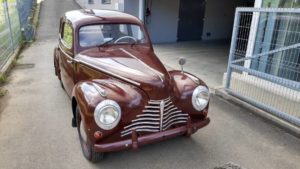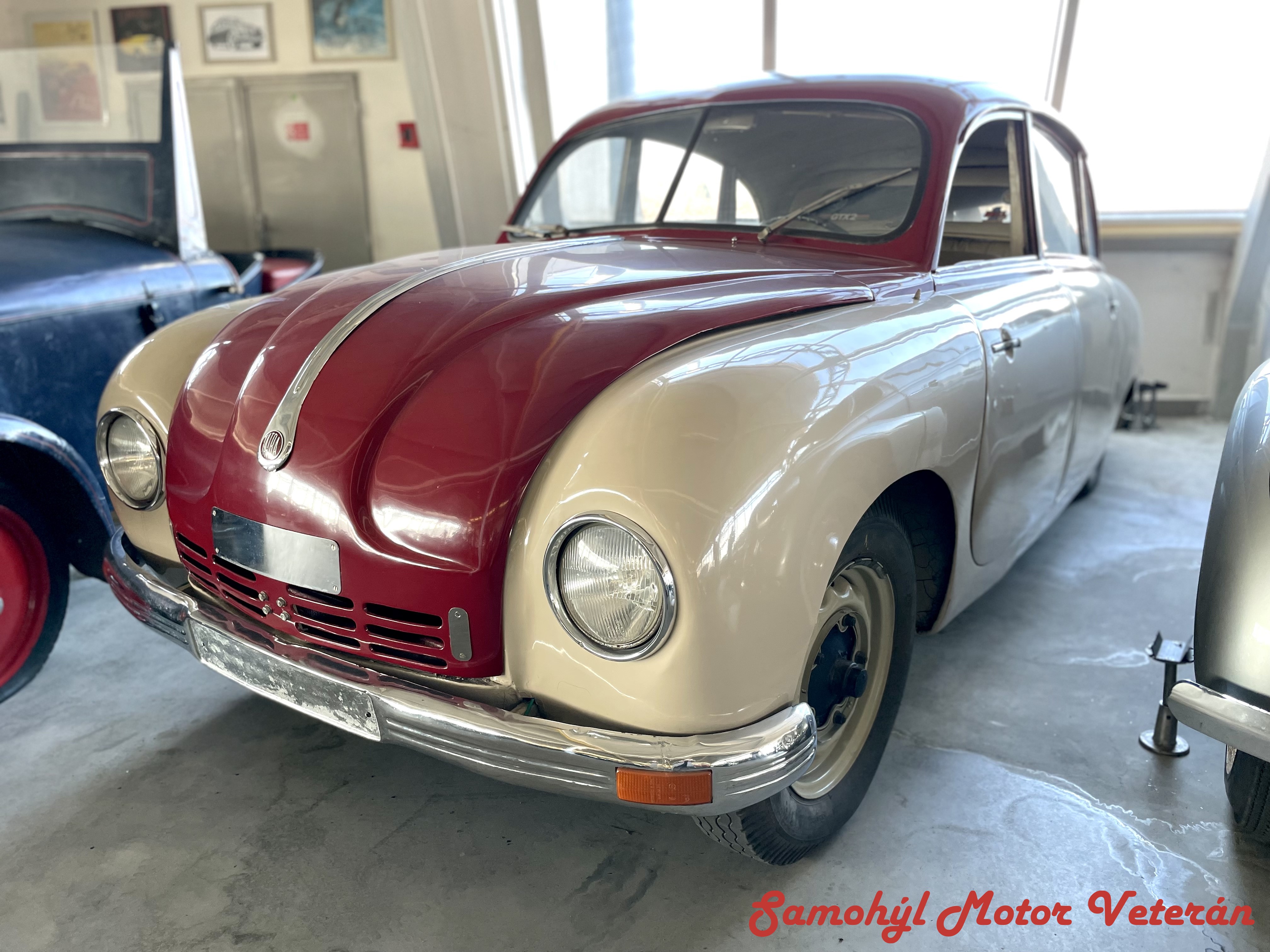
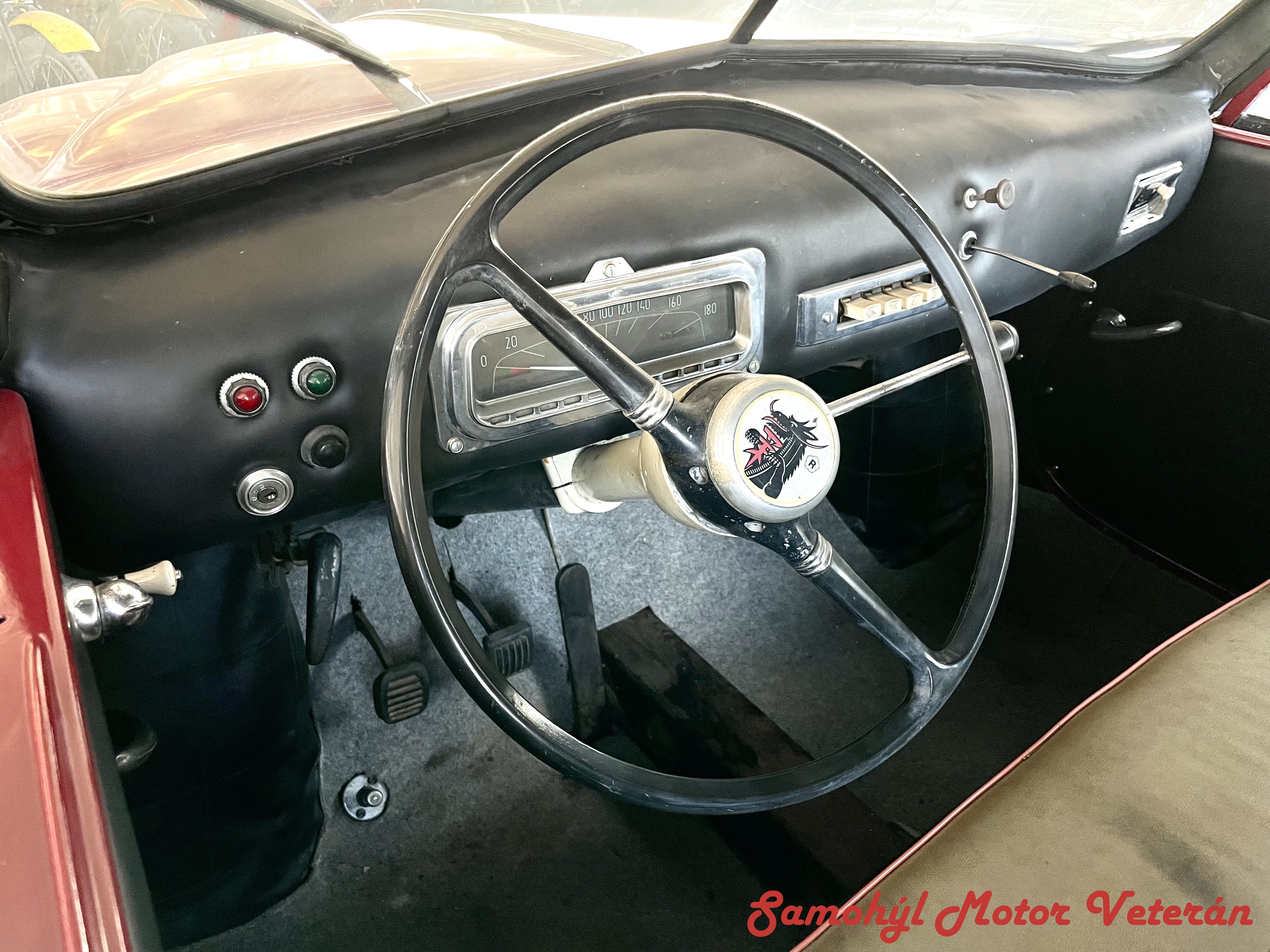
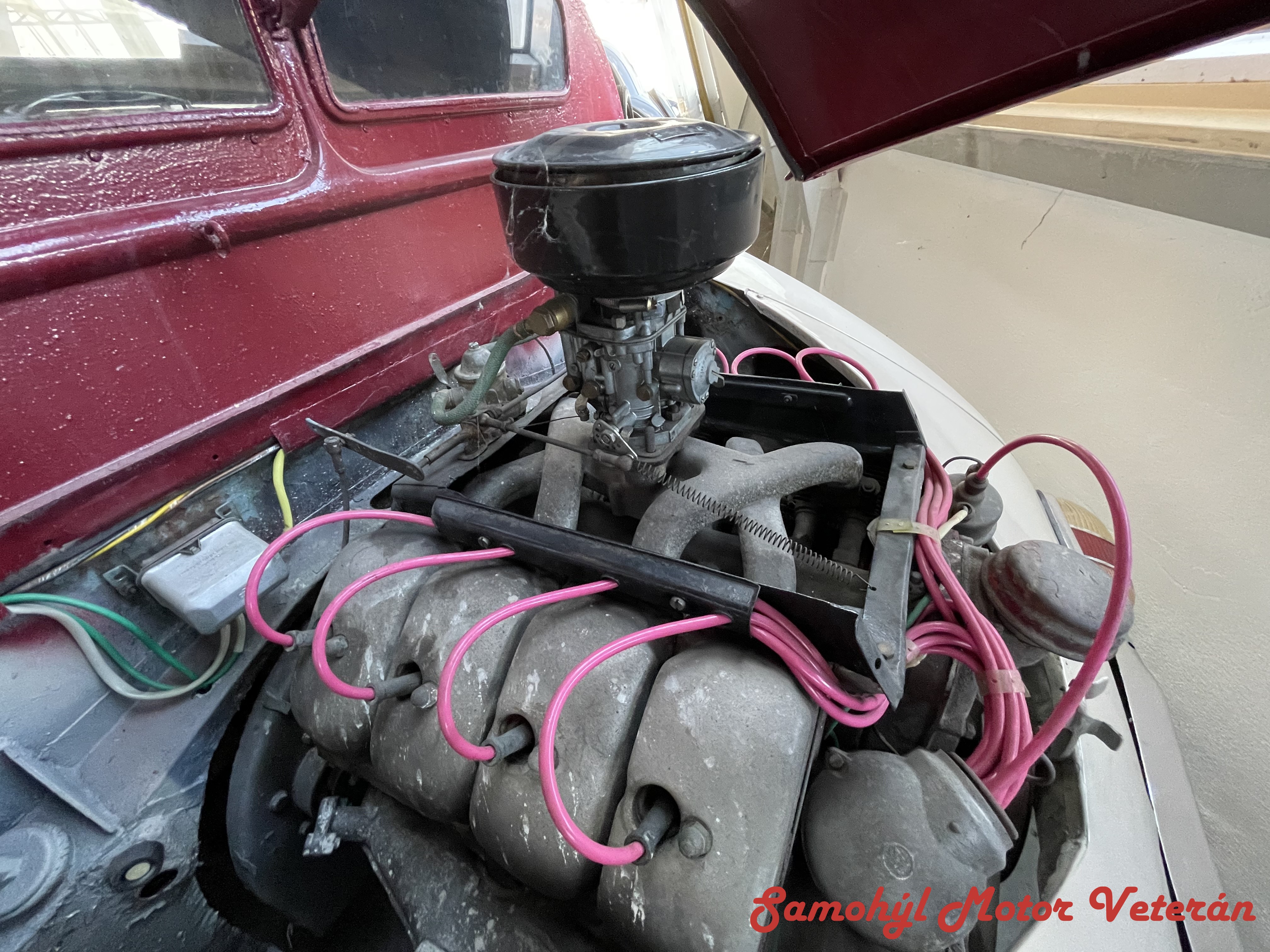
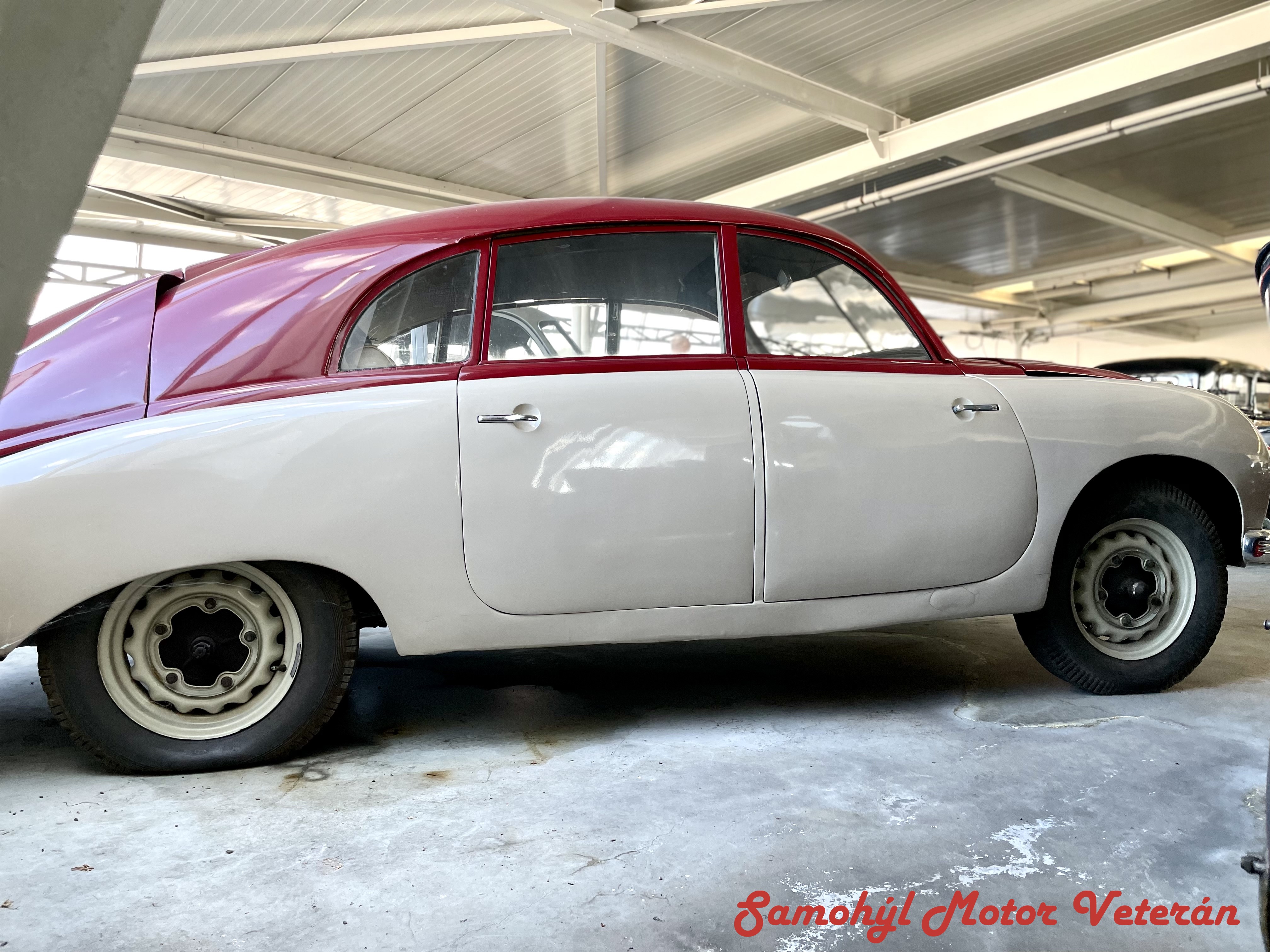
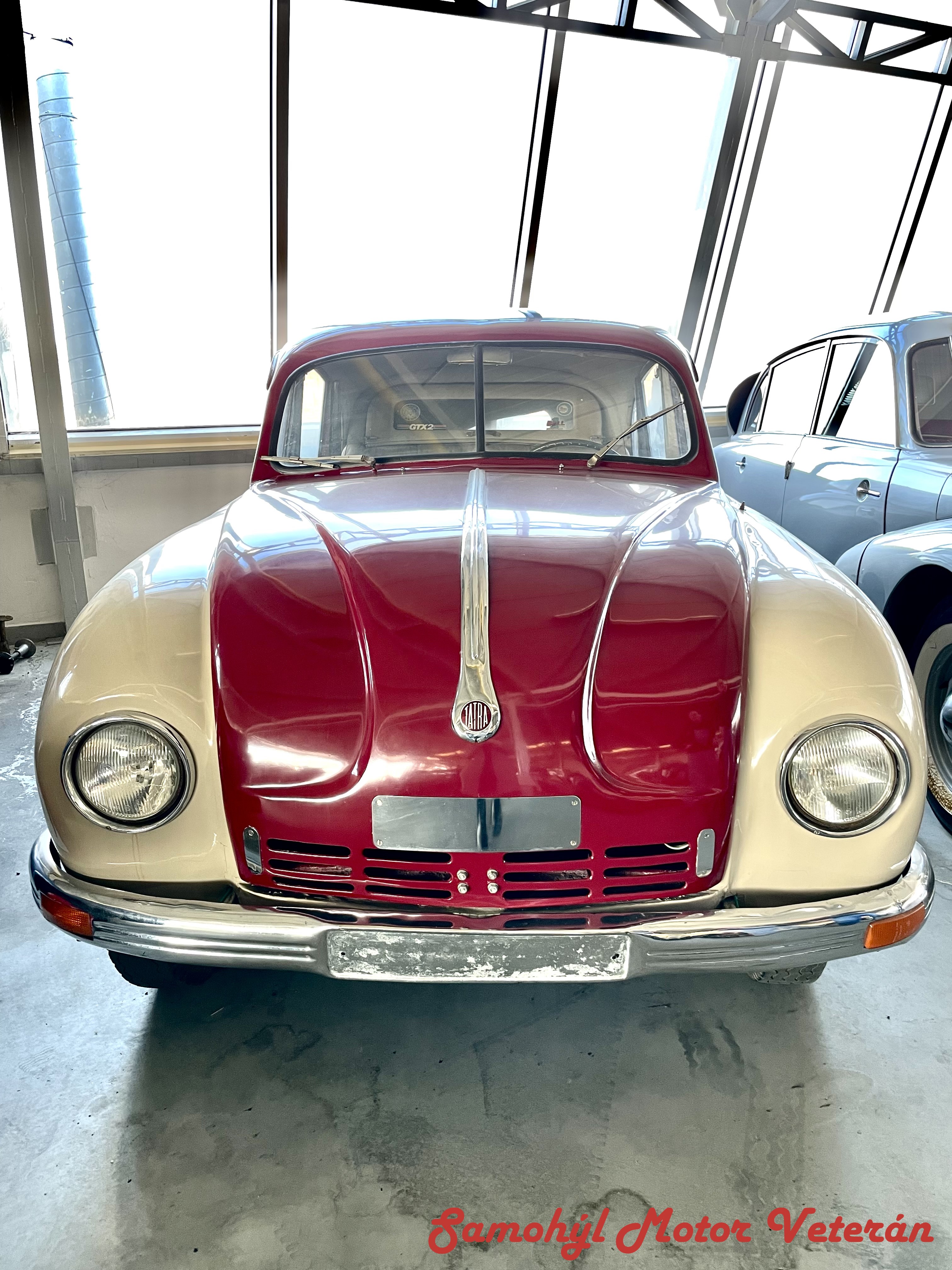
Tatra 600 Tatraplan
Year of manufacture: 1949
Power: 52 hp
Displacement: 1,952 cm3
Number of cylinders/valves: 4/2
Weight: 1,200 kg
Condition: drivable
Catalog number: 155
Introduction
The Tatra 600, also known as Tatraplán, is a mid-size passenger car produced from 1948 to 1951 by the company Tatra, n.p., and subsequently until 1952 by AZNP Mladá Boleslav. The car, featuring a streamlined body and a rear-mounted air-cooled flat-four engine, continued the tradition of aerodynamic automobiles made by Tatra. Its size corresponded to the pre-war Tatra 97 model.
Development
Originally designated as Tatra 107, the lucky “7” followed the previous aerodynamic models from Kopřivnice – T 77, T 87, and T 97. Development of the Tatraplán began at the end of World War II, intending to build upon the successes and traditions of the earlier aerodynamic cars. It was meant to be a newer, smaller, and more affordable version, also replacing the then somewhat outdated Tatra 57, whose production was ending.
The later designation Tatra 600 came from the new post-war numbering system of Tatra production, which assigned personal cars numbers beginning with 600. The name “Tatraplán” was inspired by the sleek shape resembling an airplane – an aeroplane. Some later brochures distorted this to associate the name with the two-year plan and planned economy, including the long á in the name.
Technical Specifications
The Tatraplán was characterized by a modern design for its time, featuring several advanced elements. It was one of the first cars with a pontoon-shaped body. The body was steel and self-supporting, without a wooden frame. A notable feature was the front split V-shaped windshield without a central pillar, sealed only with a narrow rubber profile.
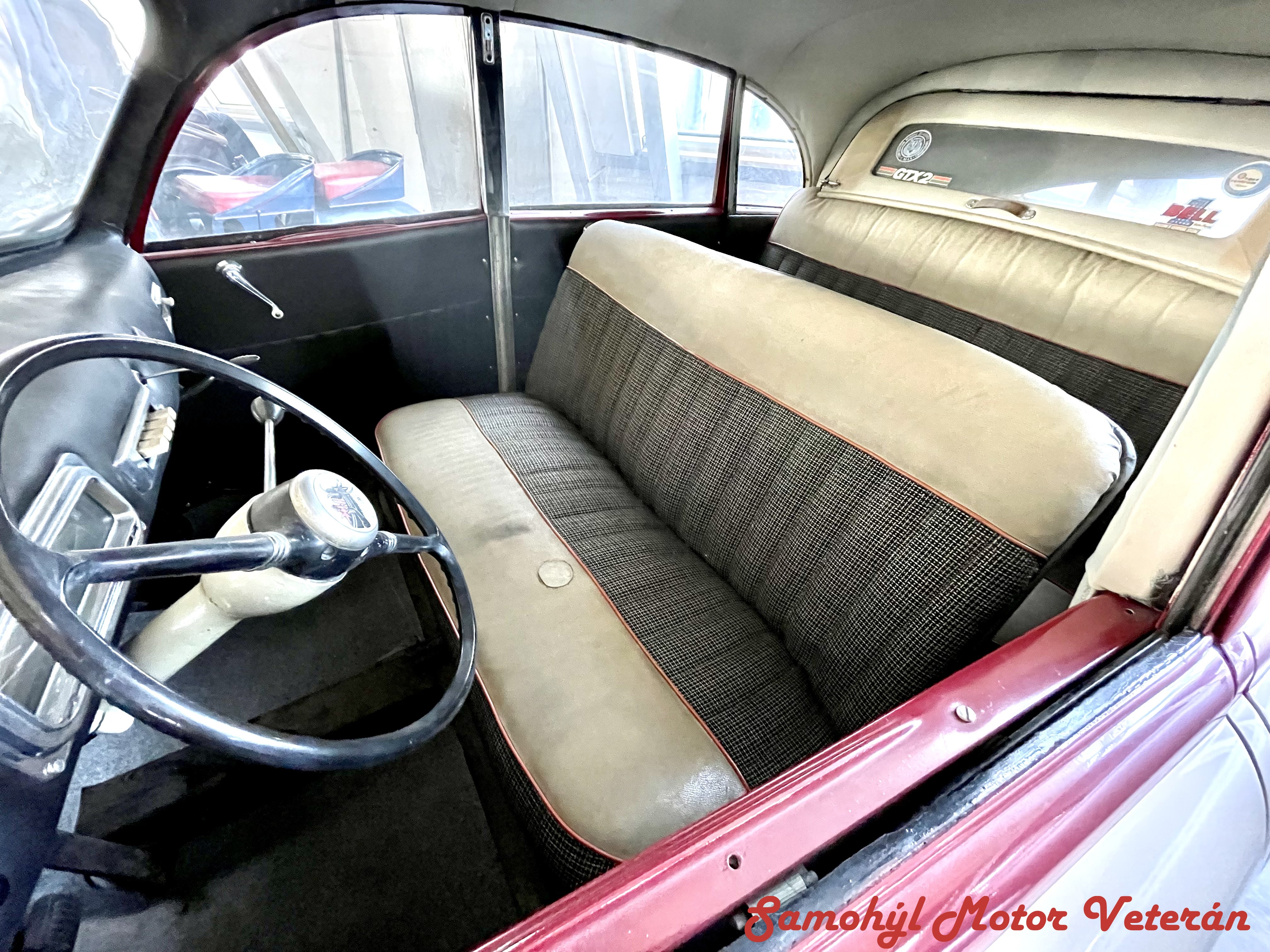
The front axle consisted of two transverse semi-elliptical leaf springs, and steering was implemented via a rack and pinion system, contributing to light and precise control. The rear axle was a swing axle, sprung by transverse torsion bars. The four-speed gearbox with synchromesh on 2nd through 4th gears was operated by a gear lever located under the steering wheel.
The car was powered by a flat-four engine with relatively large cylinder dimensions (bore 85 mm, stroke 86 mm), cooled by a single axial fan initially driven by a bevel gear, later replaced by V-belts, with the fan axis changed from vertical to horizontal. The updated engine had two carburetors, improving the car’s performance.
The entire unit was mounted on robust rubber blocks in the body. The aerodynamically designed body with recessed headlights, handles, and door hinges had a drag coefficient of 0.32 to 0.33 – a leading value for serial production cars at the time, a figure other manufacturers only reached many years later.
Thanks to this, the Tatraplán (despite its relatively small engine displacement and size) could reach speeds up to 130 km/h. In later years, with the use of the Tatra 603 engine, T 600 cars (usually in security services) were capable of speeds well over 170 km/h. During development, a prototype with a diesel engine was tested in Kopřivnice, a pioneering effort at the time. Three Tatraplán Diesel cars produced in 1949 had an output of 31 kW (42 hp) and reached speeds of 125 km/h.
Despite the somewhat louder engine, the Tatraplán was among the quietest cars inside due to good sound insulation. This was helped by the luggage compartment located behind the rear seats, separated by a partition. The front compartment was designed for small luggage, mainly housing the spare wheel (with space for two spares), tools, and fuel tank. The oil cooler was also placed at the front.
Production
The Tatraplán was also made in a sporty two-door version with an aluminum body – the Tatra 601 Monte Carlo (named after the famous rally it was meant to enter but did not) and a few open racing versions T 602 Tatraplán Sport. These cars later served as test beds for the development of the eight-cylinder 2,545 cm³ engine used in later Tatra 603 cars.
Utility prototypes with the T 600 engine mounted in the front of the body were also derived from the Tatraplán.
An interesting prototype was the T 600 convertible bodied by Sodomka in Vysoké Mýto for the 1949 Geneva Motor Show, where it attracted deserved attention. Instead of planned serial production, which could have brought valuable foreign currency from exports, the leadership decided to gift the car for J. V. Stalin’s birthday (though he likely never used it). Fortunately, the car later returned to the company museum in Kopřivnice during an exchange in the 1980s.
In 1951, the production of the Tatraplán was centrally halted by the Ministry of Industry of the planned economy and transferred to Mladá Boleslav. Tatrapláns made at Škoda (identifiable by several detail differences) quickly damaged their reputation due to a decline in build quality, leading to falling interest abroad. The decision also halted Škoda’s project, reflecting tense relations between Tatra (Moravia) and Škoda/Praga (Bohemia) at the time. Tatra was to focus only on heavy trucks, while Škoda imported conventional cars with rigid axles and ladder frames. Škoda ceased Tatraplán production in 1952. In total, 6,342 T 600 cars were produced, 4,242 of them in Kopřivnice.
Market
Although not produced in large series, the T 600 enjoyed considerable commercial success abroad, helped by its sporting achievements. The Tatraplán was exported to many European countries and even overseas. In Czechoslovakia, it mainly served as an official car for state and party officials; it was inaccessible to ordinary motorists due to the political situation after February 1948.
Trivia
Serial Tatraplán cars were driven on Czechoslovak roads for many years and abroad, imported for example to the Netherlands by the well-known company Auto Palace. Today, they are sought-after vintage cars due to their unusual and timeless design.
Car in Our Collection
The car in our collection is in fully functional, drivable condition.