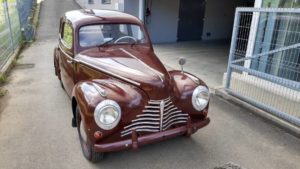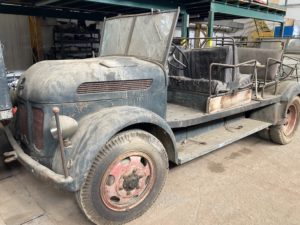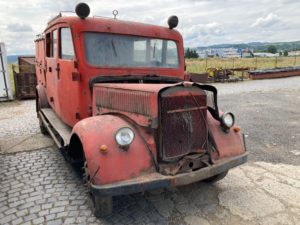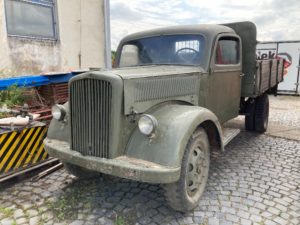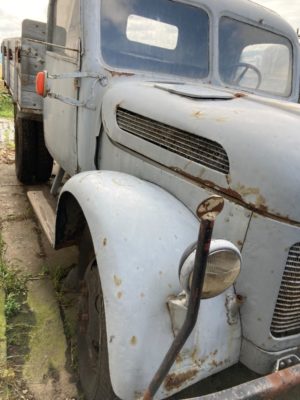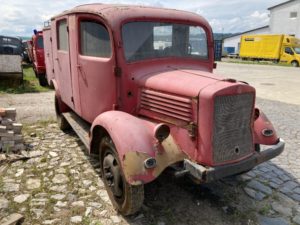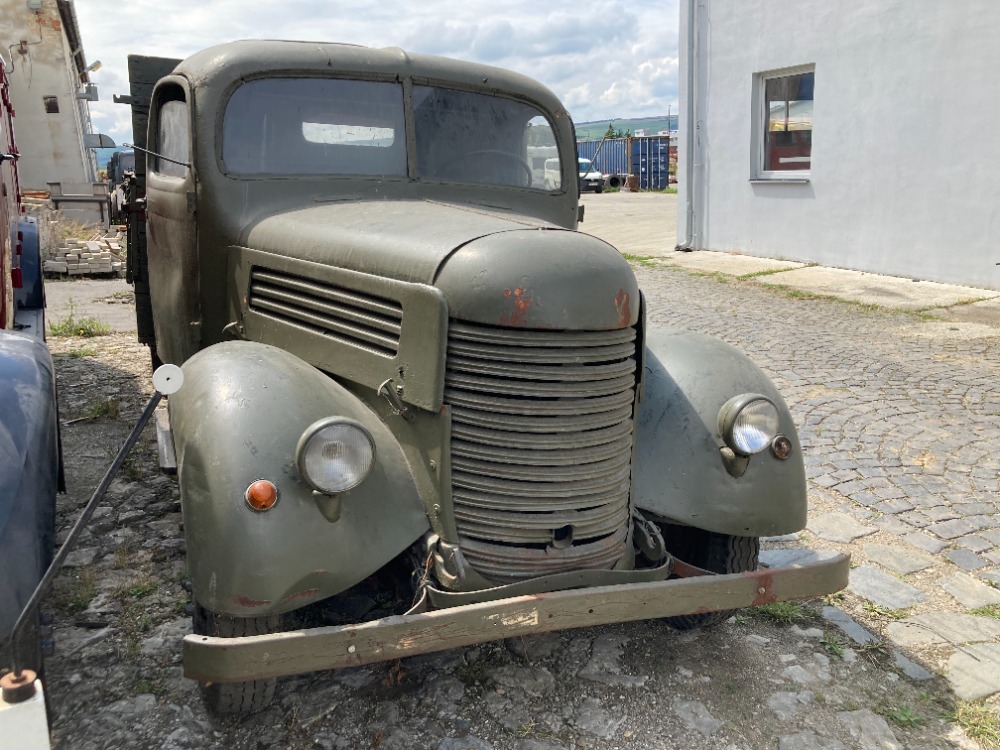
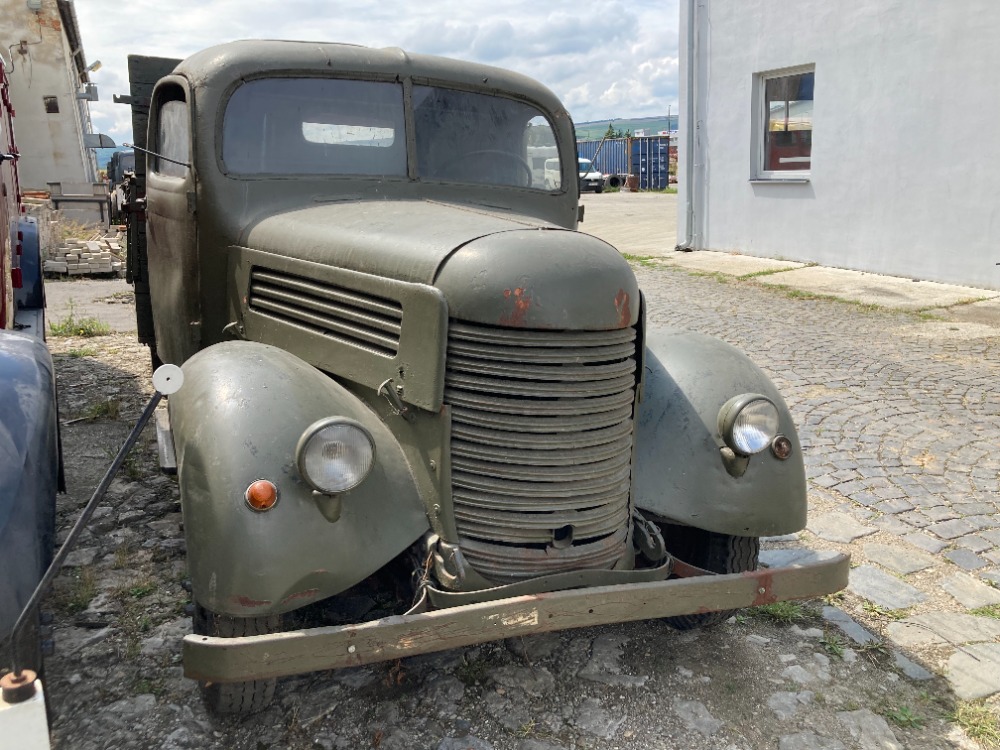
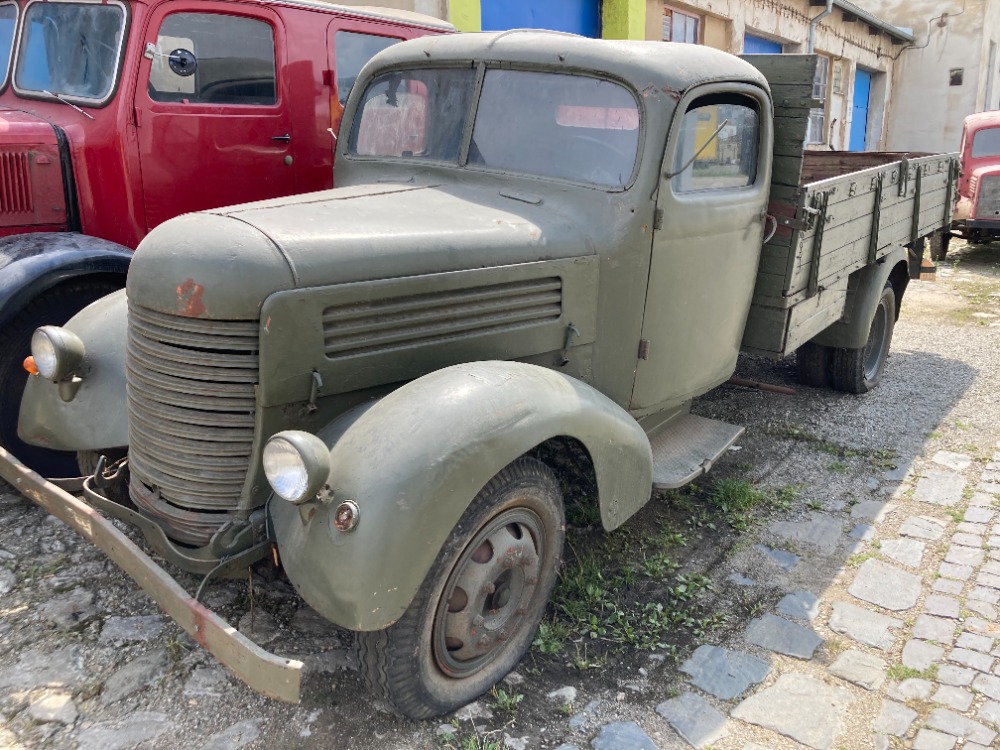
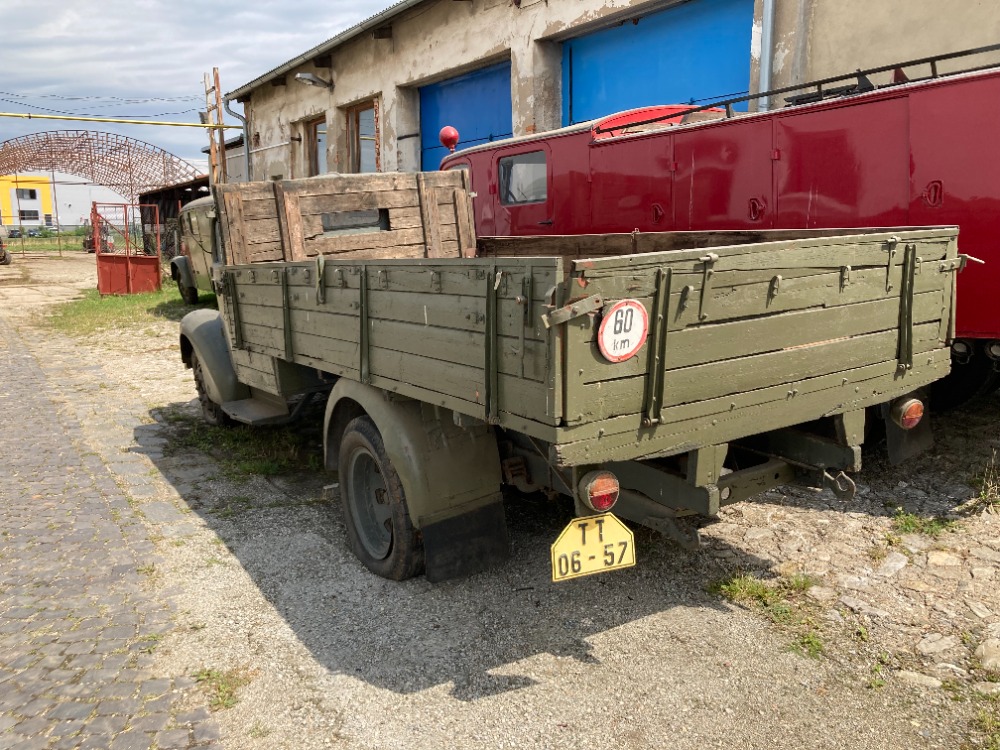
Praga RN/RND
Year of Manufacture: 1950
Power: 60 horsepower
Displacement:4,500 cm3
Number of Cylinders/Valves: 4/2
Weight: 6,300 kg
Condition:
Catalogue Number: 233
History
These were vehicles that didn’t stand out with eccentricity or innovation. Their design was classic — timeless and indestructible.
The “Erena” was developed before World War II. The designation RN stood for “Rychlý Nákladní” (Fast Truck). A parallel model, the RND, indicated a diesel engine version.
The first Praga, with a different front design, was introduced in 1933 as a 2-ton truck powered by a petrol inline six-cylinder engine producing 38 kW. The initial versions weren’t mass-produced — between 1934 and 1936, only 94 units were built.
Twelve series were produced before the war. The new RND version (Fast Diesel Truck) adopted all the improvements of its petrol-powered sibling, differing only in having a diesel engine.
Technical Specifications
The first version could carry a 2-ton payload. In 1937, Praga increased the power to 53 kW, which raised the payload capacity to 2.5 tons. The fifth series, from 1938, introduced a more rounded front and streamlined fenders.
After the war, the engine power remained unchanged, but a reinforced frame and upgraded brake system allowed a payload increase to 3 tons. This configuration remained in production until the end.
The original RN had a petrol six-cylinder engine; the diesel version had four cylinders. The modernized rounded version was produced until 1953 in Prague’s Vysočany district. It was eventually succeeded by the three-axle off-road Praga V3S, which was mainly used by the military.
No other vehicle in this category was produced in Czechoslovakia for many years, so the Praga trucks remained in service until the 1970s, when they were gradually replaced by licensed Avia A30 models.
Post-war Era
After the war, the Czechoslovak army also faced a shortage of trucks. From 1949 onward, over 4,000 Erenas were supplied for military use, despite having only rear-wheel drive. Both axles were solid and mounted on longitudinal leaf springs.
As was common, many superstructures and modifications were built on the RN chassis. Buses — in short supply after the war — were especially popular.
Czechoslovak Success
The petrol RN versions always enjoyed more popularity due to their higher speed. In 1938, Praga won a comparative trial in the former Yugoslavia. Reportedly, over 18,000 units were produced under license there, while over 40,000 were made in Czechoslovakia.
Today, the Erena is a cult classic among historical trucks. It receives great attention from collectors and participates in historic vehicle events.