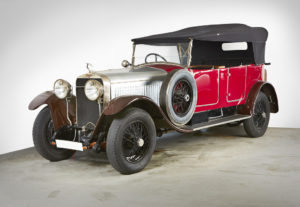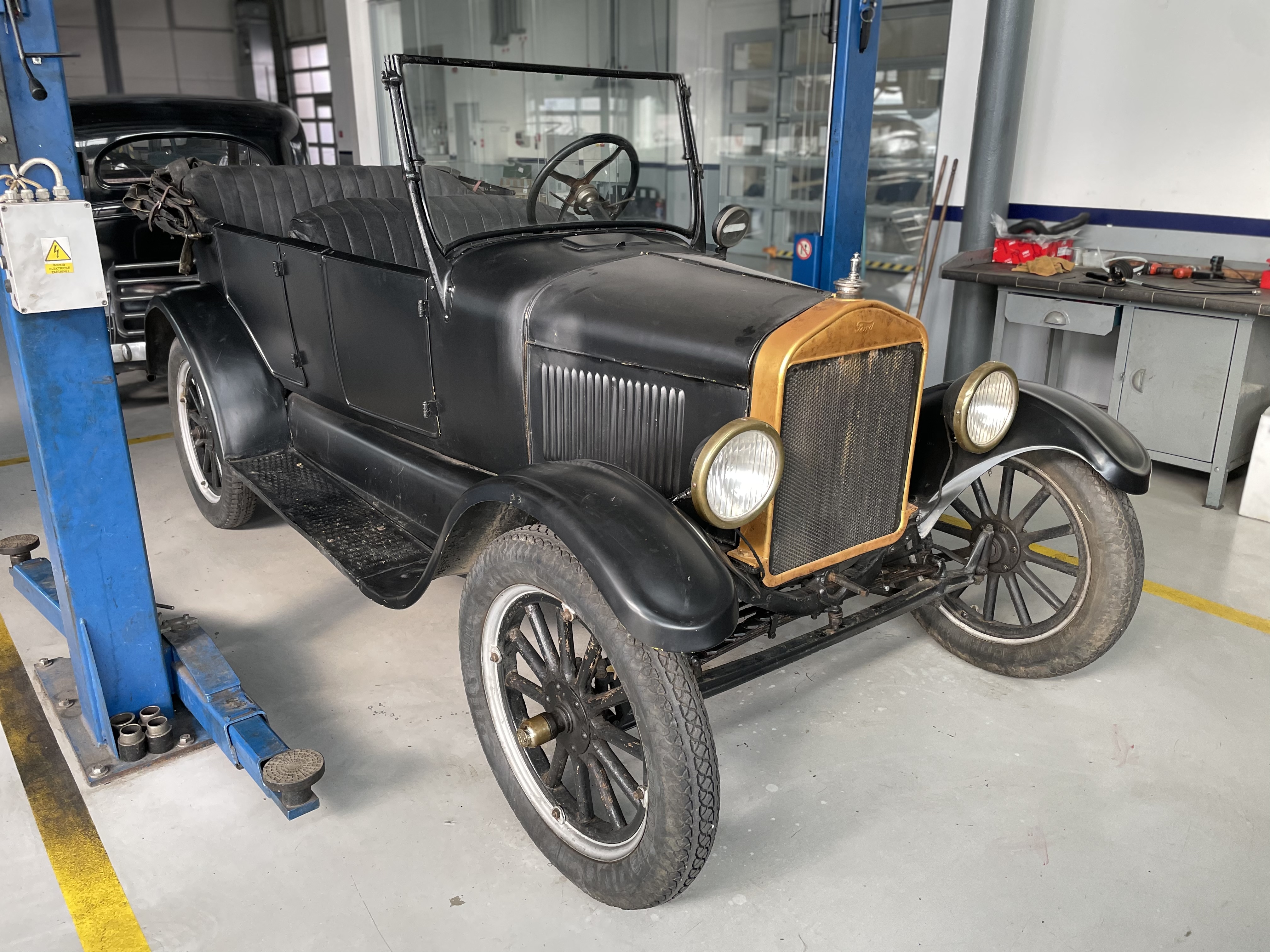
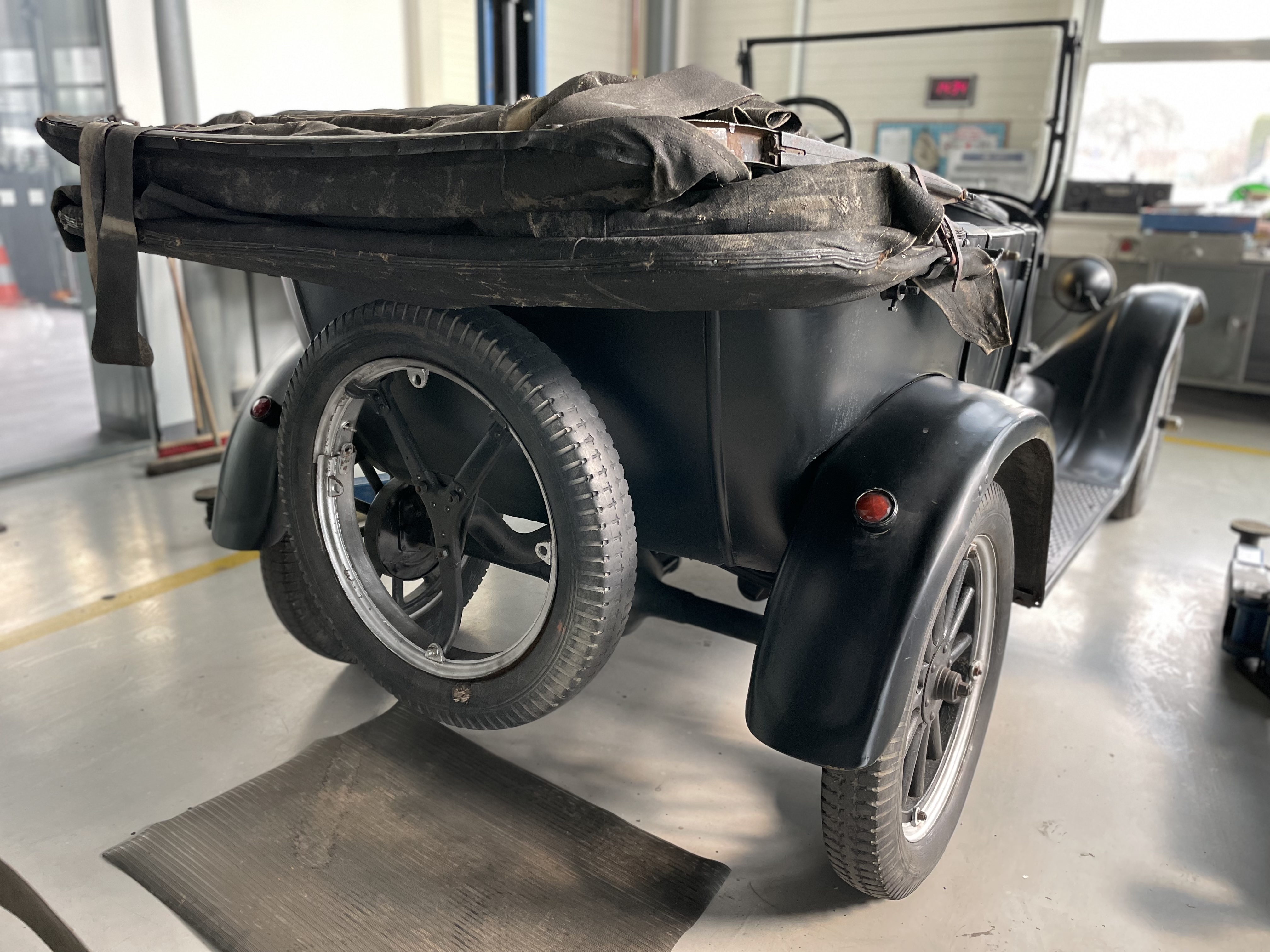
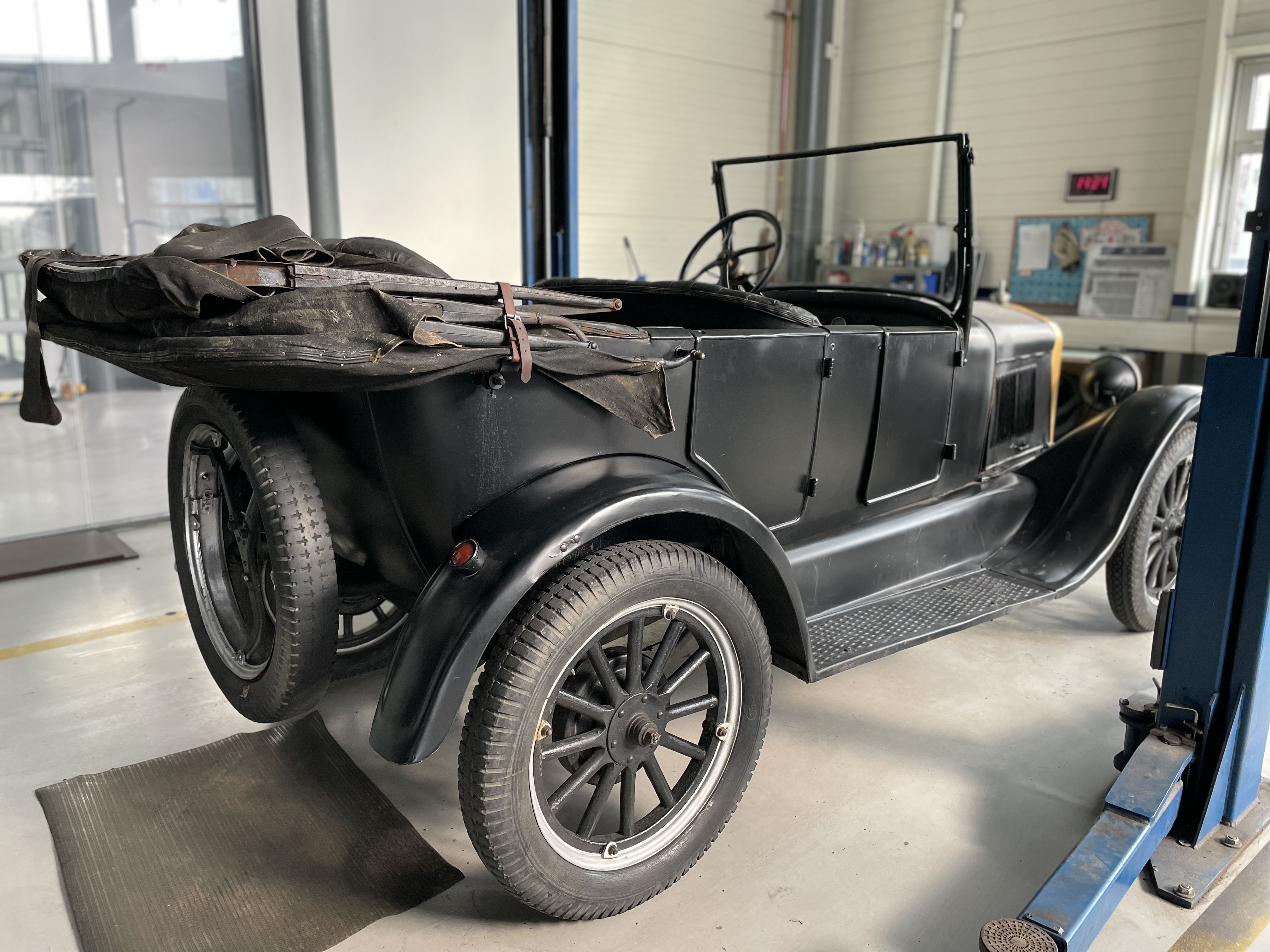
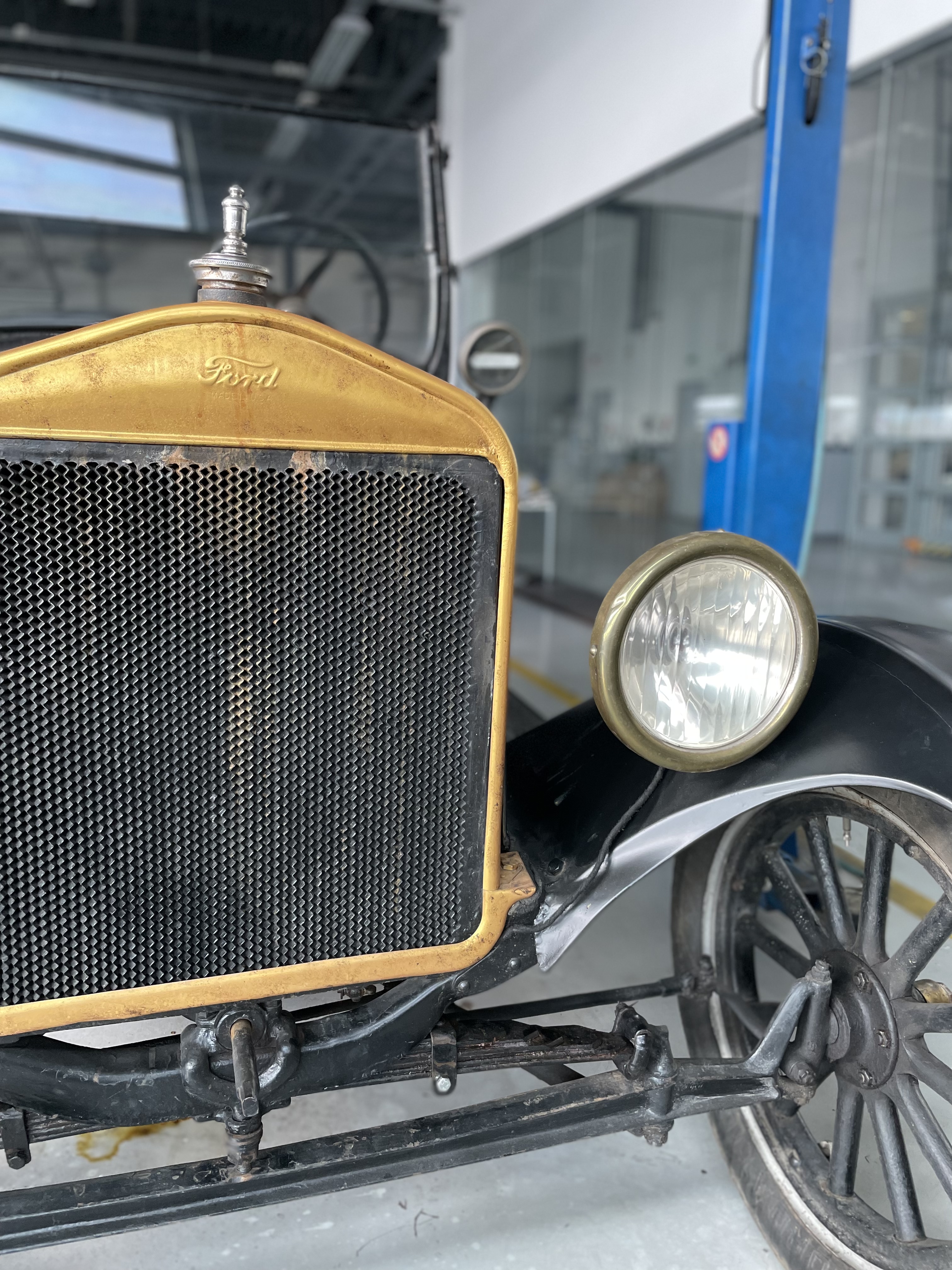
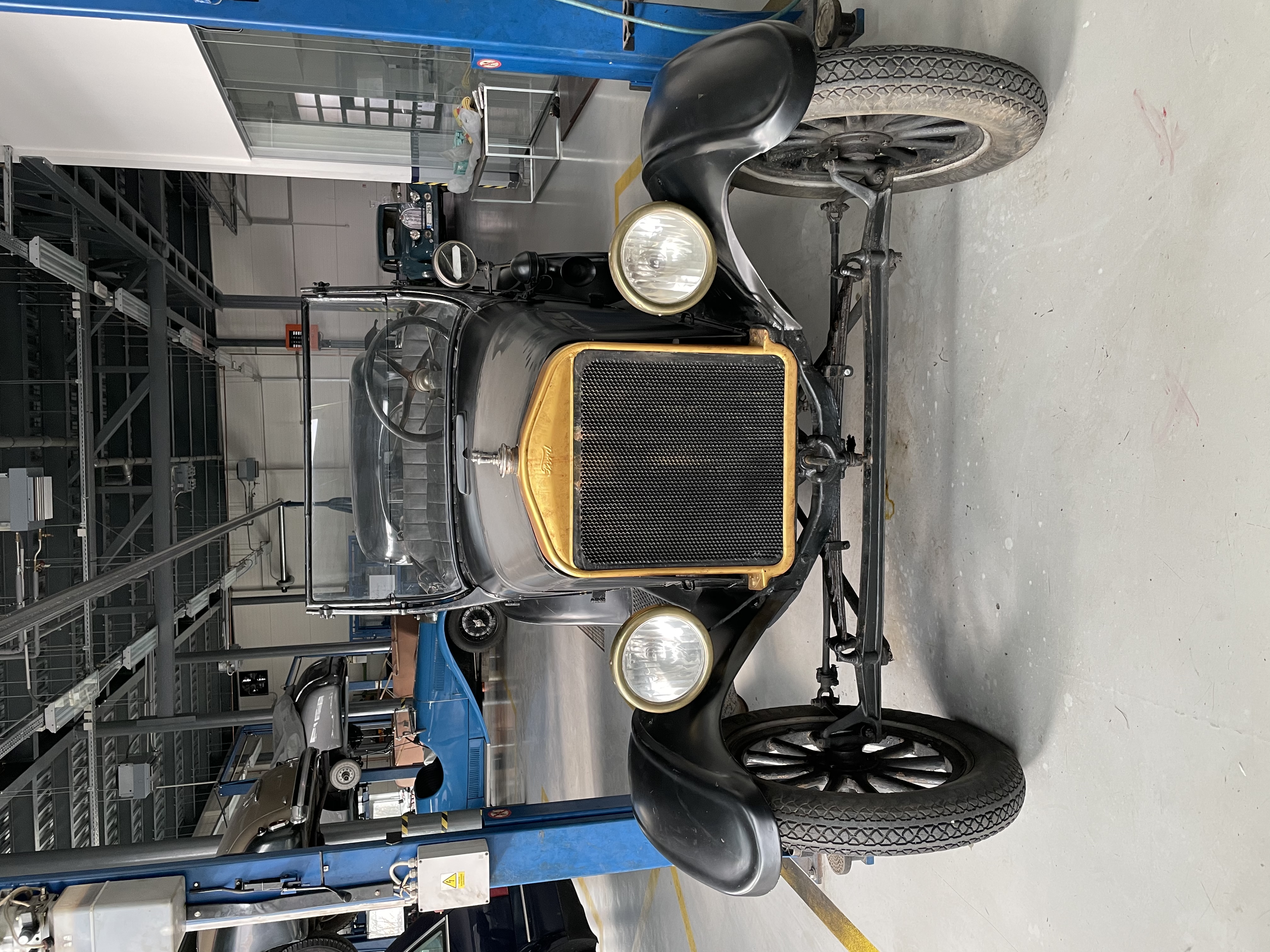
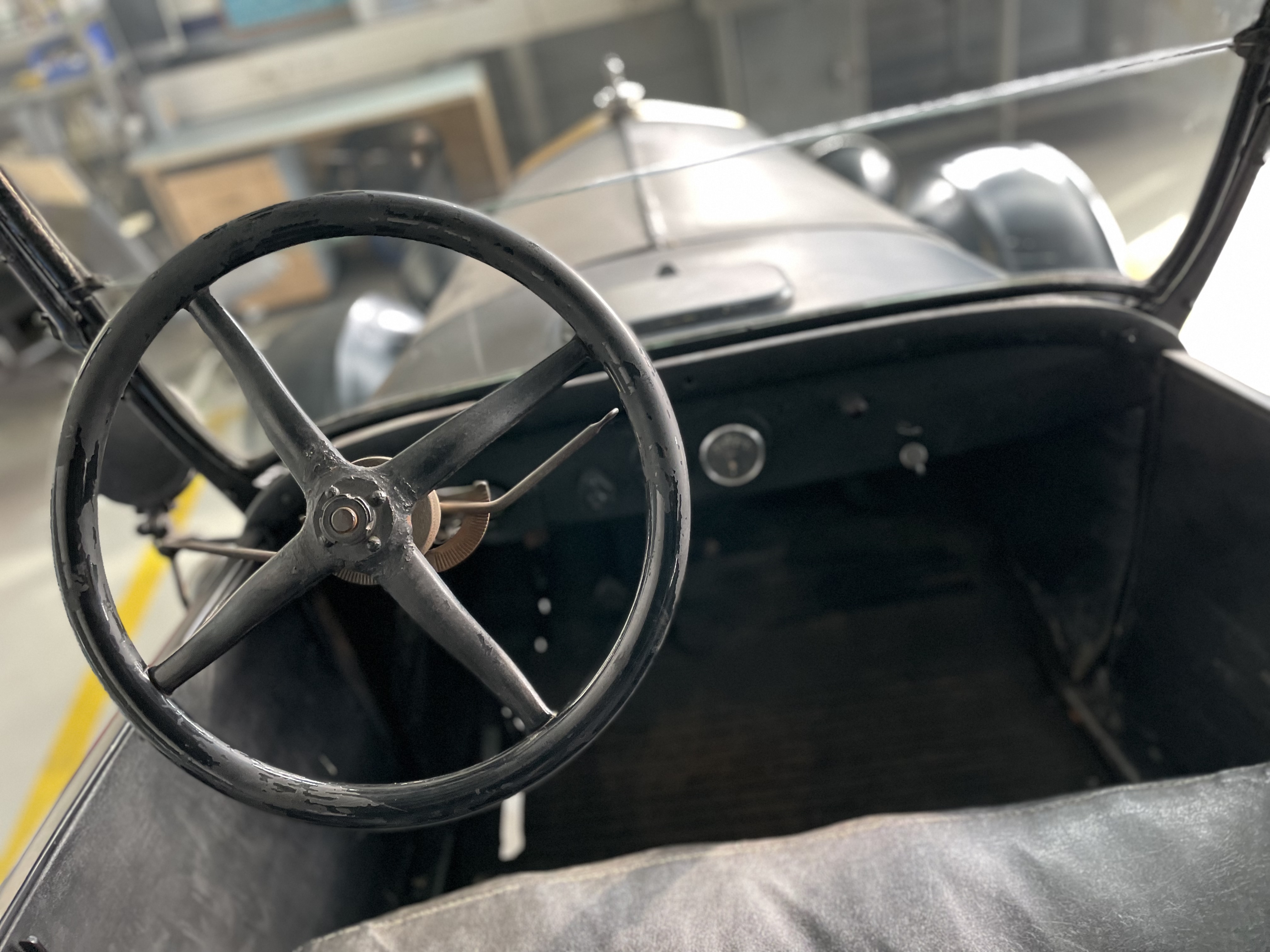
Ford T
Year of manufacture: 1925
Power: 22 hp
Displacement: 2,895 cm3
Number of cylinders/valves: 4/2
Weight: 750 kg
Condition: operational
Catalogue number: 116
Introduction
The Ford Model T was a car manufactured by the Ford Motor Company of Henry Ford from 1908 to 1927. The Model T is generally regarded as the first affordable automobile that “put America on wheels.”
Development
The series started with the Model A, but there were not 19 produced models (from A to T), as some remained only prototypes. Immediately before the Model T, the Ford Model S was produced, an improved version of the then most successful Ford Model N.
Contrary to expectations, the Ford T was not followed by Model U, but by the Ford Model A. The company publicly declared that the new car was so much better than the old one that Henry Ford wanted to start again from the letter A. In 1999, the Ford Model T was named Car of the Century, and a year later, the Model T engine was included among the top 10 engines of the century.
Technical specifications
The Model T had a front-mounted four-cylinder inline gasoline engine with a displacement of 2.9 liters producing 15 kW, with a top speed of 64–72 km/h. This small four-cylinder engine was known for its SV valve timing with an L-head design. According to Ford Motor Company, the Model T had a fuel consumption of approximately 11.1 to 18.7 liters per 100 km. The engine could run on gasoline or ethanol.
The car was rear-wheel drive. The transmission was called a three-speed, but in reality had 2 forward speeds and one reverse gear. It was operated using three pedals and a lever located by the driver’s seat. Throttle was controlled by a lever on the steering column. The left pedal was used for gear selection. When pressed and held forward, low (slow) gear was engaged. Held in the middle position was neutral. Neutral could also be engaged by pulling the lever into a vertical position. When the lever was pushed forward and the driver lifted their foot off the left pedal, the Model T engaged the higher gear. The car could drive this way even without any pedal pressed. There was no clutch pedal.
Wooden, spoked steel wheels were available in 1926 and 1927. Tires had a diameter of about 76 cm; front tires were 5 cm wide, rear tires 8.9 cm wide. The wheelbase was approximately 2,515 mm.
Production
When the model was introduced, it used the production methods of its time, being assembled by hand, and production was small. It took 12.5 hours to build one car; after the assembly line was introduced, it took 1 hour and 33 minutes using less labor. In 1914, Ford produced more cars than all other manufacturers combined. The Model T was a huge commercial success and when Henry produced his 10 millionth car, 9 out of 10 cars worldwide bore the Ford brand. It was so successful that Ford did not need to spend on advertising between 1917 and 1923. A total of 15,007,033 Model T vehicles were produced, more than almost any other model of the century.
During production, several major design changes occurred. One of the first changes involved using brass for the radiator and headlights. The horn and some other details were also brass. Many early cars had open bodies, which were cheaper to produce than closed ones. Until the 1911 model year, American-made cars had no doors for the driver. Later model years included closed bodies such as sedans, coupes, and in 1917, a truck chassis. The truck chassis, called the Ford Model TT, differed mainly by having a reinforced frame and a wheelbase extended by two feet. Many companies built bodies on these chassis, resulting in various tankers, buses, fire trucks, and other superstructures.
It is often said that Ford was only produced in black because black paint dried faster than other colors, allowing faster production—no need to wait long for paint to dry. Over 30 different types of black paint were available. Henry Ford famously said, “Any customer can have a car painted any color that he wants so long as it is black.” The Model T was produced in other colors, but only from 1908 to 1914 and again in 1926 and 1927. The different types of paint were justified by the need to meet various conditions for applying paint on different parts and different drying times depending on paint color and method used. Ford’s technical records indicate black was chosen for its cost and durability.
Market
The standard four-seat open tourer for the 1909 model year cost $850; comparable cars at that time cost $2,000 to $3,000. In 1913, the price dropped to $550, and in 1915, it reached $440. In the 1920s, the price fell as low as $300.
Sales
The Ford Model T was the first automobile produced simultaneously in multiple locations worldwide. The first Model Ts outside America rolled off the lines in the United Kingdom, followed by production in Germany and various South American countries, including Argentina and Brazil.
Trivia
The Model T appeared in many Laurel and Hardy films. In the 2006 film Cars, one of the residents of Radiator Sp