Tatra 87
Year of manufacture: 1946
Power: 75 hp
Displacement: 2,968 cm3
Number of cylinders/valves: 8/2
Weight: 1,490 kg
Condition: drivable
Catalog number: 158
Introduction
The Tatra 87 is an upper-class automobile manufactured by the Czechoslovak car company Tatra between 1937 and 1950. It is a luxury aerodynamic car and the successor to the T 77 A model.
Development
In 1936, the first two T 87 prototypes were produced for testing, followed by another five vehicles in 1937 as a verification series. The Tatra 87 was officially introduced in 1937. From 1938, the T 87 was manufactured in series. In 1940, two convertibles were also made for possible army use. After the war, serial production of the T 87 continued with minor body modifications until 1950.
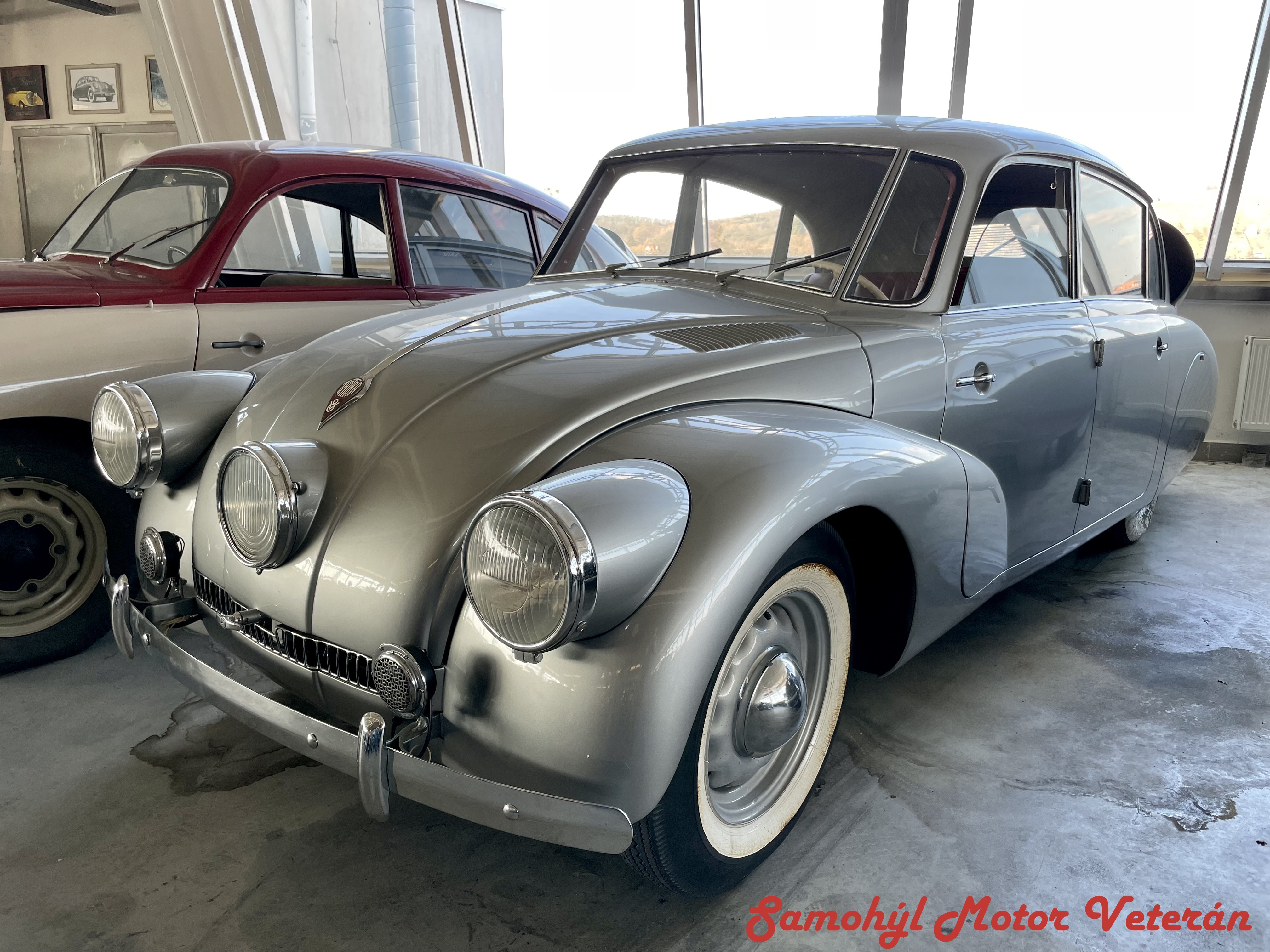
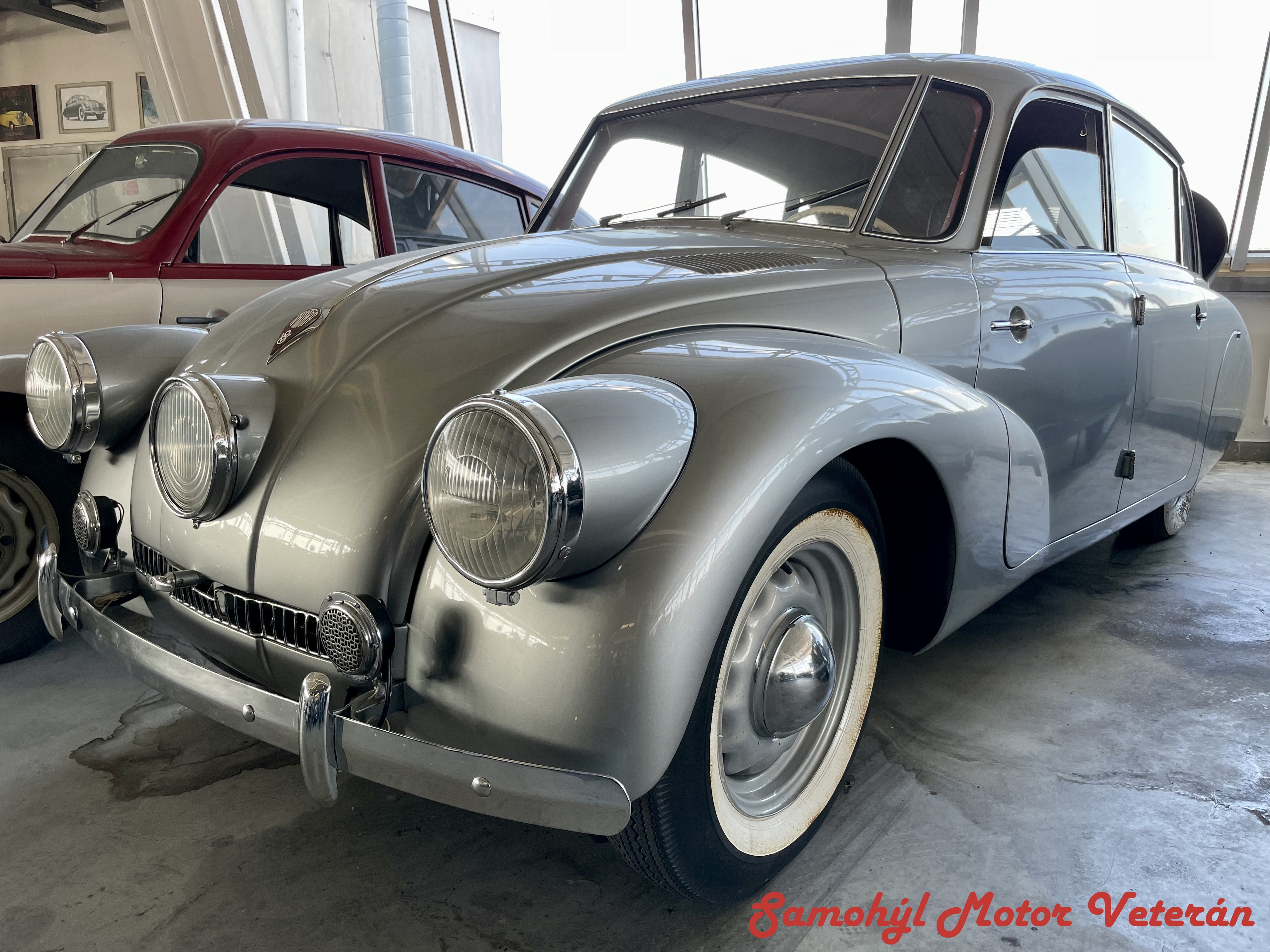
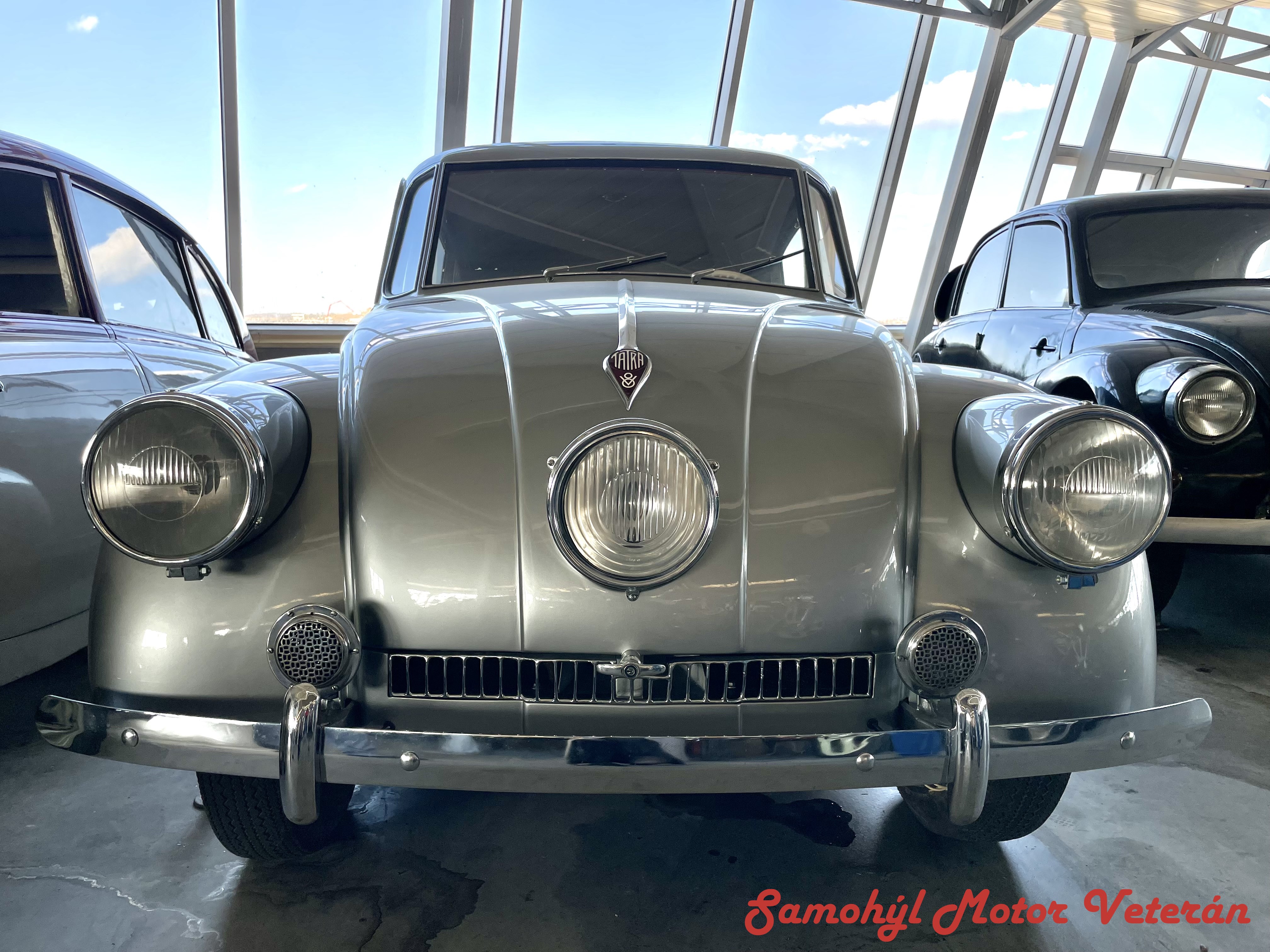
In 1948, the front part of the body was modernized; headlights were recessed into larger wheel arch bulges, flush with the protective glass. The cars received new bumpers that formed a more compact unit with the body. This model also came standard with a sliding roof section over the front seats. This modernization was designed by František Kardaus. After the update, the central headlight became steerable and was controlled from the dashboard in the standard version; in the premium version, it was linked to the steering wheel. The car was delivered in this form until 1950, exclusively for the needs of state and party organizations.
Technical specifications
Compared to its predecessor, the new car was significantly lighter, while the engine displacement was increased to 2,968 cm3. The result was a power output of 55 kW (75 hp) at 3500 rpm and a maximum speed of 155 km/h. The type 87 was also shorter and narrower with a shorter wheelbase. The weight reduction was mainly achieved by using lightweight materials and alloys, resulting in a curb weight of 1,490 kg.
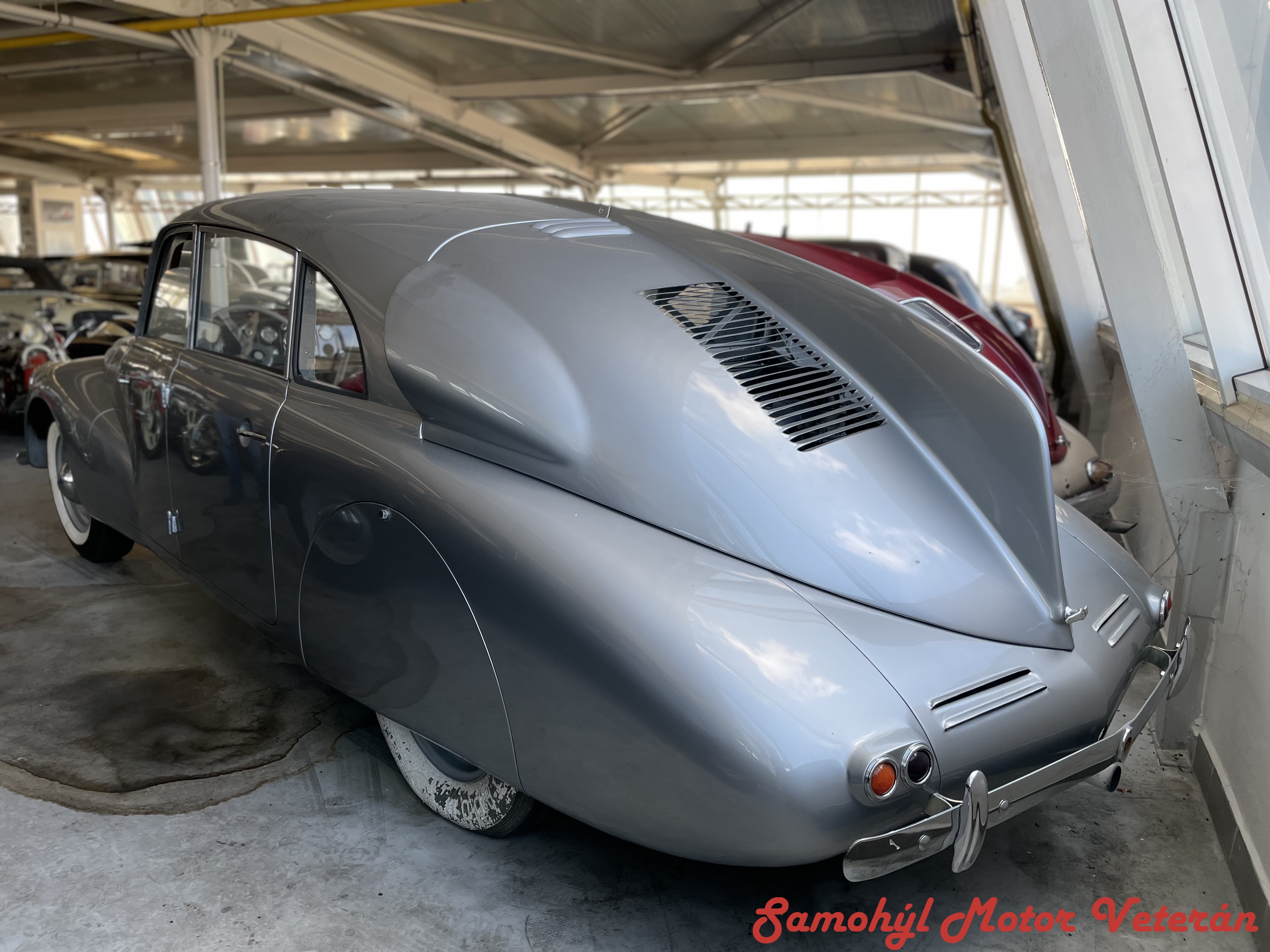
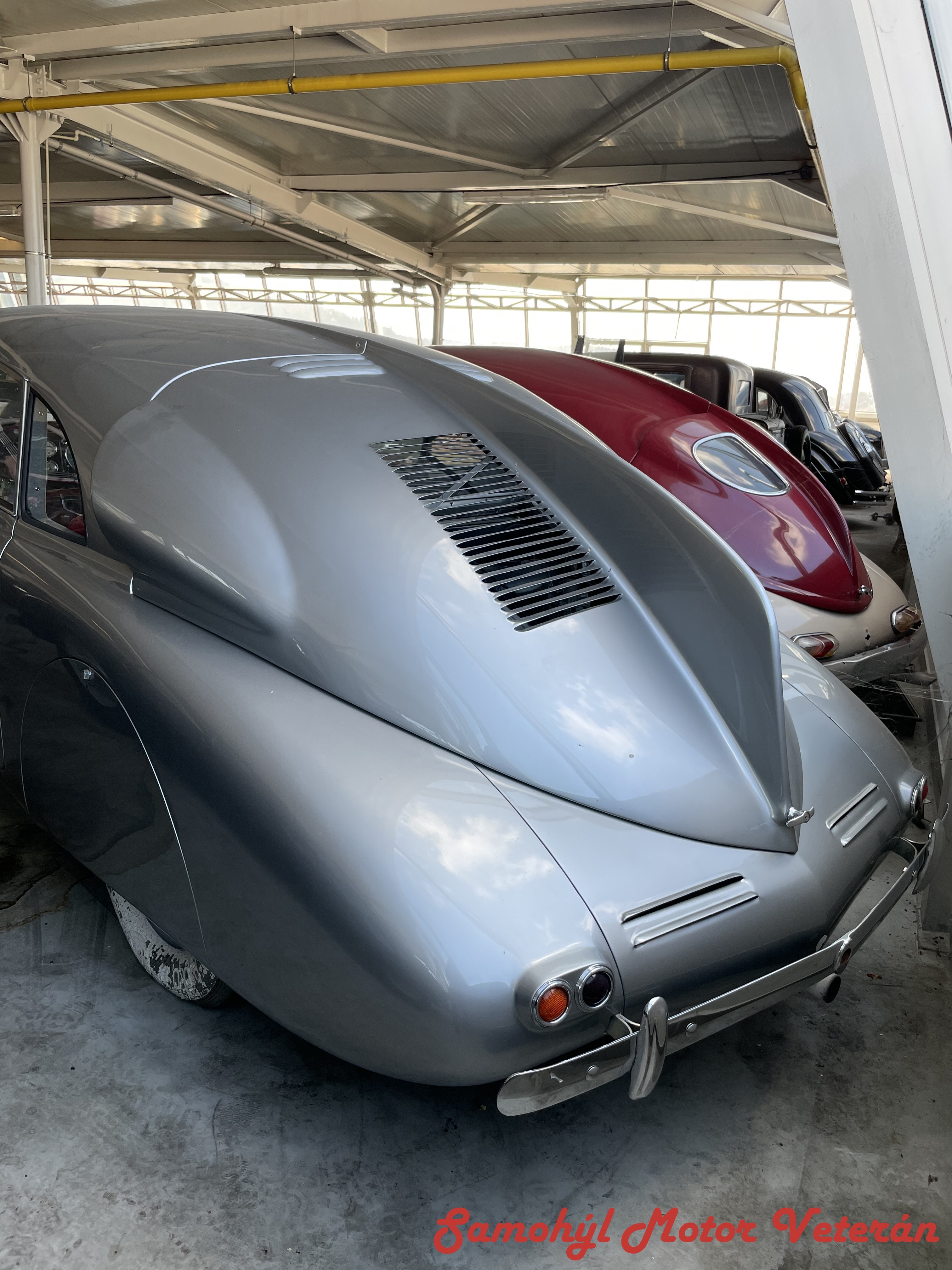
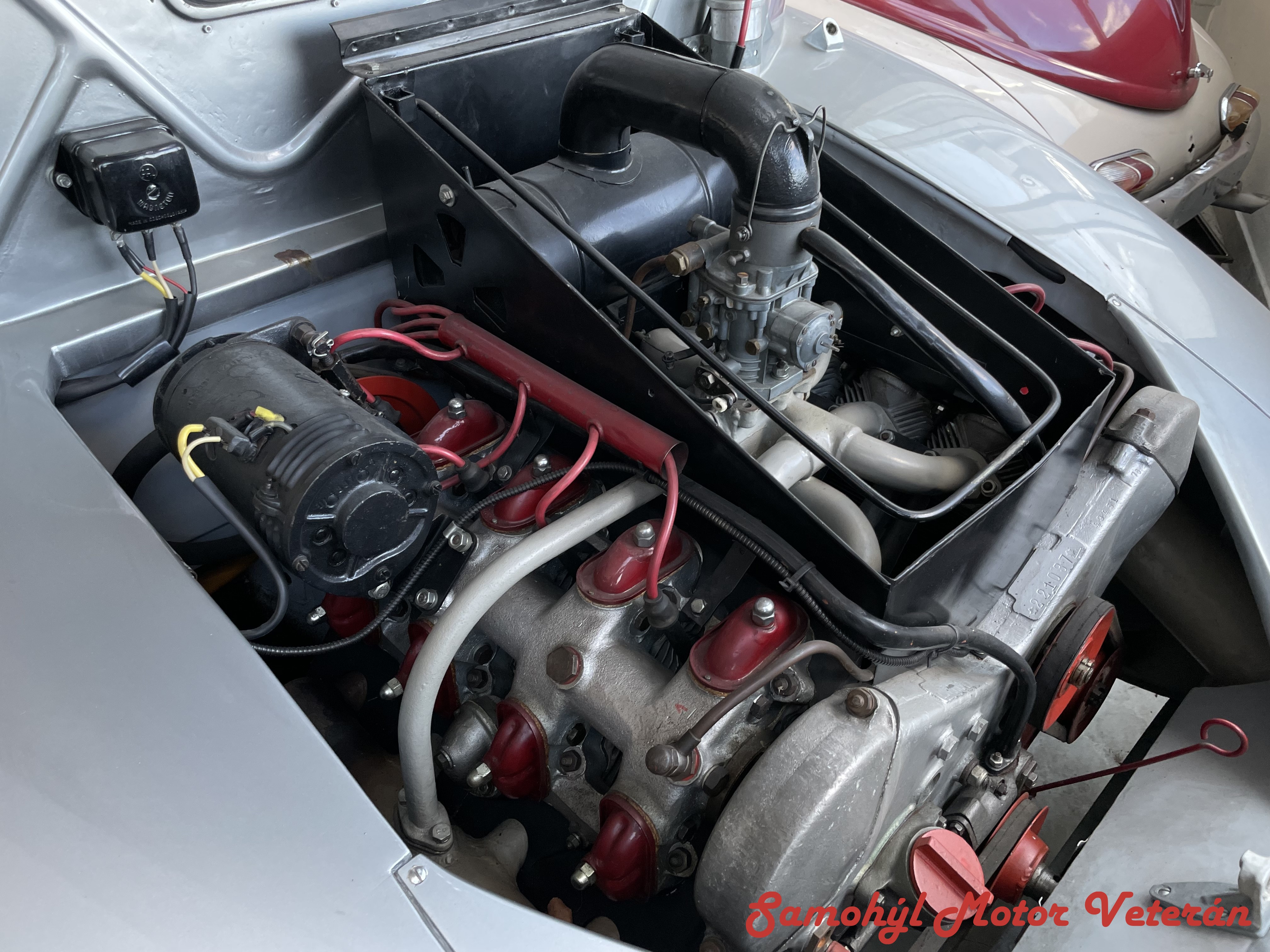
Compared to its predecessor, the T 87 had improved oil cooling; the engine was equipped with a full-flow oil filter, a ram-air oil cooler, and a double-barrel carburetor. The engine was located under an aerodynamically further improved rear hood with a stabilizing fin-shaped spoiler and powered the rear wheels. Next to the accelerator pedal, there is a button that the driver has to press approximately every 100 kilometers to pump additional oil into the engine and lubricate critical chassis points.
The Tatra 87 features a unique all-metal aerodynamic body (except for the door frames, which are wooden—as wooden construction was commonly used in most cars at the time), designed by Hans Ledwinka together with Erich Übelacker, based on the Tatra 77, which was the first car designed with an aerodynamic body concept. The body design was also influenced by Hungarian Paul Jaray, who designed the famous German airships Graf Zeppelin. The fin mounted on the sloping rear of the car helped split airflow to both sides of the vehicle, an idea later adopted by the aviation industry.
The car has rear wheel covers to reduce air turbulence around them. The windshield, originally intended to be panoramic, is divided into three parts; since manufacturing was unsuccessful, it was made of three flat panes. This car had a drag coefficient of 0.36 when tested in a Volkswagen wind tunnel in 1979; a 1:5 scale model tested in 1941 had a drag coefficient of 0.244.
The car has a central load-bearing frame that splits at the rear into a Y-shape. The wheels are independently suspended and measure sixteen inches, with the front axle supported by two semi-elliptical leaf springs and the rear by swing half-axles with quarter-elliptical springs. Many design features of the Tatra 87, later the V570 prototype and subsequently the T97, were copied by later car manufacturers. For example, Ferdinand Porsche was heavily influenced by the Tatra 87 and 97 and was subsequently sued by Tatra.
Between 1950 and 1953, some T 87 cars were fitted with the new T 603 A engine, later used in the “six hundred threes.” The engine provided sufficient power for the car to reach a maximum speed of nearly 170 km/h. These cars were labeled Tatra 87-603.
Production
A total of 3,023 vehicles of this type were produced over thirteen years (with production interrupted due to World War II), including 1,371 before 1945 and the remaining 1,652 after 1946. The highest production was in 1948, around 700 cars. The model was also successfully exported to countries such as Hungary, Romania, the USSR, Belgium, Germany, Austria, France, Sweden, South Africa, Egypt, Argentina, and even Australia. The successor to the T 87 was the more modern T 603.
Market
When introduced in the 1940s, the new car’s price was 25,000 Swiss francs.
Trivia
The Tatra 87 was highly regarded by Wehrmacht officers during World War II for its high speed and handling, suitable for driving on the German highways of the time—the Autobahns. The Minister of Armaments and Munitions Fritz Todt even stated: “This 87 is a car for the Autobahn…”. The car was also known as the Czech secret weapon because during high-speed accidents it killed so many officers that the Wehrmacht eventually banned all officers from driving the Tatra 87. The car had a light front end, making it easy to control at first glance even without power steering, but at high speeds, the car could disobey the driver due to weight placed on the rear.
Another interesting fact is that in 1947, travelers Jiří Hanzelka and Miroslav Zikmund, who met at university and became inseparable friends, decided to support the car company’s sales and fame worldwide. They embarked on expeditions in the Tatra 87 to Africa, South, and Central America. They had planned the world tour before the war, which disrupted their plans, and only after the war did they receive financial and political support, including from Tatra (for which they became sales representatives). They set out on April 22, 1947, from Opletalova Street in Prague, sailed via Marseille to Morocco, traveled through Egypt, Sudan, Ethiopia, and ended in South Africa.
On their journey, they had to replace the Tatra once, not due to technical problems but because of a serious accident in Libya. The original silver Tatraplán with recessed headlights was rendered immobile. They continued their journey with a new car. In Africa, they were also the first to cross the Nubian Desert by car and reached the summit of Kilimanjaro.
After their adventure in Africa, the duo moved to South America, starting their journey in Argentina and continuing to Mexico. They wanted to get to the USA, but the political atmosphere of the late 1940s and early 1950s, heightened by the Cold War, prevented this. Neither traveler received visas, and Hanzelka also broke his arm. Thus, they returned to Czechoslovakia in November 1950 with the Tatra 87, which was no longer the same country they had left.
Although the Communist Party was the main force of the National Front already in 1947—Klement Gottwald was prime minister at the time—neither of the two experienced the communist coup in February 1948 directly in Czechoslovakia. Many orders the duo secured abroad during their expedition were never fulfilled. Production of the Tatra 87 ended at the end of 1950, and in Kopřivnice, due to the central plan, production shifted mainly to trucks, and passenger cars became marginal.
Hanzelka and Zikmund brought back from their first expedition with the Tatra 87 about 120,000 slides, around 150 films, and produced numerous radio reports and travelogues. They traveled through 44 countries and covered nearly 62,000 kilometers in the Tatra 87 alone. Their original car, now a national cultural monument, can still be seen at the National Technical Museum in Prague.
Car in our collection
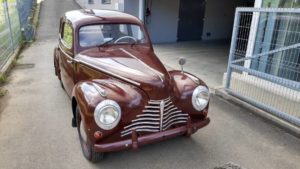
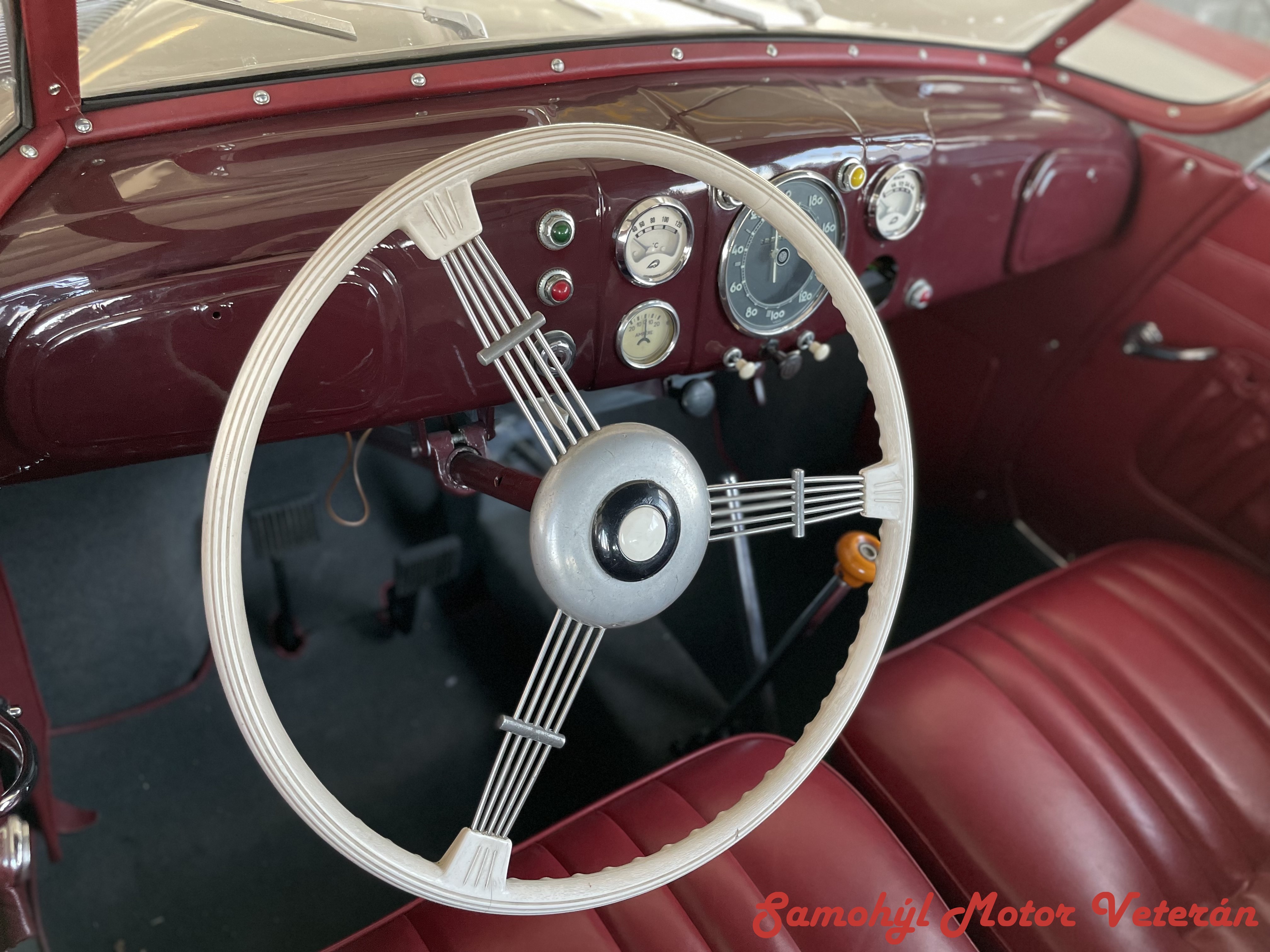
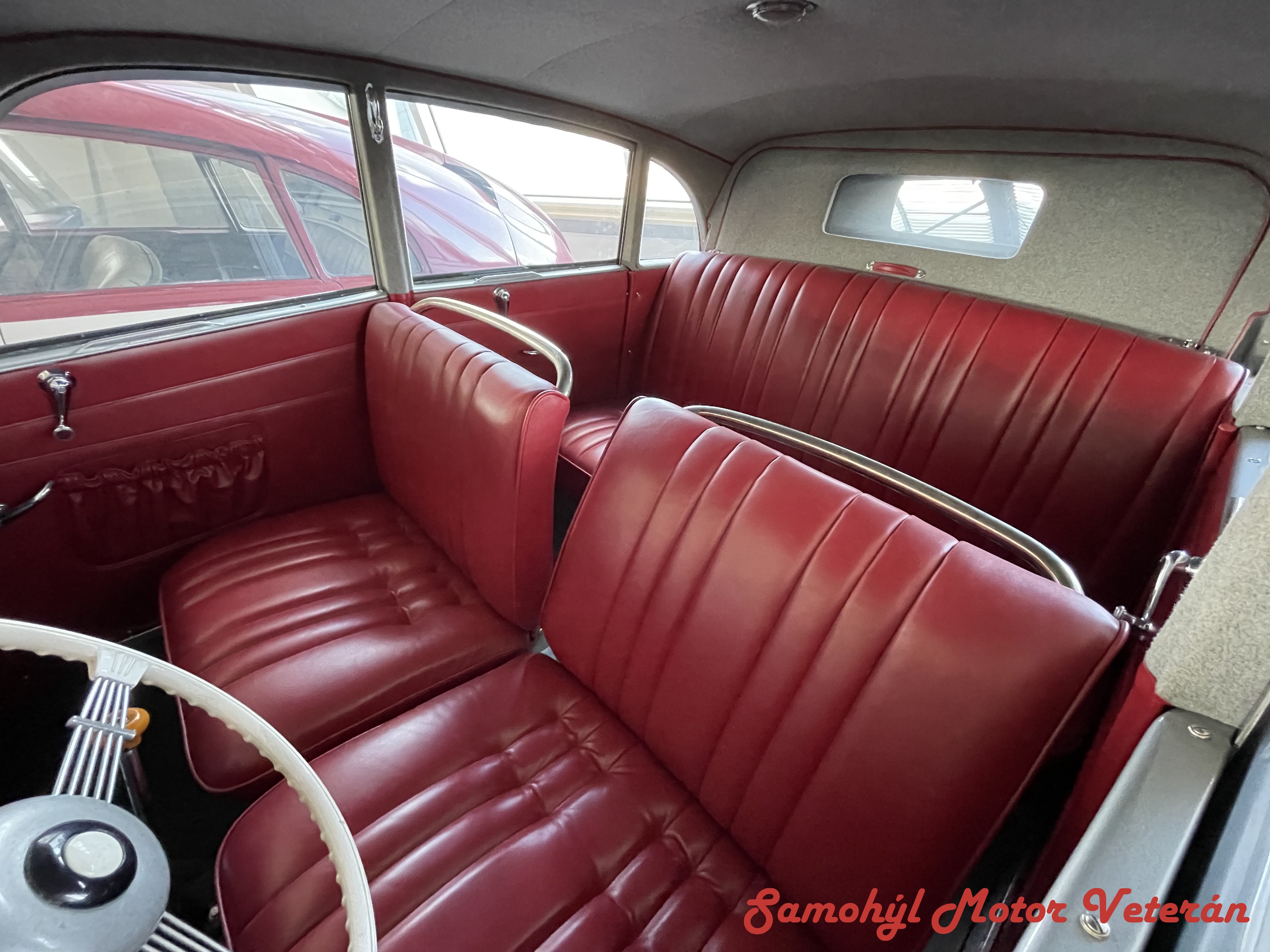
The car in our collection is a four-door five-seat sedan in perfect and fully functional condition from 1946.